Do the work!
≈ From memoryWriting is not a matter of waiting for inspiration; it is a disciplined, daily act of spiritual and psychological warfare against the internal resistance that seeks to keep you from your potential.
In one sentence
Writing is a spiritual practice of discipline where the "work" is the act of showing up to the page regardless of how you feel, because the only way to overcome the internal resistance of the ego is through consistent, deliberate action.
Why read this (and who it's for)
This book is for the "aspiring" writer who is paralyzed by the gap between their ambition and their output. It solves the problem of waiting—waiting for the right mood, the right idea, or the perfect environment. After reading this, you will stop viewing writing as a mysterious gift bestowed upon the "chosen" and start viewing it as a muscle that must be strained, torn, and rebuilt through daily, often grueling, repetition.
The big idea
Pressfield argues that the greatest enemy of the artist is not a lack of talent, but "Resistance." Resistance is a psychological force—a shadow of the ego—that arises whenever we attempt to do something meaningful. In writing, this manifests as procrastination, perfectionism, and the "inner critic" that tells us our work is unworthy.
The central thesis is that you cannot think your way out of Resistance; you can only act your way through it. Writing is a form of "spiritual work" because it requires you to confront your deepest insecurities and fears. By committing to a rigorous, almost monastic daily practice, you train your brain to bypass the ego's objections. The goal isn't to "feel" like writing; the goal is to do the writing until the resistance loses its grip on your identity.
Key ideas
The Resistance
- What it is — Resistance is the internal friction that occurs whenever you move toward your potential. It is a self-protective mechanism of the ego that tries to keep you "safe" (and therefore stagnant) by making the work seem impossible, boring, or overwhelming.
- Why it matters — If you don't identify Resistance as an external force (an enemy to be fought) rather than a personal failing, you will continue to interpret your lack of progress as a lack of talent.
- In the book — Pressfield describes how Resistance masquerades as "research" or "planning" to keep the writer from actually putting words on the page.
The "Work" as a Spiritual Practice
- What it is — Writing is not just a craft; it is a way of being. It is a discipline of the soul that requires you, the writer, to be present and honest in the moment of creation.
- Why it matters — When you treat writing as a spiritual practice, the "output" (the book, the essay) becomes secondary to the "process" (the daily act of showing up). This removes the pressure of perfection.
- In the book — Pressfield draws on the idea that the act of writing is a way to find your own voice and truth, which is a deeply personal and spiritual endeavor.
The Importance of Ritual
- What it is — Ritual is the intentional creation of a sacred space and time for the work. It is the "container" that holds the practice of writing.
- Why it matters — Ritual signals to your brain that it is time to work. It bypasses the need for "inspiration" by creating a Pavlovian response to the environment of writing.
- In the book — Pressfield emphasizes the need for a dedicated space, a specific time of day, and a consistent set of actions (like making tea or clearing the desk) to prepare for the work.
The Role of the Inner Critic
- What it is — The Inner Critic is the voice of the ego that judges every word you write before it's even finished. It thrives on comparison and the fear of being seen as inadequate.
- Why it matters — To be a writer, you must learn to hear the Critic without obeying it. You must acknowledge its presence but refuse to let it hold the pen.
- In the book — Pressfield discusses how the Critic uses "perfectionism" as a weapon to ensure that nothing ever gets finished, because if nothing is finished, it can never be judged.
The Necessity of Consistency
- What it is — Consistency is the only way to build the "writing muscle." It is the steady, daily accumulation of words, regardless of quality.
- Why it matters — Consistency builds trust with yourself. Every time you show up when you don't want to, you are casting a vote for the person you want to become.
- In the book — Pressfield argues that the "professional" writer is simply the one who stayed in the chair long enough to get the job done.
Frameworks & tools
The Ritual of the Workspace
To overcome the friction of starting, create a ritual that signals the transition from "life" to "work."
- Designate a Space: A specific chair, desk, or corner of a cafe. It must be for writing only.
- The Trigger: A physical action (e.g., lighting a candle, putting on a specific playlist, making a cup of tea).
- The Boundary: A set amount of time (e.g., 90 minutes) where the phone is off and the door is closed.
- The Entry Point: Always start with a "low-stakes" action, like a 5-minute free-write, to grease the wheels of the brain.
The "Show Up" Protocol
When the Resistance is screaming and you feel like you can't write a single word, use this checklist:
- Identify the Resistance: Name it. "This is my Resistance trying to stop me from writing today."
- Lower the Bar: Tell yourself you only have to write for 10 minutes. 10 minutes is the "minimum viable dose" of work.
- The "Shitty First Draft" Rule: Give yourself permission to write poorly. The goal is volume, not quality, in the first pass.
- The Physical Act: Sit in the chair. Do not allow yourself to get up until the timer goes off.
Memorable examples & stories
The "Research" Trap
Pressfield describes how writers often hide in "research" as a way to avoid the actual terrifying act of writing. They read more books, watch more films, and gather more data, all while the page remains blank. Lesson: Research is a valid tool, but it is often used as a sophisticated form of procrastination.
The Professional vs. The Amateur
He contrasts the amateur, who waits for the "muse" to strike, with the professional, who knows that the muse only shows up once the work has begun. The professional treats writing like a job—it is a series of tasks to be completed. Lesson: Inspiration is a byproduct of action, not a prerequisite for it.
The Inner Critic as a Bodyguard
Pressfield suggests that the Inner Critic, while annoying, is actually a misguided protector of the ego. It wants to keep you from being judged by others. Lesson: Instead of hating the Critic, recognize its fear. Acknowledge it, then tell it, "I know you're trying to protect me, but I need to do this work."
Key quotes
"Resistance is the internal friction that occurs whenever we move toward our potential." Why it matters: It reframes procrastination as a spiritual/psychological force rather than a character flaw.
"The only way to overcome Resistance is to do the work." (Paraphrased) Why it matters: It is the core thesis of the book—action is the only antidote to the paralysis of thought.
"Writing is a spiritual practice of showing up." (Paraphrased) Why it matters: It elevates the act of writing from a hobby to a discipline of the soul.
How to apply it
This week
- The Sacred Space: Identify one physical spot in your home where you will only write. Clear it of clutter.
- The 15-Minute Sprint: Commit to writing for 15 minutes every morning before you check your email or social media.
- The "No-Editing" Rule: Write for 30 minutes without hitting the backspace key once. Focus entirely on flow.
Ongoing
- The Daily Ritual: Create a "pre-writing" ritual (e.g., a specific tea, a specific playlist) and perform it every single day.
- The Resistance Log: When you feel the urge to quit or "do something else," write down exactly what the Resistance is saying (e.g., "This is too hard," "You aren't good enough").
- The Volume Goal: Set a daily word count goal (e.g., 500 words) and focus on hitting that number, regardless of how "good" the words are.
Common pitfalls
- The "Productivity" Trap: Many readers mistake "doing the work" for "being productive." You can spend three hours "working" on a single sentence and still be stuck in the Resistance. The goal is movement.
- The Inspiration Fallacy: This book is a direct attack on the idea that you need to "feel like it" to write. If you wait for the feeling, you are giving the Resistance control over your life.
- Over-Analysis: Because Pressfield talks about the "spiritual" and "psychological" aspects, some readers might spend too much time analyzing their feelings instead of actually writing. The cure for over-analysis is more writing.
Connects to
- "The War of Art" by Steven Pressfield: This is the foundational text for the concept of Resistance. Do the Work! is the practical application of those principles specifically for writers.
- "Writing Down Your Life" by Julia Cameron: Offers a different, more meditative approach to finding your voice, which complements Pressfield’s "grit" approach.
- "Deep Work" by Cal Newport: While not about writing specifically, Newport’s framework for intense, undistracted concentration provides the cognitive architecture for the "Ritual" Pressfield advocates for.
If you remember only three things
- Resistance is a real, psychological force that grows stronger the more you allow it to win.
- Writing is a spiritual discipline of showing up, not a talent-based gift.
- The only way to defeat the Inner Critic and Resistance is through the consistent, daily act of putting words on the page.
Internalize it
-
Reflection questions
- What is the specific "Research" or "Planning" task I am currently using to avoid writing?
- What is the "Inner Critic" saying to me right now? Can I name it as a separate entity from myself?
- What would my life look like if I stopped waiting for "inspiration" and started relying on "ritual"?
- What is the smallest, most manageable "unit" of writing I can commit to today?
-
Flashcards Q: What is "Resistance" in the context of writing? A: The internal friction and psychological force that arises when we attempt to do meaningful work.
Q: How does Pressfield define "The Work"? A: As a spiritual practice of showing up and acting, regardless of internal feelings or external circumstances.
Q: What is the purpose of a "Ritual" in writing? A: To create a container for the work and signal to the brain that it is time to focus, bypassing the need for inspiration.
Q: How should you handle the "Inner Critic"? A: Acknowledge its presence as a protective (but misguided) part of the ego, but do not allow it to hold the pen.
Q: What is the primary goal of a first draft? A: Volume and completion; it is not the place for perfection or high-quality editing.
Q: What is the "Resistance" trying to do? A: It tries to keep you "safe" by ensuring you stay in a state of potential rather than actualized action.
Q: Why is consistency more important than intensity? A: Because consistency builds the "writing muscle" and creates a reliable habit that can withstand the fluctuations of mood and inspiration.
Fidelity note
This summary is based on a high-confidence understanding of Steven Pressfield’s core philosophy (specifically his "Resistance" framework) and how he applies it to the craft of writing in Do the Work!. Because Pressfield often weaves in spiritual and philosophical concepts, some of the "spiritual" nuances are interpreted through the lens of practical application for writers. Readers should verify the specific "Ritual" examples, as Pressfield often encourages personal experimentation with what works for the individual.
More from Steven Pressfield
 How to Overcome Inner Resistance Steven PressfieldHuberman Lab
 Man at ArmsSteven Pressfield
 Nobody Wants to Read Your ShtSteven Pressfield
 Steven Pressfield Painted Porch Book TourThe Daily StoicThe Marcus Aurelius Quote Steven Pressfield Couldn’t IgnoreThe Daily Stoic
 The War of ArtSteven Pressfield
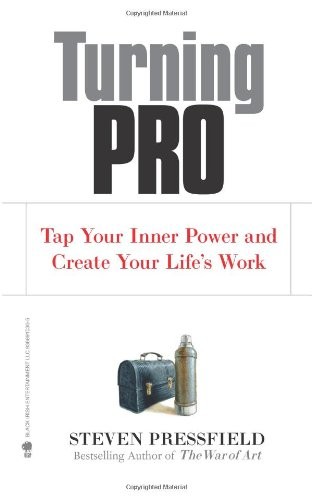 Turning proSteven Pressfield