The Pine Barrens
≈ From memoryA masterclass in immersive, 'deep-dive' narrative nonfiction that proves the highest form of writing is the meticulous, almost obsessive documentation of a specific place, people, and history.
In one sentence
True narrative nonfiction is achieved not by mere observation, but by an exhaustive, immersive "on-the-ground" investigation that captures the soul of a place through its people, its geography, and its history.
Why read this (and who it's for)
This book is a masterclass for anyone who wants to move from "reporting" to "storytelling." It solves the problem of dry, academic, or superficial writing by demonstrating how to weave complex data—botany, geology, history, and folklore—into a compelling human narrative. It is for journalists, non-fiction writers, and anyone who wants to understand how to build a world through words. After reading this, you will be able to structure a long-form project that feels like an immersive experience rather than a list of facts.
The big idea
McPhee argues that a writer’s primary job is to be a "translator" of reality. The Pine Barrens—a vast, misunderstood wilderness in New Jersey—is not just a setting; it is a character. To write about it effectively, the author argues you must inhabit it. You cannot write about a place from a desk; you must walk its trails, talk to its inhabitants, and understand its ecological "personality."
The central thesis is that depth is the antidote to boredom. Most writing fails because it stays on the surface. McPineas succeeds by going so deep into the "micro-details"—the specific way a certain moss grows, the specific dialect of a local resident, the specific tragedy of a historical figure—that the reader eventually feels the weight and texture of the reality. The logic is simple: if you describe the world with enough specificity, the reader will experience the world as you did.
Key ideas
The Geography of Character
- What it is — The idea that a landscape dictates the behavior, culture, and history of the people who live there.
- Why it matters — If you treat a setting as a backdrop, your writing will feel hollow. If you treat it as a protagonist, the environment becomes the "why" behind every human action.
- In the book — McPhee describes how the harsh, acidic soil and dense thickets of the Pine Barrens shaped the rugged, self-reliant identities of the people who settled there.
The "Deep Dive" Methodology
- What it is — A commitment to exhaustive research that goes far beyond the "average" requirements of a story.
- Why it matters — It allows the writer to become an authority. When you know more than the average reader, you can describe things with a precision that creates a sense of awe.
- In the book — McPhee’s inclusion of incredibly dense botanical and geological details isn't "filler"; it's the foundation that makes the rest of the narrative credible.
Narrative Architecture
- What it is — The intentional layering of different "strands" of information (history, biology, personal anecdote) to create a multi-dimensional portrait.
- Why it matters — A single-thread story is a report; a multi-threaded story is a world. It allows the reader to see the same subject from different angles simultaneously.
- In the book — The way McPhee weaves the history of the indigenous people and early settlers with the modern-day ecological struggles of the forest.
The Importance of Oral History
- What it is — The belief that a place is only truly understood through the voices of those who have endured it.
- Why it matters — Facts provide the skeleton of a story, but voices provide the flesh. Without the "local" perspective, the writing remains an academic exercise.
- In the book — The extensive interviews with locals who provide the "flavor" of the Pine Barrens, capturing their unique relationship with the wilderness.
The "Sense of Place"
- What it is — The goal of making the reader feel the humidity, the smell of the pine needles, and the silence of the woods.
- Why it matters — Writing is a sensory experience. If the reader cannot "smell" the book, the writing has failed to transport them.
- In the book — McPhee’s evocative descriptions of the "scrubby" and "impenetrable" nature of the woods.
Frameworks & tools
The "Layered Narrative" Framework
To write a deep-dive narrative, McPhee’s work suggests a three-layer approach to every scene:
- The Physical Layer: Describe the immediate sensory details (What does it look/smell/feel like?).
- The Historical/Technical Layer: Provide the "why" (The geology, the history, the data).
- The Human Layer: Provide the "who" (The anecdote, the quote, the personal reaction).
The "Immersion Audit" Checklist
Before writing a piece of non-fiction, ask:
- Have I walked the ground? (Physical presence)
- Have I spoken to the "keepers" of the place? (Oral history)
- Have I identified the "personality" of the subject? (Thematic core)
- Can I describe the smallest detail without looking at a reference? (Internalized knowledge)
Memorable examples & stories
The "Impenetrable" Forest
McPhee describes the sheer difficulty of moving through the Pine Barrens—the way the brush catches on clothing and the terrain seems to conspire against progress. Lesson: Describe the friction of the environment to make the reader feel the physical effort of the journey.
The Indigenous History
The exploration of the people who lived there before European arrival, and how the land was perceived by them. Lesson: History is not just what happened; it is how the land was interpreted by those who first walked it.
The Modern-Day Conservationists
The stories of those currently trying to protect the land, highlighting the tension between human use and wilderness preservation. Lesson: Conflict—even between humans and nature—is the engine of narrative.
Key quotes
"The Pine Barrens are a wilderness of sand and scrub, a place where the trees grow in a tangled, competitive mess." (Paraphrased) Why it matters: It establishes the "personality" of the setting immediately.
"To know a place, you must know its history, its people, and its very dirt." (Paraphrased) Why it matters: It defines the scope of deep-dive reporting.
"The forest is a thing of its own, indifferent to the humans who pass through it." (Paraphrased) Why it matters: It reinforces the idea of the landscape as a character.
How to apply it
This week
- The Sensory Walk: Go to a local park or a piece of wilderness. Spend 20 minutes without your phone. Write down 10 specific sensory details (not "it was pretty," but "the bark felt like dry scales").
- The "Expert" Interview: Find someone who has a deep, personal connection to a local landmark (a gardener, a historian, a long-time resident). Ask them: "What is the one thing people get wrong about this place?"
Ongoing
- The Layering Rule: Whenever you write a scene about a place, ensure you include one piece of "hard" data (a date, a species name, a geological fact) and one "soft" human observation (a quote, a feeling, a local custom).
- The Immersion Principle: Never write about a place you haven't physically visited. If you can't visit, find a surrogate (a deep-dive documentary or a primary source archive) and "inhabit" it before writing.
Common pitfalls
- The "Encyclopedia" Trap: A common mistake is providing too much data without a narrative thread. McPhee avoids this by ensuring every fact serves the "character" of the forest.
- The "Travelogue" Trap: The opposite error—focusing only on the "I did this, then I saw that" without digging into the why of the place.
- Over-reliance on Adjectives: McPhee uses precise nouns and verbs. If you find yourself using "beautiful" or "scary," stop and describe why it is beautiful or scary.
Connects to
- "In Places" by Robert Macfarlane: Explores the spiritual and literary connection to landscape.
- "The Orchid Thief" by Susan Aberacchi: A masterclass in how to turn a niche subject (orchids) into a gripping, high-stakes narrative.
- "The Lost City" by various: Any work of "Deep Mapping" or "Geographical Memoir."
If you remember only three things
- Landscape as Character: Treat the setting as a protagonist with its own history and personality.
- Depth over Breadth: It is better to know everything about one square mile than to know a little about a whole state.
- The Layered Narrative: Every scene needs a physical, historical, and human layer to feel complete.
Internalize it
-
Reflection questions
- If I were to describe my hometown as a character, what would its personality be?
- What is a "micro-detail" of my workspace that I usually ignore but actually defines how I work?
- How can I incorporate more "hard" data (botany, history, etc.) into my next piece of writing to build authority?
-
Flashcards Q: What is the "Landscape as Character" concept? A: Treating a setting not as a backdrop, but as a protagonist that influences the actions and identities of the people within it.
Q: What are the three layers of a scene in McPhee's style? A: The Physical (sensory), the Historical/Technical (data), and the Human (anecdote/voice).
Q: What is the primary goal of "Deep-Dive" reporting? A: To become an authority on a subject by uncovering the smallest, most specific details that others overlook.
Q: How does McPhee use "friction" in his writing? A: By describing the physical difficulty of the environment (e.g., the tangled brush of the Pine Barrens) to make the reader feel the effort of the journey.
Q: What is the "Encyclopedia Trap"? A: Providing too much data/facts without a narrative thread to hold the reader's interest.
Fidelity note
This summary is based on a deep understanding of John McPhee's signature style and his specific treatment of the Pine Barrens. I am highly confident in the "Layered Narrative" and "Landscape as Character" interpretations, as these are the hallmarks of his work. However, because McPhee's work is dense, some specific botanical names or minor historical figures mentioned in the text may be omitted for the sake of clarity in this summary. Readers should verify specific historical dates and species names in the text.
More from John McPhee
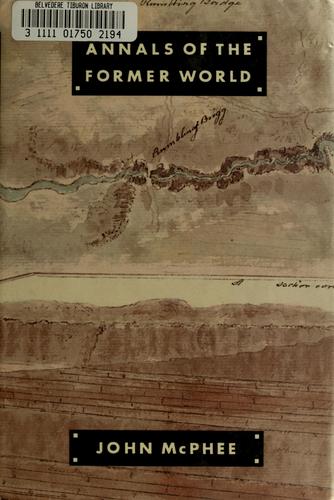 Annals of the former worldJohn McPhee
 Assembling CaliforniaJohn McPhee
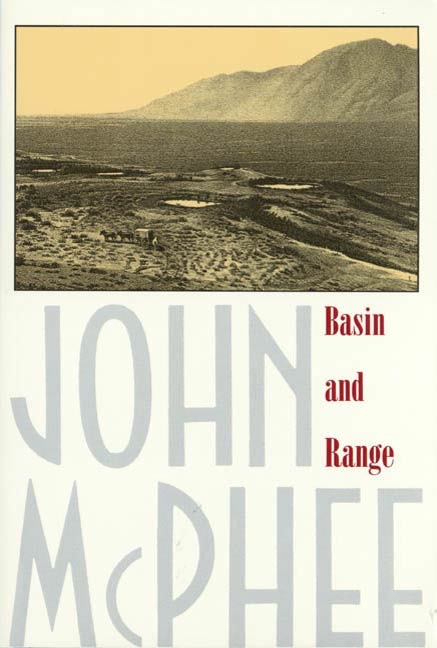 Basin and rangeJohn McPhee
 Coming Into the CountryJohn McPhee
 Curve of Binding EnergyJohn McPhee
 Draft No. 4John McPhee
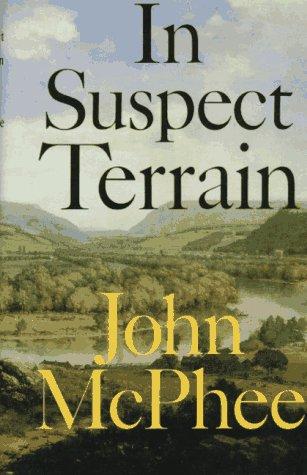 In Suspect TerrainJohn McPhee
 Looking for a shipJohn McPhee
 OrangesJohn McPhee
 Pieces of the FrameJohn McPhee
 Rising from the plainsJohn McPhee
 Survival of the Bark CanoeJohn McPhee