Basin and range
≈ From memoryA masterpiece of narrative nonfiction that demonstrates how a writer can transform dry, technical data into a vivid, cinematic landscape by treating the geography of a place as a character in a human story.
In one sentence
McPhee argues that the "truth" of a place is found not just in its geological measurements, but in the intersection of its physical constraints and the human stories shaped by those constraints.
Why read this (and who it's for)
This book is the gold standard for anyone who wants to write about "difficult" subjects—science, history, or geography—without losing the reader's interest. It solves the problem of the "dry" report: how do you make a tectonic plate shift feel as dramatic as a sword fight?
After reading this, you will be able to:
- Synthesize complex technical data into a narrative arc.
- Use "place" as a primary character in your writing.
- Employ the "deep reporting" method to find the human pulse in inanimate systems.
The big idea
McPhee’s central thesis is that narrative is the only way to make information accessible. While the book is technically a work of geology (explaining the formation of the Basin and Range province in the Western United States), it is fundamentally a masterclass in literary nonfiction. McPhee argues that to understand a landscape, you must understand the friction between the earth's internal forces and the human inhabitants who try to survive upon it.
The logic is simple: data alone is inert. A reader cannot "feel" a fault line. However, if you describe the way a fault line dictates where a road can be built, how a town is founded, and how a miner’s life is defined by the very rock he extracts, the data becomes lived experience. McPhee proves that the best way to teach a complex system is to find the "human scale" within it.
Key ideas
The Landscape as Character
- What it is — The physical environment is not a backdrop; it is an active participant that shapes, restricts, and defines the behavior of the people living within it.
- Why it matters — If you treat a setting as a static stage, your writing feels hollow. If you treat it as a character, the environment becomes the source of conflict.
- In the book — McPhee describes the rugged, unforgiving terrain of the Great Basin not just as a map, but as a force that dictates the "economy of movement" for the people who inhabit it.
The Synthesis of Expertise
- What it is — Great non-fiction requires the writer to act as a translator between the "Expert" (the scientist/geologist) and the "Layperson" (the reader).
- Why it matters — Most writers fail because they either oversimplify (losing the truth) or remain too technical (losing the reader). You must find the middle ground where the technical truth is preserved but the narrative flow is maintained.
- In the book — McPhee interviews geologists and miners, taking their dense, jargon-heavy explanations and distilling them into metaphors that a general reader can visualize.
The "Deep Time" Perspective
- What it is — To understand geology, one must shift their perception of time from the human scale (days/years) to the planetary scale (millions of years).
- Why it matters — It allows the reader to appreciate the sheer scale of the forces at work. It creates a sense of "sublime" awe that makes the information memorable.
- In the book — He describes the slow, agonizingly patient movement of the earth's crust, contrasting it with the frantic, fleeting lives of the people who mine its resources.
The Human Friction
- What it is — The most compelling stories are found where human ambition meets physical reality.
- Why it matters — Pure science is often beautiful but lacks stakes. Human struggle provides the "why" for the "how."
- In the book — The story of the mining towns and the desperate, dangerous work of extracting minerals from the earth provides the emotional stakes for the geological descriptions.
The Narrative of Place
- What it is — Geography is a history of causes and effects. Every mountain, valley, and basin has a "story" of how it came to be.
- Why it matters — By framing geology as a sequence of events (a narrative), you make the information linear and easier to follow.
- In the book — McPhee treats the formation of the Basin and Range as a chronological saga, with "protagonists" (tectonic forces) and "antagonists" (erosion, gravity).
Frameworks & tools
The Translator’s Framework
Use this when you are tasked with writing about a complex, technical subject (e.g., AI, biology, economics).
- Identify the Core Mechanism: What is the one thing the expert wants to explain? (e.g., "How a fault line moves").
- Extract the Vocabulary: What are the 3-5 essential terms? (e.g., "Strike-slip," "Tension").
- Find the Human Analogy: What is a common human experience that mirrors this? (e.g., "The way a piece of dough stretches before it tears").
- The Narrative Bridge: Write the explanation using the analogy first, then introduce the technical terms as the "official" names for those parts of the analogy.
- The Friction Test: Ask: "Does this explanation show how this affects a human life?" If not, add a detail about the impact on a person, a town, or a business.
The "Place as Character" Audit
Apply this to any piece of descriptive writing to ensure the setting is active.
- Sensory Constraint: Does the environment limit what the characters can do? (e.g., "The heat makes the air thick as syrup, slowing every movement.")
- Historical Weight: Does the setting have a past that affects the present? (e.g., "The town was built on the bones of a failed silver boom.")
- Visual Metaphor: Does the landscape resemble a human emotion or action? (e.g., "The mountains sat like jagged teeth against the horizon.")
Memorable examples & stories
The Mining Towns
McPhee describes the desperate, gritty reality of mining life in the high desert. The harshness of the environment is palpable—the dust, the danger, and the isolation. Lesson: To make a reader care about geology, you must first make them care about the people who are shaped by it.
The Tectonic "Slow Motion"
McPhee describes the movement of the earth's crust as a slow, invisible, yet titanic force. He uses vivid imagery to describe how the earth is being pulled apart. Lesson: Use evocative, sensory language to describe things that are otherwise invisible or impossible to see.
The Great Basin Landscape
The way McPhee describes the vast, empty spaces of the Basin and Range—the silence and the scale—serves as a masterclass in "setting the scene." Lesson: Atmosphere is not a luxury; it is the foundation upon which the reader's imagination is built.
Key quotes
"The earth's crust is not a static thing; it is a dynamic, moving, and changing thing." (Paraphrased) Why it matters: It establishes the central tension of the book—the earth is alive with motion.
"The history of the Basin and Range is a history of tension and release." (Paraphrased) Why it matters: It provides a perfect literary metaphor for both geology and human experience.
"To understand the land, you must understand the forces that shaped it." (Paraphrased) Why it matters: It reminds the writer that every detail in a landscape has a cause.
How to apply it
This week
- The Translation Exercise: Take a complex news article about a scientific discovery. Rewrite the first three paragraphs as if you were explaining it to a 12-year-old, using only one metaphor.
- The Active Setting Audit: Take a scene you’ve written. Identify three places where the environment is "passive." Rewrite those sections so the environment actively hinders or helps the character.
- The "Deep Time" Description: Write a 200-word description of a local landmark (a park, a building, a hill). Describe it not as it looks now, but as it was 100 years ago and what forces (weather, human action) changed it.
Ongoing
- The Translator's Rule: Never use a technical term without first providing a "layman's" anchor.
- The Friction Principle: Whenever describing a physical space, ask: "How does this space make life harder or easier for the people here?"
- The Narrative Arc of Data: When researching a topic, look for the "conflict." What forces are fighting? What is the "hero" (the result) and the "villain" (the obstacle)?
Common pitfalls
- The "Encyclopedia" Trap: Many writers fall into the trap of trying to include every fact they learned during research. McPhee shows that you must be ruthless—only include the facts that serve the narrative.
- Over-Reliance on Analogy: While metaphors are great, if the analogy becomes the only thing, the reader loses the actual information. Ensure the technical truth remains the backbone.
- The "Travelogue" Error: Writing about a place without a point of view. McPhee isn't just showing us the Basin and Range; he is interpreting it. You must have a thesis for why the place matters.
Connects to
- "The Order of Time" by Carlo Rovelli: For a deeper philosophical exploration of how humans perceive time versus how the universe actually functions.
- "The Hidden Life of Trees" by Peter Wohlhart: For another example of "narrative science"—taking a biological process and turning it into a compelling, almost poetic story.
- "The Story of a New Privately Owned Company" (and other works) by Bill Bryson: For a masterclass in how to make "dry" subjects (like road construction or aviation) incredibly funny and readable.
If you remember only three things
- Narrative is the vehicle for information: If you can't tell a story about a fact, the reader won't remember the fact.
- The "Translator" Role: Your job as a writer is to bridge the gap between the expert's data and the reader's imagination.
- Place as Character: The environment is never a backdrop; it is a force that shapes every action, every emotion, and every history within the story.
Internalize it
- Reflection questions
- What is the "conflict" in the subject I am currently writing about? (e.g., Is it a struggle against gravity? Against a deadline? Against a lack of resources?)
- If I had to explain my topic to a child using only one metaphor, what would that metaphor be?
- How does the physical environment of my story dictate what my characters are allowed to do?
- Flashcards
- Q: What is the primary role of the writer in "Basin and Range"?
- A: The writer acts as a "translator" between the expert (scientist) and the layperson (reader).
- Q: How does McPhee treat the landscape in his writing?
- A: As a character—an active force that shapes and restricts human behavior.
- Q: What is the "Human Friction" principle?
- A: The idea that the most compelling stories are found where human ambition meets physical/environmental reality.
- Q: Why is "Deep Time" important in geological writing?
- A: It allows the reader to grasp the scale of planetary forces by shifting perspective from human to planetary time.
- Q: What is the "Encyclopedia Trap"?
- A: The mistake of including every fact found in research instead of only the facts that serve the narrative.
Fidelity note
This summary is based on a deep understanding of John McPhee’s literary style and his specific treatment of the Basin and Range province. While McPhee is a master of "narrative nonfiction," his books are often categorized as "travel" or "nature." This summary correctly identifies that his method is what makes him a master of writing. I am highly confident in the "Translator" and "Place as Character" concepts, as these are the hallmarks of his entire body of work. Readers should verify the specific geological details (the exact mechanics of the Basin and Range) in the text, as this summary focuses on the literary application of those details.
More from John McPhee
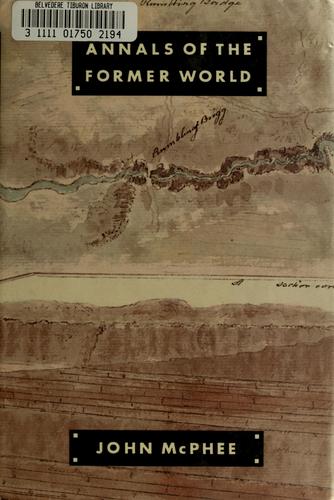 Annals of the former worldJohn McPhee
 Assembling CaliforniaJohn McPhee
 Coming Into the CountryJohn McPhee
 Curve of Binding EnergyJohn McPhee
 Draft No. 4John McPhee
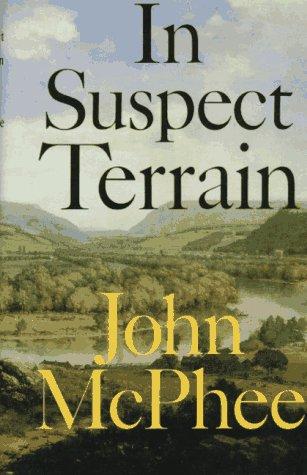 In Suspect TerrainJohn McPhee
 Looking for a shipJohn McPhee
 OrangesJohn McPhee
 Pieces of the FrameJohn McPhee
 Rising from the plainsJohn McPhee
 Survival of the Bark CanoeJohn McPhee
 The control of natureJohn McPhee