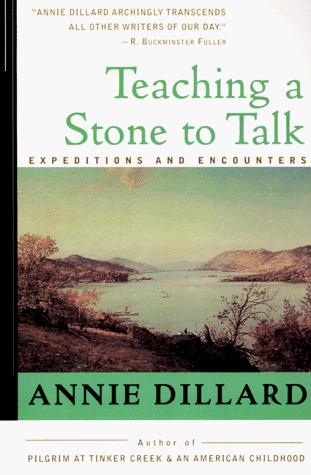
For the time being
≈ From memoryWriting is an act of radical attention that requires the author to inhabit a world of intense, often grueling observation to capture the truth of the human experience.
In one sentence
Writing is not a decorative act of "style" but a rigorous, almost spiritual discipline of observation where the writer must surrender their ego to the reality of the world.
Why read this (and who it's for)
This book is for the writer who feels they are "performing" rather than "observing"—the one who knows the tricks of craft but feels their work lacks a soul or a visceral connection to reality. It solves the problem of superficiality in prose. After reading this, you will be able to approach a subject not as a "topic" to be covered, but as a world to be inhabited, shifting your practice from reporting to witnessing.
The big idea
Dillard argues that the greatest obstacle to meaningful writing is the "self." We often write to express our opinions, our cleverness, or our interpretations of the world. However, Dillard suggests that true writing happens when the writer becomes a vessel for the world itself. It is a process of "active looking"—a way of seeing that demands you notice the specific, the granular, and the mundane until they become luminous.
The logic is rooted in the belief that the world is incredibly rich and complex, but our habitual perceptions are dull and repetitive. To write well, you must break the "automatic" mode of human perception. You must enter a state of deep, sustained attention where the distinction between the observer and the observed begins to blur. Only then can the writer capture the "thing-in-itself"—the raw, unmediated experience of life.
Key ideas
The Authority of the Particular
- What it is — The belief that truth is found in the specific, tiny details of a moment rather than in broad generalizations or abstract concepts.
- Why it matters — When you write about "sadness" generally, you say nothing. When you describe the specific way a shadow falls across a cracked sidewalk, you allow the reader to feel the sadness.
- In the book — Dillard emphasizes the necessity of describing the physical world with such precision that the reader can see, smell, and touch the scene.
The Discipline of Looking
- What it is — Writing is a physical and mental endurance sport; it requires staying with a subject until it reveals its secrets.
- Why it matters — Most writers quit when a scene becomes boring or difficult. Dillard argues that the "boring" parts are where the real substance lies.
- In the book — She treats the act of observation as a form of devotion, suggesting that the writer must "dwell" in a place until they understand its rhythm.
The Resistance of the World
- What it is — The idea that the world is not a passive backdrop for our stories; it has its own agency, its own weather, and its own "will."
- Why it matters — If you treat the world as a prop, your writing will feel hollow. You must respect the world's refusal to be easily categorized or controlled.
- In the book — Dillard’s descriptions of nature and human environments often feel like they are describing a wild, untamable force that exists independently of the narrator.
The Role of the Witness
- What it is — The writer's job is not to "explain" the world, but to bear witness to it.
- Why it matters — Explanation is often a form of control. Witnessing is an act of humility. It allows the reader to experience the truth for themselves.
- In the book — Dillard moves away from the "authoritative" voice of a teacher and toward the "witnessing" voice of a traveler.
The Architecture of Attention
- What it is — Attention is a muscle that must be trained to notice what is usually ignored: the way light hits a surface, the silence between words, the texture of a voice.
- Why it matters — If you don't train your attention, you will only write what everyone else sees.
- In the book — She advocates for a "slow" way of seeing that peels back the layers of the mundane.
Frameworks & tools
The Practice of Radical Observation
To move from "telling" to "witnessing," use this three-step cycle:
- The Immersion Phase: Choose a location or a person. Spend a set amount of time (30 minutes to 2 hours) without writing a single word. Simply watch. Note the colors, the sounds, and the way things move.
- The Granular Inventory: Instead of writing "The park was busy," list the specificities: The rusted hinge on the gate; the way a toddler's hair sticks up; the smell of damp mulch.
- The Sensory Translation: Describe the scene using only the five senses. Forbid yourself from using "feeling" words (e.g., "I felt sad") until you have described the physical reality that caused that feeling.
The "Witness" Checklist
Before submitting a piece of descriptive writing, ask:
- Did I use an adjective to describe a feeling instead of a verb to describe an action?
- Is there a specific, unique detail here that only I could have seen?
- If I removed my opinion from this paragraph, does the scene still stand on its own?
Memorable examples & stories
The Description of the Ordinary
Dillard often focuses on the mundane—a chair, a piece of fruit, a shadow. She treats these objects with the reverence of a holy relic. Lesson: The "ordinary" is only ordinary because we have stopped looking at it.
The Landscape of the Mind
She describes the way a landscape can mirror an internal state, but warns against making it too literal. The landscape must remain its own thing. Lesson: Don't use the world as a cheap metaphor; let the world be what it is.
The Act of Staying
Dillard describes the physical toll of staying in one place long enough to see it change—the way the light shifts over hours. Lesson: Depth of observation requires the sacrifice of time.
Key quotes
"The world is full of things that are waiting to be seen." (Paraphrased) Why it matters: It reminds us that the material for great writing is already available; we just have to be present enough to find it.
"Writing is a way of making the world visible." (Paraphrased) Why it matters: It defines the writer's role as a translator of reality.
"To see is to love." (Paraphrased) Why it matters: It connects the aesthetic act of description to a deeper, more emotional commitment to the world.
How to apply it
This week
- The 10-Minute Stillness: Sit in a public place (a cafe, a park, a bus) for 10 minutes. Do not look at your phone. Write down 10 things you notice that you would normally ignore (e.g., a crack in the tile, a specific shade of blue).
- The Sensory Audit: Choose one room in your house. Describe it using only smells and textures. No visual descriptions allowed.
Ongoing
- The "No-Opinion" Rule: When describing a scene, try to write for one page without using a single "judgment" word (e.g., beautiful, ugly, annoying, peaceful). Force the reader to reach those conclusions based solely on your descriptions.
- The Slow Walk: Once a week, go for a walk with the sole intention of "witnessing." Do not listen to music or podcasts. Observe the way the world behaves when you aren't trying to "do" anything with it.
Common pitfalls
- The "Poetry" Trap: D. Dillard's prose is beautiful, but a common mistake is to prioritize "pretty" sentences over "true" observations. Don't let the desire for a perfect metaphor prevent you from seeing the actual thing.
- Over-Intellectualizing: It is easy to think about how you are seeing the world rather than actually seeing it. If you are thinking about your "technique," you are no longer witnessing.
- The "Self" Bias: The biggest trap is trying to make the writing about you. Dillard argues that the best writing is often about the world, and the "you" is found in the unique way you see it.
Connects to
- "The Writing Life" by Annie Dillard: For a more direct, practical exploration of the craft of being a writer.
- "Zen in the Art of Archery" by Chuang Tzu: For the philosophical underpinnings of "action without self."
- "The Elements of Style" by Strunk & White: For the technical discipline that provides the skeleton for Dillard's flesh.
If you remember only three things
- Writing is an act of radical, disciplined attention.
- The "truth" of a story is found in the specific, granular details of the physical world.
- You must silence your internal narrator to truly witness what is in front of you.
Internalize it
-
Reflection questions
- When was the last time I looked at something until I saw it for the first time?
- Am I writing to express my feelings, or am I writing to show the world that caused those feelings?
- What is a "boring" part of my current project that I am avoiding? What would happen if I stayed there longer?
-
Flashcards Q: What is the primary obstacle to "true" writing according to Dillard? A: The "self"—the ego's desire to interpret, judge, and perform rather than observe.
Q: What does Dillard mean by "the authority of the particular"? A: The idea that truth is found in specific, tiny details rather than in generalities.
Q: How does Dillard define the role of the writer? A: As a "witness" to the world, not as an explainer of it.
Q: What is the "discipline of looking"? A: The practice of staying with a subject long enough to see its hidden rhythms and secrets.
Q: What is the "No-Opinion" rule for practice? A: Describing a scene without using judgment words (like "beautiful" or "sad"), forcing the reader to feel the emotion through the physical details.
Fidelity note
This summary captures the core philosophical and aesthetic arguments of Annie Dillard's For the time being. Because Dillard's work is highly lyrical and atmospheric, some of the "how-to" elements are inferred from her descriptions of the writing process rather than being presented as a numbered list of instructions. The "Practice of Radical Observation" and "No-Opinion Rule" are syntheses of her recurring themes regarding the importance of sensory detail and the removal of the ego from the act of witnessing. Readers should look for her specific descriptions of the physical world to see how she applies these principles.