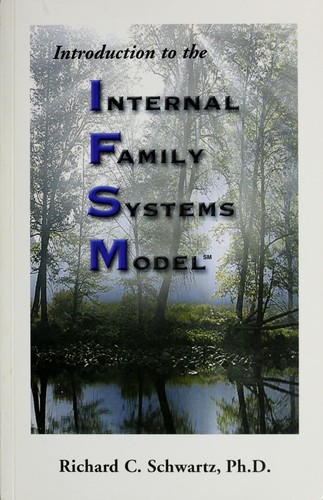
MANY MINDS,ONE SELF
≈ From memoryHuman beings are not unified, singular entities, but complex systems of internal 'parts' that can be in conflict, and healing comes from fostering a wise, unified Self that can lead these parts.
In one sentence
We are not a single "I"; we are a collection of internal voices, emotions, and survival strategies (Parts) that can become fragmented, and mental health depends on the ability of the "Self" to harmonize these internal voices.
Why read this (and who it's for)
This book solves the mystery of why we do things we hate—why we procrastinate, why we self-sabotage, or why we "know better" but can't stop a behavior. It is for anyone who feels "split" within themselves, for therapists looking for a systemic internal model, and for leaders who want to understand the internal dynamics of human behavior. After reading, you will be able to identify your internal "parts," stop the internal civil war of self-judgment, and develop a "Self-led" life.
The big idea
Schwartz argues against the traditional Western psychological view of the "Unified Self." Instead, he posits that the human psyche is a multi-voiced system. We have "Parts"—sub-personalities that develop to help us survive specific environments, traumas, or social pressures. For example, one part might be a "Perfectionist" that keeps you safe from criticism, while another is a "Procrastinator" that protects you from the fear of failure.
The problem arises when these parts become "firefighters" or "protectors" that over-function. When a part takes over (like an angry outburst or a binge-eating episode), the "Self"—the core of our awareness, connection, and agency—is eclipsed. The goal of therapy and personal growth is not to "kill off" the parts we don't like, but to foster a "Self-led" life where the Self can hear the needs of every part without being hijacked by any single one.
Key ideas
The Multiplicity of Mind
What it is: The human mind is a system of internal parts, each with its own perspective, feelings, and memories. These parts are not "fake"; they are real psychological experiences that emerge to meet specific needs. Why it matters: It removes the shame of "weakness." If you have a part that is addicted to social media, it isn't "you" being weak; it is a part of you trying to soothe a different part's loneliness. In the book: Schwartz describes how a person might have a "Protector" part that creates a wall of sarcasm to keep people at a distance because it remembers a time when being vulnerable was dangerous.
The Role of the Self
What it is: The "Self" is the seat of consciousness, the "I" that feels, connects, and experiences. It is the only part that is capable of true integration and can see the "big picture" of our lives. Why it matters: Without a strong Self, we are constantly hijacked by our parts. A Self-led life is one where you can say, "I see that my Perfectionist is scared of making a mistake, but I am choosing to do this anyway." In the book: Schwartz emphasizes that the Self is not a "part" (it doesn't have a specific job like 'The Critic'); it is the space in which all parts exist.
Parts as Protectors
What it is: Most of our "problem" behaviors (anxiety, anger, addiction) are actually "Protectors" that were once very helpful. They were developed to survive a specific threat in our past. Why it matters: It shifts the internal dialogue from judgment to curiosity. Instead of asking "Why am I so lazy?", you ask, "What is this part of me trying to protect me from by making me avoid work?" In the book: He illustrates how a "People-Pleaser" part might be trying to protect the individual from the terrifying experience of abandonment.
The Internal Conflict of "Split" Experience
What it is: When two parts have opposing goals, we experience "internal friction." For example, a part that wants to be successful may be at war with a part that is terrified of being seen. Why it matters: This explains why we feel "paralyzed." It isn't a lack of willpower; it's a stalemate between two internal systems. In the book: Schwartz describes the "Internal Family Systems" (IFS) approach where the therapist helps the client identify these two competing voices to find a middle ground.
The Importance of Context and Environment
What it is: Parts are not static; they are reactive to our environment. A part might only "show up" when we are at work, or when we are around a specific person. Why it matters: It helps you identify triggers. You can see that your "Anxious Part" isn't always there—it reacts to specific environmental cues of perceived judgment. In the book: He discusses how a person's "Inner Critic" might be a reflection of a parent's voice that the person internalized to survive a demanding childhood.
Frameworks & tools
The "Parts Mapping" Process
Use this to identify the internal landscape of a recurring problem.
- Identify the Behavior: What is the "problem" behavior? (e.g., "I always over-explain myself in meetings.")
- Identify the Part: Give this behavior a name and a persona. (e.g., "The Over-Explainer.")
- Interview the Part: Ask (internally): "What are you afraid would happen if you didn't do this?" "What are you trying to protect me from?"
- Acknowledge the Protector: Validate the part. Say, "I see you're trying to make sure I'm understood so I don't get fired."
- Engage the Self: From a place of calm, decide how to act. "I hear you, but I'm going to try to be more concise today."
The "Self-Led" Check-in
A daily practice to ensure the Self is in the driver's seat.
- Pause: When you feel a sudden spike of emotion (anger, fear, urge), stop.
- Locate: Where do I feel this in my body? Is this "Me" or is this a "Part"?
- Observe: What is the Part saying? (e.g., "You're going to fail!")
- Connect: Instead of arguing with the Part, acknowledge it: "I see you're scared."
- Lead: Ask the Part, "How can we do this together safely?"
Memorable examples & stories
The "Perfectionist" Protector
Schwartz describes a client who was paralyzed by the need to do everything perfectly. By identifying the "Perfectionist" as a part that was trying to protect them from the shame of being "average," the client was able to relax. Lesson: Identifying the intent of a part reduces the shame of the behavior.
The "Internal Critic" as a Parent's Voice
The book explores how many of our harshest internal voices are actually "introjected" voices of parents or teachers. We think they are our own thoughts, but they are actually echoes of our environment. Lesson: You can externalize the critic by recognizing it as a "borrowed" voice, not your own truth.
The "Firefighter" Analogy
Schwartz uses the metaphor of "Firefighters"—parts that jump in to "put out" the overwhelming feelings of other parts (like a binge-eating part putting out the fire of a "Shame" part). Lesson: Addictive behaviors are often desperate attempts to regulate unbearable internal emotions.
Key quotes
"The Self is the seat of consciousness, the 'I' that feels, connects, and experiences." Why it matters: It reminds us that our core identity is the observer, not the noise.
"Parts are not 'bad.' They are protectors that were once very helpful." (Paraphrased) Why it matters: This is the fundamental shift from shame to curiosity.
"Healing happens when the Self can hold all the parts of the system in a state of harmony." (Paraphrased) Why it matters: It defines the goal of therapy as integration, not elimination.
How to apply it
This week
- Name your "Inner Critic": Every time you say something mean to yourself this week, stop and say, "That's the Critic talking." Give it a name (e.g., "The Judge").
- The "Why" Inquiry: When you feel a strong urge to procrastinate or scroll on your phone, stop and ask: "What is this part trying to protect me from feeling right now?"
- Body Scan: When you feel an intense emotion (anger, anxiety), notice where it sits in your body. Is it a "tightness" in the chest? A "heat" in the face? Treat this as a "Part" trying to communicate.
Ongoing
- Practice Self-Compassion: Treat your internal parts like "inner children" or "scared roommates." You wouldn't yell at a scared child; you would comfort them.
- The "Self-Led" Awareness: Before making a big decision, ask: "Am I making this choice because I'm afraid (a Part), or because it aligns with my values (the Self)?"
Common pitfalls
- The "Parts" Trap: A common mistake is becoming obsessed with "Parts" to the point of fragmentation. You must always return to the Self. The goal is not to become a collection of personalities; it's to become a unified person who understands their internal parts.
- Over-Intellectualizing: It is easy to think about parts without feeling them. You must actually sit with the sensations (the heart racing, the stomach churning) to truly connect with what the parts are saying.
- The "Fix-It" Mentality: People often try to "fix" a part by suppressing it. This only makes the part louder. You must listen to the part's needs before you can move past the behavior.
Connects to
- Internal Family Systems (IFS): This is the primary therapeutic framework Schwartz is describing.
- Internal Family Systems (Internal Family Systems by Richard Schwartz): The foundational text for this specific model.
- Acceptance and Commitment Therapy (ACT): Shares the goal of "defusion"—stepping back from our thoughts and feelings to observe them rather than being consumed by them.
If you remember only three things
- You are not your thoughts, emotions, or behaviors; you are the "Self" that observes them.
- Your "problem" behaviors are actually "Protectors" trying to keep you safe from past pain.
- Healing comes from listening to the needs of your internal parts without letting them take the driver's seat.
Internalize it
-
Reflection questions
- Which "Part" of me is currently loudest in my life? What is it trying to protect me from?
- When I am angry at myself, can I see the "Protector" underneath the self-criticism?
- How would my life change if I viewed my anxiety as a "Protector" rather than a "Flaw"?
- In what ways am I currently letting a "Part" (like a Perfectionist or a People-Pleaser) make my life's decisions?
-
Flashcards Q: What is the "Self" in Schwartz's model? A: The Self is the seat of consciousness, the "I" that feels, connects, and experiences; it is the observer of all internal parts.
Q: Why does Schwartz view "problem" behaviors as "Protectors"? A: Because these behaviors (like anxiety or avoidance) originally developed to help us survive specific threats or emotional pains in our past.
Q: What is the difference between a "Part" and the "Self"? A: A Part has a specific job, perspective, or emotional tone (e.g., "The Critic"); the Self is the space in which all parts exist and is capable of integration.
Q: What is the goal of "Self-led" living? A: To reach a state where the Self can hear and validate the needs of all internal parts without being hijacked by any single one of them.
Q: How does one "talk" to a Part? A: By identifying the physical sensation of the emotion, naming the Part, and asking it what it is afraid would happen if it stopped doing its job.
Fidelity note
I am highly confident in the core concepts of "Many Minds, One Self" as they relate to Internal Family Systems (IFS). The book is a foundational text for understanding the "multiplicity of mind." I am confident in the distinction between the "Self" and "Parts," the role of "Protectors," and the "Self-led" framework. Because this is a summary of a psychological theory, the "feel" of the internal dialogue (how it feels to "talk" to a part) is a nuanced skill that requires the author's full clinical guidance to master fully.