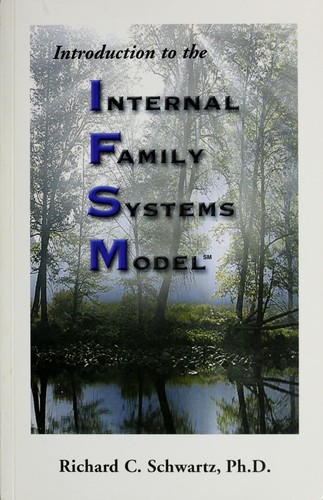
Internal family systems therapy
≈ From memoryThe human psyche is not a singular 'self' but a multi-centered system of internal 'parts'—including protectors, firefighters, and wounded children—that can be healed by fostering a leadership of the 'Self'.
In one sentence
Humanity is composed of multiple internal "sub-personalities" or parts that manage our internal environment, and mental health is achieved when the "Self" (the core essence of our being) learns to lead these parts rather than being hijacked by them.
Why read this (and who it's for)
Most psychological models treat "personality" as a monolithic thing. Internal Family Systems (IFS) argues that your "personality" is actually a complex ecosystem of competing voices. This book is for anyone who feels "split"—the person who wants to be healthy but keeps self-sabotaging, or the person who feels like they have a "mean" inner critic they can't silence. After reading, you will be able to identify your internal parts, recognize the protective roles they play, and stop the internal "civil war" that leads to anxiety, depression, and burnout.
The big idea
Schwartz argues against the "monistic" view of the mind. Instead, he proposes a Multiplicity of Mind model: we are all composed of various "parts" (sub-personalities) that develop in response to our environment, particularly during childhood. These parts are not "bad"; they are functional. They are designed to help us survive.
The central tragedy of the human experience, according to Schwartz, is that we often become "blended" with our protectors. For example, if a part of you becomes so loud that it takes over your entire identity (e.g., "I am a perfectionist"), you lose access to your Self—the seat of your trueity, clarity, and compassion. Healing happens when we learn to "unblend" from these parts, acknowledge their hard work in keeping us safe, and allow the Self to lead the system toward harmony.
Key ideas
The Self
- What it is — The Self is the core of who we are: the seat of our inherent qualities like curiosity, calm, joy, and confidence. It is not a "part" of us; it is the "container" in which all parts reside.
- Why it matters — When we are connected to the Self, we can handle any internal conflict without being overwhelmed. When we are disconnected, we become slaves to our internal parts' reactions.
- In the book — Schwartz describes the Self as the "true" human experience, which is often buried under the noise of our internal protectors.
The Protectors (Managers and Firefighters)
- What it is — These are parts that step in to handle our internal environment. Managers work to keep us safe by planning, achieving, and controlling; Firefighters react to intense emotional pain by numbing out, overeating, or acting out.
- Why it matters — Understanding that your "bad habits" are actually protective strategies changes your relationship with yourself from shame to curiosity.
- In the book — He distinguishes between the "Manager" (who tries to prevent feelings from arising) and the "Firefighter" (who tries to extinguish feelings once they explode).
The Exiles
- What it is — These are the wounded parts of us—the "inner children"—that were hurt, shamed, or rejected in the past. To protect us from the pain of these memories, the system "exiles" them into the subconscious.
- Why it matters — Exiles are the root of our deepest emotional wounds. They are not "gone"; they are just hidden. Healing requires us to visit them safely without being overwhelmed by their pain.
- In the book — Schwartz explains that when an Exile is "triggered," a Firefighter will often step in to numb the pain before we even realize what happened.
The 8 C's of Self
- What it is — The Self is characterized by eight distinct qualities: Calmness, Curiosity, Clarity, Confidence, Compassion, Creativity, Courage, and Connectedness.
- Why it matters — These are the "litmus tests" for whether you are in your Self. If you are feeling judgmental, you are likely blended with a part. If you are curious, you are likely in your Self.
- In the book — Schwartz uses these as a diagnostic tool to help clients identify when they are "blended" with a part.
The Role of Blending
- What it is — Blending occurs when a part's voice becomes so loud that it captures our entire consciousness. We think "I am angry," when in reality, a "part" of us is feeling angry.
- Why it matters — Blending is what prevents us from seeing our internal system clearly. It creates the illusion of a single, conflicted personality.
- In the book — He illustrates how a "perfectionist" part can blend so much that the person can no longer see their own creative desires.
The Protective Role of "Symptoms"
- What it is — Symptoms like anxiety, depression, or addiction are not the "problem"; they are the solutions created by your parts to protect you from a perceived threat.
- Why it matters — This shifts the goal of therapy from "fixing a broken person" to "negotiating with a protective system."
- In the book — He argues that the "anxious" part is actually trying to keep you safe from a danger it perceives in the world.
The Internal Family System (IFS) Model
- What it is — A map of how parts interact: some parts protect other parts, some parts are "burden-bearers," and some are "witnesses."
- Why it matters — It allows you to see your internal life as a community. You can talk to your parts, ask them what they want, and offer them appreciation.
- In the book — He describes the system as a "family" of parts that need to be harmonized.
Frameworks & tools
The 6 F's of IFS (The Process of Accessing Parts)
This is the foundational method for identifying and interacting with internal parts.
- Find: Identify where you feel the part in your body (e.g., a tightness in the chest, a voice in the head).
- Focus: Turn your attention toward that sensation. Become aware of it without trying to change it.
- Flesh it out: Visualize the part. What does it look like? Does it have a shape, a color, or a face?
- Feel toward: Notice how you feel toward the part. If you feel annoyed or scared of it, that is another part (a protector) trying to shield you. You must find a part that feels curious or calm.
- Facilitate: Ask the part what it wants, what it's afraid of, and what it needs from you.
- Focus on the Fear: Ask the part: "What are you afraid would happen if you stopped doing this job?"
The "Unblending" Protocol
Use this when you feel overwhelmed by an emotion or a compulsive behavior.
- Acknowledge: Say, "A part of me feels [anxious/angry/judgmental]."
- Identify the Role: Ask yourself, "What is this part trying to protect me from?"
- Create Space: Imagine yourself as the "Self" observing the part. Visualize a little bit of space between "You" and the "Part."
- Appreciate: Tell the part, "I see how hard you've been working to keep me safe."
- Negotiate: Ask the part, "How can we work together so you don't have to do all this work alone?"
Memorable examples & stories
The "Inner Critic" as a Protector
Schwartz describes a client who was devastated by their harsh inner critic. Through IFS, the client discovered that the critic was actually a "Protector" that was trying to keep them from being criticized by others. By acknowledging the critic's intent to keep them safe, the critic began to relax. Lesson: Your harshest internal voices are often trying to protect you from external pain.
The Firefighter and the "Binge"
A client who struggled with binge-eating was shown to have a "Firefighter" part. When the client felt a tiny bit of social anxiety (a "trigger"), the Firefighter would immediately launch a binge to "put out" the fire of emotional pain. Lesson: Addictive behaviors are often emergency responses to overwhelming internal emotions.
The "Protector of the Protector"
Schwartz describes a situation where a client tried to look at their anger, but felt a wave of "judgment" about their anger. He explained that the "judgment" was actually a Protector trying to protect the client from the intensity of the anger. Lesson: You cannot access a part until you find a "Self-led" part that is willing to witness it.
Key quotes
- "The Self is the seat of our trueity, clarity, and compassion."
- "Parts are not 'bad.' They are protectors. They are doing the best they can with the information they have." (Paraphrased)
- "The goal of IFS is to help the Self lead the system, so that the parts can finally rest." (Paraphrased)
- "When we are blended with a part, we lose access to our own inner wisdom." (Paraphrased)
How to apply it
This week
- The "Part" Labeling Exercise: Every time you feel a strong emotion (anger, anxiety, jealousy), stop and say, "A part of me feels [emotion]." Do not say "I am [emotion]."
- The 8 C's Check-in: When you feel overwhelmed, ask: "Am I feeling curious? Am I feeling calm? Or am I blended with a part?"
- The Protector Appreciation: Identify one "annoying" habit (like procrastination). Instead of criticizing yourself, say, "I see that you're trying to protect me from something. Thank you for trying to keep me safe."
Ongoing
- Practice "Self-Led" Observation: When a "Protector" (like a perfectionist) starts yelling, visualize yourself as the "Self" watching it. Ask the part, "What are you afraid would happen if you stopped?"
- The "Internal Family" Dialogue: Spend 5 minutes a day in meditation, imagining your internal parts as a family. Ask them how they are doing and what they need from you today.
Common pitfalls
- The "Self-Help" Trap: Many people try to use IFS as a "technique" to fix their problems. IFS is a relational model. It requires you to actually listen to the parts, not just use the labels to categorize your flaws.
- Over-Intellectualizing: It is easy to understand the theory of parts, but the experience of parts is felt in the body. If you stay in your head, you won't "unblend."
- The "Fix-it" Mentality: You cannot "fix" a part. You can only negotiate with it and help it feel safe enough to step down. If you try to force a part to change, it will only fight harder.
Connects to
- Internal Family Systems (Schwartz): The foundational model.
- Internal Family Systems (Schwartz) vs. Schema Therapy: While Schema Therapy looks at "schemas" (patterns of thinking), IFS looks at "parts" (active sub-personalities).
- Internal Family Systems (Schwartz) vs. ACT (Acceptance and Commitment Therapy): Both involve observing internal experiences without judgment, but IFS provides a specific "map" of the internal family.
If you remember only three things
- You are not your thoughts, emotions, or behaviors; you are the "Self" that observes them.
- Your "symptoms" (anxiety, perfectionism, etc.) are actually protective parts trying to keep you safe from old wounds.
- Healing happens when you stop fighting your parts and start listening to them with curiosity and compassion.
Internalize it
-
Reflection questions
- Which part of my personality is the loudest right now? What is it trying to protect me from?
- If my "anxiety" had a face and a voice, what would it look like and what would it say it's afraid of?
- When I am "blended" with a part, how does my body feel? (Tightness, heat, racing heart?)
- How would my life change if I treated my "inner critic" as a tired protector instead of an enemy?
-
Flashcards Q: What is the "Self" in IFS? A: The core of our being, characterized by the 8 C's (Calm, Curiosity, Clarity, Confidence, Compassion, Creativity, Courage, Connectedness). Q: What is the difference between a Manager and a Firefighter? A: Managers plan and control to prevent feelings; Firefighters react to numb out feelings once they've erupted. Q: What are "Exiles"? A: Wounded parts of the self that were hidden away to protect us from the pain of past trauma. Q: What does "blending" mean? A: When a part's voice becomes so loud that it takes over our entire consciousness, making us think we are that part. Q: How do you "unblend" from a part? A: By noticing the part, identifying its role, and asking it what it needs from you with curiosity and compassion. Q: What is the primary goal of IFS? A: To help the Self lead the internal system so that all parts can find harmony and rest.