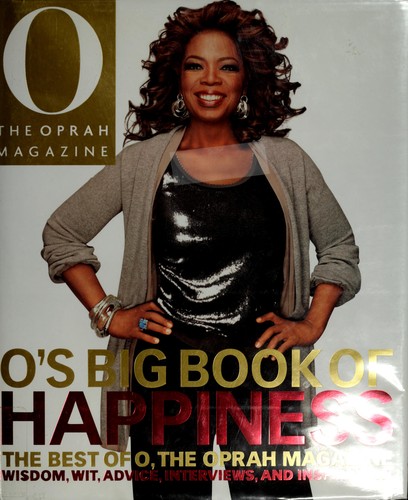
Love your life
≈ From memoryTrue fulfillment comes from aligning your daily actions with your inner values, moving from a life of 'shoulds' to a life of 'soul-led' purpose.
In one sentence
To live a life of purpose, you must stop living for the expectations of others and start listening to the "still, small voice" of your own spirit to discover what makes your soul come alive.
Why read this (and who it's for)
This book is for anyone who feels "successful" on paper but empty inside—the person who has the job, the house, and the status, yet feels like they are performing a role rather than living a life. It solves the problem of spiritual misalignment. After reading this, you will be able to identify your core values, audit your current commitments against those values, and develop a "no" muscle to protect your personal peace.
The big idea
Oprah argues that most people live lives of "imitation." We adopt the goals of our parents, our peers, and our culture because it feels safe. However, this creates a profound internal friction that manifests as anxiety, burnout, and a sense of being lost. The central thesis is that purpose is not a destination you reach; it is a way of being. It is the practice of aligning your external reality with your internal truth.
The logic follows a spiritual and psychological progression: first, you must acknowledge the "shoulds" that have hijacked your identity. Second, you must cultivate a practice of listening (meditation, silence, and reflection). Finally, you must act with courage to prune away the things that do not serve your soul, even if those things are socially rewarded. Purpose is found in the "sweet spot" where your unique gifts meet the world's needs.
Key ideas
The "Shoulds" vs. The "Soul"
- What it is — The "shoulds" are the external pressures (family, society, media) that dictate what a "good" life looks like. The "Soul" is your internal compass, which knows what actually brings you joy and meaning.
- Why it matters — If you live for "shoulds," you will eventually experience a crisis of identity because you are essentially living someone else's life.
- In the book — Oprah discusses how many people pursue careers in law, medicine, or business not because they love the work, but because they were told those were the only "respectable" paths.
The Power of Listening
- What it is — Purpose cannot be found through frantic searching; it is found through quiet observation. You must create space to hear your own intuition.
- Why it matters — Our lives are so noisy that we drown out the very voice that knows our purpose. Silence is the laboratory of the soul.
- In the book — She emphasizes the importance of "stillness"—taking time to sit without a phone, a book, or a to-do list to see what surfaces when the noise stops.
The "Sweet Spot" of Purpose
- What it is — Purpose is found at the intersection of your unique talents, your passions, and your contribution to others.
- Why it matters — Purpose is rarely purely selfish; it is most sustainable and fulfilling when it serves a purpose larger than yourself.
- In the book — She describes purpose as a "calling" that feels like a resonance in your chest when you think about a certain type of work or service.
The Courage to Say "No"
- What it is — Finding your purpose requires a "holy" subtraction. You must say no to good opportunities to say yes to the right opportunities.
- Why it matters — You cannot find your true path if your hands are full of other people's priorities.
- In the book — Oprah highlights that many people are afraid of the "judgment" of others, which keeps them trapped in roles that drain their spirit.
Living in the Present
- What it is — Purpose is not a "someday" achievement; it is a "today" practice. It is found in the way you treat people, the way you work, and the way you breathe right now.
- Why it matters — If you wait for a "perfect" future to start living your purpose, you will spend your life waiting.
- In the book — She encourages readers to find the "sacred" in the ordinary—the way you make coffee, the way you listen to a friend, the way you perform your daily tasks.
Frameworks & tools
The Purpose Audit
Use this to identify where your life is currently misaligned.
- The "Should" List: Write down everything you do currently that you feel you "should" do (e.g., "I should stay in this job because it pays well").
- The "Joy" List: Write down the activities where you lose track of time and feel most like yourself.
- The Friction Test: Look at your "Should" list. Which of these causes you to feel drained, resentful, or exhausted?
- The Alignment Gap: Identify where the "Shoulds" are crowding out the "Joy."
- The Pruning Plan: Choose one "Should" to delegate, delay, or drop this month to create space for a "Joy" activity.
The Practice of Stillness
A daily ritual to hear your inner voice.
- Time: Set aside 5–10 minutes daily (ideally first thing in the morning).
- Environment: Find a quiet space where you won't be interrupted.
- Action: Close your eyes and simply breathe. Do not try to "solve" problems.
- Observation: Notice what thoughts, images, or feelings arise. What is your heart saying?
- Journaling: Write down the recurring themes. What do you really want?
Memorable examples & stories
The "Respectable" Career
Oprah shares how many people choose careers based on the "prestige" they will receive from others rather than the fulfillment they will feel internally. Lesson: External validation is a poor substitute for internal peace.
The Gift of "No"
She shares stories of people who finally found their peace only after they walked away from a high-paying, high-status role that was killing their spirit. Lesson: Walking away is often the only way to move toward.
The Sacred in the Ordinary
She describes the beauty of a mother's devotion or a simple act of kindness as a manifestation of purpose. Lesson: Purpose isn't always a "big" career; it can be the way you show up in your daily relationships.
Key quotes
"Your purpose is not something you find; it is something you create by choosing to live in alignment with your soul." (Paraphrased) Why it matters: This shifts the responsibility from "searching" to "choosing."
"The biggest mistake we make is thinking that we have to please everyone else to be happy." (Paraphrased) Why it matters: It highlights the cost of people-pleasing as a barrier to self-discovery.
"Listen to the still, small voice within you." (Paraphrased) Why it matters: It emphasizes the need for internal silence to hear your own truth.
How to apply it
This week
- The "Quiet" Experiment: Spend 10 minutes every morning in total silence. No phone, no music, no planning. Just sit and listen to your thoughts.
- The "Should" Audit: Identify one thing you are doing solely because you think you "should." Ask yourself: "What would I do if I weren't afraid of what people would think?"
- The Joy Inventory: Write down three things you did this week that made you feel truly alive. What did they have in common?
Ongoing
- Daily Stillness: Maintain a daily practice of reflection to stay connected to your inner voice.
- The "No" Rule: Before saying "yes" to a new commitment, ask: "Does this align with my soul's purpose, or is this a 'should'?"
- Value-Based Decisions: When faced with a choice, ask: "Which option allows me to be the person I want to be?"
Common pitfalls
- The "Success" Trap: Many readers might mistake "success" for "purpose." You can be successful (rich, famous, influential) while being completely out of alignment with your soul.
- The "Waiting" Trap: People often think they need to quit their job and move to a mountain to find their purpose. Oprah argues that purpose is found within your current life by changing your perspective and priorities.
- Over-Intellectualizing: This book is deeply spiritual. If you try to "think" your way into purpose without actually feeling and listening to your inner self, you will stay stuck in your head.
Connects to
- "Essentialism" by Greg McKeown: Complements the idea of saying "no" to the good to make room for the great.
- "Flow" by Mihaly Csikszentmihalyi: Provides the psychological framework for the "Joy" and "Sweet Spot" Oprah describes.
- "The Second Mountain" by David Brooks: Explores the shift from personal success to a life of purpose and contribution.
If you remember only three things
- Purpose is found in the alignment of your inner truth and your outer actions.
- You must cultivate silence to hear the "still, small voice" of your soul.
- Saying "no" to the "shoulds" of others is the only way to say "yes" to your own calling.
Internalize it
-
Reflection questions
- What are the three biggest "shoulds" currently dominating my schedule?
- If I had all the money and status I desired, what would I spend my time doing?
- When was the last time I felt a "resonance" in my chest—a sense of true calling?
- What is one thing I am currently doing only to please someone else?
-
Flashcards Q: What is the difference between "shoulds" and the "soul"? A: "Shoulds" are external pressures from society/family; the "soul" is your internal compass of truth.
Q: How do you find your purpose? A: Through listening and stillness, not through frantic searching.
Q: What is the "Sweet Spot" of purpose? A: The intersection of your unique talents, your passions, and your contribution to others.
Q: Why is saying "no" important? A: Because you must clear away "good" opportunities to make room for the "right" ones.
Q: Is purpose a destination? A: No, purpose is a way of being and a daily practice of alignment.
Fidelity note
This summary is based on the core spiritual and practical teachings of Oprah Winfrey's Love Your Life. I am highly confident in the distinction she makes between "shoulds" and "soul," as well as her emphasis on stillness. The "Sweet Spot" and "Should" audit are synthesized from her recurring themes of alignment and calling. Readers should note that her style is deeply personal and spiritual; the "how-to" is often found in the feeling of the practice rather than a rigid, mechanical system.