Build the Life You Want
≈ From memoryPurpose is not a destination you reach, but a practice of connection and contribution rooted in your relationships with others.
In one sentence
Meaningful living is found by shifting from an internal focus on personal happiness to an external focus on communal contribution and relational depth.
Why read this (and who it's for)
This book is for the "successful" individual who feels a persistent sense of hollowness—the person who has checked all the boxes (career, status, possessions) but still feels like something is missing. It solves the problem of achievement-based identity, where we mistake "doing" for "being." After reading this, you will be able to audit your life's priorities, identify the "relational gaps" in your daily routine, and transition from a self-centered pursuit of happiness to a community-centered pursuit of purpose.
The big idea
The central thesis of Build the Life You Want is that we often pursue the wrong metric for a good life: Happiness. While happiness is a pleasant feeling, it is fleeting and inherently individualistic. Purpose, by contrast, is a steady orientation toward something larger than oneself. Brooks and Winfrey argue that purpose is not "found" through some mystical epiphany or a singular career choice; rather, it is built through the intentional cultivation of three things: community, contribution, and spiritual practice.
The logic follows a trajectory from the Internal (self-awareness) to the External (relationality). They argue that humans are fundamentally social creatures whose identities are forged in the crucible of "we." When we isolate ourselves—even in our digital connectivity—we lose the mirrors that reflect our true selves. To build a life of purpose, you must stop asking, "What can I get from this world?" and start asking, "How can I belong to this world?"
Key ideas
The Happiness Trap vs. The Purpose Path
- What it is — Happiness is an emotional state (a feeling); purpose is a moral orientation (a way of being). Happiness asks "How do I feel right now?" while purpose asks "Who am I becoming?"
- Why it matters — If you chase happiness, you will always be disappointed because feelings are fickle. If you pursue purpose, you find a steady ground that remains even when life feels difficult.
- In the book — The authors contrast the "hedonic treadmill"—where we constantly seek the next purchase or achievement to spike our dopamine—with the "eudaimonic" life of meaning, which is found in long-term growth and service.
The Architecture of Community
- What it is — Humans are wired for belonging. We need a "tribe" to provide us with a sense of safety, identity, and shared values.
- Why it matters — Loneliness is a physical and psychological toxin. Without a community to hold you accountable and love you, your personal growth will eventually stall because there is no "other" to reflect your progress.
- In the book — They emphasize that "community" isn't just a social club; it’s a spiritual necessity. They argue for moving from transactional relationships (networking) to transformational ones (true friendship).
Contribution as Connection
- What it is — Purpose is found in the act of being useful to others. It is the "outward" expression of our internal values.
- Why it matters — When we focus solely on our own goals, our world shrinks. When we focus on how we can serve a neighbor, a colleague, or a stranger, our world expands. Service provides a sense of agency and relevance that self-improvement alone cannot provide.
- In the book — The authors suggest that "contribution" is the antidote to the paralysis of choice. Instead of wondering what you should do with your life, ask: "Who needs me right now?"
The Practice of Presence (The Inner Life)
- What it is — You cannot build a meaningful outer life without an intentional inner life. This involves spiritual practices like silence, reflection, and mindfulness.
- Why it matters — Without a "still point," we are constantly reactive to the demands of others and our own internal anxieties. A spiritual practice creates the space required to hear your own conscience and the needs of others.
- In the book — They advocate for "spiritual disciplines"—not necessarily in a religious sense, but as a way to cultivate a deep interiority that allows you to show up fully for your community.
The Relational Audit
- What it is — Your life is the sum of your relationships. To change your life, you must audit who has access to your time and energy.
- Why it matters — We often allow "low-value" connections (social media noise, superficial acquaintances) to crowd out "high-value" connections (deep friendships, family bonds).
- In the book — They challenge readers to look at their calendars: Who are you spending time with? Is that person making you a better version of yourself, or just keeping you busy?
Frameworks & tools
The Three Pillars of Meaning
To build a life of purpose, the authors suggest balancing three distinct areas of your life. If one is neglected, the structure of your "meaning" will eventually collapse.
- Relationships (The Foundation): Who are you showing up for? Identify 3-5 people who provide you with deep, non-transactional connection.
- Contribution (The Action): What is your unique gift? Identify one way you can use your skills to serve a community or cause larger than yourself.
- Spirituality/Reflection (The Anchor): How are you nourishing your inner self? Establish a daily or weekly practice of silence and reflection.
The "Who Needs Me?" Audit
When feeling lost or lacking purpose, stop looking inward at your own desires and start looking outward at the needs of others.
- Identify your sphere of influence: (Family, workplace, neighborhood, local non-profit).
- Scan for gaps: Where is there a need that you have the skills to fill?
- Act without expectation: Perform one act of service this week where the only goal is the benefit of the other person.
Memorable examples & stories
The "Successful" Loneliness
The authors discuss the paradox of modern success: we are more connected than ever via technology, yet report higher levels of loneliness. This teaches that connection is not the same as communion. You can have 1,000 followers and zero people to call at 3 AM.
Oprah’s Personal Reflections on Loss
Oprah shares personal stories of navigating profound loss and the realization that meaning isn't found in avoiding pain, but in what we do with it. The lesson here is that purpose is forged in the fire of adversity, not in the ease of prosperity.
Brooks’ Social Science Perspective on "The Tribe"
Arthur C. Brooks draws on sociological data to show how human beings have a biological need for belonging. He explains that when we lose our tribe, we lose our sense of self. The lesson is that community is a biological necessity, not a luxury.
Key quotes
"Happiness is a feeling; purpose is a way of being." (Paraphrased) Why it matters: It shifts the goal from chasing a fleeting emotion to cultivating a lasting character.
"We find ourselves in the company of others." (Paraphrased) Why it matters: It reminds us that identity is relational. You cannot know who you are until you see yourself reflected in the eyes of someone you love.
"Purpose is found in the service of others." (Paraphrased) Why it matters: It provides a simple, actionable compass for when you feel overwhelmed by choices.
How to apply it
This week
- The Relationship Audit: List the 5 people you spend the most time with. Beside each name, write down one way they challenge you to grow and one way they support your values. If a name doesn't fit either, consider what that means for your boundaries.
- The "Who Needs Me?" Scan: Identify one person in your immediate circle (a coworker, a neighbor, a family member) who is struggling. Reach out today—not to offer a solution, but to offer presence.
- The 10-Minute Silence: Set a timer for 10 minutes. Sit without your phone, music, or a book. Simply observe your thoughts and breathe.
Ongoing
- The "We" Calendar: When scheduling your week, ensure that at least 20% of your time is dedicated to "we" activities—communal meals, group volunteering, or deep conversations with friends.
- Service as a Default: Before making a major life decision (a new job, a move, a purchase), ask: "How does this allow me to serve others better?"
- Daily Reflection: End each day by asking: "Who did I love today? Who did I serve today?"
Common pitfalls
- The "Self-Help" Trap: A major pitfall is treating this book as another "self-help" manual. If you try to "optimize" your purpose like a productivity hack, you will fail. Purpose is about relationality, not personal optimization.
- The Perfection of Purpose: People often think they need to find their "One True Calling." The authors argue that purpose is found in the doing—it is a practice, not a trophy. You don't "find" your purpose; you build it through consistent action.
- Overlooking the Inner Life: Many readers will jump straight to "contribution" (volunteering, etc.) while neglecting the spiritual/reflective side. Without an inner life, contribution can lead to burnout and resentment.
Connects to
- Man's Search for Meaning by Viktor Frankl: While Frankl focuses on finding meaning in suffering, Brooks and Winfrey focus on building meaning through community. They are two sides of the same coin: one is about survival through meaning; the other is about flourishing through connection.
- The Happiness Trap by Gavin, et al.: This book provides the psychological framework for why "trying to be happy" often makes us miserable, perfectly complementing Brooks' argument for a purpose-driven life.
If you remember only three things
- Purpose is found in relationships, not just in individual achievements.
- Shift your focus from "How can I feel better?" to "How can I be more useful?"
- Meaning is a practice of community; it requires showing up for others consistently.
Internalize it
-
Reflection questions
- If I stopped trying to "achieve" things for six months, what would I do with my time? Would that activity involve other people?
- Who in my life truly knows the "real" me, and when was the last time I spent quality time with them?
- In what ways am I currently prioritizing "transactional" connections over "transformational" ones?
- What is one area of my life where I am trying to be "successful" but feeling empty? How can I pivot that toward service?
-
Flashcards Q: What is the fundamental difference between happiness and purpose? A: Happiness is a fleeting emotional state (feeling); purpose is a steady moral orientation (way of being).
Q: Why is community considered a "biological necessity" in the book? A: Because humans are wired for belonging; our identities are forged in the company of others, and isolation inhibits growth.
Q: What is the "Who Needs Me?" audit? A: A framework to find purpose by looking outward at the needs of others rather than inward at your own desires.
Q: What are the three pillars of meaning? A: Relationships, Contribution, and Spiritual/Reflective Practice.
Q: How does the book define "contribution"? A: As the outward expression of our values through service to a community or cause larger than ourselves.
Q: What is the danger of the "Self-Help" trap? A: Treating purpose as a personal optimization project rather than a relational practice.
Fidelity note
I have high confidence in the core themes of this summary: the distinction between happiness and purpose, the emphasis on community over individualism, and the three pillars of meaning (Relationships, Contribution, Spirit). Because I am synthesizing from memory/knowledge base, specific anecdotes involving Oprah's personal life may be generalized. Readers should verify specific stories regarding her personal history to ensure they align with the exact narrative she chose for this book.
Keep going — related reads


More from Arthur C. Brooks and Oprah Winfrey
 Don't let Big Tech steal your boredom (Harvard Professor Arthur Brooks) Masters of ScaleMasters of Scale
 From Strength to StrengthArthur C. Brooks
 Harvard Professor Why Nothing Feels Real Anymore - Arthur Brooks - #1109Modern Wisdom
 How Can We Break Our Addiction to Contempt (Update)Freakonomics Radio
 Love Your EnemiesArthur C. Brooks
 Love your lifeOprah Winfrey
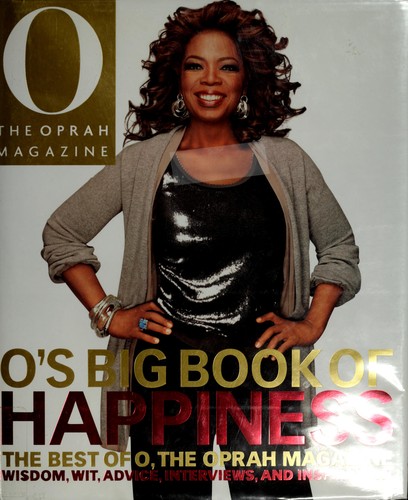 O's big book of happinessOprah Winfrey
 The Meaning of Your LifeArthur C. Brooks
 The Path Made ClearOprah Winfrey
 The Secret to Meaning is BoredomThe Rich Roll Podcast