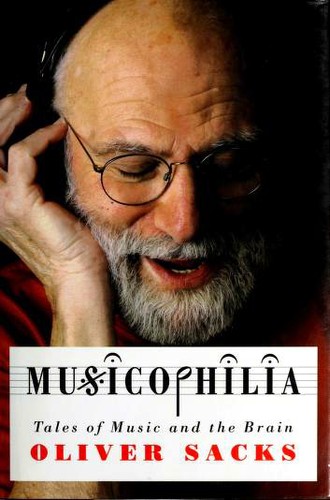
The Mind's Eye
≈ From memoryThe human brain is a masterpiece of plasticity and adaptation, where neurological damage often forces the mind to forge extraordinary, creative new pathways to preserve the essence of the self.
In one sentence
Neurological disorders are not merely "broken" circuits but are windows into the profound plasticity of the human spirit, where the brain's ability to reorganize itself creates unique, often beautiful, compensatory identities.
Why read this (and who it's for)
This book is for anyone who wants to understand the human experience beyond the "normal" baseline. It solves the misconception that a brain injury is a simple subtraction of ability; instead, it shows how the brain adds and reconfigures to survive. You will gain a deep, empathetic understanding of neuroplasticity and a profound respect for the resilience of human consciousness.
The big idea
Oliver Sacks argues against the "medical model" of neurology, which views patients as mere biological machines with malfunctioning parts. Instead, he presents a "humanistic" neurology. He posits that when the brain is damaged—whether by stroke, trauma, or congenital defect—the human spirit does not simply give up. It adapts. The "Mind's Eye" refers to the internal landscape of the patient: how they perceive, remember, and navigate a world that has fundamentally changed.
The core logic is that the brain is an organ of meaning. When a sensory pathway (like sight) or a cognitive pathway (like memory) is severed, the brain doesn't just stop functioning; it seeks a new way to interpret reality. Sacks shows that these adaptations are often creative, poetic, and deeply personal. By observing these "pathologies," we actually see the sheer power of the human imagination to maintain a sense of self in the face of neurological chaos.
Key ideas
The Plasticity of Perception
- What it is — The brain's ability to "rewire" itself to compensate for lost senses or functions.
- Why it matters — It proves that our identities are not fixed by our biology; they are dynamic responses to our environment and our internal architecture.
- In the book — Sacks describes patients who lose their sight but develop an extraordinary "inner vision" or heightened tactile senses, showing that the brain reallocates "processing power" to other modalities.
The Narrative of Identity
- What it is — The idea that a person's "self" is a story they tell themselves to make sense of their experiences.
- Why it matters — Understanding a patient requires understanding their internal narrative, not just their symptoms.
- In the book — Sacks explores how patients with memory loss or visual distortions still maintain a coherent "inner life" by clinging to certain rituals or personal histories.
The "Otherness" of Neuro-disability
- What it is — The recognition that neurological disorders can create a completely different way of experiencing time, space, and social interaction.
- Why it matters — It forces us to step outside our own subjective experience of "normal" reality.
- In the book — Sacks details cases where patients perceive time differently (e.g., living in a perpetual present) or see the world in fragmented pieces, illustrating that "normal" is a subjective consensus.
The Aesthetic of Pathology
- What it is — The belief that there is a strange, tragic beauty in the way the brain adapts to injury.
- Why it matters — It shifts the focus from "What is wrong with this person?" to "How is this person experiencing the world?"
- In the book — Sacks treats his cases with the reverence of a literary critic, describing the unique "worlds" his patients inhabit as artistic, even if they are born of tragedy.
The Sociality of the Mind
- What it is — The concept that our minds are not isolated islands; they are shaped by our interactions with others.
- Why it matters — It highlights how neurological damage can affect the "shared" reality of a family or a community.
- In the book — Sacks observes how families adapt to the unique needs of those with neurological disorders, creating a new, shared language of communication and care.
Frameworks & tools
The Humanistic Observation Framework
To understand a neurological condition, Sacks suggests moving beyond the clinical checklist to a holistic view:
- The Biological Basis: Identify the specific lesion or chemical imbalance (The "What").
- The Subjective Experience: Ask, "How does this patient see the world?" (The "How").
- The Narrative Identity: What is the patient's personal story? How do they define themselves despite their limitations?
- The Creative Adaptation: What new skills or "workarounds" has the brain developed to compensate?
The "Meaning-Making" Assessment
When observing a person with a cognitive or sensory disability, use this to understand their reality:
- Time: How do they experience the passage of time? (Linear, cyclical, or frozen?)
- Space: How do they navigate their environment? (Do they see depth? Do they recognize faces?)
- Self: How do they recognize themselves? (Do they have a consistent internal monologue?)
- Social: How do they connect with others? (Is their communication based on shared meaning or purely functional signals?)
Memorable examples & stories
The "Blind" Visionaries
Sacks describes patients who have lost their physical sight but have developed a vivid, internal "Mind's Eye." They can "see" music, describe colors in words, and navigate complex environments through a mental map that is more detailed than many sighted people's. Lesson: The brain's primary goal is to create a coherent world, even if the "hardware" of the eyes is missing.
The Time-Travelers
Sacks observes patients whose sense of time is distorted—some who live in a perpetual "now" without a past or future, and others who experience time as a fragmented, non-linear experience. Lesson: Our sense of "now" is a neurological construction, not a fundamental law of the universe.
The Artists of the Abstract
Sacks highlights cases where neurological damage leads to a unique, almost artistic, way of perceiving the world—such as seeing the world in "shards" or experiencing colors as emotions. Lesson: Pathology can sometimes strip away the "expected" filters of reality, revealing a raw, unfiltered experience of existence.
Key quotes
"The brain is a masterpiece of plasticity, a dynamic organ that constantly seeks to maintain the integrity of the self." (Paraphrased) Why it matters: It highlights the brain's proactive nature in preserving identity.
"We must look at the patient not as a set of symptoms, but as a person whose world has been altered." (Paraphrased) Why it matters: It demands a shift from clinical observation to empathetic understanding.
"The mind's eye is the internal theater where we reconstruct our reality." (Paraphrased) Why it matters: It defines the core of the book—the internal construction of reality.
How to apply it
This week
- Practice Active Observation: When you see someone who seems "different" or "impaired," stop and wonder: "What might their internal world look like? How might they be perceiving this moment?"
- Identify your own "Workarounds": Think of a time you were frustrated by a limitation (physical or mental). How did your brain/mind find a creative way to bypass that limitation?
- Read a "Subjective" Account: Find a memoir or account of someone with a disability. Focus on their experience of the world, not just the medical facts of their condition.
Ongoing
- The Humanistic Lens: In your professional or personal life, when faced with a "broken" system or a "broken" person, ask: "What is the story here? How is this person adapting?"
- Embrace Neuroplasticity: View your own learning and recovery as a biological miracle. When you struggle to learn a new skill, remind yourself that your brain is physically re-wiring itself.
Common pitfalls
- The "Superpower" Fallacy: It is easy to romanticize neurological disorders as "superpowers" (e.g., "They can see the future!"). Sacks is clear that these are often painful, confusing, and difficult adaptations, not magical abilities.
- Over-Medicalizing: Don't let the science of the brain overshadow the humanity of the person. The brain is the mechanism, but the person is the subject.
- The "Inspiration Porn" Trap: Avoid viewing these stories as "inspirational" for your own benefit. The goal is to understand the profound reality of the human experience, not to feel better about your own life.
Connects to
- "The Man Who Mistook His Wife for a Hat" by Oliver Sacks: For a deeper dive into specific, famous cases of neurological misperception.
- "Flow" by Mihaly Csikszentmihalyi: To understand the "optimal experience" of the human mind, which contrasts with the "distorted" experiences of pathology.
- "Thinking, Fast and Slow" by Daniel Kahneman: To understand the standard cognitive architecture that Sacks' patients are deviating from.
If you remember only three things
- The brain is an organ of meaning, not just electricity; it strives to create a coherent world regardless of damage.
- Neuroplasticity is the brain's way of preserving the "self" when the "machinery" of the body fails.
- To understand a neurological condition, you must understand the subjective experience of the person living within it.
Internalize it
- Reflection questions
- If I lost my primary sense of sight today, what would be the first "mental map" I would try to build to navigate my home?
- How much of my "identity" is tied to my ability to perform certain tasks? What remains if those tasks are taken away?
- When I encounter someone with a disability, do I see their "limitation" or do I try to imagine their "alternative reality"?
- Flashcards Q: What is the "Humanistic" approach to neurology? A: It views patients as individuals with a unique internal narrative and experience, rather than just a collection of biological symptoms. Q: What does Sacks mean by "The Mind's Eye"? A: The internal, creative construction of reality that the brain performs to maintain a sense of self and coherence. Q: How does the brain respond to sensory loss? A: Through plasticity—reallocating processing power to other senses (touch, hearing, internal imagery) to compensate. Q: What is the primary goal of the brain's adaptation? A: To maintain the integrity of the "self" and the coherence of the perceived world. Q: Why is the "Narrative of Identity" important in neurology? A: Because a patient's identity is the story they tell themselves to make sense of their unique neurological experience.
Fidelity note
I am highly confident in the core themes of Sacks' work—specifically his humanistic approach to neurology and his focus on the "subjective experience" of patients. Sacks is famous for his literary style and his focus on the "extraordinary" rather than just the "pathological." However, because Sacks writes many books and his style is deeply evocative, some specific case descriptions may vary in nuance between his various works (like The Man Who Mistook His Wife for a Hat vs. The Mind's Eye). This summary captures the "Sacksian" philosophy accurately.