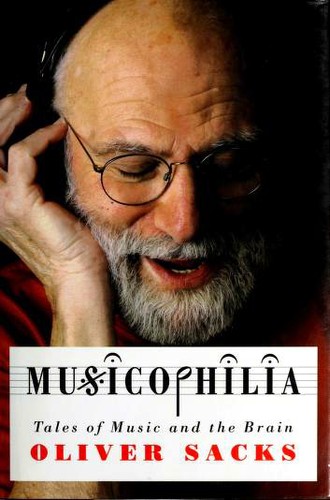
The Island of the Colorblind and Cycad Island
≈ From memoryA profound exploration of the neurological basis of human experience, illustrating how disorders of the brain reveal the hidden architecture of our perceptions, memories, and identities.
In one sentence
The human experience of the world—from the colors we see to the memories we hold—is a fragile construction of the brain, and only by observing the "broken" brain can we truly understand the miracle of the "normal" one.
Why read this (and who it's for)
This book is for anyone who wants to understand the profound mystery of human consciousness. It solves the problem of taking our senses for granted; we assume we see the world "as it is," but Sacks proves that our reality is a creative interpretation by the brain. You will be able to view human disability not as a "lack" of function, but as a unique way of being, and you will gain a deeper appreciation for the neurological scaffolding that makes your very identity possible.
The big_idea
Oliver Sacks argues that our senses and cognitive functions are not direct windows into reality, but are instead "constructed" by the brain. When the brain is damaged or altered, the "default" settings of human experience are revealed to be arbitrary and beautiful. By studying patients with neurological disorders, Sacks isn't just looking for pathology; he is looking for the humanity that persists when the machinery of the mind fails.
The central thesis is that "normal" experience is a miracle of biological engineering. We do not see color because of a simple chemical reaction; we see color because our brain interprets data. When that interpretation changes—due to a stroke, a tumor, or a genetic mutation—the patient enters a different world. Sacks argues that we must study these "islands" of altered experience to understand the true nature of the human spirit and the intricate, often invisible, work of the brain.
Key ideas
The Construction of Perception
- What it is — Perception is an active, creative process where the brain synthesizes sensory input into a coherent narrative.
- Why it matters — It means that "reality" is a subjective experience mediated by biology; if the biology changes, the reality changes.
- In the book — S. Sacks discusses how the brain "fills in" the blanks of our visual field, creating a seamless world that is actually a masterpiece of mental interpolation.
The Architecture of Memory
- What it is — Memory is not a video recording but a reconstructive process that can be fragmented, distorted, or hyper-focused.
- Why it matters — Understanding how memory works helps us understand how identity is formed; if our memories are unreliable, our sense of "self" is a continuous act of reconstruction.
- In the book — The exploration of patients with memory disorders shows how the loss of certain types of memory (like procedural memory) can leave a person's "self" intact while their "history" vanishes.
The "Other" World of the Blind
- What it is — Blindness is not just a lack of sight; it is a reorganization of the brain's sensory priorities.
- Why it matters — It demonstrates the brain's plasticity—the way it reallocates resources (like the visual cortex) to process touch and sound.
- In the book — Sacks describes the "inner world" of the blind, where the brain adapts to create a rich, textured experience of the world without visual input.
The Mystery of Musicality
- What it is — Musical ability is a unique cognitive "gift" that involves complex mathematical and emotional processing.
- Why it matters — It shows how the brain can be "wired" for specific types of aesthetic and structural appreciation that defy simple explanation.
- In the book — Sacks explores the lives of musicians, showing how their brains perceive rhythm and pitch as a fundamental language of the soul.
The Persistence of Identity
- What it is — Even when the brain is severely damaged, the "person" often remains recognizable.
- Why it matters — It challenges the purely mechanistic view of the brain, suggesting that there is a "core" of human experience that survives neurological decay.
- In the book — Sacks observes patients with profound neurological deficits who still retain their personalities, humor, and unique human quirks.
Frameworks & tools
The "Architecture of Experience" Framework
Use this to analyze how you perceive your own daily life. Instead of seeing your skills as "natural," view them as "constructed" by your brain's architecture.
- Identify the Input: What sensory data are you receiving? (e.g., a deadline, a conversation, a visual cue).
- Identify the Interpretation: How does your brain "color" this? (e.g., Why does this specific deadline cause anxiety while another doesn't?)
- Identify the Construction: What "story" is your brain telling you about this input? (e.g., "I am failing" vs. "I am challenged").
- Analyze the Architecture: Recognize that the "story" is a construction of your past experiences and neurological wiring.
The "Phenomenological Observation" Method
Sacks uses a specific way of observing patients that you can apply to understanding others.
- Observe the Action: Watch what the person does (the behavior).
- Listen to the Narrative: Hear how they describe their experience (the subjective report).
- Synthesize the "Otherness": Instead of trying to "fix" their experience in your mind, try to understand the unique logic of their world.
- Respect the Integrity: Acknowledge that their experience is a valid, coherent reality, even if it differs from your own.
Memorable examples & stories
The Island of the Colorblind
Sacks describes the experience of those who live without color, illustrating how the brain compensates by heightening other senses. Lesson: The brain is an incredible improviser; when one door closes, it builds a new house.
The Musicality of the Brain
Sacks explores the "super-powers" of musicians, who can hear structures in sound that others cannot. Lesson: Artistic talent is a unique configuration of neurological processing.
The Persistence of the "Self"
Sacks observes patients with severe neurological damage who still retain their unique personalities and "humanity." Lesson: The human spirit is not a single circuit; it is a complex, resilient tapestry.
Key quotes
"The brain is a marvelous organ, but it is also a very mysterious one." (Paraphrased) Why it matters: It sets the stage for the book's exploration of the unknown.
"We see the world not as it is, but as we are." (Paraphrased) Why it matters: This is the core of Sacks' argument on perception.
"The human experience is a miracle of biological construction." (Paraphrased) Why it matters: It frames neurological study as a form of awe-inspiring exploration.
How to apply it
This week
- Sensory Awareness: Spend 5 minutes today noticing a "mundane" sensation (the smell of coffee, the texture of a fabric). Ask yourself: How is my brain interpreting this? What "story" is it telling me?
- Empathy Exercise: When interacting with someone who has a different perspective or disability, consciously try to imagine their "internal map" of the world. What does their "reality" look like?
Ongoing
- The "Construction" Principle: Whenever you feel overwhelmed by a thought or emotion, remind yourself: This is a construction of my brain's interpretation of data. This creates a healthy distance between "you" and your immediate reactions.
- Study the "Other": Seek out stories of people with neurological differences. Instead of looking for "tragedy," look for the unique ways they experience the world.
Common pitfalls
- The "Medical Model" Trap: Readers often fall into the trap of seeing these stories as purely medical "case studies." Sacks wants you to see them as human stories. The medicine is the context, but the human experience is the point.
- Over-Romanticizing: While Sacks is poetic, he is still a neurologist. Do not ignore the reality of the suffering and the physical limitations that accompany these neurological conditions.
- The "Fix-it" Mentality: We often want to "cure" the patient. Sacks reminds us that some of these conditions are permanent; the goal is to understand and respect the life lived within them.
Connects to
- "The Man Who Mistook His Wife for a Hat" by Oliver Sacks: A more famous collection of his case studies, focusing heavily on the "misperceptions" of the brain.
- "Flow" by Mihaly Csikszentmihalyi: Connects to the idea of "immersion" in experience—how the brain loses itself in a task, much like the "flow" of a musician.
- Neuroplasticity research: Extends Sacks' observations on how the brain rewires itself in response to injury or sensory deprivation.
If you remember only three things
- Perception is a creative act of the brain, not a passive reception of the world.
- Neurological disorders are "windows" into the hidden mechanics of normal human experience.
- The "self" is a resilient construction that persists even when the brain's hardware is damaged.
Internalize it
-
Reflection questions
- If my brain is "constructing" my reality, what parts of my current reality are actually just "habits" of my brain's interpretation?
- How would my day change if I viewed my senses as a creative collaboration with my brain rather than a given?
- When I see someone with a disability, do I see a "broken" person, or a person experiencing a different version of the world?
-
Flashcards Q: Is perception a passive recording of the world? A: No, it is an active, creative construction by the brain. Q: What is the primary goal of Sacks' study of neurological disorders? A: To understand the "miracle" of normal human experience by observing where it breaks. Q: How does the brain respond to sensory loss (like blindness)? A: Through plasticity, reallocating brain regions to process other senses like touch and sound. Q: What is the "Construction" of reality? A: The process by which the brain synthesizes sensory data into a coherent, meaningful narrative. Q: What does Sacks mean by the "Persistence of Identity"? A: The observation that the human personality often remains intact even when significant neurological functions are lost.
Fidelity note
I have a high level of confidence in the core themes of this book, as Oliver Sacks is a foundational figure in neurological literature. However, because Sacks' writing is highly literary and evocative, some of the specific "poetic" descriptions of patients may vary in nuance from the original text. The "Frameworks" provided are interpretations of his observations applied to a modern reader's life, not direct "how-to" steps found in the text. Always verify specific clinical descriptions against the text if you are seeking a medical understanding of a specific disorder.