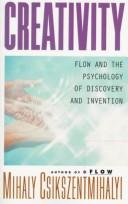
The evolving self
≈ From memoryThe self is not a fixed entity but a dynamic, evolving process of 'self-creation' that emerges through the interaction between our internal perceptions and the external world.
In one sentence
The "self" is not a static core hidden inside us; it is a continuous, creative process of selecting, interpreting, and constructing our identity through our interactions with the world.
Why read this (and who it's for)
Most people treat their personality as a "given"—something they were born with that they simply have to manage. Csikszentmihalyi argues that this view is a psychological trap that leads to passivity. This book is for anyone who feels stuck in a rut, feels like they lack a "true" self, or wants to understand the mechanics of personal growth. After reading, you will stop looking for a "hidden" self and start viewing your identity as a project of active construction.
The big idea
Csikszentmihalyi challenges the "essentialist" view of the self. Most of us believe there is a "true" self buried deep inside, like a pearl in an oyster, waiting to be discovered. He argues the opposite: the self is a process. It is a "self-creating" entity that emerges only when we engage with the world. There is no "you" without a "you-ing"—an active engagement with objects, people, and tasks.
The logic follows a developmental path: we begin as biological organisms, then become social beings, and finally, we become "self-aware" beings. However, self-awareness is not a destination; it is a feedback loop. We perceive the world, we interpret those perceptions, and those interpretations then shape how we see the world in the future. The "self" is the name we give to the ongoing story we tell ourselves about who we are based on these interactions.
Key ideas
The Self as a Process, Not a Thing
The self is not a static object; it is a dynamic flow of perceptions and interpretations. It is the "how" of our experience, not the "what." Why it matters: If you believe your self is fixed, you will feel powerless to change. If you see it as a process, you realize that every choice and interaction is a brushstroke on the canvas of your identity. In the book: The author contrasts the "Self-as-Content" (the list of traits like "I am funny") with "Self-as-Process" (the way I navigate a conversation).
The Role of Perception and Interpretation
We do not see the world as it is; we see the world as we are. Our past experiences create a filter (a "schema") through which we interpret new data. Why it matters: This explains why two people can see the same event and have different reactions. Your "self" is the unique lens through which you filter reality. In the book: He describes how our internal "maps" of the world dictate what we notice and what we ignore, creating a feedback loop where our interpretations reinforce our identities.
The Social Construction of Identity
The self is fundamentally relational. We understand who we are by seeing ourselves reflected in the eyes of others. Why it matters: It highlights why social isolation can feel like a loss of self. We need a "social mirror" to calibrate our identities. In the book: He explores how we use others as "mirrors" to confirm our roles, values, and capabilities.
The "Self-Creating" Agency
While our environment shapes us, we possess the agency to choose which parts of our experience we will prioritize. Why it matters: This is the core of personal growth. You are not just a product of your upbringing; you are the architect of your current interpretation of that upbringing. In the book: The author emphasizes that while we cannot control every external event, we can control the meaning we assign to those events.
The Integration of Experience
A healthy self is one that can integrate disparate experiences into a coherent narrative. Why it matters: Without a coherent story, our lives feel fragmented and chaotic. The "self" is the narrator that weaves our past, present, and future into a single "me." In the book: He discusses how we synthesize our various roles (parent, worker, friend) into a unified sense of identity.
Frameworks & tools
The Self-Creation Loop
Use this to understand how your identity is built and how to intentionally shift it.
- Perception: Observe a situation or a piece of information about yourself (e.g., "I failed at this task").
- Interpretation: Identify the "story" you tell yourself about that fact (e.g., "I am incompetent").
- Action: Choose a new interpretation based on a different set of values (e.g., "I am a beginner who needs a new strategy").
- Feedback: Act on that new interpretation and observe how it changes your future perceptions.
The Narrative Audit
A tool to identify where your "self" is being dictated by others rather than by your own values.
- Identify a "Fixed" Label: Write down a label you give yourself (e.g., "I'm just not a math person").
- Trace the Source: Ask, "Whose voice is this? Is it my parents? A teacher? A past failure?"
- Analyze the Utility: Does this label help me grow, or does it provide a convenient excuse for inaction?
- Rewrite the Script: Replace the label with a process-oriented statement (e.g., "I haven't mastered this specific skill yet").
Memorable examples & stories
The "Mirror" of Social Interaction
Csikszentmihalyi describes how a child learns to recognize their own face and personality by watching the reactions of their parents. The Lesson: Our identity is built on the feedback loops of our early social environment.
The Artist's Interpretation
He uses the example of how two artists might look at the same landscape and see entirely different subjects based on their internal "schemas." The Lesson: Reality is not "out there"; it is co-created by the observer's internal history.
The "Self-Concept" vs. "Self-Actualization"
He distinguishes between the "Self-Concept" (the mental image of who we are) and the actual "Self" (the active process of doing). The Lesson: Don't get stuck in the "Self-Concept"—it's a mental map, not the actual territory of your life.
Key quotes
"The self is not a thing that is found, but a process that is created." (Paraphrased) Why it matters: It shifts the focus from discovery to creation.
"We see the world not as it is, but as we are." (Paraphrased) Why it matters: It highlights the power of our internal filters.
"The self is a self-creating entity that emerges through the interaction of the individual with the world." (Paraphrased) Why it matters: It emphasizes the necessity of action for identity formation.
How to apply it
This week
- The Narrative Audit: Identify one "fixed" label you've used to describe yourself this week (e.g., "I'm so disorganized"). Write down why you believe that is true and then write a "process" alternative (e.g., "I am currently struggling to manage my priorities").
- The Observation Log: For one day, notice how many times you interpret a neutral event as a personal failure or success. Note the "story" you told yourself in the moment.
Ongoing
- Active Interpretation: Whenever you experience a setback, pause before labeling it. Ask: "What is the most growth-oriented way to interpret this event?"
- Relational Reflection: Periodically check in with your "social mirrors." Are the people you spend time with reflecting the person you want to become, or the person you used to be?
Common pitfalls
- The Trap of Over-Analysis: One might spend so much time analyzing their "self" that they stop doing anything. Remember: the self is a process of doing.
- The "True Self" Fallacy: Many readers will still look for a "hidden" self. Csikszentmihalyi is adamant: there is no hidden self. If you stop acting, the self stops being "created."
- Over-Reliance on Interpretation: While interpretation is key, it must be grounded in reality. You cannot simply "think" yourself into a new reality without taking actions that provide new data for your brain to interpret.
Connects to
- Flow (Csikszentmihalyi): This book provides the psychological foundation for Flow. You cannot achieve flow without a clear sense of self and a clear goal.
- The Presentation of Self in Everyday Life (Erving Goffman): Goffman looks at the "performance" of the self in social settings; Csikszentmihalyi looks at the internal psychological construction of that performance.
- Man's Search for Meaning (Viktor Frankl): Frankl argues that meaning is found through action; Csikszentmihalyi argues that the self is found through the same type of active engagement with the world.
If you remember only three things
- The self is a process, not a static object.
- Your interpretations of the world create your reality.
- You create your identity through your interactions and actions; it is not something you "find."
Internalize it
-
Reflection questions
- If I stopped saying "I am [X]," how would I describe my actions today?
- Which parts of my identity were given to me by others, and which did I choose?
- How would my life change if I viewed my personality as a "work in progress" rather than a finished product?
-
Flashcards Q: Is the self a "thing" or a "process"? A: A process of self-creation through interaction with the world. Q: How do our past experiences affect our current self? A: They create "schemas" or filters that shape how we perceive and interpret new information. Q: What is the "Self-as-Content" vs. "Self-as-Process"? A: Self-as-Content is a list of traits (I am smart); Self-as-Process is the active way one engages with the world. Q: Why is social interaction important for the self? A: Other people act as "mirrors" that help us perceive and calibrate our own identities. Q: What is the core mechanism of self-creation? A: The feedback loop of Perception $\rightarrow$ Interpretation $\rightarrow$ Action $\rightarrow$ New Perception.
Fidelity note
I have a high confidence level in the core psychological framework of this book. Csikszentmihalyi’s work is deeply rooted in his theories of Flow and Complexity. I am confident in the distinction between "Self-as-Content" and "Self-as-Process." However, because this is a complex psychological work, some of the nuances regarding the "social mirror" and the specific developmental stages of self-awareness are summarized for clarity. Readers should verify the specific developmental stages (biological, social, self-aware) in the text to see the full depth of his developmental theory.