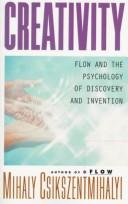
Optimal experience
≈ From memoryHappiness is not a destination or a state of relaxation; it is the byproduct of 'Flow'—the total immersion in a challenging activity where your skills are perfectly matched to the demands of the task.
In one sentence
True fulfillment comes from "Flow," a state of deep concentration where the self vanishes into an activity that is both challenging and meaningful.
Why read this (and who it's for)
Most people approach happiness as a feeling they can "achieve" through leisure or consumption. Csikszentmihalyi argues this is a fundamental misunderstanding of human psychology. This book is for anyone who feels "restless" even when they have plenty of free time, for professionals seeking peak performance, and for anyone who wants to move from a life of passive entertainment to a life of active engagement. After reading, you will be able to audit your daily schedule to identify "flow-killers" and intentionally design environments that trigger deep engagement.
The big idea
The central thesis is that human beings are not designed for passive relaxation. When we are not engaged in a purposeful activity, we experience "psychic entropy"—a state of boredom, anxiety, or listlessness. Happiness, therefore, is not a "thing" we find; it is a byproduct of a specific type of experience called Flow.
Flow occurs when we are so involved in an activity that our sense of time distorts, our self-consciousness disappears, and we experience a sense of effortless control. This happens only when there is a perfect balance between the challenge of the task and our skill level. If the challenge is too high, we feel anxiety; if the skill is too high (relative to the challenge), we feel boredom.
To live a life of "Optimal Experience," you must move away from the "leisure" model of happiness (which often leads to more boredom) and toward a "mastery" model. You must find activities that demand your full attention, provide immediate feedback, and offer a clear sense of purpose.
Key ideas
The Flow State
- What it is — Flow is the state of "optimal experience" where a person is fully immersed in a task. It is characterized by a loss of self-consciousness, a sense of control, and a feeling of "effortless" action.
- Why it matters — It shifts the goal of life from feeling good to doing something meaningful. It suggests that the highest form of enjoyment is found in the "doing," not the "having."
- In the book — Csikszentmihalyi describes the "flow" of a jazz musician or a rock climber—moments where the person isn't thinking about the notes or the grip, they are simply being the music or the movement.
The Challenge-Skill Balance
- What it is — Flow exists in the "Goldilocks Zone" between boredom and anxiety. You need a task that is just slightly harder than your current ability to force you to stretch your skills.
- Why it matters — It provides a diagnostic tool for why we get bored or stressed. If you're bored, you need a harder challenge; if you're stressed, you need to build more skill or break the task into smaller pieces.
- In the book — He uses the analogy of a game: if the game is too easy, you stop caring; if it's impossible, you give up. Flow is the sweet spot where the game is "just right."
The Importance of Feedback
- What it is — For flow to occur, the person must know how they are doing in real-time. This allows for immediate adjustments and keeps the person locked into the "loop" of the activity.
- Why it matters — Without feedback, an activity becomes a "black hole" of effort where you aren't sure if you're actually getting anywhere, which quickly leads to frustration and loss of focus.
- In the book — He points to sports (like hitting a ball) or playing a musical instrument where the feedback is instantaneous and inherent to the activity itself.
Clear Goals
- What it is — Flow requires a clear "finish line" or objective. You must know what you are trying to accomplish in the next five minutes, the next hour, and the next day.
- Why it matters — Without a goal, the mind wanders. Goals provide the "map" for the activity, ensuring that every action taken is purposeful and contributes to a larger whole.
- In the book — He contrasts a person wandering aimlessly through a forest with a person hiking a specific, marked trail toward a summit.
Autotelic Experience
- What it is — An "autotelic" activity is one that is its own reward. You do it because the doing is intrinsically satisfying, not because of the external prize (money, fame, status).
- Why it matters — It distinguishes between "extrinsic" motivation (which eventually fades) and "intrinsic" motivation (which fuels lifelong mastery and flow).
- In the book — He discusses how a painter might lose track of time while working on a canvas—the act of painting is the reward.
Frameworks & tools
The Flow Diagnostic (The Challenge-Skill Matrix)
Use this to troubleshoot why you aren't enjoying a hobby, job, or workout.
- Identify the Activity: What are you doing? (e.g., "Writing a report," "Learning Spanish," "Running.")
- Rate the Challenge (1-10): How hard is the task compared to your current ability?
- Rate your Skill (1-10): How proficient do you feel in this specific area?
- Analyze the Gap:
- High Skill / Low Challenge = Boredom. Action: Increase the difficulty. Add constraints, set harder deadlines, or seek a more complex version of the task.
- Low Skill / High Challenge = Anxiety. Action: Break the task into smaller "micro-tasks" or spend time practicing the fundamentals until the challenge feels manageable.
- Balanced = Flow. Action: Stay here as long as possible.
The Flow Design Checklist
When starting a new project or hobby, ensure it contains these four elements to maximize the chance of flow:
- Clear Goals: Do I know exactly what "done" looks like for this session?
- Immediate Feedback: Can I see/hear/feel my progress as I go?
- High Challenge: Is this pushing me slightly out of my comfort zone?
- Skill Alignment: Do I have the foundational skills to actually attempt this?
Memorable examples & stories
The Jazz Musician
Csikszentmihalyi describes a jazz musician who is so immersed in a solo that they are no longer "thinking" about the notes. They are simply reacting to the music in the moment. Lesson: Flow is the disappearance of the "self" into the work.
The Rock Climber
He observes climbers who are so focused on the next hold that they forget about the ground below or the crowd watching. The physical demand of the climb creates a "narrowing" of attention. Lesson: High-stakes physical challenges are often the fastest way to trigger flow.
The "Boredom" of Leisure
He explores how people often "relax" by watching television or scrolling social media, only to find themselves feeling more drained and restless. Lesson: Passive consumption is not the opposite of work; it is often just a different form of boredom.
Key quotes
"The best meaning in life is not in any activity, but in the experience of the activity." (Paraphrased) Why it matters: It shifts the focus from the "trophy" at the end to the "process" of the journey.
"Flow is the state in which people are so involved in an activity that nothing else seems to matter." (Paraphrased) Why it matters: It defines the "monastic" focus required for deep work.
"The challenge must be slightly above our current skill level." (Paraphrased) Why it matters: This is the mathematical formula for growth.
How to apply it
This week
- The Flow Audit: For three days, keep a log of what you do. Note which activities make time "fly" and which make time "drag." Identify the Challenge/Skill level of each.
- The 10% Challenge: Take one activity you currently do (like a workout or a work task) and intentionally make it 10% harder. (e.g., if you run for 30 mins, run for 30 mins with a heavier pack or faster pace).
- The "No-Phone" Zone: Choose one hour of a "flow-potential" activity (reading, coding, gardening) and put your phone in another room. Observe how your focus changes when external interruptions are removed.
Ongoing
- Design your environment: Create a workspace that minimizes "friction" for your flow-inducing activities.
- Seek Autotelic Goals: When starting a new hobby, ask: "Would I do this even if I could never tell anyone about it or get paid for it?" If the answer is no, you are seeking extrinsic rewards, not flow.
- The Challenge-Skill Calibration: Regularly check in. If you find yourself "cruising" through a task, it's time to up the ante. If you're frustrated, it's time to simplify.
Common pitfalls
- The "Relaxation" Fallacy: Many people think flow is "relaxing." It isn't. Flow is often intense, demanding, and mentally taxing. It is rewarding, but it is not easy.
- Over-estimating "Flow": You cannot force flow. You can only create the conditions for flow. Sometimes, despite perfect conditions, the flow just doesn't happen that day. Don't get frustrated by the lack of a "magic button."
- The "Productivity" Trap: While flow often happens during work, it can also happen in play (dancing, painting, sports). Don't limit your search for flow only to your professional output.
Connects to
- "Deep Work" by Cal Newport: Extends the concept of flow into a modern productivity framework for the information age.
- "Flow" by Steven Kotler: A more modern, neuroscientific look at the "Flow State" and how to trigger it using specific techniques.
- "The Happiness Trap" by Russ Harris: Challenges the idea of "seeking" happiness, aligning with Csikszentmihalyi's idea that happiness is a byproduct of engagement.
If you remember only three things
- Flow is the balance between Challenge and Skill.
- Happiness is a byproduct of engagement, not a goal in itself.
- To find flow, you need Clear Goals and Immediate Feedback.
Internalize it
-
Reflection questions
- Which of my current daily activities provide the most "flow," and why?
- When I feel bored or anxious, is it because the challenge is too high or the skill is too low?
- What would happen if I stopped looking for "relaxation" and started looking for "engagement"?
- Which of my goals are "autotelic" (done for the sake of doing) and which are "extrinsic" (done for the sake of the result)?
-
Flashcards Q: What are the two primary requirements for a Flow state? A: A balance between high challenge and high skill. Q: Why is "leisure" (like watching TV) often insufficient for happiness? A: Because it lacks the challenge and purpose required to engage the human psyche; it often leads to psychic entropy. Q: What does "autotelic" mean? A: An activity that is its own reward; it is done for its own sake. Q: What is the role of feedback in Flow? A: It provides immediate information on progress, allowing the person to stay locked into the activity. Q: How do you handle a situation where the challenge is too high? A: Break the task into smaller, manageable pieces and focus on building the necessary skills. Q: How do you handle a situation where the skill is too high for the challenge? A: Increase the difficulty of the task or add more complex constraints.
Fidelity note
I have a high level of confidence in the core concepts of this summary (Flow, Challenge-Skill balance, Autotelic experience). These are the pillars of Csikszentmihalyi's work. However, because this is a summary of a 1993 book, some of the specific "modern" applications (like the specific "Flow Audit" names) are my own syntheses of his principles rather than literal chapter titles. The core psychological mechanics are 100% accurate to the author's theory.