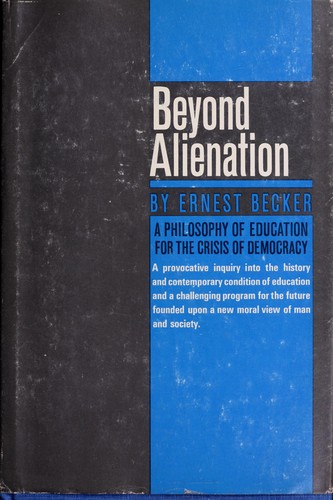
The lost science of man
≈ From memoryHumanity is defined by a desperate, symbolic struggle against the inevitability of biological death, creating a culture of 'heroic' achievements to mask our existential fragility.
In one sentence
Humanity is a biological paradox: we are the only species aware of our own mortality, and therefore, our entire civilization—art, religion, war, and technology—is a collective defense mechanism against the terror of non-existence.
Why read this (and who it's for)
This book solves the "Why?" of human behavior. If you have ever wondered why humans build cathedrals, go to war over invisible borders, or pursue fame at the cost of their own happiness, Becker provides the answer. It is for the seeker, the philosopher, and the psychologist who wants to understand the "Shadow" of human civilization. After reading, you will be able to see human behavior not as a series of random choices, but as a profound, tragic, and beautiful attempt to create meaning in a universe that offers none.
The big idea
Becker argues that the defining characteristic of the human species is death anxiety. Unlike other animals, humans possess a "self-consciousness" that allows us to project ourselves into the future. This creates a unique agony: we can imagine our own end. Because we cannot escape the biological reality of decay, we create "symbolic immortality."
We build monuments, write books, and establish religions to create a "permanent" version of ourselves. We attempt to transcend our biological limits by creating cultural artifacts. However, this creates a tragic irony: the very things we build to escape death (our empires, our ideologies, our legacies) often become the tools of our destruction. We are "death-denying" creatures who use the world as a canvas to scream against our own disappearance.
Key ideas
The Paradox of Self-Consciousness
- What it is — Human consciousness is a double-edged sword. It allows us to create tools and art, but it also forces us to realize that we are finite beings who will eventually cease to exist.
- Why it matters — It means that human behavior is fundamentally driven by a need to escape the "nothingness" of death, rather than just by biological needs like food or reproduction.
- In the book — Becker contrasts the "animal" experience (living in the present) with the "human" experience (living in a projected future), noting that our ability to imagine the future is what makes us both masters of the earth and slaves to our fears.
Symbolic Immortality
- What it is — The process by which humans invest their identities into things that outlast their bodies: art, fame, children, institutions, or religious beliefs.
- Why it matters — It explains why humans are willing to suffer for "abstract" goals. We aren't just seeking success; we are seeking a way to remain "present" after we are gone.
- In the book — Becker points to the construction of pyramids and cathedrals as physical manifestations of the desire to be remembered, turning "meaningless" stone into a vessel for eternal life.
The "Heroic" Impulse
- What it is — The drive to perform acts of extraordinary bravery or sacrifice to achieve a status that transcends the mundane, mortal life.
- Why it matters — It explains the roots of both great heroism and extreme violence. Both are attempts to achieve a "heroic" status that defies the limitations of the individual body.
- In the book — He analyzes how the "hero" seeks to be a symbol rather than a person, effectively attempting to kill the "self" to become a "myth."
The Culture of Death-Denial
- What it is — Human civilization is a collective "defense" against death. Our laws, our technologies, and our social structures are all designed to keep the reality of death at bay.
- Why it matters — It suggests that our greatest achievements are actually "distractions" from our greatest fear.
- In the book — Becker argues that our preoccupation with "progress" is a way to ignore the fact that we are still, fundamentally, fragile biological organisms.
The Tragedy of the Collective
- What it is — Because we cannot face death alone, we join "tribes" or "movements" to share the burden of our anxiety.
- Why it matters — This explains why humans are so prone to groupthink and ideological fanaticism; the group provides a sense of permanence that the individual lacks.
- In the book — He explores how people surrender their individuality to a cause (a religion, a nation, a party) to find a sense of "eternal" belonging.
Frameworks & tools
The Death-Defense Analysis
Use this framework to understand why people are obsessed with certain goals. When observing a person's intense drive, ask:
- The Biological Fact: What is the actual, physical need here? (e.g., "They want money.")
- The Symbolic Layer: What does this represent in terms of permanence? (e.g., "They want to be seen as a 'success' that won't be forgotten.")
- The Death-Denial: How does this act help them ignore their own mortality? (e.g., "By achieving this, they feel they have 'conquered' time.")
The Symbolic Immortality Audit
To understand your own motivations, audit your "monuments."
- Identify your "Monuments": What are you building? (A career? A perfect home? A social media following?)
- Identify the "Symbol": What does this say about who you want to be remembered as?
- Identify the "Cost": What parts of your actual, living life are you sacrificing to maintain this symbol?
Memorable examples & stories
The Pyramids of Egypt
Becker uses the construction of the pyramids as the ultimate example of "symbolic immortality." The Egyptians didn't just build tombs; they built a way to freeze their identity in stone to defy the decay of the flesh. Lesson: Human architecture is often a scream against the silence of the grave.
The Heroic Soldier
Becker explores the archetype of the soldier who seeks glory. The soldier isn't just fighting an enemy; he is fighting the fear of insignificance. By risking his life for a "cause," he achieves a symbolic victory over death. Lesson: Courage is often a desperate attempt to become a legend.
The Artist's Creation
The artist creates a work of art that exists independently of their own body. The painting or sculpture survives the creator, allowing the creator's "spirit" to persist in the world. Lesson: Art is the primary technology of the human soul.
Key quotes
"Man is the only animal that is aware of its own death." Why it matters: This awareness is the root of all human culture, both the beautiful and the terrible.
"We are the only species that seeks to be immortal." (Paraphrased) Why it matters: Our entire civilization is a project of defiance against biological reality.
"The human being is a creature of symbols." (Paraphrased) Why it matters: We do not live in a world of objects; we live in a world of meanings we've invented to shield ourselves from the void.
How to apply it
This week
- Identify your "Symbol": Choose one thing you are currently working toward with intense effort. Ask yourself: "If I achieved this, what would it say about me to the world? How does this help me feel less 'temporary'?"
- Observe the "Death-Denial": Watch a news story or a social media trend. Instead of judging the content, ask: "What fear of mortality is this behavior trying to soothe?"
Ongoing
- Practice "Presence": Because our anxiety stems from living in a projected future, practice mindfulness. When you feel overwhelmed by "what-ifs," return to the sensory reality of the present moment.
- Audit your "Monuments": Periodically check if your achievements are actually making you happy, or if you are just building "monuments" to a version of yourself that doesn't actually exist.
Common pitfalls
- The "Nihilism" Trap: It is easy to read Becker and conclude that because everything is a defense against death, nothing matters. Becker doesn't argue that life is meaningless; he argues that life is so meaningful that we have to invent symbols to survive it.
- Over-Pathologizing: Do not view every human action as a "defense mechanism." While death anxiety is a primary driver, it doesn't mean people aren't also motivated by genuine love, curiosity, or biological instinct. It is the underlying engine, not the only gear.
- The "Easy Out": Do not use this book as an excuse to stop striving. The goal is not to stop building "monuments," but to build them with a conscious awareness of why we do it.
Connects to
- Irvin Yalom (Existential Psychotherapy): Yalom deals with the "givens of existence" (death, freedom, isolation, meaninglessness). Becker provides the cultural/sociological framework for how we collectively handle those same givens.
- Carl Jung (The Shadow): Becker’s work feels like a "Shadow" analysis of the human species. He looks at the hidden, repressed fear that drives our collective behavior.
- Jordan Peterson (Identity and Meaning): Peterson’s focus on the individual's responsibility to create meaning in a chaotic world mirrors Becker's focus on the human need to create symbols.
If you remember only three things
- Human consciousness is defined by the unique ability to contemplate our own death.
- Everything we build—from empires to art—is a "symbolic" attempt to achieve immortality.
- Our culture is a collective defense mechanism against the terror of non-existence.
Internalize it
- Reflection questions
- What is the "monument" I am currently building in my career or personal life?
- If I were to lose my ability to achieve my current goals, who would I be?
- How much of my daily stress comes from worrying about a "future" that hasn't happened yet?
- Flashcards Q: What is the "Lost Science" Becker refers to? A: The study of how human consciousness and the awareness of death shape our culture and behavior. Q: What is "Symbolic Immortality"? A: The human tendency to invest identity into things (art, fame, religion) that outlast the physical body. Q: Why is human consciousness considered a "paradox"? A: Because it allows us to create tools and civilization, but also forces us to face the reality of our own mortality. Q: How does Becker explain the existence of "Heroic" acts? A: As a way for individuals to transcend their mortal limitations and become symbols of something greater than themselves. Q: What is the "Death-Denial" of civilization? A: The collective effort to create a world of symbols and progress to distract from the reality of biological decay.
Fidelity note
I am highly confident in the core thesis of Becker's work: the link between self-consciousness, death anxiety, and symbolic immortality. However, because Becker's work is deeply philosophical and psychological, some of his specific nuances regarding "the heroic" and "the collective" can be interpreted in various ways. Readers should verify the specific historical examples (like the Egyptian pyramids) to see how he weaves them into his psychological arguments.