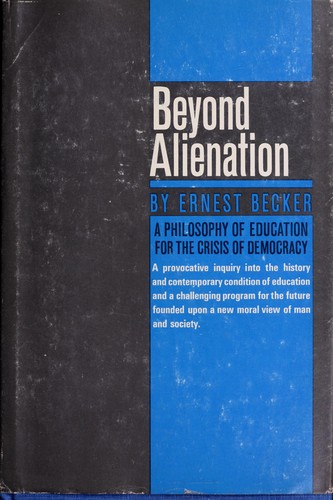
The birth and death of meaning
≈ From memoryHumanity is a biological paradox: we are the only animals aware of our own mortality, and we create 'meaning' as a psychological defense against the terror of our inevitable physical annihilation.
In one sentence
Humanity's greatest achievements—art, religion, science, and culture—are not merely products of intelligence, but desperate "heroic" defenses against the paralyzing dread of death.
Why read this (and who it's for)
This book is for the seeker of deep, existential truth who finds standard "productivity" or "happiness" advice hollow. It solves the problem of why we do what we do: why we strive for status, why we create, and why we feel such profound anxiety. After reading, you will be able to see human behavior not as a series of random choices, but as a profound, collective struggle to justify our existence in a universe that does not care if we live or die.
The big idea
Becker argues that humans are unique because we are "symbolic" creatures. Unlike a lion, which dies and is forgotten, a human knows they will die and that their body will decay. This awareness of our own "non-permanence" is a biological catastrophe; it is a source of terror so profound that it threatens to paralyize our ability to function.
To survive this terror, we create "meaning." We build civilizations, religions, and artistic legacies to create a "symbolic immortality." We try to convince ourselves that we are part of something larger than our fragile, decaying bodies. However, this is a tragic paradox: the very things we build to escape death (culture, fame, legacy) are ultimately fragile and will also die. We are engaged in a "heroic" struggle to deny our own mortality, and our greatest triumphs are actually our most desperate cries of fear.
Key ideas
The Terror of Mortality
- What it is — The awareness of death is the fundamental driver of human behavior. It is not a peripheral concern; it is the "primary" reality that shapes our psychology.
- Why it matters — If you accept that death is the root of all human anxiety, you realize that most human conflicts and achievements are actually "defense mechanisms" against this fear.
- In the book — Becker explores how the realization of our own "nothingness" creates a psychological paralysis that can only be broken by action.
Symbolic Immortality
- What it is — The process by which humans project their identities into things that outlast their bodies: monuments, stories, children, or social movements.
- Why it matters — It explains why we care so much about "legacy." We aren't just looking for success; we are looking for a way to stay "alive" after our hearts stop beating.
- In the book — Becker points to the construction of pyramids and cathedrals as physical manifestations of the human need to be remembered.
The Heroic Defense
- What it is — The "heroic" act of creating meaning is a way to deny our biological limitations. We act as if we can transcend our bodies through our deeds.
- Why it matters — It reframes "achievement" as a spiritual necessity. We don't just do things to get things; we do them to prove we were here.
- In the book — Becker argues that the "hero" is anyone who successfully creates a symbolic reality that others can inhabit.
The Paradox of Culture
- What it is — Culture is a collective defense against death, yet it is also a source of oppression and suffering because it demands we conform to certain "meanings" to be accepted.
- Why it matters — It explains why we feel so much pressure to "fit in." To be cast out of the group is to be stripped of our symbolic immortality—it is a social death.
- In the book — Becker examines how religious and social institutions provide a "home" for our identities, but at the cost of individual autonomy.
The Death of Meaning
- What it is — The realization that all symbols eventually fail. Eventually, the monuments crumble, the religions are forgotten, and the names are erased.
- Why it matters — It highlights the tragedy of the human condition: we are doomed to fail in our quest for permanence.
- In the book — Becker notes that while our defenses are necessary for survival, they are ultimately futile against the sheer fact of biological decay.
Frameworks & tools
The Defense Mechanism Analysis
Use this to understand why you are pursuing a specific goal. When you feel a deep, almost desperate drive to achieve something, ask:
- The Physical Fear: What is the underlying anxiety I am trying to escape? (e.g., "I'm afraid of being forgotten," "I'm afraid of being insignificant.")
- The Symbolic Substitute: What "monument" am I trying to build? (e.g., "If I get this promotion, I will be 'important.'")
- The Heroic Act: How does this achievement allow me to deny my mortality? (e.g., "This work will outlast my physical presence.")
Memorable examples & stories
The Pyramid Builders
Becker discusses the construction of the pyramids as a massive, collective effort to defy time. It wasn't just about housing a king; it was about creating a permanent "presence" in a world of decay. Lesson: Our greatest architectural feats are actually our most desperate prayers for permanence.
The Ritual of the Hero
Becker looks at how societies celebrate "heroes" who sacrifice themselves for the group. These figures provide a blueprint for how to "die" meaningfully, ensuring that the individual's name lives on in the collective memory. Lesson: We celebrate the hero because they provide a way to turn a private death into a public legacy.
The Religious Community
The way religious groups provide a "shared reality" where the individual's life gains meaning through participation in a divine narrative. Lesson: We join groups not just for companionship, but to be woven into a story that is larger than our own lives.
Key quotes
"The human being is a creature who is aware of his own death, and this awareness is the source of all his creative activity." Why it matters: It identifies the "why" behind every human endeavor.
"We create symbols to deny our own mortality." (Paraphrased) Why it matters: It simplifies the complex psychological machinery of culture into a single, powerful motive.
"The tragedy of the human condition is that we are the only animals who know we are going to die." (Paraphrased) Why it matters: It highlights the unique burden of human consciousness.
How to apply it
This week
- Identify your "Monuments": Look at your current projects (work, hobbies, social media). Ask: "If I achieved this, what would it say about my existence? What part of my fear of being 'nothing' does this address?"
- The Awareness Walk: Spend 10 minutes in a public space (a park, a busy street) observing the "meaning" people are creating. Notice the symbols of status, the expressions of purpose, and the underlying drive for significance.
Ongoing
- The Legacy Audit: Periodically evaluate your life's work. Are you building "symbols" that actually matter to you, or are you just conforming to the symbols of others?
- Embrace the Paradox: When you feel the "terror" of insignificance, acknowledge it as a natural byproduct of being a human being. Instead of suppressing it, recognize it as the very thing that makes your creativity possible.
Common pitfalls
- The Nihilistic Trap: One might read this and conclude that because all symbols eventually die, nothing matters. Becker isn't arguing for nihilism; he is arguing that meaning is necessary for survival. The fact that it is a "defense" doesn't make it less real or less important.
- Over-Intellectualizing: It is easy to treat this as a purely academic theory of history. It is actually a psychological theory of you. It is about your internal experience of anxiety and your external expressions of creativity.
- The "Solution" Fallacy: Becker does not provide a "cure" for the fear of death. He provides a map of why we act the way we do. The "cure" is the recognition of the truth.
Connects to
- Irvin Yalom's "Existential Psychotherapy": Extends Becker's ideas into a clinical framework for dealing with the "givens" of existence (death, freedom, isolation, and meaninglessness).
- Jordan Peterson's "12 Rules for Spiritual Revolution": Echoes Becker's ideas on the necessity of "meaning" over "happiness" and the role of myth in human survival.
- Viktor Frankl's "Man's Search for Meaning": While Becker focuses on the defense against death, Frankl focuses on the discovery of meaning within suffering. They are two sides of the same coin.
If you remember only three things
- Humans are driven by a fundamental terror of their own mortality.
- Culture, art, and religion are "heroic" defenses designed to create symbolic immortality.
- Meaning is not a luxury; it is a survival mechanism for a species that knows it will die.
Internalize it
-
Reflection questions
- What is the "monument" I am currently trying to build in my career or personal life?
- When I feel anxious about my future, is that anxiety actually a fear of being "insignificant"?
- How much of my current identity is built on symbols created by others rather than my own needs?
-
Flashcards Q: What is the primary driver of human creative activity according to Becker? A: The awareness of our own mortality and the terror it produces. Q: What does Becker mean by "Symbolic Immortality"? A: The process of projecting our identity into things (art, buildings, stories) that outlast our physical bodies. Q: Why does Becker call human culture a "heroic" defense? A: Because it is a collective effort to deny our biological limitations and create a reality where we can endure. Q: What is the "paradox of culture" in this book? A: Culture is necessary for us to survive our fear of death, but it also creates the social pressures and limitations that can oppress the individual. Q: Is Becker's view of meaning "nihilistic"? A: No. He argues that meaning is a vital survival mechanism, even if the symbols we create are ultimately temporary.