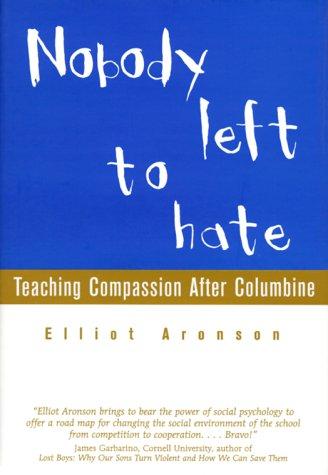
The jigsaw classroom
≈ From memoryPrejudice is a learned social behavior rooted in systemic inequality, and it can be dismantled by forcing individuals into interdependent, cooperative roles where they must rely on one another to succeed.
In one sentence
Prejudice is not an innate biological trait but a learned social behavior that can be dismantled by creating "interdependent" environments where individuals from opposing groups must cooperate to achieve a common goal.
Why read this (and who it's for)
This book is a foundational text in social psychology that addresses the "how" of prejudice: how it is formed, how it persists, and—crucially—how it can be unlearned. It is for anyone who feels frustrated by the polarization of modern society, for educators looking to foster inclusive environments, and for leaders who need to manage diverse teams without falling into the traps of tribalism. After reading, you will be able to identify the psychological mechanisms of "in-group" favoritism and design "interdependent" systems that force people to see each other as essential partners rather than competitors.
The big idea
Aronson argues that prejudice is a social product, not a biological one. It is a learned behavior that arises when people are conditioned to view certain groups as "out-groups" that are inferior, threatening, or unworthy of respect. Because prejudice is learned, it can be unlearned through a deliberate restructuring of social interaction.
The core of the book is the "Jigsaw Classroom" method. The logic is simple but profound: if you want to break down prejudice, you cannot do it by simply telling people "don't be prejudiced." You must change the structure of the interaction. By creating a situation where a student (or employee, or citizen) cannot succeed unless they cooperate with someone from a different group, you force the brain to move from a state of "us vs. them" to "we need each other." This shifts the focus from abstract labels to personal, functional interdependence.
Key ideas
The Social Roots of Prejudice
- What it is — Prejudice is a learned behavior, not an innate instinct. It is acquired through socialization, media, and the reinforcement of stereotypes.
- Why it matters — If prejudice were biological, it would be impossible to change. Because it is social, it means the "machinery" of our brains is capable of learning new, healthier social patterns.
- In the book — Aronson examines how children learn to categorize people into "good" and "bad" groups based on external cues like skin color or religion, often before they have any personal experience with those groups.
The Role of Group Dynamics
- What it is — Humans have a natural tendency to favor their "in-group" and view "out-groups" with suspicion or hostility.
- Why it matters — Understanding this "in-group/out-group" bias allows us to recognize that prejudice is often a systemic byproduct of how humans organize themselves into tribes.
- In the book — Aronson discusses how group identity provides a sense of belonging, but it can become toxic when it creates a "zero-sum" mentality where the gain of the in-group requires the loss of the out-group.
Interdependence as an Antidote
- What it is — Interdependence is a state where individuals are required to work together to achieve a goal that neither can achieve alone.
- Why it matters — It moves the interaction from "coexistence" (being in the same room) to "cooperation" (needing each other). It forces individuals to see the "other" as a source of value.
- In the book — The Jigsaw Classroom is the primary vehicle for this: each student holds a piece of the "puzzle" (the information) that the rest of the group needs to succeed.
The Importance of Personal Contact
- What it is — Prejudice is often sustained by "abstract" stereotypes. Direct, personal contact with individuals from the out-group breaks these abstractions.
- Why it matters — It is much harder to hate a person who has helped you understand a difficult concept than it is to hate a faceless representative of a group.
- In the book — Aronson emphasizes that the "contact" must be meaningful; mere proximity isn't enough if the groups remain segregated in their tasks.
The "Jigsaw" Mechanism
- What it is — A pedagogical and social structure where a group is divided into smaller units, and each member is assigned a unique, essential piece of information.
- Why it matters — It creates a "mutual need" for the other person's contribution, which builds trust and necessitates communication.
- In the book — In the classroom, one student might be the "expert" on one part of a story, and they must teach it to their peers to ensure the whole group understands the narrative.
Frameworks & tools
The Jigsaw Classroom Framework
This is the primary tool for dismantling prejudice in a group setting (classroom, workplace, or community group).
- Divide the Material: Take a complex topic or task and break it into 4–5 distinct "pieces" of information or responsibility.
- Assign "Experts": Assign each member of a diverse group a specific piece. They are responsible for mastering that piece.
- Create Interdependence: Ensure that the group cannot complete the task without every single person's unique contribution.
- The Teaching Phase: Each member must teach their piece to the rest of the group. They are the "teachers" in this moment.
- The Assessment: The group's success is measured by how well the entire group understands the whole topic, not by individual performance.
The Interdependence Audit
Use this to evaluate any group dynamic where friction exists.
- Identify the Conflict: What is the "us vs. them" tension?
- Analyze the Current Structure: Are the groups currently competing for the same resources or status?
- Design a Shared Goal: What is a goal that neither group can achieve alone?
- Engineer the "Piece": What specific information or skill does Group A have that Group B desperately needs?
- Enforce Cooperation: Create a mechanism where the reward is only distributed if both groups succeed together.
Memorable examples & stories
The "Expert" Student
In the Jigsaw Classroom, a student who might be struggling academically is assigned a piece of the puzzle that they happen to understand well. Because they become the "expert" for their group, their self-esteem rises, and they are forced to engage with peers who might have previously ignored them. Lesson: Giving someone a position of responsibility and "expert" status can break down the hierarchy of prejudice.
The "Missing Piece" Effect
Aronson describes a situation where a group is trying to solve a problem, but one member is silent. Because the group cannot finish the task without that member's specific piece of information, the group is forced to reach out and engage with that person. Lesson: Structural interdependence creates a "pull" toward the other person that overcomes the "push" of prejudice.
The Abstract vs. Concrete Interaction
Aronson contrasts the "abstract" prejudice of a person who hears only stereotypes about a group with the "concrete" experience of a person who sits next to a member of that group and learns their name, their interests, and their unique contribution to a task. Lesson: Personal interaction is the only way to overwrite the "mental scripts" of prejudice.
Key quotes
"Prejudice is a learned behavior, and therefore it can be unlearned." Why it matters: This is the foundational hope of the book—that our social identities are plastic, not fixed.
"The Jigsaw Classroom is a way of organizing the group so that each person is a necessary part of the whole." (Paraphrased) Why it matters: It shifts the focus from "tolerance" (passive) to "interdependence" (active).
"The goal is to create a situation where the individuals are forced to depend on one another to succeed." (Paraphrased) Why it matters: It identifies the mechanism of change—structural necessity.
How to apply it
This week
- Identify a "Jigsaw" moment: Find a project at work or in your community where two people who don't get along are currently working on separate tasks.
- Propose a Shared Goal: Suggest a small, joint task where they must collaborate to finish (e.g., "We need both of your inputs on this specific slide to get approval").
- Practice "Expert" Recognition: In your next meeting, explicitly ask someone from a different background to "teach" the group about a specific part of their expertise.
Ongoing
- Design for Interdependence: Whenever you form a team, don't just assign tasks; ensure that the tasks are interdependent. Ensure that Person A's output is the required input for Person B.
- The "Teacher" Mindset: When interacting with someone from an "out-group," seek to learn one specific thing they know well. Ask them to explain it to you.
- Audit your "In-Groups": Regularly ask: "Is our group identity based on shared values, or is it based on excluding others?"
Common pitfalls
- The "Tolerance" Trap: Many people think that just putting diverse people in a room together (diversity) will solve prejudice. Aronson argues that without interdependence, people will simply retreat into their own silos.
- The "Forced" Feeling: If the interdependence is too obvious or feels coerced, it can lead to resentment. The "need" for the other person should feel organic to the task at hand.
- Over-simplifying the Problem: While the Jigsaw Classroom is a powerful tool for reducing prejudice, it is not a "cure" for systemic racism or deep-seated historical trauma. It is a psychological tool for interpersonal interaction, not a total social overhaul.
Connects to
- "Implicit Bias" (Project Implicit): While Aronson focuses on social structures, Implicit Bias research looks at the subconscious "shortcuts" our brains take. They complement each other: Jigsaw structures help override those shortcuts.
- "The Culture Code" by Daniel Coyle: Extends Aronson's ideas by looking at how groups (tribes) create shared meanings and rituals to bond.
- "Contact Theory" (Gordon Allport): The academic precursor to Aronson's work, which argues that interaction between groups can reduce prejudice—Aronson provides the specific how-to for that interaction.
If you remember only three things
- Prejudice is a learned social behavior, which means it can be unlearned through new social experiences.
- The most effective way to break prejudice is to create interdependence: a situation where people must work together to succeed.
- The Jigsaw Classroom is the practical model for this: break a task into pieces, make every person an "expert" on one piece, and make the group's success dependent on every single piece being shared.
Internalize it
- Reflection questions
- In what areas of my life am I currently viewing people as "out-groups" rather than as individuals with unique skills?
- If I were to apply the "Jigsaw" method to a conflict I am currently experiencing, what would be the "missing piece" that the other person holds?
- How can I create a "mutual need" in my professional relationships that forces me to rely on people I currently find difficult to work with?
- Flashcards
- Q: Is prejudice an innate biological trait according to Aronson?
- A: No, it is a learned social behavior.
- Q: What is the core mechanism of the Jigsaw Classroom?
- A: Interdependence—creating a situation where individuals must rely on one another to achieve a common goal.
- Q: Why is "mere contact" insufficient to reduce prejudice?
- A: Because without a shared task or interdependence, people can remain in the same space while still remaining socially segregated.
- Q: What is the role of the "Expert" in the Jigsaw Classroom?
- A: Each student/member becomes an expert on one piece of information, giving them a sense of mastery and a reason to communicate with others.
- Q: How does Aronson define the "out-group"?
- A: As a group of people who are perceived as different, often unfairly categorized as inferior or threatening.
Fidelity note
I am highly confident in the core psychological principles of this summary, specifically the distinction between learned behavior and biological instinct, and the mechanics of the Jigsaw Classroom. Aronson’s work is a staple of social psychology curricula. However, because this is a summary of a 1970s text, some of the specific classroom examples may vary slightly in their pedagogical application compared to modern "active learning" techniques, though the underlying psychological theory remains the same. Readers should verify the specific "Jigsaw" steps if they intend to implement them in a formal educational setting.