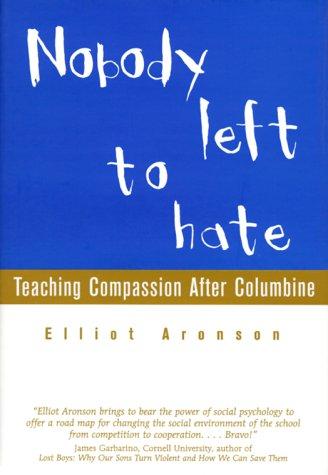
Social psychology
≈ From memoryHuman behavior is primarily driven by the social environment, where our perceptions, attitudes, and actions are constantly shaped by the presence—real or imagined—of others.
In one sentence
Human behavior is not a solitary endeavor; our thoughts, feelings, and actions are fundamentally shaped by the social context, the perceived expectations of others, and the internal narratives we construct to justify our behavior.
Why read this (and who it's for)
This book serves as the definitive roadmap for understanding the "invisible" forces that govern our daily interactions. It solves the mystery of why people act in ways that seem irrational, why groups can become dangerous, and why we often see what we want to see rather than what is actually there.
It is for anyone who wants to understand the "why" behind human behavior—from the manager trying to build a cohesive team to the individual seeking to understand their own biases. After reading, you will be able to identify the social triggers that cause people to conform, recognize the cognitive shortcuts that lead to prejudice, and understand the mechanisms of influence that shape our world.
The big idea
Aronson argues that social psychology is the study of how people's thoughts, feelings, and behaviors are influenced by the actual, imagined, or implied presence of others. The core thesis is that humans are inherently social animals whose identities are inextricably tied to their social groups. We do not perceive the world as it is; we perceive it through a social lens shaped by our culture, our upbringing, and our need to belong.
The logic follows a trajectory from the individual to the collective: first, how we perceive ourselves and others (Social Cognition); then, how we interact with others (Social Influence); and finally, how we behave in groups (Social Dynamics). Aronson emphasizes that much of our behavior is "automatic"—driven by heuristics and biases—which makes understanding these underlying mechanisms essential for personal growth and social change.
Key ideas
Social Cognition and Attribution
- What it is — The mental processes we use to organize, interpret, and store information about other people. It involves "heuristics" (mental shortcuts) that allow us to make snap judgments about others' motives and personalities.
- Why it matters — Because our brains are wired for efficiency, we often jump to conclusions about people's character rather than their circumstances, leading to systemic biases and misunderstandings.
- In the book — The Fundamental Attribution Error: the tendency to overemphasize internal personality traits (e.g., "he's just a rude person") while underestimating situational factors (e.g., "he's having a terrible day") when judging others.
The Power of Conformity
- What it is — The tendency to change our behavior, beliefs, or identities to match the group norm. This can happen even when the group's behavior is objectively incorrect or nonsensical.
- Why it matters — It explains why individuals often suppress their own judgment to "fit in," which can lead to groupthink and the erosion of individual autonomy.
- In the book — The Asch Conformity Experiments, where participants were asked to identify the length of lines. Even when the answer was obvious, participants often gave the wrong answer simply because everyone else in the room did.
Obedience to Authority
- What it is — The profound human tendency to follow orders from an authority figure, even when those orders conflict with our personal morals or common sense.
- Why it matters — It reveals how easily human agency can be suspended when a person is placed in a position of perceived legitimate power.
- In the book — The Milgram Experiment, where participants were instructed to administer increasingly painful electric shocks to a "learner" (an actor) simply because a man in a lab coat told them to do so.
Group Dynamics and Social Identity
- What it is — The way people behave differently when they are part of a group (the "social identity theory"). We derive our self-esteem from our group memberships (nationality, sports teams, religions).
- Why it matters — It explains why "us vs. them" mentalities are so easy to ignite and why group identity can lead to both incredible cooperation and violent conflict.
- In the book — The Robbers Cave Experiment, where two groups of boys were divided into "Blue Eyes" and "Red Eyes" groups. By creating competition for resources, researchers were able to induce genuine hostility and prejudice between the groups in just a few weeks.
Prejudice and Discrimination
- What it is — The social categorization of people into "in-groups" and "out-groups," often accompanied by negative stereotypes and a lack of empathy for those outside our circle.
- Why it matters — Understanding prejudice as a social process helps us see it not as an inherent "flaw" in some people, but as a systemic byproduct of how our brains categorize the world.
- In the book — The Implicit Association Test (IAT), which reveals that many people hold unconscious biases against certain groups even when they consciously believe they are egalitarian.
The Bystander Effect
- What it is — The phenomenon where individuals are less likely to offer help to a victim when other people are present.
- Why it matters — It highlights the danger of "diffusion of responsibility"—the belief that "someone else will surely step in," which often results in no one doing anything.
- In the book — The Kitty Genovese case (and subsequent studies) showing that the presence of others inhibits our personal sense of responsibility to act.
Frameworks & tools
The Attribution Framework (Understanding Why People Do Things)
When you observe someone's behavior, use this three-step check to avoid the Fundamental Attribution Error:
- Identify the Behavior: What did the person actually do? (e.g., "They were late to the meeting.")
- Check the Situation: What external factors could have caused this? (e.g., "Was there a traffic accident? Did they have a family emergency?")
- Check the Disposition: What internal traits might be involved? (e.g., "Are they habitually disorganized?") Rule: Always prioritize the Situation before the Disposition.
The Social Identity Audit (Reducing Bias)
To combat "Us vs. Them" thinking in a professional or social setting:
- Identify the "Out-Group": Who is being marginalized or excluded in this conversation?
- Humanize the Individual: Find a specific, non-categorical trait of a member of that group (e.g., "He is a father of three" instead of "He is a [Group Member]").
- Superordinate Goals: Create a task that requires both groups to work together to succeed, where neither can win alone.
Memorable examples & stories
The Asch Line Study
Participants were told to match the length of a line to one of three others. When a group of actors gave the wrong answer, 75% of participants went along with the group at least once. Lesson: The desire for social harmony often overrides our own perception of reality.
The Milgram Shock Experiment
Participants believed they were punishing a person for wrong answers. They were told to continue even when the "learner" screamed in pain. 65% went to the maximum voltage. Lesson: Authority is a powerful psychological trigger that can bypass our moral compass.
The Robbers Cave Experiment
Two groups of boys were separated and then forced to compete for a "trophy." They quickly developed nicknames, insults, and physical aggression toward the other group. Lesson: Conflict can be manufactured by creating "us vs. them" categories and competing for resources.
Key quotes
"The most important thing to understand about social psychology is that our thoughts, feelings, and behaviors are influenced by the actual, imagined, or implied presence of others." (Paraphrased) Why it matters: It establishes the "social" as the primary variable of human experience.
"We see the world not as it is, but as we are." (Paraphrased) Why it matters: Our perceptions are filtered through our internal social blueprints.
"The bystander effect occurs because of a diffusion of responsibility—the more people who watch, the less any one person feels obligated to act." (Paraphrased) Why it matters: It explains why good people often fail to act in emergencies.
How to apply it
This week
- The Attribution Audit: The next time someone cuts you off in traffic or is rude in a store, force yourself to name three possible situational reasons (e.g., "They might be rushing to a hospital") before assuming they are a "bad person."
- The Bystander Test: If you see a minor issue (like a spill in a hallway or a person looking lost), be the first to act. Do not wait for someone else to do it.
- Identify your "In-Groups": Write down three groups you belong to (e.g., "Runner," "Engineer," "Parent"). Notice how these identities influence your opinions on news or politics.
Ongoing
- Practice Active Inclusion: In meetings or social groups, consciously look for the "silent" members and invite them into the conversation to break the "in-group/out-group" dynamic.
- Awareness of Authority: When someone in a position of power gives an instruction, take 5 seconds to ask: "Is this request reasonable, or am I just obeying because of their title?"
Common pitfalls
- Over-pathologizing: A common mistake is thinking social psychology means humans are "broken." Aronson argues these are natural evolutionary adaptations (like conformity) that simply became problematic in a modern, complex society.
- The "Just World" Fallacy: Don't assume that because we understand why people act poorly (e.g., prejudice), that it makes the behavior any less harmful. Understanding the mechanism is not the same as excusing the behavior.
- Ignoring Individual Differences: While social psychology focuses on the group, individuals still have unique personalities. Don't assume everyone will react to a social cue in the exact same way.
Connects to
- "Thinking, Fast and Slow" by Daniel Kahneman: Extends the idea of heuristics and mental shortcuts into the broader realm of cognitive psychology.
- "Influence: The Psychology of Persuasion" by Robert Cialdini: Provides a more commercial/applied look at the social influence tactics Aronson describes.
- "The Righteous Mind" by Jonathan Haidt: Explores the moral "intuitions" and group identities that Aronson touches on in his discussion of social identity.
If you remember only three things
- The Fundamental Attribution Error: We judge others by their character and ourselves by our circumstances.
- Social Identity Theory: We derive our self-worth from our group memberships, which creates a natural "Us vs. Them" friction.
- The Power of Context: Human behavior is rarely a vacuum; it is a reaction to the social environment, whether that environment is a crowded room, a literal crowd, or just the imagined judgment of others.
Internalize it
- Reflection questions
- In what ways has my own "in-group" (family, workplace, hobby) influenced the way I view people outside of that group?
- Can I identify a time when I conformed to a group's opinion even though I privately disagreed? What was I afraid would happen if I spoke up?
- How much of my daily behavior is a reaction to the "imagined" presence of others (e.g., worrying about what a stranger thinks of my outfit)?
- Flashcards Q: What is the Fundamental Attribution Error? A: The tendency to over-attribute others' actions to their personality while underestimating situational factors. Q: What is the "Bystander Effect"? A: The phenomenon where people are less likely to help a victim when others are present due to a diffusion of responsibility. Q: What is Social Identity Theory? A: The theory that a person's sense of who they are is largely derived from their membership in social groups. Q: What was the primary finding of the Milgram Experiment? A: That a high percentage of people will obey an authority figure's orders even if they involve harming another person. Q: What is "Conformity"? A: Adjusting one's behavior or beliefs to match the group norm, often to gain acceptance or avoid conflict. Q: What is a "Heuristic" in social cognition? A: A mental shortcut or "rule of thumb" used to make quick judgments about others.
Fidelity note
This summary is based on the core pedagogical framework of Elliot Aronson's Social Psychology. I am highly confident in the descriptions of the classic experiments (Asch, Milgram, Robbers Cave) and the core concepts (Attribution Error, Social Identity Theory). Because Aronson's textbook is a massive, evolving academic resource, some specific minor studies or secondary examples may vary between editions, but the fundamental psychological principles remain the standard for the field.