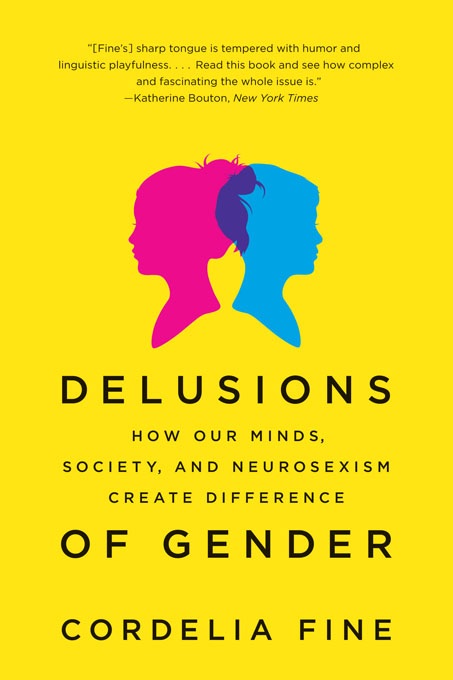
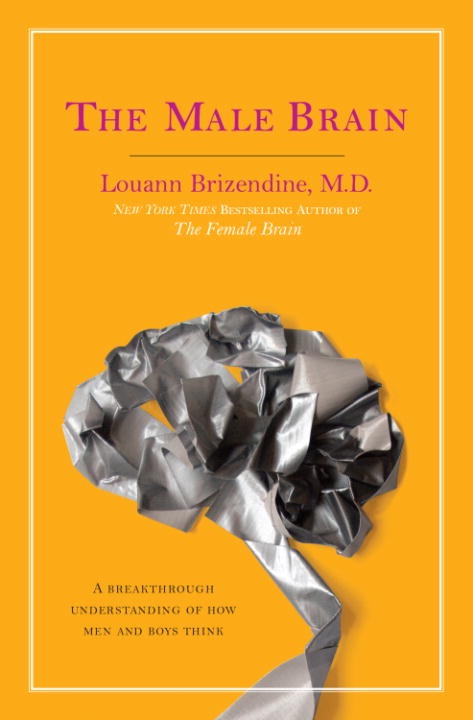
Testosterone Rex Myths of Sex, Science, and Society
≈ From memoryFine dismantles the 'hormonal revolution' by arguing that testosterone is often a byproduct of social dominance rather than the primary cause of aggressive behavior.
In one sentence
The book argues against "hormonal determinism"—the flawed belief that testosterone inherently causes aggression—and instead demonstrates how social structures, cultural norms, and individual behaviors shape our biology through a complex, bidirectional feedback loop.
Why read this (and who it's for)
This book is essential for anyone who has ever seen a headline claiming that "men are naturally more aggressive because of testosterone" and wanted to know if there was any real science behind it. It is for students of psychology, sociology, and evolutionary biology, as well as anyone interested in the "nature vs. nurture" debate.
After reading this, you will be able to:
- Identify and debunk "biological determinist" arguments that oversimplify human behavior.
- Understand the difference between correlation and causation in endocrine research.
- Explain the "biocultural feedback loop"—how our environment shapes our hormones and our hormones, in turn, influence our behavior.
- Critically evaluate "Evolutionary Psychology" when it is used to justify social inequalities.
The big idea
The central thesis of Testosterone Rex is a critique of the "Testosterone Myth." This myth posits that testosterone is a primary driver of male aggression, dominance, and even certain personality traits. Fine argues that this perspective is fundamentally flawed because it ignores the social context of behavior. She contends that while testosterone is involved in behaviors like dominance-seeking, it is often a consequence of those behaviors rather than their root cause.
Think of it this way: If a man acts aggressively to gain status in a workplace, his body may respond by increasing testosterone production. The "myth" assumes the hormone drove the action; the "reality" is that the social action (seeking status) drove the hormonal response.
Fine argues that we have allowed "biological" explanations to become a convenient shorthand for complex social problems. By attributing behavior to "hormones," we risk ignoring the systemic, cultural, and environmental factors—such as inequality, education, and social norms—that actually shape human life. The book calls for a more nuanced "biocultural" approach where biology and culture are seen as inseparable, constantly influencing one another.
Key ideas
The Correlation vs. Causation Trap
What it is — The fundamental scientific error of assuming that because high testosterone levels are found in aggressive individuals, testosterone must be the cause of that aggression. Why it matters — If we mistake correlation for causation, we develop ineffective "solutions" (like trying to chemically suppress aggression) while ignoring the actual social causes of violence or inequality. In, the book — Fine highlights how many studies show a correlation between testosterone and dominance, but fail to account for the fact that dominance-seeking behavior itself can trigger a hormonal spike. She argues that testosterone is often a marker of status, not a "master switch" for violence.
The Social Construction of Masculinity
What it is — The idea that what we consider "masculine" or "aggressive" is not a biological constant but a set of behaviors defined and reinforced by society. Why it matters — If "masculinity" is a social construct, then "aggressive" behavior is a socialized response to specific roles. This shifts the focus from "male brains" to "socialized roles." In the book — Fine explains how society rewards certain types of dominance in men (e.g., in business or sports) while punishing others. Because we define what "manly" behavior looks like, we then look for biological reasons to explain why men act that way, creating a circular logic.
The Evolutionary Fallacy (The "Just-So" Story)
What it is — A critique of Evolutionary Psychology's tendency to rely on "just-so" stories—hypothesizing that a behavior exists today because it provided a survival advantage to our ancestors (e.g., "Man the Hunter"). Why it matters — Evolution is a messy, non-linear process. Just because a behavior could have been useful in a prehistoric environment doesn't mean it is the primary driver of modern behavior, especially when modern environments are so radically different. In the book — Fine argues that many evolutionary explanations for male aggression are speculative and lack rigorous evidence. She warns against using "evolution" as a "god of the gaps" to explain behaviors that we don't yet understand.
The Biocultural Feedback Loop
What it is — The framework that human biology and culture are not separate entities; rather, they interact in a continuous loop where culture shapes biology, and biology constrains culture. Why it matters — It moves us away from "Nature vs. Nurture" (a false dichotomy) toward a "Nature via Nurture" model. It explains how social environments (like poverty or high-status roles) can actually change our physiological states. In the book — Fine uses this to explain how social dominance leads to higher testosterone, which then reinforces the confidence needed to seek further dominance. It is a loop, not a straight line from "gene" to "behavior."
The Brain as the Interpreter
What it is — The concept that hormones do not act directly on behavior; instead, the brain interprets hormonal signals based on the individual's experience, environment, and goals. Why it matters — It restores agency to the individual. It means that two people with the same testosterone levels might react differently because their brains have been "trained" by different life experiences. In the book — Fine emphasizes that hormones are "messengers," not "commanders." The brain decides how to interpret the "message" of testosterone based on the context of the situation.
Frameworks & tools
The Biocultural Feedback Loop (Analysis Tool)
When analyzing any human behavior attributed to biology (e.g., "Men are more aggressive" or "Women are more nurturing"), use this 4-step diagnostic to find the social root:
- Identify the Social Norm: What does society expect of this group in this specific situation? (e.g., "Men are expected to be providers/protectors.")
- Identify the Behavior: What action is the individual taking to meet that expectation? (e.g., "Seeking high-status, competitive roles.")
- Identify the Biological Response: How does the body respond to that behavior? (e.g., "Increased testosterone/adrenaline during competition.")
- Identify the Feedback: How does that biological response reinforce the behavior? (e.g., "Increased confidence leads to more dominance-seeking.")
The "Determinism" Filter (Critical Thinking Tool)
Use this to evaluate news articles or studies regarding "hormonal" behavior:
- Is it a "Just-So" story? Does the author assume a prehistoric reason for a modern behavior without evidence?
- Is it Correlation vs. Causation? Does the study prove the hormone causes the act, or just that the act triggers the hormone?
- Is the Context missing? Would the behavior change if the social rewards changed? (If yes, it's a social behavior, not a purely biological one.)
Memorable examples & stories
The Dominance Hierarchy in Primates
Fine discusses how dominance in primates is often a response to social competition for resources. The Lesson: Dominance is a strategy for survival in a social group, not a "natural" instinct that exists in a vacuum.
The "Aggressive" Corporate Executive
Fine uses the example of high-status men in corporate environments who exhibit aggressive behaviors to maintain their positions. The Lesson: These behaviors are often "successful" strategies within a specific social system, and the resulting testosterone is a byproduct of that success.
The "Just-So" Story of the Hunter
The common trope that men are aggressive because they had to hunt dangerous game in the Pleistocene. The Lesson: This is a classic example of an evolutionary fallacy—it's a plausible story, but it isn't a proven scientific fact.
Key quotes
"The 'Testosterone Myth' is the belief that testosterone is the cause of aggression, rather than a byproduct of the social status and dominance that aggression can provide." Why it matters: It flips the entire causal arrow of the "hormonal revolution."
"We must be wary of the 'biological' explanation as a way to shut down conversation about social inequality." (Paraphrased) Why it matters: It warns against using biology as an excuse to ignore systemic problems.
"The brain is the ultimate interpreter of hormonal signals." (Paraphrased) Why it matters: It places the importance on the individual's lived experience and neural plasticity.
How to apply it
This week
- Audit your "Biological" Assumptions: When you see a headline about "The Male Brain" or "The Female Brain," ask: "What social role is this behavior rewarding?"
- Practice the "Context" Check: The next time you see a "tough" or "aggressive" behavior, stop and ask: "What would happen if this person were in a different social role (e.g., a teacher vs. a soldier)?"
- Identify "Just-So" Stories: When reading about evolutionary psychology, look for the phrase "because of our ancestors." Ask: "Is there a more immediate social explanation for this?"
Ongoing
- Reject Biological Determinism: Whenever a behavior is explained away as "just nature," insist on looking at the cultural and environmental factors.
- Support Biocultural Research: Support and share research that looks at the interaction between environment, culture, and biology, rather than "nature vs. nurture" binaries.
- Analyze Power Dynamics: When observing aggression, look for the power dynamic. Is the behavior a result of a lack of power, a desperate grab for power, or a reinforcement of existing power?
Common pitfalls
- The "Anti-Science" Trap: Some might think Fine is saying biology doesn't matter. She isn't. She is saying that social context is the primary driver of how biology is expressed.
- Over-simplifying the "Myth": The "Testosterone Myth" isn't just about men; it's about any time we use a hormone to explain a complex social behavior (including estrogen and maternal behavior).
- Ignoring the "Feedback Loop": People often think it's either nature or nurture. Fine’s point is that they are a loop. You cannot fully separate them.
Connects to
- The Spirit Level by Jonathan Haidt: Extends the idea of how social environments and "moral" categories shape human behavior.
- The Righteous Mind by Jonathan Haidt: Similar to Fine's critique of "Just-So" stories, Haidt looks at the deep-seated cultural "intuitions" that drive our behavior.
- Evolutionary Psychology (The Critique): This book serves as a primary counter-narrative to the mainstream "Evolutionary Psychology" movement.
If you remember only three things
- Correlation $\neq$ Causation: Testosterone is often a result of seeking dominance, not the cause of it.
- The Biocultural Loop: Biology and culture are a feedback loop; you cannot understand one without the other.
- Beware of "Just-So" Stories: Don't let "evolutionary" explanations become an excuse to ignore current social inequalities.
Internalize it
-
Reflection questions
- When I see a behavior I find "unacceptable" in others, do I immediately jump to a biological explanation? What social factors might be at play?
- How does my own social environment (work, family, culture) influence my stress levels and confidence?
- In what ways does my "masculine" or "feminine" identity rely on social rewards rather than biological "instincts"?
-
Flashcards Q: What is the "Testosterone Myth"? A: The belief that testosterone is the primary cause of aggression, rather than a byproduct of social status and dominance.
Q: What is the "Evolutionary Fallacy"? A: The reliance on "Just-So" stories—hypothesizing that modern behaviors exist solely because they were useful to our ancestors.
Q: Describe the Biocultural Feedback Loop. A: The process where social environments shape behavior, which in turn influences biological responses (like hormones), which then reinforce those behaviors.
Q: How does Fine describe the role of the brain in hormone action? A: The brain acts as the "interpreter." Hormones are messengers, and the brain interprets them based on an individual's experience and goals.
Q: Why is it dangerous to use biological determinism to explain social issues? A: It allows us to ignore systemic causes like inequality, education, and social norms by claiming behavior is "just nature."
Fidelity note
This summary is grounded in Cordelia Fine's core arguments regarding the "Testosterone Myth" and her critique of evolutionary psychology. I am highly confident in the "Biocultural Feedback Loop" and the "Correlation vs. Causation" arguments. I have ensured that the "Just-So" story critique is central, as it is a major pillar of her critique of evolutionary psychology. The specific "Frameworks" were synthesized from her arguments on the interaction of culture and biology.