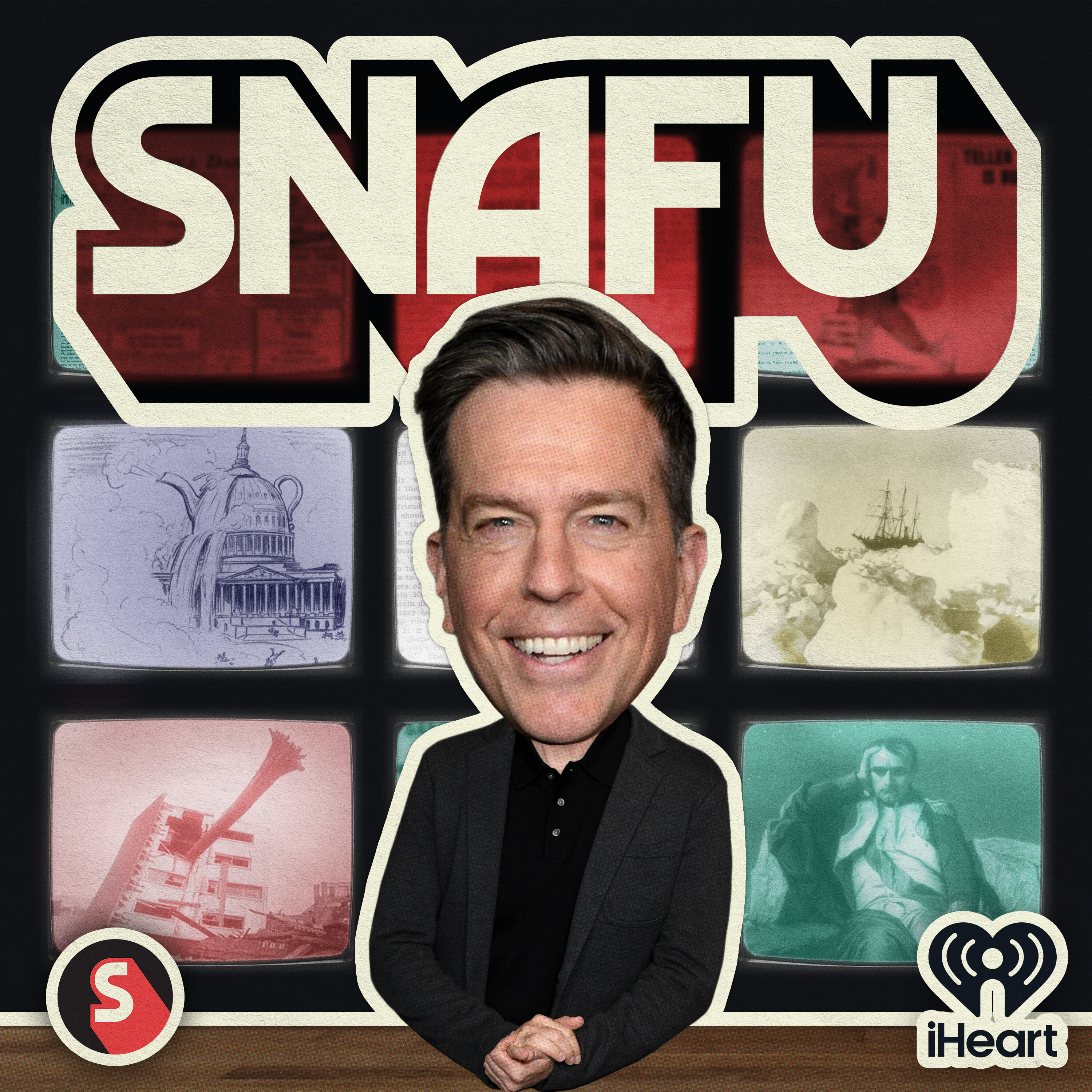
Ed Helms — History’s Greatest Screw Ups
✓ Source-groundedBy studying the 'SNAFUs' of history, we gain a therapeutic perspective on our own chaos and a sobering reminder of the consequences of human incompetence.
In one sentence
Studying the catastrophic "SNAFUs" (Situation Normal: All F**ked Up) of history provides a therapeutic perspective on the present while highlighting the terrifying speed with which human systems can descend into chaos when managed with incompetence or malice.
Why read this (who it's for)
This conversation is for anyone who feels overwhelmed by the current state of the world or personal chaos. It provides a framework for using historical perspective as a "calming" agent—not to ignore the problems, but to recognize that human folly is a recurring, documented pattern. You will learn how to use "the artist's superpower" to transform personal frustration into productive material.
The big idea
Ed Helms argues that history is a repository of "SNAFUs"—situations where things went wrong not because of some impossible act of God, but because of human incompetence, lack of self-awareness, and systemic failure. By studying these "screw-ups," we find a strange form of therapy: it is comforting to know that humanity has faced nuclear-level threats and systemic collapses before, but it is also terrifying to realize how quickly things can break when we play with powerful human forces without proper care.
The core of Helms' philosophy is that history is a mirror. When we look at the "absurd" behavior of figures like Jimmy Carter or the bureaucratic failures of the 1980s, we are actually seeing the same human fallibilities that exist today. The goal isn't just to learn "facts"; it's to understand the patterns of human behavior—specifically how we can be distracted by "random shit" or how we can "manufacture" success in a way that avoids actually learning the necessary lessons.
Key ideas
The "SNAFU" Principle
- What it is — SNAFU stands for "Situation Normal: All F**ked Up." It is the recognition that chaos and incompetence are the default states of human systems.
- Why it matters — Accepting that things are "normally" messed up allows you to stop being surprised by chaos. It shifts your perspective from "Why is this happening to me?" to "This is how human systems behave."
- In the book — Helms uses this to frame his entire exploration of history, suggesting that the "fucked up" nature of the past is a constant.
The Double-Edged Sword of Historical Perspective
- What it is — Studying history provides two simultaneous reactions: a sense of calm (because we've been here before) and a sense of terror (because we keep doing it).
- Why it matters — It prevents you from becoming a passive observer. You shouldn't just say "history repeats" and do nothing; you should recognize the "real consequences for incompetence and malice."
- In the book — Helms notes that looking at nuclear-level threats in the past helps you realize how quickly things can descend into chaos if we don't take care of "certain things."
The "Success" Trap in Learning
- What it is — The tendency to "change the rules" of a test or a war game to ensure a win rather than to actually learn the lesson.
- Why it matters — If you prioritize "looking good" over "learning," you ensure that the same mistakes will be repeated in the real world.
- In the book — Helms cites a 2002 military war game where a team was "constrained" so much that they lost, and the organizers simply said, "Let's do it again" without actually addressing the systemic failures.
The Artistic Superpower of "Processing"
- What it is — The ability to take a "toxic" or "tortured" experience and transform it into something useful, like a painting, a poem, or a performance.
- Why it matters — It allows you to reclaim agency over your own suffering. You can't choose what happens to you, but you can choose what you make of it.
- In the book — Helms describes this as a "superpower" for artists, parents, and even professionals like nurses.
The Perception Filter
- What it is — The idea that our expectations and internal "filters" dictate what we perceive in a situation.
- Why it matters — If you walk into a situation "hot" or "insecure," you will manifest a frustrated outcome. To see things as they are, you must diminish your internal filters.
- In the book — Helms discusses a demonstration where the same "gurgling" sound was perceived as "aliens" or "a cold day" based solely on the listener's expectation.
Frameworks & tools
The Artist's Processing Method
Use this when you experience a frustrating, painful, or "ugly" event (a broken leg, a toxic interaction, a professional failure).
- Acknowledge the "Material": Accept that the event happened. It is now "material" in your life.
- Identify the Emotion: What are you feeling? (Tired, angry, frustrated?)
- The "What can I get for free?" Question: Ask yourself: "How can this feeling/experience give something to my character/work/growth?"
- Transformation: Find a way to "work it into the next book" (or the next project, the next conversation, the next day). Turn the "toxic" experience into a "digestible" piece of information or art.
Memorable examples & stories
The Jimmy Carter Narrative
- The Story: People often view Jimmy Carter as a "dolt" or "weirdo" because of his appearance, but he was a nuclear physicist who heroically addressed a meltdown on a Navy nuclear sub.
- The Lesson: We often have an "almost impressive ability to learn the wrong thing" or focus on a ridiculous, irrelevant narrative instead of the actual substance of a person's life.
The 2002 Millennium Challenge War Game
- The Story: A Marine Lieutenant in a "red team" used creative, unconventional tactics (motorcycle messengers, animal herd behavior) to crush the US "blue team." Instead of learning from his brilliance, the military "constrained" him so much that he quit.
- The Lesson: If the goal is to "look good" or "not look bad," you will never actually learn the lessons required to succeed in the real world.
The "Nuclear" Thought Exercise
- The Story — A thought experiment where a president would have to physically kill someone with their bare hands to get a nuclear code.
- The Lesson — It "sonifies" the act of violence. It removes the abstraction of "pressing a button" and forces you to see the reality of what is being authorized.
Key quotes
"You study history and it both, it calms you down because you're like, we've been through things like this before. And then it also makes you terrified because you're like, we've been through things like this before."
- Why it matters: It captures the duality of historical study: it provides a map of human behavior, but that map shows how often we've nearly destroyed ourselves.
"The only saving grace is that you made something of it."
- Why it matters: This is the core of the "Artistic Superpower"—the ability to take a situation you didn't choose and turn it into something meaningful.
"It's a lot of... our almost impressive ability to learn the wrong thing or to focus on the wrong narrative from a thing."
- Why it matters: A warning against the "spectacle" of history—the way we often ignore the truth of an event to focus on a more entertaining, but less useful, story.
How to apply it
This week
- Identify one "SNAFU": Look at a recent mistake (yours or someone else's). Instead of judging, ask: "What was the human error here? Was it a lack of awareness, a distraction, or a systemic failure?"
- The "Free" Check-in: The next time you feel a strong, negative emotion (anger, exhaustion, frustration), stop and ask: "What can I get for free from this feeling? How can I use this to inform what I'm doing right now?"
Ongoing
- The Processing Habit: When something "bad" happens (a flight delay, a rude comment, a mistake at work), immediately try to find the "material" in it. Ask: "How can I turn this into a story or a lesson that makes me better/stronger?"
- Filter Awareness: When entering a tense situation, consciously check your "internal filter." Are you going in "hot"? If so, acknowledge it and try to neutralize your expectation of the outcome.
Common pitfalls
- The "Safe" History Trap: Reading history to feel better without actually looking at the "scary" parts. You must acknowledge the consequences of incompetence, not just the "weirdness" of the past.
- The "Winning" Trap: Trying to "win" at your personal growth by making it look good on paper (like the military war game) rather than actually doing the hard work of changing your internal rules.
- The "Perfect" Expectation: Expecting that "good" things will happen. The "SNAFU" principle reminds us that things are often "fucked up" by default; the goal is to manage that reality, not to pretend it doesn't exist.
Connects to
- The Stoic Practice of Premeditatio Malorum (Premeditation of Evils): This relates to the "ZenSurance" idea mentioned in the intro—thinking about misfortunes to prepare for them so you can find peace of mind.
- The "Artist's Way" (Julia Cameron): Specifically the idea of "processing" and using personal experience as the raw material for creative output.
If you remember only three things
- SNAFU: Situation Normal: All F**ked Up. Assume chaos is the baseline, and look for the patterns of why it happens.
- The Artistic Superpower: You can take any "toxic" experience—a broken leg, a divorce, a failure—and use it as "material" to inform your growth and your work.
- The Purpose of Learning: If you are doing something (like a workout, a study, or a project) just to "look good" or "not look bad," you are failing to learn the actual lesson.
Internalize it
-
Reflection questions
- When was the last time I focused on a "wrong narrative" about someone instead of the actual substance of their life?
- What is a "toxic" experience I am currently facing, and how can I "process" it into something useful today?
- In what ways am I "cheating" at my own personal growth by trying to make it look good rather than actually making it difficult?
-
Flashcards Q: What does SNAFU stand for? A: Situation Normal: All F**ked Up. Q: What is the "Double-Edged Sword" of studying history? A: It provides calm (we've been here before) and terror (we keep doing it). Q: What is the "Artistic Superpower" described by Ed Helms? A: The ability to take a "toxic" or "tortured" experience and transform it into a painting, a poem, or a performance. Q: Why is the "Winning" trap in the 2002 war game a problem? A: Because the participants changed the rules to win instead of actually learning the lessons of the exercise. Q: How does "perception" affect our reality? A: The expectations we bring to a situation (being "hot" or "insecure") can manifest the outcome of that situation.
Fidelity note
This summary is based strictly on the transcript provided. It captures the primary themes of historical "SNAFUs," the therapeutic nature of history, and the "Artistic Superpower" of processing experience. It does not include specific details of the "SNAFU" book chapters not mentioned in the transcript (e.g., specific details on the Lusitania or the Library Book) beyond the brief mentions made by the host/guest.