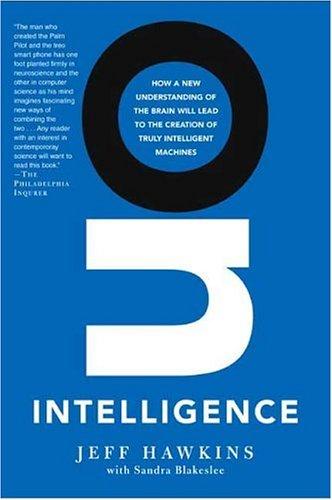
Jeff Hawkins — Future of Intelligence
✓ Source-groundedIntelligence is the ability to build and navigate internal models of the world, and true artificial intelligence requires a system capable of 'movement' within those conceptual reference frames.
In one sentence
Intelligence is not a mystical spark but a functional architecture of internal models where "thought" is analogous to movement through a conceptual space.
Why read this (and who it's for)
This conversation dismantles the "black box" view of AI by providing a biological blueprint for what intelligence actually is. It is for anyone who feels that current AI (LLMs, image generators) is "mimicry" rather than "thinking." You will learn how to distinguish between pattern recognition and actual modeling, and how to conceptualize the "alignment problem" through the lens of biological architecture.
The big idea
Jeff Hawkins argues that the human neocortex—which makes up about 70% of the brain's volume—is essentially a modeling engine. Unlike the rest of the brain, which handles reflexive actions, the neocortex is dedicated to creating an internal recreation of the world. Intelligence, therefore, is the ability to use these models to plan, act, and predict.
The core of Hawkins' theory is that we cannot understand intelligence without understanding reference frames. To understand a cup, you must know where your finger is relative to the cup. To understand a concept like "democracy," you must be able to navigate a conceptual map of how it relates to other ideas. Therefore, true intelligence requires "movement"—the ability to change the location of a representation within an internal map.
Key ideas
The Neocortex as a Modeling Engine
- What it is — The neocortex is the part of the brain that builds an internal model of the world, allowing us to recognize objects, understand language, and plan for the future.
- Why it matters — If intelligence is modeling, then "smart" behavior is only possible if the system can simulate the consequences of actions before they are taken.
- In the book — Hawkins notes that we didn't know what a "coffee cup" was when we were born; we had to learn a model of it through interaction.
The Primacy of Motion and Reference Frames
- What it is — To learn anything, the brain must establish a "reference frame"—a way of noting location. You cannot understand an object's shape unless you know where your finger is relative to it.
- Why it matters — This implies that "movement" (even virtual or conceptual) is the fundamental requirement for learning. You cannot learn by just looking at a static set of pictures.
- In the book — Hawkins argues that even "virtual" movement (like following a link on the internet) is a form of movement because it changes the location of a representation in a conceptual space.
The Common Cortical Algorithm
- What it is — Different parts of the cortex (vision, hearing, touch) are actually performing the same fundamental algorithm, organized into "columns."
- Why it matters — This explains why the brain is so plastic; because the underlying algorithm is the same, the brain can "repurpose" a visual area for touch if the eyes are damaged.
- In the book — Hawkins points out that the human neocortex has about 150,000 of these columns, each acting as a small modeling engine.
The "Predictive State" of Neurons
- What it is — Neurons don't just fire; they maintain a "predictive state." Specific branches of the dendrites recognize patterns and cause spikes that change the voltage of the cell body.
- Why it matters — This means the brain is constantly making predictions about the sensory input it expects to receive. We only notice the world when those predictions are violated (e.g., feeling a crack in a cup).
- In the book — Hawkins explains that these predictions are mostly unconscious and happen at the level of individual neuronal branches.
The Distinction Between Pattern Recognition and Intelligence
- What it is — Current AI (like LLMs) are "wonderful pattern classifiers," but they lack the internal model-building and reference-frame navigation of a sentient mind.
- Why it matters — To reach Artificial General Intelligence (AGI), we must move beyond "predicting the next token" to "modeling the world" through embodied (or virtual) movement.
- In the book — Hawkins argues that you cannot learn how to run a factory or use a tool just by looking at a set of pictures; you need to be able to move and interact with the world's rules.
The "Alignment" of Intelligence vs. Biology
- What it is — Hawkins argues that the "alignment problem" is less about "emotions" and more about the fact that we are trying to build a high-level intelligence without the "old parts" of the brain (the evolutionary baggage).
- Why it matters — He argues that "reason" and "emotion" can be separated. We can build a system that is "smart" without giving it human-like drives or feelings.
- In the book — Hawkins argues that the risk isn't necessarily a "malicious" AI, but a system that is simply optimized for a goal without the human-centric constraints of our biological evolution.
Frameworks & tools
The Modeling Requirement for AGI
To build a truly intelligent machine, one must replicate the principles of the neocortex:
- Embodiment: The agent must have a way to move its sensors (physical or virtual) to interact with the world.
- Reference Frames: The system must be able to establish "where" things are in a conceptual or physical space.
- Movement Vectors: The system must be able to change the location of a representation (an "action") to explore the model.
- Predictive Processing: The system must constantly compare actual input against its internal model to detect "errors" or surprises.
Memorable examples & stories
The Coffee Cup Example
- The Story: To understand the shape of a cup, you don't need to see it; you can feel it with one finger. But to do so, the brain must know where the finger is relative to the cup.
- The Lesson: Reference frames are the prerequisite for any meaningful model of the world.
The House Walkthrough
- The Story: If you imagine walking through your house, your thoughts aren't random. You "move" through a mental map of the rooms.
- The Lesson: Thought itself is a form of movement through a conceptual space.
The "Spaghetti" Column
- The Story: Hawkins describes cortical columns as being like a piece of "angel hair pasta" (about 1mm wide) stacked side-by-side.
- The Lesson: The brain's architecture is modular and repetitive, allowing for a scalable "common algorithm" to be repeated across the cortex.
Key quotes
"Intelligence is just about having a model in your head and using that for planning and action."
- Why it matters: It strips away the mysticism of "consciousness" and replaces it with a functional definition of what a model does.
"You can't learn about the world just by looking at a set of pictures."
- Why it matters: This highlights the necessity of interaction and "movement" (active exploration) in the development of true intelligence.
"The reference frame becomes the core structure for the entire... knowledge about the world is in these reference frames."
- Why it matters: It identifies the "coordinate system" of the mind as the foundation for all complex thought.
How to apply it
This week
- Identify your "Reference Frames": When you are struggling to learn a complex new skill (like a language or a sport), ask: "What is the coordinate system I'm missing?" (e.g., in a language, it's the grammar; in a sport, it's the spatial awareness of the ball).
- Practice "Conceptual Movement": When thinking about a problem, visualize it as a physical space. If you are planning a business, "walk" through the different departments and "look" at the connections between them.
Ongoing
- The Prediction Check: When you feel surprised by a social interaction or a piece of news, ask: "What was the model I was using to predict this?" This helps identify where your internal model of the world is out of date.
- Active Exploration: When learning, prioritize "doing" over "watching." If you want to learn a craft, you must move and interact with the tools, not just watch a video of someone else doing it.
Common pitfalls
- The Anthropomorphism Trap: People often assume that to be "intelligent," a machine must have human emotions or "feelings." Hawkins argues that intelligence is a structural property of modeling and reference frames, which can be separated from the "biological baggage" of human evolution.
- The "Static" Learning Fallacy: Thinking that more data (more pictures/more text) will eventually lead to intelligence. Hawkins argues that without a mechanism for movement and reference frames, more data just leads to better pattern matching, not actual understanding.
Connects to
- "A Thousand Brains" by Jeff Hawkins: The primary source for the cortical column theory and the "common algorithm" of the neocortex.
- "The Alignment Problem" (various authors): This conversation provides a counter-perspective to the standard "AI Safety" discourse by focusing on the structural requirements of intelligence rather than just the dangers of "super-intelligence."
If you remember only three things
- Intelligence is the ability to build and navigate internal models of the world.
- Movement (the ability to change location in a conceptual space) is the fundamental requirement for learning.
- True intelligence requires "reference frames"—knowing where things are relative to one another.
Internalize it
-
Reflection questions
- If I stripped away all my emotions and memories, what "models" of the world would I still possess (e.g., the rules of gravity, the shape of a chair)?
- How much of my current "knowledge" is actually just a high-quality pattern match versus a model I can actually navigate?
- In what ways does my current work/study lack "movement"? Am I just looking at pictures (data) instead of interacting with a system?
-
Flashcards Q: What is Hawkins' definition of intelligence? A: Having an internal model of the world and using that model for planning and action.
Q: What is a "reference frame" in the context of the neocortex? A: A way of noting location; the knowledge of where things are in the world relative to other things.
Q: Why is "movement" essential for intelligence? A: Because to learn a model of the world, you must be able to change the location of a representation (action) to explore the world.
Q: What is the "Common Cortical Algorithm"? A: The idea that different parts of the neocortex (vision, hearing, touch) all perform the same fundamental algorithm organized into columns.
Q: How do neurons create a "predictive state"? A: Through spikes traveling along the dendrites that recognize patterns and change the voltage of the cell body.
Fidelity note
This summary is based strictly on the provided transcript. I am highly confident in the definitions of "intelligence" and "reference frames" as presented by Jeff Hawkins. The distinction between "pattern recognition" and "modeling" is a central theme of his argument. The transcript does not provide a full list of the "principles" he mentions in his book, so the summary focuses on the ones he explicitly mentions in the conversation (embodiment, reference frames, and movement).