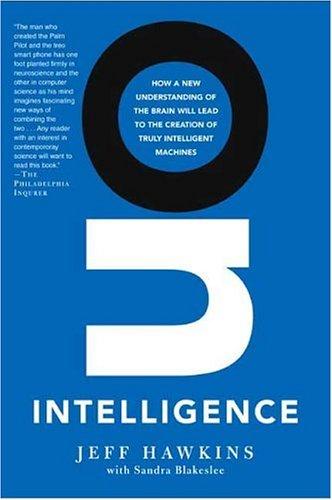
Jeff Hawkins — Thousand Brains Theory of Intelligence
✓ Source-groundedIntelligence is not a single centralized process but a collective of thousands of independent modeling systems in the neocortex that communicate via a voting mechanism.
In one sentence
The human neocortex is composed of roughly 150,000 independent "mini-brains" (columns) that each maintain their own model of the world and reach a consensus on reality through a voting system.
Why read this (for who it's for)
This summary is for anyone interested in the fundamental architecture of consciousness, artificial intelligence, and neuroscience. It solves the mystery of how a single, unified "self" can emerge from a messy, biological organ. After reading this, you will be able to explain why the brain doesn't store memories in a single "file cabinet" and how the principle of prediction serves as the primary engine for all learning.
The big idea
Jeff Hawkins argues that our current understanding of the brain is fundamentally flawed because we look for a "central command" that doesn't exist. Instead, the neocortex is a massive, repetitive circuit of thousands of independent modeling systems. Each "column" in the cortex acts as a self-contained unit of intelligence, learning and predicting its own specific domain of the world (e.g., a specific visual feature or a specific motor movement).
The "intelligence" we experience is actually the result of these thousands of systems communicating with one another. They don't share their internal data; instead, they "vote" on the state of the world. When you see a water bottle, you aren't seeing a single unified image; you are seeing the result of a consensus reached by thousands of columns that have each developed a model of what that bottle looks like from different angles and in different contexts.
Key ideas
The Thousand Brains Theory
- What it is — The neocortex is not a single processor but a collection of tens of thousands of independent modeling systems. Each column is a complete modeling system.
- Why it matters — It explains why we don't have a "special place" for memories. Knowledge is distributed across thousands of complementary models that work together.
- In the book — Hawkins describes the columns as "little grains of rice" stacked next to each other, each representing a distinct modeling system.
Prediction as the Fundamental Engine
- What it is — Intelligence is fundamentally about prediction. The brain's primary job is to predict what will happen next based on a model of the world.
- Why it matters — If you understand how the brain makes predictions, you understand how it builds models and how it learns. Prediction is the "key that got us in the door."
- In the book — Hawkins uses the example of predicting what a finger will feel when touching a coffee cup. To make that prediction, the brain must have a reference frame for the cup and the finger's position relative to it.
The Voting Mechanism
- What it is — Because the columns are independent, they communicate via "voting neurons" or long-range connections to reach a consensus.
- Why it matters — This explains why our perception feels singular and stable even though the input from our eyes and ears is constantly changing and moving.
- In the book — Hawkins explains that as our eyes move three times a second, the input is entirely new, but the "voting" tells us the water bottle is still in the same place.
The Role of the Neocortex
- What it is — The neocortex accounts for about 70-75% of the brain's volume and is the seat of all high-level vision, hearing, touch, language, and planning.
- Why it matters — While other parts of the brain handle emotions and body regulation, the neocortex is the "modeling system" that allows us to understand and interact with the world.
- In the book — Hawkins compares the neocortex to a map of the world; the map itself is the neocortex, while the rest of the brain determines how that map is used (motivations, desires, etc.).
Sensory-Motor Learning Systems
- What it is — Learning is the process of discovering the structure of the world by moving through it.
- Why it matters — This principle applies to both biological and artificial systems. To learn, a system must "move" through a world—whether that world is physical, digital, or conceptual.
- In the book — Hawkins notes that a system living on the internet that follows links to sample information is a "sensory-motor system" because it is moving through a conceptual world to learn its structure.
Frameworks & tools
The Prediction-Model-Action Loop
To understand how any intelligent system (biological or artificial) learns, use this three-step framework:
- Model: Build a representation of the world (a "map").
- Prediction: Use that model to forecast what will happen next (e.g., "If I do X, then Y will happen").
- Action/Test: Perform the action to see if the prediction was correct. If the prediction fails, the model is updated.
The Reference Frame Principle
When designing a model of any object or environment, you must establish a reference frame:
- Identify the Object: (e.g., a coffee cup).
- Establish Coordinates: Create a way to represent the location of other things relative to that object (e.g., X, Y, Z axes).
- Predictive Mapping: Use these coordinates to predict where a finger or an eye will be in relation to the object.
Memorable examples & stories
The Water Bottle Perception
As we look at a water bottle, our eyes are constantly moving, and the input to our brain is changing every millisecond. However, we perceive the bottle as a stable, stationary object. This is because the "voting" neurons are constantly confirming the consensus of the thousand brains, allowing us to ignore the "noise" of the moving input. Lesson: Our conscious experience is the result of a massive, invisible consensus.
The Wright Brothers and the Principles of Flight
People often think the Wright Brothers' innovation was the propeller, but it was actually understanding the principles of flight—specifically, how to control the twist of the wings. They studied birds to understand how they turned. Lesson: Once you understand the underlying principles of a system (like flight or intelligence), you can choose any implementation (biological or mechanical) to achieve the goal.
The "Dance" of Pedestrian-Car Interaction
When a pedestrian crosses the street, there is a "dance" of mutual understanding. The pedestrian looks at the car to see if it will stop; the car "understands" the human's intent. Lesson: High-level intelligence requires understanding the "game theory" of human interaction and social cues.
Key quotes
- "The neocortex is a sheet of neural tissue... it runs on this very repetitive algorithm."
- "The big idea... is that we think of the brain... as learning this model of the world, but what we learned is actually there's tens of thousands of independent modeling systems going on."
- "Prediction is the fundamental research agenda... if we understand how the brain makes predictions, we'll understand how it builds these models and how it learns." (Paraphrased)
- "The best frameworks stick around while the details change." (Paraphrased)
How to apply it
This week
- Identify your "Reference Frames": When learning a new complex skill (like a new language or a musical instrument), stop trying to memorize facts. Instead, identify the "map" of the system. What are the coordinates? What is the underlying structure?
- Practice Prediction: Before you perform a routine task (like a meeting or a workout), spend 30 seconds predicting the outcome. After the task, reflect on why your prediction was right or wrong.
Ongoing
- Think in Models: When faced with a problem, ask: "What is my current model of this situation?" and "How can I update this model to make better predictions?"
- The Principle of Movement: Recognize that learning requires "movement." Whether you are learning a physical sport or a conceptual theory, you must "move" through the data to find its structure.
Common pitfalls
- The "Single Brain" Fallacy: Many people assume there is a "CEO" in the brain. Hawkins argues this is a myth; the "CEO" is actually the result of a voting system among thousands of independent departments.
- Overestimating AI Risk: Hawkins argues that the "intelligence" side of AI is not the existential risk; rather, the risk lies in self-replication (like a virus). Intelligence itself is just a tool for modeling.
- The "Biological" Trap: Don't assume that because a system is biological, it must be "messy." While the brain is complex, the neocortex is remarkably regular and structured.
Connects to
- The Wright Brothers/Aviation: For understanding how identifying principles allows for different implementations.
- Game Theory: For understanding the "dance" of human interaction and social intelligence.
- Evolutionary Biology: For understanding how self-replication (the true risk) differs from intelligence.
If you remember only three things
- Intelligence is a collective of thousands of independent modeling systems (the Thousand Brains Theory).
- Prediction is the fundamental engine of all learning and intelligence.
- Understanding the "principles" of a system (like flight or neural modeling) allows you to build any implementation of that system.
Internalize it
- Reflection questions
- If my brain is made of a thousand brains, what does that say about my "individual" identity?
- How would my approach to learning change if I viewed every new skill as a "model" I need to build rather than a list of facts to memorize?
- In what areas of my life am I making "predictions" without having a solid "model" to back them up?
- Flashcards
- Q: What is the "Thousand Brains Theory"?
- A: The theory that the neocortex consists of thousands of independent modeling systems (columns) that communicate via a voting mechanism.
- Q: What is the fundamental research agenda for understanding intelligence?
- A: Understanding how the brain makes predictions.
- Q: What is a "reference frame" in the context of the brain?
- A: A way of representing the location of one thing relative to another (e.g., the finger relative to the coffee cup) to allow for accurate prediction.
- Q: Why is the neocortex considered a "modeling system"?
- A: Because it is a regular, structured system that allows for high-level planning, language, and perception by creating a map of the world.
- Q: What is the difference between "intelligence" and "self-replication" in the context of existential risk?
- A: Intelligence is a tool for modeling; self-replication is the mechanism of growth and spread (like a virus), which is where the actual danger lies.
Fidelity note
This summary is based strictly on the provided transcript of the conversation between Lex Fridman and Jeff Hawkins. The summary captures Hawkins' specific theories on the neocortex, the "Thousand Brains" theory, and his views on AI and existential risk. It does not include any outside information regarding Hawkins' other works unless explicitly mentioned in the text.