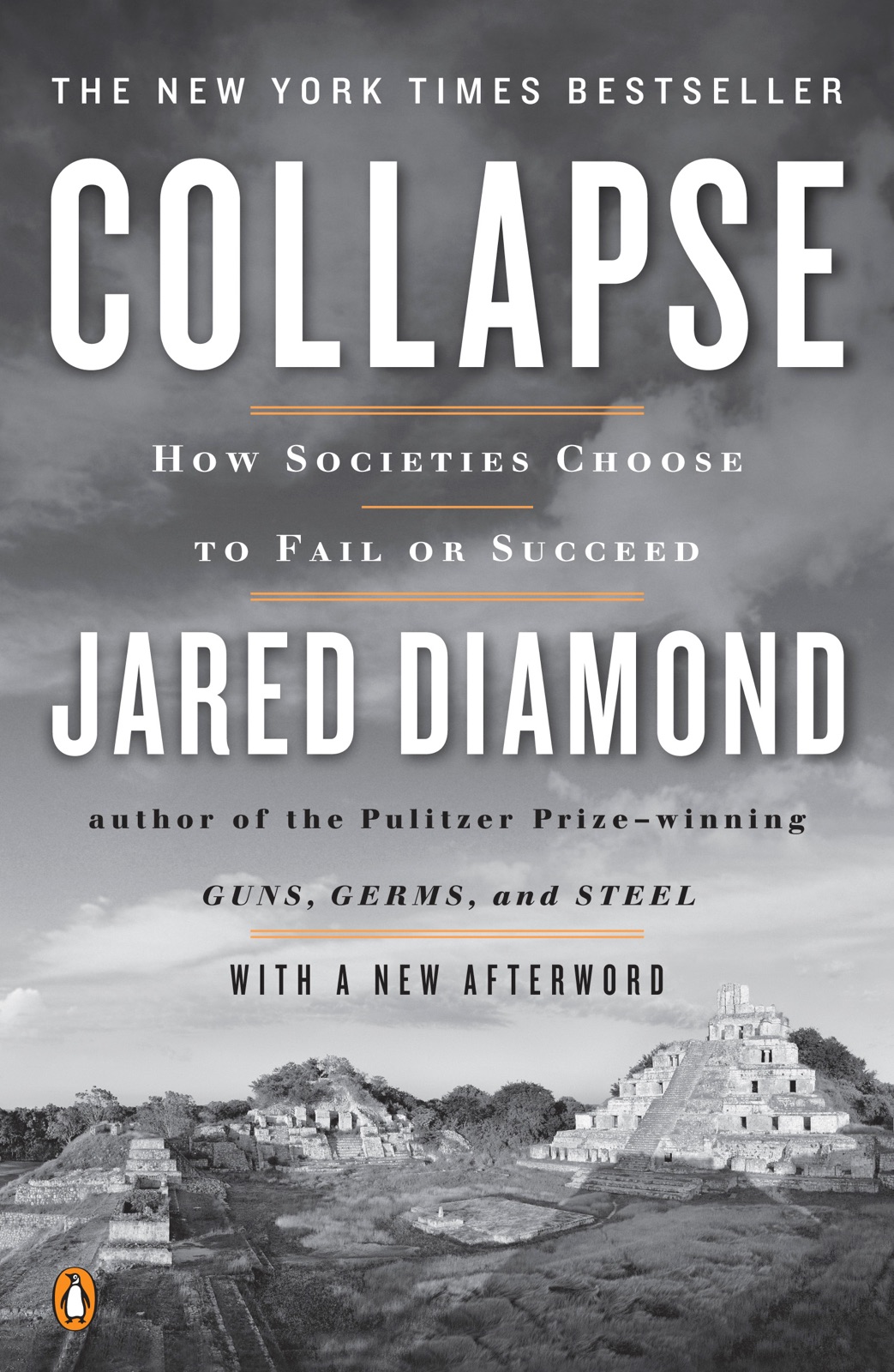
Jared Diamond — Rise & Fall
✓ Source-groundedCivilizational success is largely determined by geographic luck—specifically the availability of domesticable species—and the breakdown of political civility poses a modern existential threat to the stability of the state.
In one sentence
The trajectory of human civilizations is dictated by "geographic determinism"—the presence of domesticable plants and animals—while the survival of modern civilization depends on our ability to maintain political civility and institutional stability.
Why read this (and who it's for)
This conversation provides a macro-historical framework for understanding why some societies flourish while others struggle. It is for anyone interested in history, anthropology, or political science who wants to understand the structural reasons behind global inequality and the fragile nature of modern democratic institutions. You will be able to view history not as a series of random cultural choices, but as a response to environmental constraints and geographic "luck."
The big idea
Jared Diamond argues that the primary reason for the disparate development of human civilizations is not inherent cultural superiority or biological differences, but rather geographic determinism. Specifically, the "luck" of having wild species (plants and animals) suitable for domestication allowed certain regions—like the Fertile Crescent—to develop food surpluses, which in turn fueled the rise of inventors, kings, and scribes.
Diamond posits that this geographic head start created a compounding effect: agriculture led to metal tools, which led to writing, which led to the expansion of "cargo" (technology, medicine, and schools). Conversely, regions without domesticable species (like Australia) were effectively locked out of this developmental trajectory. Diamond’s work suggests that while the human spirit is important, it operates within the hard limits of the environment.
Key ideas
Geographic Determinicism
- What it is — The theory that the success of a civilization is primarily determined by its environment, specifically the availability of domesticable species.
- Why it matters — It removes the "moral" or "cultural" justification for why some nations are wealthy and others are poor, attributing success to unearned geographic luck.
- In the book — Diamond points out that while many cultures exist, only a tiny fraction of wild species can be domesticated. If you live in an area with no domesticable species, you cannot develop agriculture, and therefore cannot develop the "cargo" of civilization.
The "Cargo" of Civilization
- What it is — A term used by New Guineans to describe the fruits of advanced civilization: metal, technology, writing, schools, and medicine.
- Why it matters — It illustrates how technological development is a cumulative process. You cannot have "cargo" without the preceding steps of agriculture and surplus.
- In the book — Diamond notes that New Guineans asked why Europeans developed "cargo" while they did not; the answer lies in the 11,000-year head start provided by domesticable species.
The Breakdown of Political Civility
- What it is — The erosion of the ability to resolve differences through debate, conversation, or institutional compromise.
- Why it matters — Without civility, the only remaining recourse is political violence or the "mock assassination" of public figures.
- In the book — Diamond highlights the "epidemic" of milkshakes thrown at politicians in the UK as a sign of a breakdown in the "break" on our baser natures that words and debate provide.
Selection Pressures: Disease vs. Intelligence
- What it is — The idea that different environments select for different human traits.
- Why it matters — It explains why different populations might develop different strengths based on survival needs.
- In the book — Diamond argues that in Eurasia, high-density populations faced selection for resistance to epidemic diseases (like smallpox), whereas in New Guinea, lower population densities favored selection for social skills and cognitive ability to survive in a tribal, non-state environment.
The Decline of Violence in Civilized Societies
- What it is — The historical trend of a precipitous decline in the risk of violent death as societies become more organized.
- Why it matters — It highlights the success of the "state" as a mechanism to end wars and restrain "hotheads."
- In the book — Diamond cites Steve Pinker’s research showing that while modern wars are horrific, the rate of violent death per capita is significantly lower in stable, civilized societies than in traditional, non-state tribal societies.
Frameworks & tools
The Geographic Determinism Framework
To understand why a society is where it is, analyze its environmental constraints:
- Identify Domesticable Species: Did the region have wild plants/animals suitable for farming/breeding?
- Assess Food Surplus: Did agriculture allow for a population explosion and a class of non-farmers (scribes, kings, inventors)?
- Trace the "Cargo" Chain: Did the surplus lead to metal, then writing, then complex technology?
- Identify Geographic Luck: Recognize that these developments were often "unearned" by the people living there, but were the only viable paths forward given the available biology.
Memorable examples & stories
- The Zebra vs. The Horse: While some may have pulled carts, zebras were never domesticated because they are too aggressive. This illustrates how "unearned" geographic luck is—you cannot simply "will" a species into being useful for civilization.
- The "Angry Anthropologist": Diamond recounts having to hire bodyguards and install spikes on his fence because of a single, angry anthropologist. This serves as a metaphor for the current "moral panic" surrounding the discussion of human differences.
The "Mock Assassination" of Milkshakes: Diamond explains that throwing a milkshake at a politician is a "mock assassination" because it demonstrates a persistent vulnerability, signaling to potential actual assassins that security measures can be bypassed.
Key quotes
- "Geography has big effects. And in some cases, the big effects are dominant... If you don't have domesticable species around there, you're not going to develop agriculture."
- "The fact is that those who invented agriculture longest ago... the major causes of death for the last many millennia have been epidemic infectious diseases... whereas in New Guinea, the major causes of death are starvation, fighting with other New Guineans."
- "We can't politically be vulnerable to just the data coming in... we are, as a community of public intellectuals, truly vulnerable to what is a kind of moral panic around the politics of discussing human difference." (paraphrased)
How to apply it
This week
- Analyze a "Success" Story: Pick a country or culture you admire. Instead of looking at "grit" or "culture," look at its geographic resources. What "domesticable" advantages did it have?
- Observe Political Discourse: Watch a news cycle and identify where "civility" breaks down. At what point did the conversation stop being about a solution and start being about a "public humiliation"?
Ongoing
- The "Civility" Check: Before engaging in a heated debate, ask: "Is this a conversation intended to find a common ground, or is it a performance of hostility?"
- Contextualize Human Difference: When looking at differences between groups, consider the "selection pressures" of their environments (e.g., disease vs. starvation) rather than jumping to moralistic conclusions.
Common pitfalls
- The "Human Spirit" Trap: Do not mistake the human spirit for a magic wand. Diamond argues that while the spirit is real, it cannot overcome a lack of domesticable species or the physical reality of a harsh environment.
- The "Moral Panic" of Data: Avoid the trap of refusing to look at data because of the political implications. Diamond argues that we must be able to look at human differences (biological or cultural) without falling into a "moral panic."
Connects to
- Sapiens by Yuval Noah Harari: Explores the rise of Homo sapiens and the "imagined orders" (like money and nations) that allowed us to cooperate in large groups.
- The Better Angels of Our Nature by Steven Pinker: Directly relates to Diamond's point about the decline of violence in civilized societies.
If you remember only three things
- Geographic Determinism: Civilizations thrive based on the "luck" of having domesticable plants and animals.
- The Cargo Chain: Agriculture $\rightarrow$ Surplus $\rightarrow$ Technology $\rightarrow$ Writing $\rightarrow$ Civilization.
- The Fragility of Civility: The survival of our modern world depends on our ability to maintain a "break" on our baser natures through civil discourse.
Internalize it
- Reflection questions
- If I were born in a region with no domesticable species, how would my life's trajectory have been fundamentally different?
- How much of my own success is due to "unearned" luck (geography, birth, genetics) versus my own effort?
- What is the "break" in my own life that prevents me from reacting with violence or hostility when I disagree with someone?
- Flashcards
- Q: What is "Geographic Determinism"?
- A: The theory that the success of a civilization is determined by its environment, specifically the availability of domesticable species.
- Q: What is the "Cargo" of civilization?
- A: The cumulative technologies of civilization: metal, writing, schools, and medicine.
- Q: Why did Eurasia develop faster than New Guinea?
- A: Because Eurasia had a head start in domesticable plants and animals, leading to agriculture and food surpluses.
- Q: What is Diamond's view on the "milkshake" incidents in the UK?
- A: They are "mock assassinations" that demonstrate a breakdown of civility and a persistent vulnerability in public figures.
- Q: What selection pressures favored cognitive skills in New Guinea?
- A: Because the population was too small for epidemic diseases, survival depended on social skills and intelligence.
Fidelity note
This summary is based strictly on the provided transcript. The discussion on biological differences is presented as a theoretical possibility that Diamond acknowledges but notes has not been established at a population level. The summary captures Diamond's specific emphasis on geographic determinism as the primary driver of historical disparity.