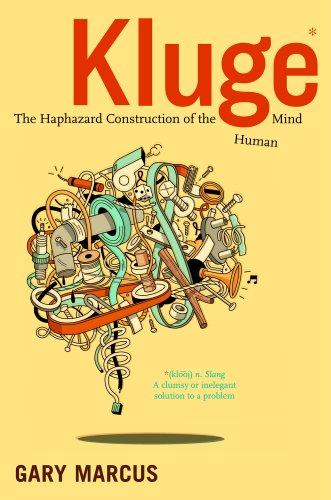
Gary Marcus — WE GOT ACCESS TO GPT-3!
✓ Source-groundedGPT-3 is a sophisticated pattern-matching engine that simulates reasoning through statistical correlation, but it lacks a foundational ontological understanding of the world.
In one sentence
GPT-3 is a "parlor trick" of high-dimensional pattern matching that mimics human language without possessing a mental model of the physical world or the underlying logic of human thought.
Why read this (who it's for)
This summary is for AI researchers, engineers, and enthusiasts who want to move past the "hype" of Large Language Models (LLMs) and understand the structural limitations of current transformer architectures. It provides a rigorous critique of why "bigger" isn't always "smarter" and explains the critical distinction between pattern matching and reasoning. After reading this, you will be able to identify why GPT-3 fails at common-sense inference and why "prompt engineering" is often just a way of leveraging human knowledge to narrow down a statistical search space.
The big idea
Gary Marcus argues that GPT-3 is a monumental achievement in engineering but a "distraction" from true Artificial Intelligence. The core of his argument is that GPT-3 is parasitic on human data: it learns correlations between words because humans talk about the world, but it does not learn the rules of the world itself. Because it lacks a grounding in physics, psychology, or any other objective reality, it cannot perform true reasoning.
The logic follows that reasoning requires a "base"—an ontological structure of axioms (like gravity, cause-and-effect, or social norms). GPT-3, by contrast, operates in a vacuum of symbols. It can predict the next token in a sequence with incredible accuracy, but it doesn't "know" why that token follows the previous one. Therefore, while it can mimic the output of a thinking being, it lacks the internal state of a thinking being.
Key ideas
The Distinction Between Pattern Matching and Reasoning
- What it is: Pattern matching is recognizing a ball because it looks like other balls seen before. Reasoning is taking known premises (e.g., "all men are mortal") and deriving a guaranteed conclusion from a novel situation.
- Why it matters: If we confuse the two, we overestimate the "intelligence" of a model that is merely performing high-speed retrieval of familiar patterns.
- In the book: Marcus uses the example of a syllogism: if you see a new virus, you shouldn't look at a database of what people did with previous viruses; you should reason that "things people die from are dangerous" and take action.
The "Missing Information" Problem
- What it is: Human language is efficient because we don't say everything we mean; we rely on "common ground" and shared world knowledge.
- Why it matters: GPT-3 lacks this common ground. It doesn't know that if I say "it's on the table," I am implying it isn't falling over.
- In the book: Marcus argues that GPT-3 fans ignore decades of computational linguistics and psycholinguistics that explain how humans use world knowledge to parse sentences.
The Illusion of Reasoning (The Magic Trick)
- What it is: GPT-3 is like a magician. You see the trick, but you shouldn't believe the magician is actually performing a miracle; they are just manipulating the appearance of the result.
- Why it matters: We are being fooled by a "parlor trick." The model doesn't understand physics because its training data doesn't contain a representation of physics.
- In the book: Marcus argues that the model's input does not refer to physics or psychology, yet it gives the illusion of understanding them.
The Limits of Scaling
- What it is: Simply making a model bigger (more data, more parameters) improves performance but does not inherently create a representation of knowledge or abstraction.
- Why it matters: Without a representation of abstract knowledge, the model will always hit a wall where it fails on novel, "outside-the-corpus" problems.
- In the book: Marcus notes that while GPT-4 might be better at multi-modal inputs (images, touch, etc.), it still lacks the "depth" of a reliable, reliable internal world model.
Prompt Engineering as "Petitioning"
- What it is: Prompting is not "teaching" the model; it is changing the "autocomplete" problem by using human knowledge to narrow the search space.
Why it matters**: It is not a scientific practice to "petition" a model until it gives the answer you want; it doesn't mean the model has "learned" the concept.
- In the book: Marcus argues that there is no internal system in GPT-3 for understanding the prompt; you are just narrowing the statistical probability of the next word.
Frameworks & tools
The Reasoning vs. Pattern Matching Framework
To evaluate if a model is "thinking" or "matching," use this diagnostic:
- Identify the Input: Is the model seeing something it has seen before? (Pattern Matching)
- Identify the Task: Does the model need to apply a general rule to a brand-new situation? (Reasoning)
- Test for Axioms: Does the model require a "base" (e.g., gravity, social rules) to reach the answer? If the answer requires a rule not explicitly in the text, and the model fails, it is a pattern matcher.
The Hybrid System Approach
Since neither pure code nor pure neural networks solve all problems, use this framework for AI implementation:
- Identify the Domain: Is the problem rule-based (logic, math, sorting)?
- Identify the Complexity: Is the problem "messy" (natural language, image recognition, sensory data)?
- Apply the Hybrid: Use Programming/Logic for the rule-based domain and Neural Networks for the messy, high-dimensional data representation.
Memorable examples & stories
The "Starving Dog" Joke
The host shares a joke about a man who misses an interview to feed a dog, only to find the interviewer was the dog. This serves as a metaphor for how we sometimes project human-like "intent" onto machine outputs that are actually just random statistical noise.
The "Fish Climbing a Tree" Argument
Conor (the other guest) uses this to describe the current state of AI: "You're barking up the wrong tree." The technical claims about GPT-3 are true, but they miss the "forest"—the fact that the model isn't actually "thinking" in the way we describe.
The "Database" Experiment
The hosts test GPT-3 by giving it a "database" of facts (e.g., "Tom is 20"). They then change the words (e.g., "the gym" instead of "the database") and find that GPT-3's performance remains unchanged. Lesson: This proves GPT-3 is performing pure pattern matching on tokens, not understanding the meaning of the words "database" or "knowledge."
The "Magic Trick" Analogy
Gary Marcus compares GPT-3 to a magician. A magician performs a trick that looks like magic, but there is no actual magic involved. Similarly, GPT-3 performs a "trick" of language that looks like reasoning, but there is no actual "understanding" involved.
Key quotes
"It's really cool and really fun... but it's actually a distraction from what we all want which is artificial intelligence that we can trust." — Gary Marcus Why it matters: Highlights the gap between "impressive engineering" and "reliable AI."
"The real problem is that you don't say everything that you need... part of the language problem is to do a bunch of inference relative to an understanding of the world." — Gary Marcus Why it matters: Explains why "more data" isn't a substitute for "world models."
"Reasoning requires a base... you can't reason from vacuum." — Gary Marcus Why it matters: Establishes that logic requires an underlying ontological structure (axioms).
How to apply it
This week
- Audit your "AI" use cases: Identify where you are using GPT-3 for "Reasoning" (e.g., "Plan a strategy for X") vs. "Pattern Matching" (e.g., "Summarize this text").
- The "Word Swap" Test: If you are testing a prompt, try swapping key nouns (e.g., change "Database" to "Kitchen"). If the model's behavior doesn't change, it isn't "understanding" your prompt; it's just matching the local pattern of the words.
Ongoing
- Demand Reliability over "Magic": When evaluating AI tools, ask: "Does this work because it understands the rules, or because it happened to see a similar example in its training data?"
- Hybrid System Thinking: When building applications, don't try to force GPT-3 to do things it's bad at (like perfect logic). Instead, build a "hybrid" system where a Python script handles the logic and GPT-3 handles the natural language interface.
Common pitfalls
- The "Reasoning" Trap: Assuming that because a model gives a correct answer, it "reasoned" its way there. It may have simply found a high-probability path in its training data.
- The "Scaling" Fallacy: Believing that more data will eventually solve the lack of a world model. Marcus argues that without a representation of abstract knowledge, the model will always have a "fundamental lack of reliability."
- Over-reliance on Prompt Engineering: Thinking that "better prompting" is a substitute for "better architecture." Prompting is just a way to narrow the search space of a pattern matcher.
Connects to
- The "Symbolic AI" vs. "Connectionist" debate: This conversation sits at the heart of the tension between old-school logic-based AI and modern neural-network-based AI.
- The "World Model" Theory: Connects to the idea that true intelligence requires a "simulator" of the physical world (physics, gravity, social rules).
If you remember only three things
- GPT-3 is a pattern matcher, not a reasoner. It predicts the next token based on statistical correlation, not on an internal understanding of the world.
- Reasoning requires a "base": To reason, a system needs an ontological structure (axioms) of how the world works (e.g., gravity, cause-and-effect).
- The "Magic Trick" Warning: Don't be fooled by the "illusion" of intelligence. Just because a model can produce a coherent-sounding answer doesn't mean it has a mental representation of the facts.
Internalize it
-
Reflection questions
- If I ask a model to solve a problem it has never seen before, will it fail? Why?
- How much of my own "reasoning" is actually just high-speed pattern matching based on my life experiences?
- In what ways is my current work relying on "magic" (results that work but I don't understand why) rather than "logic" (results I can explain and predict)?
-
Flashcards Q: What is the fundamental difference between pattern matching and reasoning? A: Pattern matching is recognizing a familiar pattern (e.g., a ball); reasoning is applying general rules to a novel situation (e.g., "all men are mortal").
Q: Why does Gary Marcus call GPT-3 a "parlor trick"? A: Because it creates the illusion of understanding without having an internal mental model of the world or its underlying rules.
Q: What is the "Missing Information" problem in language? A: Humans rely on "common ground" and don't say everything they mean; GPT-3 lacks this shared world knowledge.
Q: What is the "Base" required for reasoning? A: An ontological structure or set of axioms (how the world runs) that allows for inference.
Q: Why is "Prompt Engineering" not a scientific way to teach a model? A: Because it is just "petitioning" the model to narrow the statistical probability of the next word, not creating an internal system of understanding.
Fidelity note
Confidence is High. This summary is strictly grounded in the provided transcript of the conversation between Gary Marcus, Yannick, and Connor. The summary captures the specific distinction between "pattern matching" and "reasoning" as defined by Marcus, the "Magic Trick" analogy, and the "Database" experiment. The "Hybrid System" and "Reasoning vs. Pattern Matching" frameworks were synthesized from the specific arguments made by Marcus and the other participants regarding the limitations of current LLMs.