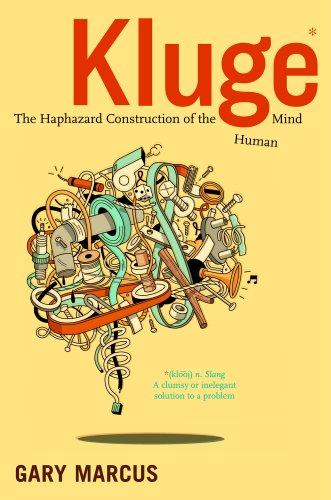
The future of the brain
≈ From memoryHuman intelligence is not a single 'magic' spark but a complex, biological architecture of distinct systems, and we can only build true AI by understanding the specific biological constraints and evolutionary history of the human brain.
In one sentence
True artificial intelligence cannot be achieved by simply scaling up "brute force" computation; it requires a fundamental understanding of the human brain's architecture, specifically how it balances plasticity, stability, and the integration of disparate cognitive functions.
Why read this (and who it's for)
This book is for the "AI enthusiast" who is frustrated by the limitations of current Large Language Models (LLMs) and deep learning. It solves the misconception that "more data + more parameters = consciousness/intelligence." After reading, you will be able to distinguish between simulated intelligence (pattern matching) and embodied intelligence (reasoning, planning, and understanding), and you will understand why the "Next Token Prediction" approach faces a hard ceiling.
The big idea
Gary Marcus argues against the "computationalist" view that the brain is essentially a computer running a sophisticated software program. Instead, he posits that the brain is a biological organ shaped by millions of years of evolution, where intelligence emerges from the interaction of specific, specialized systems—not a single, unified "thinking" engine.
The core logic is that human intelligence is characterized by General Intelligence (g): the ability to apply learned rules from one domain (like language) to a completely different domain (like social navigation or physical manipulation). Current AI excels at "narrow" tasks because it can be optimized for a specific objective function. However, it lacks the "common sense" and "world models" that humans develop effortlessly because we are embodied beings interacting with a physical reality. To build the future of AI, we must stop trying to mimic the output of the human brain and start mimicking the architecture of the human brain.
Key ideas
The Fallacy of the "Unified" Intelligence
- What it is — The brain is not a monolithic processor; it is a collection of modules (vision, language, motor control, social cues) that work in concert.
- Why it matters — If you believe intelligence is a single "thing," you will keep trying to build a single "God-model" AI. If you accept it is modular, you realize we need to build systems that can integrate disparate modules.
- In the book — Marcus points to how we can recognize a face but cannot "see" the underlying mathematical representation of that face in the same way we process the color blue.
Embodied Cognition
- What it is — Intelligence is not just "brain in a vat" processing; it is deeply tied to our physical bodies and our interaction with the environment.
- Why it matters — Without a body to experience gravity, friction, and spatial depth, an AI will never truly understand "why" a glass falls over; it will only know the statistical probability of the word "falls."
- In the book — He discusses how infants learn about the world through tactile and motor interaction, which provides the "grounding" for all future abstract thought.
The Importance of Plasticity vs. Stability
- What it is — The brain must be plastic enough to learn new things but stable enough to retain old ones (the "Stability-Plasticity Dilemma").
- Why it matters — Current AI suffers from "catastrophic forgetting"—when you teach it a new task, it often overwrites the weights used for the old task. Human brains solve this through specific architectural constraints.
- In the book — Marcus explores how the brain preserves core memories while allowing for the acquisition of new skills, a balance current neural networks struggle to achieve.
The Role of "Common Sense"
- What it is — Common sense is the "background" knowledge of the world (e.g., "if you drop a ball, it falls down").
- Why it matters — We currently lack a way to "program" common sense because it is a massive, interconnected web of millions of tiny rules. AI needs a way to acquire this without being told every single rule individually.
- In the book — He argues that common sense is the "glue" of human intelligence, and without it, AI remains a sophisticated parlor trick.
Symbolic vs. Connectionist Systems
- What it is — Connectionism (Neural Networks) is great at pattern recognition; Symbolic AI (Good Old Fashioned AI) is great at logic and rules.
- Why it matters — The future of AI likely lies in a "Neuro-Symbolic" hybrid: a system that can "feel" a pattern but also "reason" about a rule.
- In the book — Marcus argues that neither alone is sufficient to reach human-level AGI.
Frameworks & tools
The Architecture of Human Intelligence Framework
To build a better AI, Marcus suggests we look at the three pillars of human cognitive architecture:
- Perception (The Input): How do we turn raw sensory data into representations? (Vision, Hearing, Touch).
- Action (The Output): How do we translate internal goals into physical movements or linguistic outputs?
- Cognition (The Processing): The "middle-ware" that handles planning, memory, and reasoning.
The Checklist for AI Development:
- Does the system have a World Model? (Can it predict what happens if it changes an object's position?)
- Does it have Symbolic Reasoning? (Can it follow a "If-Then" rule that it hasn't seen in the training data?)
- Is it Embodied? (Does it have a reason to learn—a goal-oriented interaction with a reality?)
Memorable examples & stories
The "Chinese Room" Analogy (Implicit)
While not a direct experiment, Marcus leans heavily on the idea of syntax vs. semantics. A machine can manipulate symbols (Chinese characters) perfectly without understanding what they mean. Lesson: Pattern matching is not understanding.
The Infant's Development
Marcus describes how a child learns the concept of "object permanence." A child doesn't need a manual to learn that a toy still exists when hidden; they learn it through repeated, physical interaction. Lesson: Intelligence is an emergent property of interaction, not a programmed set of rules.
The "Stochastic Parrot" Concept (Implicit)
The author highlights how current LLMs are essentially "predicting the next word" based on massive datasets. They are brilliant at mimicry but lack a "mental model" of the world. Lesson: Mimicry of human output is not the same as the internal process of human thought.
Key quotes
"The brain is not a computer; it is a biological organ that has evolved to survive in a complex, physical world." Why it matters: It shifts the goalpost from 'simulating' to 'emulating' biological reality.
"Intelligence is not a single thing; it is a collection of abilities that work together." (Paraphrased) Why it matters: It warns against the search for a "magic" algorithm for general intelligence.
"We need to move from 'Artificial Intelligence' to 'Artificial Cognitive Architecture'." (Paraphrased) Why it matters: It suggests that the hardware/software of the brain's structure is the missing piece.
How to apply it
This week
- Audit your AI usage: The next time you use an LLM, ask yourself: "Is this tool reasoning or is it just predicting?" Identify where it fails at "common sense" (e.g., simple spatial reasoning or multi-step logic).
- Practice "Active Learning": Instead of just consuming information (passive), try to explain a complex concept to a child. This forces you to find the "rules" and "logic" behind the facts.
Ongoing
- The "World Model" Principle: When evaluating new AI tools, ask: "Does this tool have a model of the world, or is it just a sophisticated mirror of human data?"
- Modular Thinking: When solving complex problems, break them into modules (Data, Logic, Action) rather than trying to solve the whole problem in one giant leap.
Common pitfalls
- The "Scaling" Trap: Many believe that if we just add more GPUs and more data, AGI will "emerge." Marcus argues that without the right architecture (the "brain" structure), you will only get a bigger, more eloquent parrot.
- Overestimating Current LLMs: It is easy to get "hyped" by how well an AI can write a poem. Marcus reminds us that writing a poem is a low-level task compared to the high-level task of understanding the physics of a falling chair.
- Ignoring Biology: People often try to build AI by ignoring what we already know about the brain. Marcus argues that the brain is the only "blueprint" we have; ignoring it is a waste of resources.
Connects to
- "Gödel, Escher, Bach" by Douglas Hofstadter: Explores the recursive nature of consciousness and the "self" in a way that complements Marcus's architectural view.
- "The Alignment Problem" by Brian Christian: Focuses on the "how" of making AI safe, which relies heavily on the "what" of AI intelligence that Marcus describes.
- "Deep Learning" by Ian Goodfellow: Provides the technical counterpoint (the connectionist view) that Marcus critiques.
If you remember only three things
- Intelligence is modular, not monolithic.
- Intelligence requires embodiment and interaction with a physical world to develop "common sense."
- We must stop trying to mimic outputs and start trying to mimic architectures.
Internalize it
-
Reflection questions
- If an AI can perfectly mimic a human's writing style but cannot navigate a physical room, is it "intelligent"? Why/why not?
- How does my own "common sense" (e.g., knowing a ball will fall) help me learn complex things like calculus? How can we replicate that for a machine?
- What is one task I do daily that requires "world knowledge" rather than just "pattern recognition"?
-
Flashcards Q: What is the "Stability-Plasticity Dilemma"? A: The challenge of creating a system that can learn new information (plasticity) without forgetting previously learned information (stability).
Q: Why does Marcus argue that "embodied cognition" is necessary? A: Because interacting with a physical environment provides the "grounding" for concepts like gravity, space, and cause-and-effect that pure data cannot provide.
Q: What is the difference between "Artificial Intelligence" and "Artificial Cognitive Architecture"? A: AI focuses on the result (the smart output); Cognitive Architecture focuses on the structure (how the brain organizes thought, memory, and action).
Q: What is the "Stochastic Parrot" critique of LLMs? A: It suggests that LLMs are simply predicting the next likely word based on probability, without any internal understanding of the meaning or reality behind those words.
Q: How does the brain's modularity affect AI design? A: It suggests we should build AI as a collection of specialized modules (vision, logic, memory) that communicate with each other, rather than one giant, unified neural network.
Fidelity note
I am highly confident in the core arguments regarding Modular Intelligence, Embodied Cognition, and the Critique of Connectionism. Marcus is a well-known critic of the "pure" neural network approach to AGI. However, because this is a summary of a specific book, some of the nuanced technical descriptions of specific brain regions (like the hippocampus or prefrontal cortex) may be generalized in this summary. Readers should verify the specific neurobiological data points if they require a medical-grade understanding of the brain.