Kelly McGonigal — How to Create an Exercise Habit Without Driving Yourself Nuts
✓ Source-groundedTrue habit change comes from shifting from extrinsic, shame-based goals (like weight loss) to intrinsic, joy-based motivations rooted in your deepest values.
In one sentence
To build a lasting exercise habit, you must stop using shame as a motor and instead anchor your movement in "intrinsic" motivations—the deep, personal reasons why you want to be a better version of yourself.
Why read this (and who it's for)
This summary is for anyone who has ever started a fitness routine with high intensity only to burn out, or anyone who feels a sense of "self-flagellation" when they miss a workout. It solves the problem of "dysregulation" caused by over-identifying with external metrics (calories, weight, aesthetics) and provides a psychological framework to make movement a source of joy rather than a chore. You will learn how to identify your "why," engineer your environment for success, and practice self-compassion when you inevitably stumble.
The big idea
Kelly McGonigal argues that our current cultural conversation around exercise is fundamentally flawed because it prioritizes extrinsic rewards—burning calories, losing weight, and preventing disease—over the intrinsic rewards of human experience. When we focus solely on the "numbers," we strip away the joy, connection, and mastery that make movement meaningful. This creates a "shame spiral" where the more we fail to meet impossible aesthetic standards, the more we criticize ourselves, which ultimately drains the willpower needed to continue.
To break this cycle, McGonigal suggests a shift toward "joy" as a primary motivator. This isn't "gooey" fluff; it is a psychological strategy to align your habits with your identity. By identifying a version of yourself you want to become—perhaps a more adventurous, compassionate, or present parent—you can anchor your exercise habits in a way that feels deeply personal and meaningful. When the "why" is rooted in your values, the "how" (the actual workout) becomes a tool for self-actualization rather than a punishment for a perceived flaw.
Key ideas
The Problem with Extrinsic Motivation
Most people approach exercise as a way to "fix" their bodies (weight loss, calorie burning). While these are valid health goals, they are often insufficient to sustain a habit because they don't tap into the deep, personal "why" that keeps us going when we are exhausted or stressed. Why it matters: If your only motivation is a number on a scale, you will eventually lose steam when the scale doesn't move fast enough. In the book: McGonigal notes that focusing on weight loss can "kill the joy" of movement, making it a "big distraction" from the actual benefits of the activity.
The "Runner's High" as a Social Connection
The "runner's high" isn't just a solo endorphin rush; it is a neurochemical cocktail (endorphins, endocannabinoids, and oxytocin) that evolved to reward humans for physical endurance. Why it matters: Understanding this helps you see exercise as a biological tool for connection. The "high" actually primes us to share, cooperate, and listen to others. In the book: McGonigal cites research showing that endocannabinoids relate to social contact and shared laughter, suggesting that movement is a way to "prime" our bodies for human connection.
Identifying "Intrinsic" Motivation
To form a lasting habit, you must move away from "I want a six-pack" (extrinsic) toward "Who do I want to be?" (intrinsic). Why it matters: Intrinsic motivation provides the "deep motivation" required to persist when you are tired or under pressure. In the book: McGonigal suggests asking: "What are the most important roles and relationships in your life right now?" and "What is a version of you that you can envision yourself becoming?"
Environmental Engineering
Willpower is a finite resource; therefore, you must design your physical surroundings to make the "right" choice the easiest one. Why it matters: It removes the need for constant mental effort by making the desired behavior the "default" path. In the book: McGonigal suggests putting your sneakers out or placing a photo of your son (your motivation) near your workout gear to create a "supporting" environment.
Self-Compassion as Courage
Self-compassion is often mistaken for self-indulgence, but McGonigal defines it as a form of "embodied courage." Why it matters: When you fail (e.g., eat popcorn when you didn't mean to), the "inner critic" wants to punish you. Self-compassion allows you to acknowledge the suffering of the mistake without letting it derail your long-term goals. In the book: She describes self-compassion as "finding the version of myself who is brave and is going to act in this moment to protect my well-being."
Frameworks & tools
The Identity-Based Habit Framework
Instead of focusing on the outcome (the weight lost), focus on the identity (the person you are becoming).
- Identify the "Who": Ask yourself, "Who is the version of me I want to show up as in the world?" (e.g., "The adventurous version of myself").
- Connect the Habit: Ask, "How does this specific exercise help me become that person?"
- Audit the Motivation: If the habit was chosen because you read it in a magazine but doesn't actually help you become that person, discard it.
The Environment Support System
Use your physical space to "nudge" your behavior.
- Visual Reminders: Place a word, a memento, or a photo of a loved one in your line of sight.
- Friction Reduction: Place your sneakers, yoga mat, or workout clothes in a prominent, accessible location.
- Positive Reinforcement: Ensure your environment supports the "new" behavior (e.g., putting healthy food in the fridge).
Memorable examples & stories
The "Worm Rescue"
As a child, McGonigal had a tendency to rescue worms from the rain, even if it meant missing the bus to school. The lesson: This illustrates her natural temperament toward empathy and her tendency to be "easily overwhelmed" by the world's suffering—a reason why she finds meditation and movement so vital for maintaining a "strong heart."
The "Runner's High" as a Hunter-Gatherer Reward
The biological rush we feel during long-distance running is an evolutionary reward for the physical labor our ancestors performed to survive. The lesson: Our bodies are literally wired to reward us for movement; we can tap into this "built-in" system to find joy in physical effort.
The "Inner Critic" vs. The "Right Habit"
During the recording, McGonigal shares a story about "mindless eating" (popcorn) and how her inner critic immediately attacked her. The lesson: She realized that sometimes the "habit" you need to change isn't the eating—it's the self-criticism. We often pick the hardest things to change (the behavior) instead of the most important things (the internal narrative).
Key quotes
"I think I've spent most of my public-facing career helping people deal with things they wish they didn't have to deal with." Why it matters: This highlights her shift toward helping people find joy in movement rather than just "fixing" problems.
"Self-compassion is about choosing to believe that you have the capacity to change and grow." Why it matters: It reframes self-compassion from a feeling to an active, courageous choice.
"The inner critic doesn't like that perspective... sometimes the habit you need to change is self-criticism." Why it matters: This is a profound shift in perspective—identifying that our internal dialogue is often the primary obstacle to change.
How to apply it
This week
- The "Who" Audit: Spend 10 minutes journaling on the question: "What is a version of me that I can envision myself becoming?" Write down three adjectives (e.g., "Patient," "Strong," "Present").
- The Visual Nudge: Identify one "motivation" (a person, a goal, a feeling) and place a physical reminder of it where you will see it first thing in the morning.
- The "Why" Connection: Before your next workout, say out loud: "I am doing this because it helps me become [Adjective]."
Ongoing
- The 6-Week Rule: Give yourself at least six weeks to find a movement type that feels right. Don't judge the habit until the "brain is adapting" to the new experience.
- Compassion over Criticism: When you miss a workout or make a "mistake," immediately pause the inner critic. Ask: "What would the version of me who believes in me do right now?"
- Identify the "Right" Habit: Regularly check in: "Is this habit actually helping me become the person I want to be, or am I just doing it because I think I 'should'?"
Common pitfalls
- The "Should" Trap: Doing an exercise because you think you should (extrinsic) rather than because it serves your identity (intrinsic).
- Over-identifying with the "Wrong" Habit: Trying to fix a behavior (like snacking) when the real issue is the self-criticism you apply to yourself when you do.
- The "Quick Fix" Fallacy: Expecting to see results in a few days. McGonigal emphasizes that the brain needs time to adapt to new experiences.
Connects to
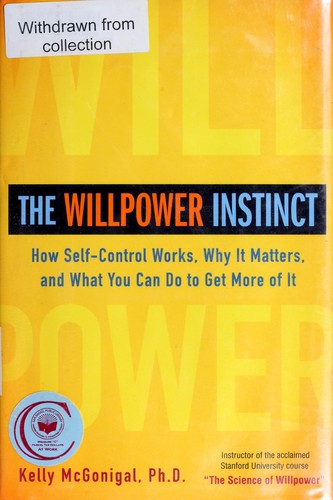
- The Willpower Instinct (Kelly McGonigal): Provides the foundational science on how our brains handle self-control and habit formation.
- The Upside of Stress (Kelly McGonigal): Explores how our bodies respond to physical stress (like exercise) and how we can harness that response.
If you remember only three things
- Intrinsic over Extrinsic: Move away from "weight loss" goals and toward "who I want to become" goals.
- Environment is Everything: Make the right choice the easiest one by changing your physical surroundings.
- Compassion is Courage: When you fail, use self-compassion as a brave act of protection for your well-being, not as a way to let yourself off the hook.
Internalize it
- Reflection questions
- If I stopped caring about the number on the scale today, what would be my reason for moving my body?
- What is a version of myself I want to show up as in the world? How does movement help me get there?
- When I feel the "inner critic" start to berate me for a mistake, what is the "brave" thing I can say to myself in that moment?
- Flashcards Q: What is the difference between extrinsic and intrinsic motivation in exercise? A: Extrinsic is about external rewards (weight loss, calories); intrinsic is about internal values (becoming a more adventurous or present person). Q: What is the "Runner's High" actually rewarding? A: It is a neurochemical cocktail (endocannabinoids, etc.) that evolved to reward physical endurance and prime us for social connection. Q: How does McGonigal define self-compassion? A: As a form of "embodied courage" where you choose to act in a way that protects your well-being rather than escaping into self-judgment. Q: What is a practical way to "engineer" your environment for a new habit? A: Put your sneakers out, place a photo of a loved one near your workout gear, or put healthy food in the front of the fridge. Q: What is the "6-week rule"? A: It takes about six weeks for the brain to adapt to a new experience; you shouldn't judge a new habit's success before that time.
Fidelity note
This summary is grounded in the provided transcript. I am confident in the core concepts of intrinsic motivation, environmental engineering, and the definition of self-compassion. The specific "6-week" timeframe and the "Runner's High" neurochemistry are directly stated by the guest. The "Inner Critic" vs. "Right Habit" distinction is a key insight from the latter half of the conversation.