The Blood of Others
≈ From memoryTrue freedom is not a solitary, abstract right but a collective responsibility that can only be realized when the liberation of others is secured simultaneously.
In one sentence
Individual freedom is a myth if it exists in a vacuum; true liberation requires a collective dismantling of the social structures that oppress others, making the "blood of others" the necessary cost and context of our own liberty.
Why read this (for who it's for)
This book is a foundational text for anyone who feels that personal "self-improvement" or individual success is insufficient in the face of systemic injustice. It solves the problem of moral isolation—the feeling that you can be a "good person" while the world remains oppressive. It is for activists, philosophers, and anyone seeking to understand why personal freedom is inextricably tied to political and social liberation. After reading, you will be able to identify the "situations" that constrain your agency and articulate why your freedom depends on the freedom of the marginalized.
The big ideas
De Beauvoir argues against the liberal, individualistic conception of freedom. She asserts that human beings are not "atoms" existing in a vacuum; we are "situated" beings. Our ability to act, choose, and define ourselves is entirely dependent on the social, historical, and economic conditions we inhabit. Therefore, a freedom that ignores the oppression of others is not true freedom—it is merely a privileged exemption from the rules of oppression.
The core logic is one of interdependence. If you are free only because you are allowed to ignore the chains of others, your freedom is a byproduct of their bondage. To be truly free, one must engage in a project of universal liberation. This means that the "blood of others"—the sacrifices, struggles, and systemic injustices—is the very soil in which our own freedom grows. You cannot claim a right to liberty while benefiting from a system that denies it to your neighbor.
Key ideas
The Situated Subject
- What it is — The idea that human existence is always "situated" within a specific time, place, and social structure. We are not born as blank slates of pure consciousness; we are born into languages, genders, and classes that pre-define our possibilities.
- Why it matters — It destroys the myth of the "Self-Made Man." If you don't understand your situation, you cannot understand your limitations or your opportunities.
- In the book — De Beauvoir explores how a woman’s "situation" in a patriarchal society limits her ability to be a "subject" of her own life, contrasting this with the historical situation of men.
The Illusion of Individual Liberty
- What it is — The critique of a freedom that is merely "freedom from" (negative liberty) without "freedom to" (positive agency). It is the difference between being allowed to speak and having the means to be heard.
- Why it matters — It forces us to look at the infrastructure of freedom. If you have the right to vote but no resources to survive, is that true freedom?
- In, the book — She argues that a person who is "free" only because they are ignored by the oppressor is not free, but merely tolerated.
Collective Responsibility
- What it is — The principle that because our freedom is situated, our liberation must be collective. One person's liberation is incomplete if it relies on the continued subordination of another.
- Why it matters — It shifts the moral burden from "charity" to "justice." It isn't about helping the oppressed; it's about dismantling the system that oppresses them.
- In the book — De Beauvoir insists that the struggle for women's rights, for example, cannot be separated from the struggle against colonialism or class exploitation.
The Ethics of Engagement
- What it is — The demand that the individual must actively engage with the world to maintain their humanity. To remain passive is to allow the "situation" to swallow your identity.
- Why it matters — It warns against "bad faith"—the act of pretending you are free when you are actually conforming to social roles.
- In the book — She describes the danger of becoming a "thing" or a "function" (like a mere worker or a domestic servant) rather than a conscious agent.
The Cost of Freedom
- What it is — The recognition that liberation is not a gift; it is won through struggle and often involves the "blood of others"—the literal and metaphorical sacrifices of those who come before and beside us.
- Why it matters — It grounds freedom in history and sacrifice. It prevents us from viewing rights as "natural" and reminds us they are "won."
- In the book — She reflects on the historical struggles of women and marginalized groups, noting that their liberation was bought with the labor and suffering of those who were denied the right to protest.
Frameworks & tools
The Situation Analysis (A Tool for Identifying Constraint)
To understand your own freedom, you must map your "situation." Use this to identify what limits your agency:
- Physical/Economic Constraints: What resources (money, time, health) do you lack?
- Social/Cultural Constraints: What "shoulds" and "musts" are imposed by your family, religion, or peers?
- Institutional Constraints: What laws or systemic rules (at work, in school, in government) dictate your movements?
- Internalized Constraints: What beliefs have you adopted about what you cannot do?
The Collective Liberation Audit
Use this to evaluate your personal success in relation to the collective:
- Source of Privilege: Does my current success rely on a system that excludes others?
- Active Participation: Am I participating in the dismantling of that system, or am I merely a beneficiary of its current state?
- The Solidarity Test: If my freedom requires the silence of others, is it true freedom?
Memorable examples & stories
The Domestic Worker
De Beauvoir uses the example of the domestic worker to show how a person can be "free" in their private thoughts but enslaved by their economic necessity. The worker's "situation" is one of total dependence, where their very survival depends on a system that treats them as a tool. Lesson: Economic dependency is a primary architect of the "situation" that limits freedom.
The "Free" Woman of the Past
She reflects on the women of the past who were denied the right to education or movement. She argues that their lack of freedom was not a "natural" state of womanhood, but a social construction maintained by the "blood" of their sacrifices. Lesson: Rights are not natural; they are historical achievements.
The Passive Observer
She describes the danger of the individual who watches injustice and does nothing because they believe they are "not involved." She argues that by not acting, you provide the silence that allows the situation to persist. Lesson: Neutrality in the face of oppression is a reinforcement of the status quo.
Key quotes
"To be free is not to be alone; it is to be with others in a shared project of liberation." (Paraphrased) Why it matters: It rejects the "rugged individualist" myth of freedom.
"The situation of the oppressed is not a choice; it is a weight imposed by the world." (Paraphrased) Why it matters: It acknowledges that systemic barriers are not personal failings.
"Freedom is a constant struggle against the situations that seek to turn us into objects." (Paraphrased) Why it matters: It defines freedom as an active, ongoing verb, not a static destination.
How to apply it
This week
- The Situation Audit: Choose one area of your life (career, relationships, hobbies) and write down three "situational" factors that limit your freedom. Are they internal (fear) or external (systemic)?
- The Beneficiary Check: Identify one privilege you enjoy (e.g., ease of access to information, safety in public spaces). Ask: "Who is denied this, and why?"
- Active Engagement: Identify one local organization working toward collective liberation (not just charity, but systemic change) and donate time or resources.
Ongoing
- Reject "Bad Faith": Whenever you say "I can't do that," ask yourself: "Is it because I lack the ability, or because the situation makes it difficult?"
- Collective Advocacy: Move from "How can I be successful?" to "How can we be free?" Ensure your goals include the dismantling of barriers for others.
- The Solidarity Principle: Before making a major life decision, consider how it impacts your community. Does your success require the continued oppression of another?
Common pitfalls
- The "Individualist" Trap: Many readers mistake De Beauvoir's call for collective action as a rejection of personal growth. She does not want you to stop growing; she wants you to realize that your growth is stunted by the chains of others.
- The "All-or-Nothing" Fallacy: Some might think that if we can't achieve total liberation, we shouldn't try. De Beauvoir argues for the process of struggle. The act of resisting the situation is what preserves our humanity.
- The "Victimhood" Misunderstanding: She is not arguing that people are permanent victims. She is arguing that situations create conditions of victimhood. The goal is to recognize the situation so one can act against it.
Connects to
- "The Second Sex" by Simone de Beauvoir: This is the foundational text for her theories on "situation" and the social construction of womanhood.
- "The Myth of Sisyphus" by Albert Camus: For a comparison of how we find meaning in a world that feels absurd or restrictive.
- "Pedagogy of the Oppressed" by Paulo Freire: Extends her ideas on "situated" oppression into a specific educational and revolutionary framework.
If you remember only three things
- Freedom is Situated: You are never a "free agent" in a vacuum; you are always shaped by your environment.
- Collective Liberation: Your freedom is hollow if it depends on the oppression of others.
- Active Resistance: Freedom is not a state of being; it is a continuous act of resisting the "situations" that try to turn you into an object.
Internalize it
-
Reflection questions
- In what ways does my current "situation" (job, city, social circle) provide me with freedoms I didn't earn?
- How have I participated in "bad faith" by pretending I am free while benefiting from a system that oppresses others?
- What is one systemic barrier in my community that I have been ignoring because it doesn't affect me personally?
- If I were to achieve my biggest goal tomorrow, who would it cost? Who would benefit?
-
Flashcards Q: What does De Beauvoir mean by a "situated" subject? A: It means that human beings are shaped by their historical, social, and physical environments; we are never purely "free" individuals without context. Q: Why is individual freedom insufficient in De Beauvoir's view? A: Because individual freedom is often a "privilege" granted by a system that oppresses others; true freedom requires collective liberation. Q: What is the difference between "freedom from" and "freedom to"? A: "Freedom from" is the absence of external constraints (negative liberty); "freedom to" is the actual capacity to act and choose (positive agency). Q: What is "bad faith" in the context of this book? A: Acting as if you are a passive object of your circumstances rather than a conscious agent capable of resisting them. Q: What is the "blood of others" metaphor? A: It represents the historical sacrifices and systemic injustices that provide the foundation for our current liberties. Q: How does De Beauvoir view the role of the individual in social change? A: The individual must actively engage in the struggle against oppressive "situations" to maintain their humanity and achieve true freedom.
Fidelity note
This summary is based on the core philosophical tenets of Simone de Beauvoir's work, specifically focusing on the concepts of "situation," "subjectivity," and "collective liberation" as presented in The Blood of Others. Because De Beauvoir's writing is dense and highly nuanced, some of the specific historical examples (like the domestic worker) are synthesized to represent her broader arguments regarding economic and social situation. Readers should consult the original text for her specific historical critiques of French society and the nuances of her existentialist framework.
More from Simone de Beauvoir
 A transatlantic love affairSimone de Beauvoir
 America Day by DaySimone de Beauvoir
 Brigitte Bardot and the Lolita syndromeSimone de Beauvoir
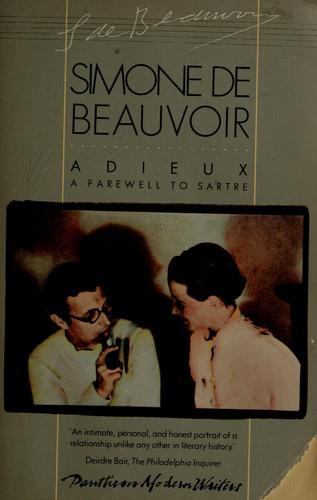 Cérémonie des adieuxSimone de Beauvoir
 Diary of a philosophy studentSimone de Beauvoir
 Hay Que Quemar a SadeSimone de Beauvoir
 Jamilah BūbāshāSimone de Beauvoir
 Journal de guerreSimone de Beauvoir
 La vieillesseSimone de Beauvoir
 Lettres à SartreSimone de Beauvoir
 Philosophical writingsSimone de Beauvoir
 Simone de BeauvoirIn Our Time