Lettres à Sartre
≈ From memoryA profound philosophical dialogue on the ethics of freedom, the responsibility of the individual, and the necessity of choosing a commitment that preserves one's autonomy.
In one sentence
True freedom is not the absence of constraint, but the conscious choice of a commitment that allows for the continued expansion of one's own agency and the liberation of others.
Why read this (and who it's for)
This book is a masterclass in "applied existentialism." It solves the paralyzing problem of radical freedom: if we are entirely free to choose, how do we choose anything without being arbitrary? It is for the intellectual who feels overwhelmed by the weight of choice, the activist seeking a coherent ethical framework, and anyone who wants to understand how to live a life of integrity without falling into the trap of "bad faith" (mauvaise foi). After reading, you will be able to articulate a personal ethics based on action rather than just abstract theory.
The big idea
The central thesis of Lettres à Sartre is that human existence is defined by "transcendence"—the ability of a human being to project themselves toward a future that does not yet exist. Unlike an object (which is what it is), a human being is what they do with what they are. However, this freedom is terrifying because it lacks a pre-written script.
Beauvoir argues that we cannot escape the need for commitment. To be truly free, one must choose a "project"—a cause, a vocation, or a set of values—and commit to it. The danger, she warns, is "the trap of the spectator": the belief that we can remain neutral or observe the world without participating in it. To be truly free, one must engage in the world, recognizing that our freedom is inextricably bound to the freedom of others.
The logic follows a rigorous path: Existence precedes essence $\rightarrow$ Freedom is our fundamental condition $\rightarrow$ Freedom requires a project to be meaningful $\rightarrow$ A meaningful project must be ethical and involve others $\rightarrow$ Therefore, freedom is realized through committed action.
Key ideas
The Trap of Neutrality
- What it is — The idea that "neutrality" is often a mask for a choice to remain passive. By refusing to take a stand, the individual chooses the status quo.
- Why it matters — It forces you to realize that "doing nothing" is a choice with consequences. It eliminates the comfort of the bystander.
- In the book — Beauvoir critiques the intellectual who analyzes the world perfectly but refuses to act, arguing that such a person is essentially choosing to let the world remain as it is.
Freedom as a Project
- What it is — Freedom is not a "state of being" but a "process of doing." It is only realized when it is directed toward a goal (a project).
- Why it matters — It shifts the focus from feeling free to acting freely. It provides a roadmap for building a life of purpose.
- In the book — She explores how a person defines themselves through their commitments—be it to art, to politics, or to a specific social change.
The Ethics of Engagement
- What it is — Because our freedom is situated in a social world, our choices affect the freedom of others. An ethical choice is one that seeks to expand the possibilities of others.
- Why it matters — It prevents existentialism from becoming a purely selfish, solipsistic philosophy. It grounds personal freedom in social responsibility.
- In the book — She argues that one cannot be truly free in a world of slaves; therefore, the liberation of the other is a prerequisite for the liberation of the self.
The Danger of "Bad Faith" (Mauvaise Foi)
- What it is — The act of lying to oneself to escape the burden of responsibility. It is pretending you have no choice when, in fact, you do.
- Why it matters — It identifies the psychological mechanism of self-deception, such as saying "I had no choice" to avoid the guilt of an action.
- In the book — She describes how people often adopt roles (the "perfect" worker, the "perfect" spouse) to escape the terrifying vacuum of absolute freedom.
The Situation of the Individual
- What it is — We are not "free" in a vacuum; we are always born into a specific time, place, and body. Our freedom is "situated."
- Why it matters — It acknowledges that some people have fewer options than others due to oppression, but it insists that even within those limits, the attitude toward those limits remains a choice.
- In the book — She discusses how social conditions (like gender or class) constrain action, but the individual's response to those constraints defines their essence.
Frameworks & tools
The "Project" Assessment
To determine if your current commitments are authentic expressions of your freedom or merely "bad faith" habits, use this diagnostic:
- Identify the Source: Is this action being done because of social pressure, habit, or a genuine internal commitment?
- Analyze the Impact: Does this action expand the possibilities for others, or does it merely serve your own comfort?
- Evaluate the Transcendence: Does this action project you toward a future goal, or is it a repetitive loop of "maintenance" (doing things just to keep things the same)?
- The Freedom Test: If you were stripped of all social rewards for this action, would you still choose to do it?
The Responsibility Matrix
When faced with a difficult moral choice, evaluate the choice through these three lenses:
- Authenticity: Does this choice align with my self-defined values?
- Agency: Does this choice increase my capacity to act in the future?
- Solidarity: Does this choice contribute to the freedom of the collective?
Memorable examples & stories
The Spectator Intellectual
Beauvoir describes the intellectual who observes injustice with perfect clarity but refuses to intervene. She argues this is a form of "bad faith" because the intellectual is choosing to let the injustice continue. Lesson: Knowledge without action is a choice to allow the status quo.
The Role of the "Worker"
She explores how individuals can become "absorbed" by their jobs to the point where they lose their sense of self. They treat their job as a destiny rather than a choice. Lesson: Beware of letting a role become your identity; you must remain the author of your actions.
The Situation of the Oppressed
She discusses how a person in a state of extreme oppression (like a prisoner) still possesses a "freedom of attitude." While their physical movement is restricted, their internal orientation toward their situation remains a site of freedom. Lesson: Freedom is not just what you can do, but how you choose to relate to what you cannot do.
Key quotes
"To will oneself free is to will oneself to be responsible." (Paraphrased) Why it matters: Freedom is not a gift; it is a burden of responsibility.
"The individual is not a thing; they are a project of constant becoming." (Paraphrased) Why it matters: You are never "finished." You are always in the process of creating yourself.
"Neutrality is a choice to remain in the status quo." (Paraphrased) Why it matters: It exposes the lie of the bystander.
How to apply it
This week
- Identify one "Automatic" Action: Find one thing you do daily out of habit or social pressure (e.g., a certain social media scroll, a polite but dishonest interaction). Ask: "If I chose this today, what would I be choosing to uphold?"
- The "No-Neutrality" Rule: In one conversation where you feel tempted to stay neutral on a topic that matters, state a clear position. Practice the discomfort of taking a stand.
- The Project Audit: Write down three things you are currently "committed" to. For each, ask: "Is this a project of transcendence (moving toward a goal) or a project of maintenance (keeping things as they are)?"
Ongoing
- The Responsibility Check: Before making a major decision, ask: "Does this action expand the freedom of others, or does it only serve my immediate comfort?"
- Practice Transcendence: Ensure that your daily actions are linked to a long-term "Project." Whether it is a career, a craft, or a social cause, ensure your actions are building toward a future you envision.
Common pitfalls
- The "Anything Goes" Fallacy: People often mistake existentialism for the idea that there are no rules. Beauvoir argues the opposite: because there are no pre-set rules, you must create your own rules through commitment.
- The Action Trap: Some think this means you must be a revolutionary hero every day. Beauvoir acknowledges that "projects" can be private (like being a parent or an artist), provided they are chosen authentically.
- Ignoring the "Situation": A common mistake is thinking that "freedom" means everyone has the same choices. Beauvoir is clear: some people have fewer choices due to systemic oppression, but the responsibility to act within those limits remains.
Connects to
- "The Second Sex" by Simone de Beauvoir: Provides the sociological foundation for how "situations" (like gender) constrain the individual.
- "Being and Nothingness" by Jean-Paul Sartre: The foundational ontological text that provides the definitions of "Bad Faith" and "The Look."
- "Ethics of Ambiguity" by Gabriel Marcel: Offers a complementary look at the importance of "presence" and "engagement" in human relationships.
If you remember only three things
- Freedom is Action: You are what you do, not what you think or feel.
- Commitment is Required: To avoid the paralysis of infinite choice, you must choose a "Project."
- Freedom is Collective: Your freedom is inextricably tied to the freedom of the people around you.
Internalize it
-
Reflection questions
- In what areas of my life am I currently practicing "Bad Faith" by pretending I have no choice?
- If I were to strip away my job title and social roles, what "Project" would I still choose to pursue?
- How does my current "neutrality" on certain issues actually serve the status quo?
- How can I make my personal projects more "expansive" for the people around me?
-
Flashcards Q: What is the difference between an object and a human being in Beauvoir's view? A: An object is what it is (essence precedes existence); a human being is what they do (existence precedes essence).
Q: What is "Bad Faith" (Mauvaise Foi)? A: The act of deceiving oneself into believing one lacks freedom or choice to avoid the weight of responsibility.
Q: Why is "neutrality" considered a choice? A: Because choosing not to act is a conscious decision to allow the current situation to remain unchanged.
Q: What does Beauvoir mean by "situated" freedom? A: The idea that our freedom is always constrained by our historical, social, and physical circumstances.
Q: What is a "Project" in the context of existentialism? A: A self-chosen commitment or goal that gives meaning to one's existence and defines one's identity.
Q: How does Beauvoir define the ethical dimension of freedom? A: True freedom is only possible when it seeks to expand the freedom of others, as we are inextricably linked in a social world.
More from Simone de Beauvoir
 A transatlantic love affairSimone de Beauvoir
 America Day by DaySimone de Beauvoir
 Brigitte Bardot and the Lolita syndromeSimone de Beauvoir
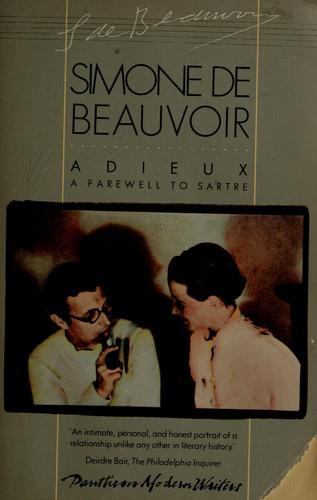 Cérémonie des adieuxSimone de Beauvoir
 Diary of a philosophy studentSimone de Beauvoir
 Hay Que Quemar a SadeSimone de Beauvoir
 Jamilah BūbāshāSimone de Beauvoir
 Journal de guerreSimone de Beauvoir
 La vieillesseSimone de Beauvoir
 Philosophical writingsSimone de Beauvoir
 Simone de BeauvoirIn Our Time
 The Blood of OthersSimone de Beauvoir