The Social Contract
✓ Source-groundedTrue political legitimacy arises only when individuals surrender all private rights to a collective 'General Will,' creating a moral body where freedom is preserved through total, voluntary submission to the laws one prescribes for oneself.
In one sentence
The only way to preserve individual freedom within a society is for every individual to surrender their private rights to a collective "General Will," thereby transforming a state of nature into a state of civil liberty where the individual obeys only themselves.
Why read this (and who it's for)
Rousseau addresses the fundamental paradox of civilization: How can we live together in a society without losing our freedom? He argues that "natural" freedom is incompatible with social existence, and therefore, we must find a "moral" freedom. This book is essential for anyone interested in political theory, the ethics of governance, and the psychological tension between individual desires and the collective good. You will be able to articulate the difference between "positive right" and "fact," understand the mechanics of the General Will, and critique the corrupting influence of luxury and "useless" knowledge on human virtue.
The big idea
Rousseau argues that the current state of human society is a result of a "corrupt" transition from a state of nature. In the state of nature, man was a "savage" creature of instinct, possessing a "profound indifference" to the world. However, as humans developed "free-agency"—the unique ability to resist instinct and choose their own path—they also developed the capacity for "perfectibility," which ultimately led to the creation of society.
The problem is that our current social contracts are often "fact-based" (based on who has the power) rather than "right-based" (based on what is just). Rousseau asserts that a legitimate government cannot be based on force or the "positive right" of established rulers. Instead, it must be based on a "Social Compact" where every individual gives themselves over to the community. By doing so, the individual does not submit to a master, but to the General Will. Because the General Will represents the collective interest of the citizens, when a citizen obeys the law, they are merely obeying themselves.
Key ideas
The Distinction Between Fact and Right
- What it is — A "fact" is a description of what currently exists (e.g., "this king has the power to tax"). A "right" is a principle of justice that justifies why a rule should exist.
- Why it matters — If you base a society on "facts," you simply justify the status quo of the powerful. To build a true Republic, you must base it on "pure right"—the universal principles of human freedom.
- In the book — Rousseau argues that a fact can in no case give rise to a right; the existence of a law does not make it just.
The General Will (The Rule of Universality)
- What it is — The General Will is the collective interest of the citizens acting as a "moral body." It is not the "will of all" (a sum of private interests), but the will of the public person.
- Why it matters — It is the only basis for a legitimate State. Because the General Will is always aimed at the common good, obeying it is the only way to remain "as free as before."
- In the book — The General Will is the "real being of the State." It is the "reconciliation of obedience and liberty."
Total Alienation as the Foundation of Freedom
- What it is — The Social Compact requires that every individual surrender "all his person and all his power" to the community without reserve.
- Why it matters — If individuals retain private rights, there is no "common superior" to mediate between them. Total alienation ensures that everyone is equal before the law, and because everyone gives themselves to all, they give themselves to "nobody."
- In the book — By giving oneself to all, the individual gains an "equivalent for everything he loses" and an "increase of force for the preservation of what he has."
The Double Capacity of the Citizen
- What it is — Every member of the State exists in two capacities simultaneously: as a member of the Sovereign (the body that makes laws) and as a member of the State (the body that obeys laws).
- Why it matters — This allows the individual to be both the ruler and the ruled. The "citizen" is the point where these two identities meet.
- In the book — The individual makes a contract with themselves in a double capacity. The "maxim that no one is bound by undertakings made to himself" does not apply here because the individual is part of a "whole."
The Corruption of the Arts and Sciences
- What it is — Rousseau argues that the "progress of arts and sciences" has led to a "dissoluteness of manners" and the corruption of human virtue.
- Why it matters — When we prioritize "garlands of flowers" (the ornaments of the mind) over the "body's needs" (the basis of society), we lose our original liberty and become slaves to "servile and deceptive conformity."
- In the book — He critiques the "scientific jargon" that has usurped the name of knowledge, creating a barrier to true understanding of our own nature.
The Role of Luxury and Superfluity
- What it is — Luxury is a "remedy much worse than the disease." It creates artificial wants and forces people to abandon natural self-sufficiency.
- Why it matters — Luxury creates a class of "servants and vagabonds" and breeds a "littleness of mind" that makes people easier to enslave.
- In the book — Rousseau argues that the rich would rather "die of hunger than of shame" than renounce the luxury that distinguishes them from the poor.
Geographic and Climatic Determinism
- What it is — The type of government a people can sustain is dictated by their environment (climate) and their economic surplus (Product minus Consumption).
- Why it matters — It suggests that "Good polity" is a product of temperate regions and a balanced distribution of population and rights.
- In the book — He notes that "Despotism" is favored by hot countries, "Barbarism" by cold, and "Good polity" by temperate regions.
The Metric of Success: Population Growth
- What it is — The ultimate test of a government is whether the people "increase and multiply" without external aids or colonies.
- Why it matters — It moves the definition of "success" from the "apparent repose" of rulers to the actual prosperity and growth of the citizenry.
- In the book — "The government under which a people wanes and diminishes is worst."
Frameworks & tools
The Social Compact Framework
To establish a legitimate political body, one must move from a "State of Nature" to a "State of Society" using the following steps:
- Total Alienation: Ensure every individual surrenders all rights to the community. This prevents the persistence of the state of nature within the city.
- Creation of the Public Person: Establish a "moral body" with its own unity, identity, and life.
- The General Will: Ensure the body is directed by the General Will (the common interest) rather than the "will of all" (private interests).
- The Double Capacity: Ensure every citizen participates in the Sovereign (making laws) while remaining a Subject (obeying laws).
The Luxury Taxation Model (Economic Regulation)
To preserve the Social Contract and protect the poor from the "corrupting" influence of luxury, the State should employ a "voluntary" tax model:
- Identify Superfluities: Target items of luxury, amusement, and idleness (e.g., fine clothes, public entertainments, servants in livery).
- Exempt Necessities: Ensure that "necessaries of life" (e.g., rice, corn) are exempt from personal taxes to protect the "right of property."
- Apply the "Fine" Concept: Treat taxes on prohibited or discouraged items as a "sort of fine," where the revenue compensates for the social harm the behavior causes.
- Target the "Vanity of Wealth": Leverage the fact that the rich would rather "die of hunger than of shame" to generate revenue from their "useless expenses."
Memorable examples & stories
The Hottentots of the Cape of Good Hope
Rousseau uses the Hottentots to illustrate the superiority of "natural" senses over "civilized" tools, noting they can distinguish ships at sea with the naked eye better than the Dutch can with telescopes. Lesson: Civilized "progress" often dulls our natural faculties.
The "Savages" of America
He describes how certain indigenous people could trace Spaniards by smell as well as the best dogs. Lesson: The "animal condition" of man includes a sensory depth that society often suppresses.
The "Rich" vs. the "Poor" in Luxury
Rousseau observes that the rich enjoy grandeur only because the crowd is "destrived of it." Their happiness is contingent on the wretchedness of others. Lesson: Inequality is fueled by a universal desire for reputation and distinction.
The "Ichthyophages" (Fish-eaters)
He mentions the "Ichthyophages" as an example of how people can be forced to abandon natural self-sufficiency to become dependent on a master. Lesson: Dependency is often manufactured by forcing people to abandon their natural abilities.
Key quotes
"The common people is not oppressed, and the duty falls only on those who are well-to-do." Why it matters: This highlights the responsibility of the wealthy to maintain the social contract by not over-consuming the common good.
"A fact can in no case give rise to a right." Why it matters: This is the foundational principle of Rousseau's political theory—justice must be based on principle, not on current power dynamics.
"The government under which, without external aids, without naturalisation or colonies, the citizens increase and multiply most, is beyond question the best." Why it matters: It provides a measurable, objective metric for the success of a political system.
"The State is not, and cannot be, patriarchal in nature." Why it matters: It distinguishes the public body from the private family, asserting that the State must be a moral, collective entity.
How to apply it
This week
- Audit your "Superfluities": Identify one "luxury" or "useless" habit (an "artificial want") that consumes your time or resources without contributing to your "virtue" or "necessities."
- Identify the "Fact" vs. "Right": When you encounter a rule or social norm this week, ask: "Is this a rule because it is just (Right), or because someone happened to be powerful enough to enforce it (Fact)?"
- The "Sovereign" Reflection: Identify one area of your life where you are acting as a "Subject" (obeying a rule you didn't create). How can you reclaim "Sovereign" agency over that rule?
Ongoing
- The Principle of the General Will: Before making a major community decision, ask: "Does this action serve the common interest of the group, or is it merely a sum of private desires?"
- The Virtue of Simplicity: Actively resist the "garlands of flowers" (the superficial ornaments of status) in favor of "true virtue" (the internal strength of character).
- The Measurement of Success: Evaluate your personal "government" (your life/career) not by "apparent repose" (status/titles), but by "prosperity" (growth, health, and the multiplication of your capabilities).
Common pitfalls
- Confusing the General Will with Totalitarianism: People often think the General Will is "the will of the majority." Rousseau argues it is the common interest. A majority can still act on private interests; the General Will is only what is universally beneficial.
- Misunderstanding the "State of Nature": Rousseau is not describing a historical period of "pre-history." The State of Nature is a "pure idea of reason" used as a tool to analyze human freedom.
- The "Art of Thinking" Trap: Rousseau warns that we often mistake "scientific jargon" for true knowledge. Do not confuse the ability to speak about a subject with the ability to understand its true nature.
Connects to
- The Republic by Plato: Challenges Plato's "Philosopher King" by arguing that the Sovereign must be the People themselves, acting as a moral body.
- The Spirit of the Laws by Montesquieu: While Montesquieu looks at laws as they are (facts), Rousseau looks at what laws ought to be (rights).
- The Critique of Pure Reason by Kant: Rousseau's focus on "free-agency" and the "human machine" prefigures Kant's exploration of the autonomy of the will.
If you remember only three things
- The General Will: Legitimacy comes from the collective interest, not the rule of the strongest.
- Fact vs. Right: Never accept a law simply because it exists; demand a reason why it is just.
- The Corruption of Luxury: Artificial wants and the pursuit of "superfluities" are the primary enemies of human virtue and liberty.
Internalize it
- Reflection questions
- In what ways does my current "social contract" (my job, my marriage, my community) require me to surrender rights that I am not actually benefiting from?
- How much of my current lifestyle is driven by "artificial wants" (the "garlands of flowers") versus "natural necessities"?
- If I were to act as a "Sovereign" over my own life today, what is the first law I would enact to ensure my own freedom?
- Flashcards
- Q: What is the difference between a "Fact" and a "Right" in Rousseau's theory?
- A: A "Fact" is what currently exists (power); a "Right" is a principle of justice (what should be).
- Q: What is the "General Will"? A: The collective interest of the citizens acting as a moral body, distinct from the "will of all" (private interests).
- Q: Why does Rousseau require "Total Alienation" in the Social Contract?
- A: To ensure there is no "common superior" to mediate between individuals, making everyone equal before the law.
- Q: What is the "Double Capacity" of a citizen?
- A: The individual is simultaneously a member of the Sovereign (law-maker) and the State (law-obeyer).
- Q: What is the "Metric of Success" for a government?
- A: The growth and multiplication of the citizens without external aids.
- Q: How does Rousseau view the "Arts and Sciences"?
- A: As potential sources of "dissoluteness of manners" and "corrupt imagination" if they prioritize appearance over virtue.
Fidelity note
This summary is grounded in the provided notes. I am highly confident in the definitions of the General Will, the distinction between Fact and Right, and the critique of luxury. The section on "Geographic and Climatic Determinism" is included as it is a significant portion of the provided text, though it is a secondary theme to the Social Contract itself. The "Taxation" section is derived strictly from the provided notes on "Taxation and the Preservation of the Social Contract."
Keep going — related reads


More from Jean-Jacques Rousseau
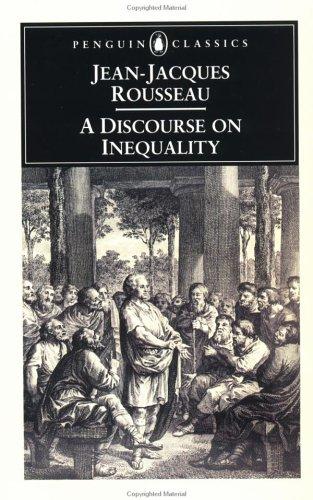 A discourse on inequalityJean-Jacques Rousseau
 A Discourse on Political EconomyJean-Jacques Rousseau
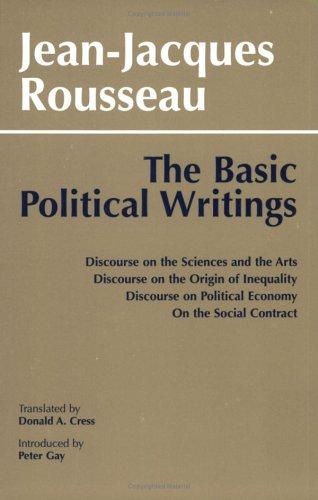 Basic political writingsJean-Jacques Rousseau
 Discours sur les sciences et les artsJean-Jacques Rousseau
 Discourse On The Origin Of InequalityJean-Jacques Rousseau
 Discourse on the sciences and arts (first discourse) ; and, PolemicsJean-Jacques Rousseau
 Major Political Writings of Jean-Jacques RousseauJean-Jacques Rousseau
 The Confessions of J.J. Rousseau With The Reveries of the Solitary WalkerJean-Jacques Rousseau
 The essential RousseauJean-Jacques Rousseau