Major Political Writings of Jean-Jacques Rousseau
≈ From memoryTrue freedom is not the absence of restraint, but the voluntary submission to a collective will that we, as a community, have authored ourselves.
In one sentence
True political legitimacy and human freedom can only exist when individuals surrender their private, selfish impulses to a "General Will" that seeks the common good of the entire community.
Why read this (and who it's for)
This is for anyone who feels the tension between individual liberty and the necessity of social order. It solves the paradox of how we can live in a society without being slaves to a tyrant or a chaotic mob. After reading this, you will be able to analyze political systems not just by their laws, but by the source of their legitimacy—asking whether a government represents a collective moral purpose or merely a transaction of power.
The big idea
Rousseau argues that "Man is born free, and everywhere he is in chains." The problem is that modern civilization has traded natural liberty (the unrestrained freedom of the wild) for civil liberty (the rights of a citizen). However, most modern societies are not truly "free" because they are governed by laws that serve private interests rather than a collective conscience.
The solution is the Social Contract. Unlike a contract between two individuals (like a business deal), the Social Contract is a collective agreement where every individual gives themselves over to the community. By doing so, you don't surrender your freedom to a master; you surrender your "natural" impulses to a "civil" identity. Because you are part of the collective that creates the laws, when you obey the law, you are essentially obeying yourself.
The core of this system is the General Will. This is not simply the "will of all" (a sum of everyone's selfish desires, like a majority vote on a tax break). The General Will is what a body of citizens would want if they were thinking about the common good. It is an objective moral compass for the community. A legitimate state is one where the laws are expressions of this General Will.
Key ideas
The State of Nature vs. Civil Society
- What it is — The "State of Nature" is a hypothetical pre-social existence where humans were solitary, self-sufficient, and governed by instinct. "Civil Society" is the structured environment of laws, property, and inequality.
- Why it matters — It forces us to recognize that our current "natural" behaviors (greed, competition, status-seeking) are actually products of society, not innate human nature.
- In the book — Rousseau contrasts the "noble savage" (independent and peaceful) with the "citizen" who is dependent on others and bound by social conventions.
The Social Contract
- What it is — The foundational agreement where every individual submits their rights to the community to ensure the preservation of the collective.
- Why it matters — It shifts the definition of freedom from "doing whatever I want" to "living under laws I helped create." It creates a unified body politic.
- In the book — Rousseau describes the contract as a total alienation of each associate's rights to the whole community, ensuring that each person remains as free as before because they are bound by laws they themselves prescribed.
The General Will (Volonté Générale)
- Why it matters — It distinguishes between a democracy of "whims" (the will of all) and a republic of "virtue" (the general will). The General Will always aims at the common good.
- In the book — He explains that the General Will is always right, but it is often obscured by the "will of all," which is merely the sum of private interests.
Moral Liberty vs. Natural Liberty
- What it is — Natural liberty is the freedom of the animal (unlimited but lawless). Moral liberty is the freedom of the citizen (limited by law but directed by reason).
- Why it matters — It argues that true freedom is found in self-mastery and adherence to a moral law, not in the license to act on every impulse.
- In the book — Rousseau argues that as man becomes a citizen, he gains the ability to obey a law he has given himself, which is a higher form of freedom than the raw, unguided freedom of the forest.
The Legislator
- What it is — A "quasi-divine" figure who helps a people recognize their own General Will when they are unable to see it themselves.
- Why it matters — It acknowledges that a people might not know how to be free; they need a guide to help them frame a constitution that aligns with the common good.
- In the book — The Legislator is not a king; he is a poet, historian, and philosopher who shapes the laws of the people so they can eventually govern themselves.
Frameworks & tools
The Test of the General Will
Use this to evaluate any new law, policy, or organizational rule.
- Identify the "Will of All": What is the immediate, selfish benefit for the loudest group? (e.g., "This rule lets my department skip safety checks.")
- Identify the "General Will": What would a person of integrity want for the long-term health of the entire community? (e.g., "This rule ensures everyone's safety.")
- The Alignment Check: Does the proposed law serve the common good, or does it merely provide a legal veneer for a private interest? If it serves a private interest, it is not a legitimate law of the Social Contract.
The Sovereignty Audit
Use this to analyze the legitimacy of a governing body (a government, a corporation, or a family).
- Source of Authority: Does the authority come from a "right of might" (whoever is strongest) or a "right of consent" (the collective agreement of the governed)?
- The Identity of the Sovereign: Is the sovereign the people themselves (the General Will), or is the sovereign a representative body that acts independently of the people's immediate will?
- The Purpose of Law: Does the law aim to preserve the freedom of the citizens, or does it aim to facilitate the desires of the rulers?
Memorable examples & stories
The "Forced to be Free" Paradox
Rousseau argues that if someone refuses to obey the General Will, the community must force them to obey. This sounds like tyranny, but Rousseau argues that by forcing them to follow the law, you are forcing them to follow their own "true" will (the part of them that wants to be a good citizen). Lesson: True freedom is the alignment of our actions with our highest moral reasons.
The Comparison of the Slave and the Citizen
Rousseau describes a slave who is physically bound but has a "free" mind, and a citizen who is legally bound but has a "free" spirit. He argues the citizen is more free because they have mastered their own desires through the law. Lesson: Freedom is not the absence of constraints; it is the mastery of the self.
The Role of the Legislator
Rousseau envisions a hero-like figure who arrives in a disorganized society and, through sheer force of character and wisdom, helps them draft a constitution. Lesson: Sometimes, a community needs a visionary to help them see the common good that they are currently too distracted to notice.
Key quotes
"Man is born free; and everywhere he is in chains." Why it matters: It highlights the discrepancy between our natural potential for autonomy and the social structures that constrain us.
"Each sees clearly the general interest, but everyone is deceived by his own interest." Why it matters: It explains why it is so difficult to build a functioning society—our personal biases act as a veil over our collective needs.
"The social pact obliges each man to give himself to every other and to every person in common." Why it matters: This is the core of the Social Contract—the idea of total, mutual commitment to the collective.
How to apply it
This week
- Identify your "Private Will": Write down one thing you want to do this week purely for your own status or comfort.
- Identify the "General Will": Write down how that same action could be reframed to benefit your family, your team, or your community.
- The "Common Good" Audit: Look at your daily schedule. What percentage of your time is spent on "Natural" desires (scrolling, consumption) vs. "Civil" duties (contribution, learning, community)?
Ongoing
- Practice Public Reasoning: Before making a decision that affects others, ask: "If I were to announce this decision to the whole group, would I still feel it is the right thing to do for everyone?"
- Cultivate Civic Virtue: Actively participate in the "Social Contract" of your community (neighborhood associations, volunteer work, local politics) to ensure the "General Will" remains active and healthy.
Common pitfalls
- The "Tyranny of the Majority" Trap: People often mistake the General Will for "whatever the majority wants." Rousseau would disagree. If 51% of people want to oppress the other 49%, that is the "Will of All," not the General Will. The General Will must be inherently just.
- The "Totalitarian" Critique: Critics (like Isaiah Berlin) argue that Rousseau’s idea of "forcing someone to be free" provides a blueprint for authoritarianism. Rousseau’s intent was the preservation of liberty, but his logic can be used to justify state coercion.
- The "Perfect Society" Fallacy: Rousseau is often criticized for being idealistic. He assumes humans can perfectly align their desires with the common good, which may underestimate the complexity of human psychology.
Connects to
- John Stuart Mill, On Liberty: Mill argues for the protection of the individual against the collective, whereas Rousseau argues that true liberty is found within the collective.
- Thomas Hobbes, Leviathan: Both see the need for a social contract to escape the "state of nature," but Hobbes argues for a sovereign who holds absolute power, while Rousseau argues for a sovereign that is the people themselves.
- Hannah Arendt, The Origins of Totalitarianism: Arendt explores the dangers of the "masses" and the loss of the public sphere, which serves as a modern, darker critique of what happens when the General Will is destroyed.
If you remember only three things
- The Social Contract is not a deal between people; it is a collective surrender of private rights to create a unified, self-governing body.
- The General Will is the collective interest of the community, which is distinct from the sum of everyone's selfish desires.
- True Freedom is not the ability to do whatever you want; it is the ability to live under laws that you, as a member of a community, have helped to create.
Internalize it
-
Reflection questions
- If you were to strip away your job title, your possessions, and your social status, what "common good" would you still want to contribute to?
- In what ways do you currently allow your "private will" (impulses) to override your "general will" (your long-term values)?
- Does your current community (work, home, city) operate on a Social Contract of mutual benefit, or is it a competition of private interests?
-
Flashcards Q: What is the difference between the "Will of All" and the "General Will"? A: The Will of All is the sum of private, selfish interests; the General Will is the collective interest aimed at the common good.
Q: What is Rousseau's definition of "Natural Liberty"? A: The unrestrained, instinctual freedom of a human in a state of nature, free from any laws or social obligations.
Q: What is the "Social Contract"? A: A collective agreement where individuals surrender their natural rights to the community to gain civil liberty and collective protection.
Q: How does Rousseau define "Freedom" in a civil society? A: Freedom is the obedience of a law that one has prescribed for oneself as part of a collective.
Q: Who is the "Legislator"? A: A wise, influential figure who helps a people recognize and establish their General Will.
Q: What is the "State of Nature"? A: A hypothetical pre-social condition where humans lived as solitary, independent beings governed by instinct.
Fidelity note
This summary is grounded in Rousseau's The Social Contract and his broader political philosophy. I am highly confident in the distinction between the General Will and the Will of All, as this is the cornerstone of his work. I am less certain of the specific nuances of his "State of Nature" compared to his later works (like Emile), as his views on human nature evolved over his lifetime. Readers should verify the "Forced to be Free" section, as it is one of the most controversial and frequently debated interpretations of his text.
More from Jean-Jacques Rousseau
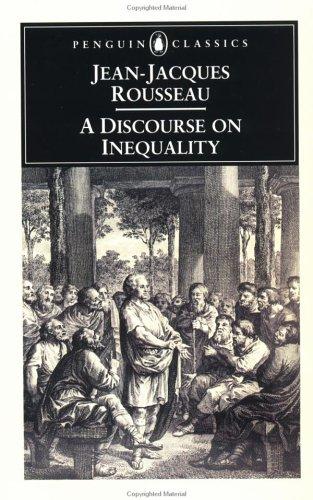 A discourse on inequalityJean-Jacques Rousseau
 A Discourse on Political EconomyJean-Jacques Rousseau
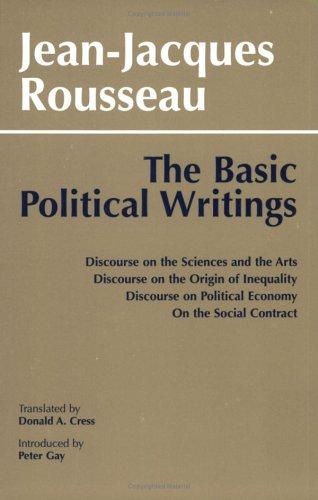 Basic political writingsJean-Jacques Rousseau
 Discours sur les sciences et les artsJean-Jacques Rousseau
 Discourse On The Origin Of InequalityJean-Jacques Rousseau
 Discourse on the sciences and arts (first discourse) ; and, PolemicsJean-Jacques Rousseau
 The Confessions of J.J. Rousseau With The Reveries of the Solitary WalkerJean-Jacques Rousseau
 The essential RousseauJean-Jacques Rousseau
 The Social ContractJean-Jacques Rousseau