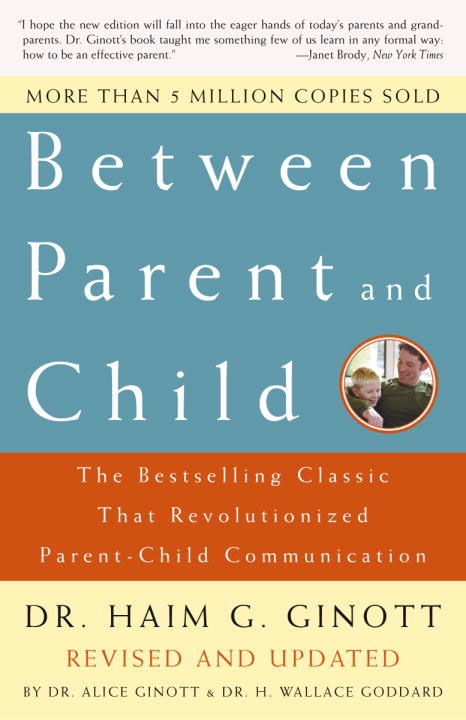
Teacher and child
≈ From memoryParenting is not about winning a power struggle or controlling a child's behavior; it is about maintaining a relationship of respect where the child feels safe enough to grow.
In one sentence
Effective parenting is a pedagogical act of teaching, not a policing act of enforcement, where the goal is to preserve the child's self-esteem while establishing clear boundaries.
Why read this (and who it's for)
This book is for parents who feel exhausted by the "power struggle" cycle—the constant yelling, the defiant eye-rolling, and the feeling that they are losing their authority. It solves the problem of reactive parenting (reacting to a behavior with a punishment) by providing a proactive framework (responding to the underlying need). After reading this, you will be able to stop "winning" arguments with your children and start "teaching" them how to navigate the world with integrity.
The big idea
Ginott argues that most parents fail because they treat children as subjects to be managed rather than individuals to be mentored. When a parent reacts to a child's misbehavior with anger, sarcasm, or threats, they are actually attacking the child's identity rather than the behavior itself. This creates a defensive child who learns to hide their feelings rather than change their actions.
The central thesis is that the relationship is the vehicle for change. If you break the relationship to "fix" the behavior, you lose the influence required to teach the child. Therefore, the parent's role is to be a "teacher"—someone who provides a safe, non-judgmental environment where a child can learn to take responsibility for their own choices.
Key ideas
The Distinction Between Behavior and Identity
- What it is — You must separate what a child does from who the child is. A child who breaks a vase is not a "bad" child; they are a child who broke a vase.
- Why it matters — When you label a child (e.g., "You're so lazy"), they internalize that label as a permanent truth, which kills their motivation to improve.
- In the book — Ginott emphasizes that labels are "sticky." Once a child believes they are "the naughty one," they will act out to fulfill that identity.
The Danger of "Winning"
- What it is — In a power struggle, the parent may "win" by forcing the child to comply, but the child loses their dignity and the parent loses their influence.
- Why it matters — Compliance gained through fear or shame is temporary. It doesn't teach the child why a behavior is wrong; it only teaches them how to avoid getting caught.
- In the book — Ginott argues that the moment a parent tries to "win" an argument, the teaching moment is over. The goal is cooperation, not capitulation.
The Importance of "I-Messages"
- What it is — Instead of saying "You made me so angry," say "I feel frustrated when the toys are left on the floor because I worry someone will trip."
- Why it matters — "You" messages sound like accusations and trigger defensiveness. "I" messages express the parent's feelings and the consequences of the behavior without attacking the child's character.
- In the book — This is a core linguistic tool. It shifts the focus from the child's "fault" to the impact of the action on the environment and the people in it.
The Role of Natural Consequences
- What it is — Whenever possible, let the environment do the teaching. If a child refuses to wear a coat, let them feel the cold.
- Why it matters — It removes the parent as the "villain" and puts the responsibility on the child's own choices. It teaches cause and effect.
- In the book — Ginott suggests that parents often intervene too much, robbing children of the opportunity to learn from the natural results of their actions.
Validation of Feelings
- What it is — A child can be angry, sad, or frustrated, but they cannot be "wrong" for feeling those emotions.
- Why it matters — When a child feels understood, their nervous system calms down, making them more capable of listening to reason.
- In the book — Ginott insists on validating the feeling (e.g., "It's frustrating when you can't have the toy right now") before addressing the behavior.
Frameworks & tools
The "Teacher" Response Framework
When a child misbehaves, instead of reacting emotionally, run through this mental checklist:
- Identify the Feeling: What is the child feeling? (Frustration, boredom, need for attention?)
- Validate the Feeling: Acknowledge it without agreeing with the behavior. ("I can see you're really frustrated that we have to leave.")
- State the Boundary: Clearly state the rule or expectation. ("However, we are leaving now.")
- Offer a Choice: Give the child a sense of agency. ("Do you want to wear the blue shoes or the red shoes?")
- The "I" Statement: Explain the impact. ("I feel worried when you run in the house because you might fall.")
The "Natural Consequences" Audit
Before punishing a behavior, ask yourself:
- Is there a natural consequence? (e.g., If they don't eat, they will be hungry.)
- Is it safe? (Never use physical harm or emotional abuse as a "consequence.")
- Is it immediate? (The closer the consequence is to the action, the more effective it is.)
- Is it related? (Do not take away a toy because they didn't eat their vegetables.)
Memorable examples & stories
The "Bad" Child Label
Ginott describes a child who was labeled "difficult" by teachers and parents. Because the child believed they were "bad," they began to act out more to satisfy that expectation. Lesson: Your words become the child's internal monologue.
The "Power Struggle" of the Toy
A child refuses to share a toy. The parent screams, "Give it to him right now!" The child grips it tighter. The parent eventually grabs it. The child is crying. Lesson: The parent "won" the toy, but the child learned that screaming and gripping harder gets the parent to eventually give in.
The "I-Message" in Action
A parent watches their child scribble on the wall. Instead of "Stop that!" the parent says, "I'm upset because the wall is getting ruined, and I want our home to be clean." Lesson: This shifts the focus from the child's "badness" to the parent's feelings and the reality of the situation.
Key quotes
"The child's behavior is a message. Our job is to listen to what the message is, not just to punish the behavior." (Paraphrased) Why it matters: It shifts parenting from a reactive stance to an investigative one.
"When we punish a child, we are telling them they are wrong. When we teach a child, we are showing them how to be right." (Paraphrased) Why it matters: It highlights the difference between shame-based control and growth-based guidance.
"The goal of parenting is to produce a child who can think for themselves, not a child who simply obeys." (Paraphrased) Why it matters: It defines the ultimate "success" metric of parenting.
How to apply it
This week
- The "No-Label" Challenge: For 7 days, do not use any adjectives to describe your child's character (e.g., "lazy," "naughty," "smart"). Describe only the behavior.
- The Validation Practice: Every time your child has a "meltdown," say one validating sentence before you give any instructions. ("You're really angry right now. It's hard to wait.")
- The "I" Message Swap: Identify one recurring argument (e.g., "Stop interrupting me!"). Replace it with an "I" message: "I feel frustrated when I'm interrupted because I'd like to finish my thought."
Ongoing
- The Teacher Mindset: Before reacting to a behavior, pause and ask: "What is this child trying to communicate?"
- The Choice Principle: Whenever possible, offer two acceptable choices to give the child a sense of autonomy (e.g., "Do you want to brush your teeth before or after we put on pajamas?").
- Consequence Consistency: Ensure that consequences are always directly related to the action and never used as a tool for emotional venting.
Common pitfalls
- The "Soft" Trap: Some parents mistake "teaching" for "permissiveness." Ginott is clear: boundaries must be firm. You can be kind and respectful while still saying "No."
- Inconsistency: The biggest pitfall is being a "teacher" one day and a "policeman" the next. This confuses the child and makes the "teaching" ineffective.
- The Parent's Ego: Many parents struggle with this because they want the immediate "win" of a quiet child. Teaching takes longer and requires the parent to endure the child's temporary frustration without reacting in anger.
Connects to
- "How to Talk so Kids Will Listen" by Adler and Adler: Complements Ginott by providing specific communication techniques for the "Teacher" framework.
- "The Whole-Brain Child" by Daniel Siegel: Extends Ginott's ideas by explaining the neurological reasons why children behave the way they do (the "downstairs brain").
If you remember only three things
- Separate the behavior from the child's identity.
- Validate the emotion before addressing the action.
- Focus on teaching and long-term cooperation over winning and short-term compliance.
Internalize it
- Reflection questions
- When I get angry at my child, what is the specific "label" I am putting on them in my head?
- In what ways am I seeking a "win" rather than a "teaching moment"?
- How can I make my boundaries clearer without using shame or threats?
- Flashcards Q: What is the difference between a "policeman" and a "teacher" in parenting? A: A policeman seeks to punish and control behavior; a teacher seeks to understand the child's needs and teach them how to make better choices.
Q: Why are "You" messages less effective than "I" messages? A: "You" messages sound like accusations and trigger defensiveness; "I" messages express the parent's feelings and the impact of the behavior.
Q: What is the primary goal of validating a child's feelings? A: To help the child feel understood and calm their nervous system so they are capable of listening to reason.
Q: What is a "natural consequence"? A: A result that happens automatically due to a child's choice (e.g., being hungry because they didn't eat) rather than a punishment imposed by a parent.
Q: How does labeling a child as "bad" affect their behavior? A: It creates a self-fulfilling prophecy where the child feels they must act out to match the label others have given them.
Fidelity note
This summary is based on the core psychological principles of Haim G. Ginott's work, specifically his focus on the "Teacher" model of parenting. I am confident in the distinction between behavior and identity, the use of "I-Messages," and the emphasis on the parent-child relationship. Because Ginott's work is often a collection of clinical observations and practical advice, some specific anecdotes may be summarized for brevity. Readers should verify the specific "I-Message" formulas in the text to ensure they are using the author's preferred phrasing.