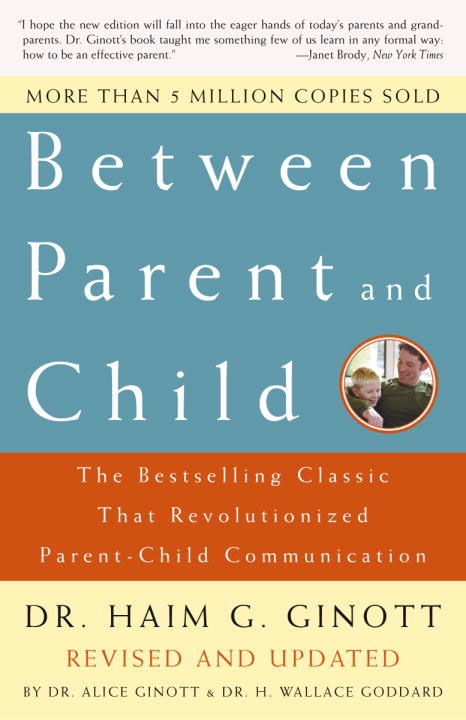
Between parent & teenager
≈ From memoryParenting is not about controlling a child's behavior through force; it is about maintaining a respectful relationship where the child feels seen, heard, and held accountable to a standard of integrity.
In one sentence
Effective parenting is a shift from "power-over" (coercion and control) to "power-with" (mutual respect and communication), where the goal is to raise a self-governing individual rather than a compliant subordinate.
Why read this (and who it's for)
This book is for parents who feel they are constantly locked in a "power struggle" with their teenagers—a cycle of yelling, door-slamming, and mutual resentment. It solves the problem of the "authoritarian trap," where parents use threats to get immediate compliance but lose the child's heart in the process. After reading, you will be able to replace reactive anger with proactive communication, learn to set firm boundaries without being mean, and understand the psychological needs behind your teenager's "rebellious" behavior.
The big idea
Ginott argues that the primary friction in the parent-teen relationship stems from a fundamental misunderstanding of what parenting is for. Most parents view their role as a "policeman" whose job is to enforce rules and punish infractions. Ginott argues this is a short-term fix that creates a long-term fracture. Instead, the parent's role is to be a "coach" or a "guide" who helps the child develop an internal moral compass.
The logic is simple: if you use force to get a child to obey, they will learn to obey out of fear, not out of understanding. When the fear of punishment is removed (or when they grow old enough to ignore it), the behavior returns. To create lasting change, you must address the why behind the behavior. You must treat the teenager as a person with their own feelings, rights, and burgeoning autonomy, while still maintaining the parental responsibility to provide a safe, structured environment.
The "click" happens when you realize that your teenager's rebellion is often a desperate, clumsy attempt to establish independence. By reacting with anger, you validate their need for independence but reinforce their belief that they must fight you to get it. By reacting with calm, firm boundaries, you provide the "container" they need to grow safely.
Key ideas
The Distinction Between Behavior and Personhood
- What it is — You must separate the child's behavior from their identity as a person. A child may do something "bad," but they are not a "bad" person.
- Why it matters — When you attack a child's character (e.g., "You're so lazy!"), they become defensive and stop listening. When you address the behavior (e.g., "Leaving your room messy makes it hard for others to use the space"), you keep the door open for cooperation.
- In the book — Ginott emphasizes that labels are weapons. If you label a child as a "liar" or "failure," they will eventually internalize that label as their reality.
The Power of "I" Messages
- What it is — Instead of accusing the child ("You made me so angry!"), express your own feelings and the impact of their actions ("I feel frustrated when the dishes aren't done because I'm tired after work").
- Why it matters — "You" messages feel like attacks; "I" messages are expressions of reality. They lower the child's defenses and force them to see the human impact of their actions.
- In the book — Ginott suggests that when a parent says "I am concerned about your grades," it invites a conversation. When a parent says "You are being irresponsible," it triggers a fight-or-flight response.
Respect as a Two-Way Street
- What it is — Respect is not something you demand; it is something you model. You cannot expect a teenager to respect your boundaries if you do not respect their privacy, opinions, and growing autonomy.
- Why it matters — Teenagers are hyper-aware of hypocrisy. If you demand respect but treat them like a puppet, they will rebel against the injustice of the dynamic.
- In the book — Ginott argues that as children grow, the "parental" role must shift from directing to consulting. You must respect their right to make mistakes, even if those mistakes are painful to watch.
The Purpose of Rules
- What it is — Rules are not meant to be "punishments"; they are the "guardrails" of a healthy life. They exist to protect the child and the family unit.
- Why it matters — When a child understands the why behind a rule (e.g., "We have a curfew so I know you're safe"), they are more likely to internalize it. When a rule is arbitrary, it becomes a hurdle to be cleared rather than a value to be lived.
- In the book — Ginott encourages parents to explain the logic of rules clearly. If a child understands the "why," they can eventually make the right choice even when you aren't there to enforce it.
Active Listening as a Tool of Influence
- What it is — Listening is not just waiting for your turn to speak; it is a deliberate act of seeking to understand the child's perspective without judgment.
- Why it matters — Most teenagers feel misunderstood. When they feel truly heard, they are much more likely to be receptive to your guidance.
- In the book — Ginott describes the "listening" phase as a prerequisite for any successful intervention. You cannot influence a child who feels you are just waiting to lecture them.
Frameworks & tools
The "Communication Audit" (The 3-Step Shift)
When a conflict arises, instead of reacting instinctively, run through this mental checklist:
- Identify the Feeling: What am I actually feeling? (Anger? Fear for their safety? Disappointment?)
- The "I" Statement: How can I express this feeling without blaming them? (e.g., "I feel worried when you stay out late.")
- The Collaborative Ask: What is the specific, measurable behavior I want to see? (e.g., "Can we agree on a check-in text by 10 PM?")
The "Reasoning" Rule Framework
Before implementing any new rule or consequence, ask yourself these three questions:
- Is it for their benefit or my convenience? (If it's just to make your life easier, it's a control tactic, not a parenting tool.)
- Can I explain the 'Why' clearly? (If you can't explain the logic, the child won't respect the rule.)
- Is the consequence proportionate? (Does the consequence actually teach the skill they lack, or is it just a way to hurt them?)
Memorable examples & stories
The "Door-Slamming" Dynamic
Ginott describes the classic scene of a parent yelling and a teenager slamming the door. He notes that the door slam is a desperate cry for autonomy—a way of saying "I am here, and I am mine." The lesson: Stop trying to win the door-slamming contest; instead, address the need for autonomy that caused it.
The "Liar" Label
He shares the story of a child who is constantly caught in small lies. Instead of calling them a "liar," the parent should say, "I'm disappointed that you weren't honest with me, because I want us to be able to trust each other." The lesson: Address the behavior (dishonesty) to preserve the relationship (trust).
The "Safe Haven" Concept
Ginott illustrates a home where rules are firm but the atmosphere is warm. He contrasts this with a home where rules are absent but the atmosphere is tense. The lesson: A child needs a "safe" environment to take risks; if the home is a battlefield, they will stop trying to grow.
Key quotes
"The goal of parenting is to produce a person who can think for themselves, not a person who can do what they are told." (Paraphrased) Why it matters: It shifts the metric of success from "compliance" to "character."
"When you yell, you lose your power. You may get the behavior you want in the moment, but you lose the respect of the child." (Paraphrased) Why it matters: It highlights the difference between winning a battle and winning the war of parenting.
"Respect is the currency of the adolescent years." (Paraphrased) Why it matters: It identifies the "economy" of the teenage years—if you don't have respect, you can't "buy" any cooperation.
How to apply it
This week
- The "No-Yelling" Challenge: Commit to one week of zero yelling. When you feel the urge to yell, stop, take three breaths, and use an "I" statement instead.
- The Listening Audit: Spend 15 minutes with your teen where you ask questions and do not give advice, corrections, or "teachable moments." Just listen.
- The "Why" Explanation: The next time you set a rule (e.g., "Clean your room"), explain the why behind it (e.g., "It helps you feel organized and makes our home a calmer place").
Ongoing
- The "Consultant" Mindset: Treat your teenager as a growing adult. Ask for their opinion on family matters (e.g., "What do you think is a fair way to handle this?") to build their confidence.
- Validation First: Before correcting a behavior, acknowledge the feeling. "I can see you're frustrated that you can't go out tonight. I understand that's hard. However, the rule is..."
- Consistent Boundaries: Ensure that your "No" means "No." Inconsistency creates anxiety; clarity creates safety.
Common pitfalls
- The "Good Parent" Fallacy: Many parents think being a "good" parent means being a "perfect" parent. Ginott argues that perfection is impossible; the goal is connection.
- The Compliance Trap: It is easy to get a child to do what you say by threatening to take away their phone. This is "compliance," not "growth." Beware of the "easy" win that creates a long-term loser.
- Over-Explaining: While Ginott advocates for explaining the "why," be careful not to over-explain to the point of negotiation. The "why" provides the logic, but the rule remains the rule.
Connects to
- "Hold Me Tight" by Philippa White: Explores the importance of emotional connection and "attunement" in parenting.
- "How to Talk So Kids Will Listen & Listen So Kids Will Talk" by Adler & Adler: Provides more specific communication scripts that complement Ginott's philosophical approach.
- "The Whole-Brain Child" by Daniel Siegel: Provides the neurological "why" behind the emotional outbursts Ginott describes.
If you remember only three things
- Relationship over Rules: If you lose the relationship, you lose the ability to influence your child.
- "I" Statements over "You" Accusations: Change your vocabulary to lower their defenses.
- Respect is the Goal: Treat your teenager as a person in training, not a project to be managed.
Internalize it
-
Reflection questions
- When I yell at my teenager, what is the specific feeling I am trying to express?
- In what ways have I treated my teenager as a "subject" rather than a "person" lately?
- What is one rule I enforce that lacks a clear "why" for my child?
- How would my reaction change if my goal was to understand their behavior rather than stop it?
-
Flashcards Q: What is the primary difference between "power-over" and "power-with" parenting? A: Power-over is about coercion and control; power-with is about mutual respect and fostering independence.
Q: Why are "I" messages more effective than "You" messages? A: "You" messages feel like attacks and trigger defensiveness; "I" messages express the parent's feelings and the impact of the behavior.
Q: What is the "why" behind a teenager's rebellious behavior? A: It is often a clumsy, necessary attempt to establish autonomy and identity.
Q: How should a parent handle a child's "bad" behavior? A: Separate the behavior from the child's identity. Address the action, not the character of the person.
Q: What is the ultimate goal of parenting according to Ginott? A: To raise a self-governing individual who can think for themselves and act with integrity.
Q: What is the "Respect" principle? A: Respect is a two-way street; you must model the respect you expect from your teenager by acknowledging their growing need for autonomy.