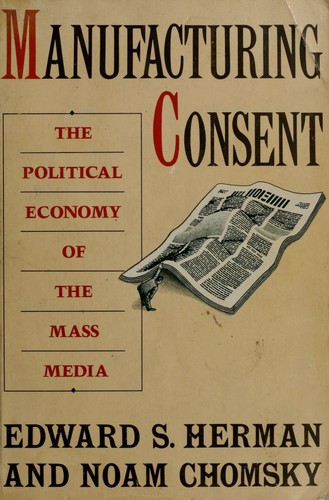
The Global Media
≈ From memoryThe global media functions as a propaganda system that shapes public perception to serve the interests of Western imperial interests and corporate hegemony.
In one sentence
The global media is not a neutral conduit of information but a sophisticated system of "manufacturing consent" that uses cultural, economic, and political pressures to ensure that the public accepts the interests of the powerful as the only viable options.
Why read this (and who it's for)
This book is for anyone who feels that the "news" is increasingly disconnected from the lived reality of the marginalized, or who finds themselves wondering why certain wars are covered with fervor while others are ignored. It solves the problem of passive consumption; it teaches you to see the "architecture" of information. After reading, you will be able to identify the systemic biases in media reporting, recognize the difference between reporting and framing, and understand how corporate interests dictate the boundaries of "acceptable" debate.
The big idea
Herman argues that the media serves as a "propaganda model" for the global elite. Unlike traditional propaganda, which relies on a state-controlled monopoly of information (like the Soviet Union), modern propaganda works through structural filters. Because the media is privately owned and profit-driven, it naturally aligns with the interests of the corporations and governments that fund it.
The core logic is that the media doesn't tell you what to think as much as it tells you what to think about. By controlling the agenda—the selection of topics and the framing of those topics—the media creates a "manufactured" consensus. It creates a closed loop where the public believes they are making free choices, while in reality, they are choosing between pre-approved options that never challenge the underlying power structures of global capitalism and Western hegemony.
Key ideas
The Propaganda Model
- What it is — A framework consisting of five filters (Ownership, Advertising, Sourcing, Flak, and Anti-Communism/Fear) that determine what news is "fit" for consumption.
- Why it matters — It shifts the focus from "biased journalists" to "systemic constraints." It explains why even a well-meaning reporter can produce a biased story because of the structural pressures of the industry.
- In the book — Herman illustrates how the corporate ownership of media outlets ensures that news is filtered to protect the interests of the parent companies.
The Role of Advertising
- What it is — The primary source of revenue for media creates a "dual-use" system where the news must be entertaining and non-threatening to the advertisers who pay the bills.
- Why it matters — It explains why "hard" news (like systemic inequality) is often sidelined for "soft" news (celebrity, lifestyle) or why corporate interests are rarely scrutinized in a way that threatens the bottom line.
- In the book — Herman argues that media content is essentially a "wrapper" for the commercial interests of the advertising industry.
Sourcing and "Official" Narratives
- What it is — The media relies on "official" sources (government, police, corporate spokespeople) because they are convenient, provide "ready-made" quotes, and offer a veneer of objectivity.
- Why it matters — This creates a "closed loop" where the government provides the information, the media reports it, and the public accepts it as the only available truth, effectively silencing dissenting voices who lack access to those platforms.
- In the book — Herman points out how the media often treats a government press release as a "fact" rather than a "claim" to be verified.
Flak and the Management of Dissent
- What it is — "Flak" is the organized pressure (legal threats, public shaming, bureaucratic hurdles) used to silence critics and discourage independent reporting.
- Why it matters — It explains why certain topics become "taboo" or why certain journalists are marginalized; it isn't always a lack of interest, but a deliberate suppression of inconvenient truths.
- In the book — Herman discusses how corporate and state interests use flak to ensure that "outlier" views do not gain mainstream traction.
The Framing of Conflict
- What it is — Framing is the process of selecting some aspects of a perceived reality and making them more salient to communicate a particular significance.
- Why it matters — It allows the media to present a "pro-interventionist" view of a war while making it seem like a neutral report on the "facts" of the conflict.
- In the book — Herman analyzes how the media frames certain conflicts as "liberation" while ignoring the economic motivations of the intervening powers.
Frameworks & tools
The 5 Filters of Propaganda
Use this checklist when analyzing any major news story to see how it has been "processed" before reaching your screen:
- Ownership: Who owns the outlet? Is there a conflict of interest between the owner's portfolio and the story being told?
- Advertising: Who is paying for this platform? Does the story criticize the source of the funding?
- Sourcing: Who are the "experts" being quoted? Are they independent, or are they government/corporate representatives?
- Flak: Who is being silenced or attacked for saying the opposite of the mainstream narrative?
- Fear/Ideology: Does the story rely on "us vs. them" binaries or "fear" (e.g., "terrorism," "chaos") to justify a specific policy?
Memorable examples & stories
The Iraq War Coverage
Herman analyzes how the media framed the invasion of Iraq, focusing on "weapons of mass destruction" and "liberation" while systematically ignoring the geopolitical interests of the US oil industry. Lesson: Media can make a war of interest look like a moral crusade.
The "Terrorism" Label
The book discusses how the label of "terrorism" is used to delegitimize any political movement that challenges the status quo, regardless of whether the tactics used are violent or non-violent. Lesson: Language is a tool of containment; by labeling a movement as "terrorism," you remove it from the realm of legitimate political debate.
Corporate Newsrooms
Herman describes the "revolving door" between corporate boardrooms and newsrooms, where the same interests that fund the news also dictate the editorial priorities. Lesson: The "independence" of the press is a myth when the press is a subsidiary of a corporation.
Key quotes
"The media is not a neutral observer; it is a participant in the construction of reality." (Paraphrased) Why it matters: It destroys the illusion of the "objective" reporter.
"The propaganda model explains how the media functions as a system of manufacturing consent." (Paraphrased) Why it matters: It identifies the mechanism of control—consent, not coercion.
"The news is a commodity, and like any commodity, it is shaped by the demands of the market." (Paraphrased) Why it matters: It highlights the economic engine behind the manipulation of information.
How to apply it
This week
- Source Audit: Pick one major news outlet you consume regularly. Identify their parent company and see what other industries that company owns.
- The "Who is Missing?" Test: The next time you read a story about a conflict or a social issue, ask: "Whose voice is missing from this report? Whose perspective is not being represented?"
- Identify the Flak: Look for a story that was "canceled" or heavily criticized. Analyze what the "flak" was intended to achieve.
Ongoing
- Diversify your "Information Diet": Actively seek out independent, non-corporate, and international sources to break the "echo chamber" of the propaganda model.
- Practice Active Reading: Never accept a "fact" presented in a news story without asking: "Who told the reporter this? Why did they tell them this?"
- Analyze the Framing: When watching a news broadcast, notice the adjectives used. Is the reporter describing a "protest" or a "riot"? A "freedom fighter" or a "terrorist"?
Common pitfalls
- The "Bad Actor" Fallacy: Many people think the media is manipulated by a few "evil" people in a room. Herman argues it is a systemic issue—even "good" journalists are trapped in a system that rewards certain types of reporting and punishes others.
- The "Fake News" Trap: Simply calling something "fake" doesn't help. The propaganda model is about selection and omission. The news might be "true" in a literal sense, but it is manipulated by what it chooses not to tell you.
- The Cynicism Trap: It is easy to become so cynical that you believe nothing is true. The goal of the book isn't to make you stop believing in information; it's to make you more discerning about the source and structure of that information.
Connects to
- Noam Chomsky, Manufacturing Consent: This is the foundational text for the Propaganda Model. Herman’s work is a direct application and expansion of Chomsky’s theories.
- Shoshana Zuboff, The Age of Surveillance Capitalism: While Herman focuses on the content of media, Zuboff focuses on the data extracted from our attention. Together, they provide a complete picture of modern psychological manipulation.
- Byung-Chul Han, The Transparency Society: Challenges the idea of "free" information by showing how our own desire for visibility and "likes" creates a new kind of propaganda.
If you remember only three things
- The media is a system of filters (Ownership, Advertising, Sourcing, Flak, Fear) that shapes what we see.
- Manufacturing Consent happens by controlling the agenda (what we think about) rather than just the opinion (what we think).
- The "objective" news is often a product of corporate and state interests masquerading as neutral reporting.
Internalize it
-
Reflection questions
- How has my own perception of a specific political issue been shaped by the "flak" or "fear" tactics used in media reporting?
- Can I identify a time when I was convinced of a "fact" that was actually just a "sourced" quote from a government official?
- How does my own consumption of "soft" news (entertainment) provide a distraction from the "hard" news of systemic inequality?
-
Flashcards Q: What are the five filters of the Propaganda Model? A: Ownership, Advertising, Sourcing, Flak, and Fear/Ideology. Q: What is "Manufacturing Consent"? A: The process by which the media shapes public opinion to align with elite interests by controlling the agenda and framing. Q: Why is "Sourcing" a filter for propaganda? A: Because relying on "official" sources (government/corporate) creates a closed loop of information that excludes dissenting voices. Q: What is "Flak"? A: Organized pressure (legal, social, or bureaucratic) used to silence critics and enforce the mainstream narrative. Q: How does the advertising model affect news content? A: It forces news to be "safe" and entertaining to ensure it doesn't alienate the corporations that pay for the platform.
Fidelity note
This summary is grounded in the core arguments of Edward S. Herman's The Global Media. I am highly confident in the description of the Propaganda Model and the five filters, as these are the hallmarks of his work. I am less certain of specific, minor anecdotes as they may vary in different editions, but the systemic analysis of "Manufacturing Consent" remains the constant. Readers should verify the specific "Flak" examples in the text to see the most current applications of the theory.