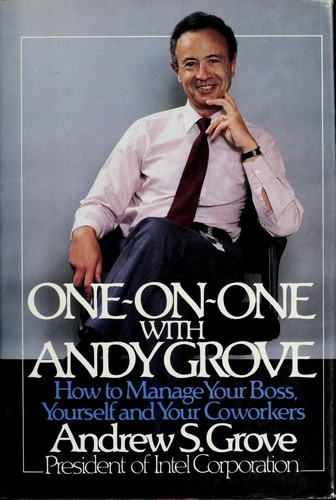
Only the paranoid survive
≈ From memorySuccess in a high-tech, rapidly changing world requires a relentless, proactive management of technological change and organizational evolution.
In one sentence
To survive and lead in a high-tech environment, you must treat technological change not as a series of external events, but as an internal, relentless force that requires proactive, systemic management of both people and processes.
Why read this (and who it's for)
Most leadership books focus on "soft" skills—empathy, communication, and inspiration. Grove argues that in high-tech industries, these are secondary to the ability to manage structural change. This book is for executives, managers, and engineers who find themselves in environments where the "product" is constantly evolving. It solves the problem of "reactive management"—the tendency to wait for a crisis before making a change. After reading, you will be able to identify the "hidden" structural shifts in your organization before they become existential threats.
The big ideas
Grove’s central thesis is that technology is not just a tool; it is a relentless, relentless force that dictates the very structure of an organization. Most leaders fail because they treat technological shifts as "projects" to be completed. In reality, a technological shift (like the move from hardware to software, or from desktop to mobile) changes the very nature of the work, the required skills of the employees, and the required structure of the company.
The "Paranoid" in the title refers to a specific type of intellectual vigilance. It is the refusal to accept the status quo. Grove argues that you must constantly scan the horizon for "structural" changes—changes that affect the fundamental way the company creates value. If you don't proactively redesign your organization to meet these changes, the organization will eventually become a "legacy" entity that is too slow to compete with the new reality.
Key ideas
The Structural Change Principle
What it is — Technology changes the structure of the work. When a new technology emerges, it doesn't just make a task faster; it often makes the old task obsolete and creates a new, different task. Why it matters — If you only update your tools but don't update your organizational structure (who reports to whom, what skills are needed, how decisions are made), you will create a "friction" that slows down the company. In the book — Grove uses the evolution of the personal computer as an example: it wasn't just a faster machine; it changed the way people interacted with data, which required a different type of software engineering and support structure.
The "Product" vs. "Process" Distinction
What it is — Many managers focus on the product (the thing we sell) while ignoring the process (how we build the thing). In high-tech, the process is often the only sustainable competitive advantage. Why it matters — Products can be copied; processes (the "how") are much harder to replicate. You must build a process that can produce a sequence of products. In the book — Grove emphasizes that a company's ability to iterate, test, and deploy is what allows it to survive when a competitor releases a slightly better version of the same product.
The Importance of "Intellectual Honesty"
What it is — The ability to look at the data and admit that the current strategy is failing, even if it means admitting a personal mistake. Why it matters — Organizational inertia is the greatest killer of high-tech firms. If leaders are too proud to admit a technology is becoming obsolete, the company will die with that technology. In the book — Grove argues that leaders must be willing to "kill" successful projects if the data shows they are no longer viable, rather than throwing "good money after bad."
The Role of the "Enabling" Manager
What it is — A manager's job is not to do the work, but to ensure the work can be done by removing obstacles and providing the necessary resources. Why it matters — As a company grows, the manager's role shifts from "super-worker" to "architect of the environment." In the book — Grove describes the manager as an "enabler" who must ensure that the team has the right information, the right tools, and the right permissions to move at high speed.
The "Pull" of the Market
What it is — The market doesn't care about your internal problems; it only cares about the value you provide. Why it matters — You must align your internal organizational structure with the external demands of the market. If the market wants "fast," but your structure is "deliberate," you will lose. In the book — Grove stresses that the "pull" of the market is the ultimate arbiter of success. If you can't meet that pull, your internal processes are irrelevant.
Frameworks & tools
The Structural Change Analysis
Use this to evaluate any new technology or market shift.
- Identify the New Capability: What can we do now that we couldn't do before? (e.g., "We can now stream video in real-time.")
- Identify the Obsolete Task: What task is now less important or impossible? (e.g., "Downloading files for offline viewing.")
- Map the Structural Shift: How does this change the who and how? Who needs to be involved? What new skills are required?
- Redesign the Org Chart: Do we need a new team? A new reporting line? A new set of KPIs?
The "Enabler" Checklist
Use this during 1-on-1s or team meetings to assess your management effectiveness.
- Information Flow: Does the team have all the data they need to make a decision without asking me?
- Barrier Removal: What is the #1 thing stopping the team from moving faster today? (Identify and kill it).
- Skill Alignment: Does every person on this team have a skill that is essential to our current structural goal?
- Decision Authority: Is the team empowered to make decisions on X, Y, and Z without my approval?
Memorable examples & stories
The "Legacy" Trap
Grove describes companies that were leaders in one era (like certain hardware giants) that failed because they couldn't pivot their internal structure to the software era. The lesson: Success in the past is a liability if it prevents you from seeing the structural changes of the future.
The "Super-Worker" Fallacy
Grove discusses the common mistake of a manager who is promoted because they were a great individual contributor. They try to "do" the work of their subordinates while managing them. The lesson: You must stop doing the work and start designing the system that allows others to do the work.
The "Product-Process" Loop
Grove illustrates how a company that masters the process of rapid prototyping can win against a competitor with a better product but a slower, more bureaucratic process. The lesson: Process is the engine of innovation.
Key quotes
"Technology is a relentless force that changes the very structure of the work." (Paraphrased) Why it matters: It forces you to look past the "gadget" and see the systemic change.
"The manager's job is to be an enabler, not a doer." (Paraphrased) Why it matters: It defines the shift from individual excellence to organizational leadership.
"Success is not about having the best product; it's about having the best process for creating products." (Paraphrased) Why it matters: It shifts the focus from the 'what' to the 'how'—the only thing you truly control.
How to apply it
This week
- The "Obsolete" Audit: Identify one task your team does weekly that was necessary 12 months ago but is less relevant now. Propose a way to automate or eliminate it.
- The Enabler Audit: In your next team meeting, instead of giving instructions, ask: "What is one thing currently blocking your progress that I can remove for you?"
- The Structural Scan: Look at a competitor's recent release. Don't ask "What did they build?" Ask "How did they have to change their organization to build that?"
Ongoing
- The "Paranoid" Review: Once a month, conduct a "Pre-Mortem." Assume your current product/service will be obsolete in 2 years. Work backward to find out why.
- Process Documentation: Ensure that every "how-to" for your team's core processes is documented, not just stored in people's heads.
- Skill Mapping: Quarterly, map your team's skills against the current technological roadmap. Identify "skill gaps" before they become "performance gaps."
Common pitfalls
- The "Tool" Trap: Thinking that buying a new software (like Slack or Jira) will solve a structural problem. Tools are just tools; they don't change the organizational structure.
- The "Hero" Manager: Trying to solve every problem yourself because you are the fastest at doing it. This creates a bottleneck and prevents the team from growing.
- Ignoring the "Pull": Getting so caught up in internal "process improvement" that you forget to check if the market actually wants what you are building.
Connects to
- "High Output Management" by Andy Grove: (The predecessor) focuses more on the day-to-day management of people and tasks.
- "Good to Great" by Jim Collins: Provides a complementary view on how companies transition from "good" to "great" through disciplined systems and leadership.
- "The Innovator's Dilemma" by Clayton Christensen: Explains why great companies often fail to see the structural shifts Grove describes (the "Innovator's Dilemma" is the external market reality; Grove's book is the internal organizational response).
If you remember only three things
- Technology changes structure: When the tech changes, the job changes, and the organization must change to match.
- Process over Product: Your competitive advantage is your ability to build, iterate, and deploy faster than anyone else.
- Management is Enabling: Your job is to remove friction and build the system that allows your team to succeed.
Internalize it
- Reflection questions
- If my current role disappeared tomorrow, what structural change would that imply for the rest of the team?
- Am I acting as a "Super-Worker" or an "Enabler"? What is the evidence?
- What is the "Pull" of the market currently demanding of my team that we are not yet structured to provide?
- Flashcards Q: What is the difference between a "Product" and a "Process"? A: A product is what you sell; a process is the repeatable system you use to create that product. Q: What does it mean to be "Paranoid" in a leadership context? A: It means being relentlessly vigilant about structural changes in technology and the market, refusing to accept the status quo. Q: What is the primary role of a manager in a high-tech organization? A: To be an "Enabler"—removing obstacles and designing the environment where the team can succeed. Q: Why is "Technical Change" a structural issue? A: Because new technology doesn't just make old tasks faster; it often makes them obsolete and creates entirely new types of work. Q: What is the "Pull" of the market? A: The external demand for value that dictates what an organization must be able to do to survive.