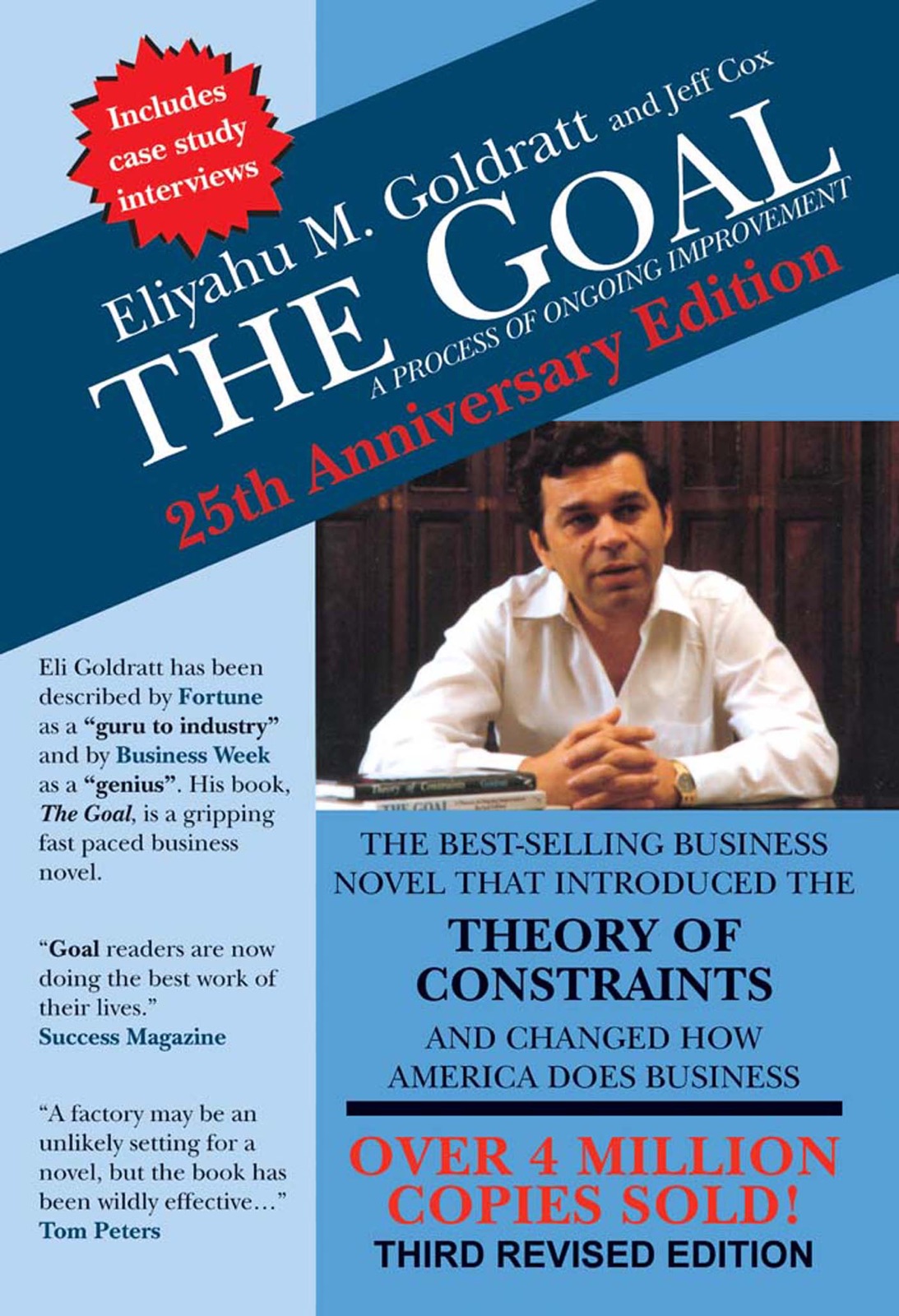
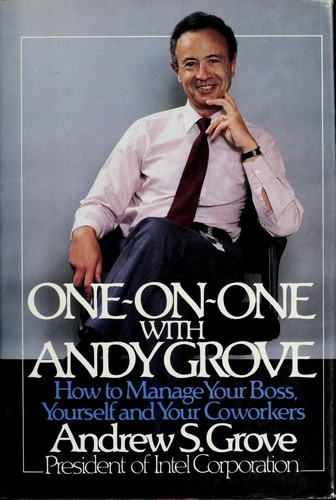
High Output Management
≈ From memoryManagement is the art of maximizing 'high-leverage' activities—actions that produce a disproportionate amount of results relative to the effort required.
In one sentence
Effective management is not about being busy; it is about identifying and executing high-leverage activities that remove bottlenecks, clarify ambiguity, and empower others to produce maximum output.
Why read this (and who it's for)
This book solves the "managerial treadmill" problem: the feeling of being constantly overwhelmed by status updates, emails, and minor fires while the actual progress of the team feels sluggish. It is designed for first-time managers, engineering leads, and executives who want to move from "doing the work" to "ensuring the work gets done." After reading this, you will be able to audit your daily tasks for leverage, communicate with surgical precision to eliminate rework, and delegate authority—not just tasks—to scale your impact.
The big idea
The central thesis of High Output Management is the Leverage Principle. Andrew Grove argues that a manager’s primary job is to maximize "output" (the results produced by the team) while minimizing "input" (the resources consumed). Because a manager's time is the most constrained resource in any organization, spending it on low-leverage activities—tasks that produce only a linear return on your time—is a failure of leadership.
Grove argues that management is essentially an engineering problem. Just as a manufacturing line has bottlenecks where parts pile up, an organization has "management bottlenecks" where information stops flowing, goals become muddy, or people lack the authority to move forward. The manager's role is to identify these bottlenecks and apply high-leverage interventions: clarifying a vague goal so 50 people can work toward it simultaneously, or coaching a frustrated employee so they can perform at their peak.
The logic clicks when you realize that management is a multiplier. If you spend an hour fixing a problem yourself, you have produced one hour of value. If you spend an hour clarifying a process that allows 10 people to work without interruption for the rest of the week, you have produced dozens of hours of cumulative value. High-leverage management is about finding those "multipliers."
Key ideas
High Leverage vs. Low Leverage
What it is — High leverage refers to activities where a small amount of effort produces a large amount of result for the organization. Low leverage refers to tasks that produce only a linear return on your time (e.g., doing work that someone else could do, or attending meetings where you have no influence). Why it matters — If you spend your day in low-leverage activities, you are essentially "doing" work rather than "managing" output. You become the bottleneck because you are too busy with trivialities to provide the direction and clearing of paths required for the team to succeed. In the book — Grove uses the example of a manager who spends all day answering routine questions from subordinates. This is low leverage. A high-leverage alternative would be creating a comprehensive FAQ or training manual that prevents those questions from arising in the first place, freeing up everyone's time.
The Managerial Process (POSDC)
What it is — Management consists of five core functions: Planning, Organizing, Staffing, Directing, and Controlling. These are not separate silos but a continuous cycle where each feeds into the next. Why it matters — Without this framework, management becomes reactive. You end up "putting out fires" without ever asking why the fire started. By systematically moving through these five stages, you ensure that the organization is built on a foundation of intent rather than accident. In the book — Grove illustrates how "Planning" (setting goals) must be rigorous because if the plan is muddy, "Directing" becomes impossible—people will move in different directions, creating friction and wasted output.
Communication as a Feedback Loop
What it is — Communication is not about what you say; it is about what the receiver hears and interprets. It requires a feedback loop where the sender verifies that the receiver's mental model matches the sender's intent. Why it matters — Most management friction comes from "assumed knowledge." If you assume a team understands a goal but they actually have a slightly different interpretation, they will spend weeks producing the wrong output. You must verify their interpretation before they start working. In the book — Grove describes how a manager might give an instruction like "make this faster." The receiver hears "reduce latency," but the sender meant "increase throughput." Without a feedback loop to clarify these nuances, the team produces wasted effort.
Empowerment vs. Abdication
What it is — Delegation is not just handing off a task; it is the transfer of authority. Empowerment means giving an individual the responsibility and the permission to make decisions without checking back with you. Why it matters — If you delegate a task but keep the decision-making power, you have created a bottleneck. The employee has to stop every time they hit a snag to ask you for permission, slowing down the entire process. In the book — Grove warns against "abdication"—throwing a problem at someone and walking away—versus true empowerment, where you provide the boundaries (the "what") but let them decide the "how."
The Cost of Delay
What it is — Every decision has two costs: the cost of making the decision (time/effort) and the cost of delaying the decision. Often, the cost of delay far outweighs the cost of making a slightly imperfect decision quickly. Why it matters — Managers often paralyze themselves by seeking 100% certainty. However, in a high-output environment, a "good enough" decision made now is often superior to a "perfect" decision made three weeks later because the delay allows the organization to lose momentum or miss a window of opportunity. In the book — He argues that managers must learn to identify which decisions are "reversible" (low cost of error) and which are "irreversible." For reversible ones, speed is the primary metric of success.
Performance Management as Coaching
What it is — Managing performance isn't an annual review; it’s a continuous cycle of feedback, coaching, and course correction. It involves identifying an employee's strengths and weaknesses and providing the specific tools to improve them. Why it matters — If you wait until a quarterly review to tell someone they are underperforming, they have already wasted three months of output. Continuous coaching ensures that "course corrections" happen in real-time. In the book — Grove emphasizes that feedback must be specific and immediate. Instead of saying "You need to be more proactive," a manager should say, "I noticed you waited for me to tell you X; next time, I want you to make the call on Y without asking."
Frameworks & tools
The Managerial Process (POSDC)
Use this checklist to audit any management responsibility:
- Planning: What is the specific goal? What does "success" look like in measurable numbers? What are the constraints?
- Organizing: How will the work be divided? Who owns which piece? What resources (budget, tools, people) are needed?
- Staffing: Do we have the right skills for these specific roles? Is there a gap between current ability and required output?
- Directing: How will I communicate the plan? How will I ensure everyone understands my intent? (Use the Communication Loop).
- Controlling: What are the milestones? How will I measure progress? How will I provide feedback to adjust the course?
The Communication Loop
Follow these steps every time you give a critical instruction:
- Sender's Intent: Clearly define what you want to happen (the "Why" and the "What").
- The Message: Deliver the instructions in a way tailored to the receiver’s experience level.
- Receiver's Interpretation: Ask the receiver to repeat back their understanding of the goal/task in their own words.
- Verification: Compare their interpretation with your intent. If they differ, adjust your message immediately before they start work.
The Empowerment Matrix
When delegating a task, determine where you sit on these two axes:
- Responsibility: Who is accountable for the result? (Should be the subordinate).
- Authority: Who has the power to spend money, change the plan, or hire/fire? Rule: If you give Responsibility without Authority, you have created a bottleneck. You must grant enough authority to allow them to move without asking you for permission on routine matters.
Memorable examples & stories
The Manufacturing Bottleneck
Grove describes how production lines can be paralyzed by a single slow machine. Even if every other machine is running at 100% capacity, the total output is limited by that one bottleneck. Lesson: Management is about finding the "slow machine" in your team's workflow (e.g., a slow approval process) and fixing it to unlock the potential of everyone else.
The Ambiguous Instruction
A manager tells a team to "improve the user interface." One group spends three weeks on colors; another spends three weeks on navigation; a third spends three weeks on speed. They all produce different results, and none of them satisfies the manager's actual intent (which was speed). Lesson: Ambiguity is the greatest waste of output. You must define "success" with such precision that there is only one way to interpret it.
The Cost of Delay in Decision Making
Grove discusses scenarios where a manager waits for perfect data before deciding on a product feature. By the time the data arrives, the competitor has already launched, and the window of opportunity is closed. Lesson: Identify "reversible" decisions and make them instantly to maintain organizational velocity.
Key quotes
- "Management is about maximizing output." (Paraphrased) Why it matters: It shifts the focus from "activity" (looking busy) to "results" (actually moving the needle).
- "Communication is not what you say, but what they hear." (Paraphrased) Why it matters: It forces managers to take responsibility for the receiver's understanding, not just their own delivery.
- "The manager’s job is to remove the obstacles that prevent others from doing their jobs." (Paraphrased) Why it matters: This defines high leverage—the act of clearing a path so that 10 people can run faster.
How to apply it
This week
- Leverage Audit: Look at your calendar for the next 5 days. Identify three tasks that are "low leverage" (tasks someone else could do, or routine status updates). Find one way to automate, delegate, or eliminate them.
- Clarify One Goal: Pick a project currently in progress. Ask the person running it: "What is your understanding of what 'success' looks like for this?" If their answer differs from yours by even 10%, stop them and redefine the goal immediately.
- The Feedback Loop: In your next three meetings, don't end with "Any questions?" Instead, ask: "To make sure I was clear, can you summarize what you're going to do next?"
Ongoing
- Identify Bottlenecks: Every Friday, ask yourself: "Where did my team get stuck this week? Was it because of a lack of information, a lack of authority, or a muddy goal?" Then, create a high-leverage fix for that bottleneck.
- Empowerment Check: When you delegate a task, explicitly state what decisions the person is allowed to make without asking you. (e.g., "You have the authority to spend up to $500 to solve any issue related to X.")
- Focus on Multipliers: Before doing any work, ask: "Will doing this help others do their work better?" If the answer is no, find a way to delegate it or move it to the bottom of your priority list.
Common pitfalls
- Micromanagement as "Helping": Many managers think they are helping by doing the work for their subordinates. Grove argues this is low leverage; you are removing the opportunity to train them and creating a bottleneck where only you can produce results.
- The "Perfect" Decision Trap: Managers often fall into the trap of thinking that more data equals better output. In reality, the time spent gathering that extra 5% of data often costs more in lost momentum than the benefit of the slightly better decision.
- Assuming Knowledge: The most common failure is assuming that because you know what you mean, everyone else knows too. If you don't verify their mental model, you are essentially gambling with your team's time.
Connects to
- "The Effective Executive" by Peter Block: Extends Grove’s ideas on communication and "managing up," focusing more on the interpersonal dynamics of office life.
- "Radical Candor" by Kim Scott: Complements Grove’s focus on feedback loops by providing a specific framework for how to deliver that feedback without destroying relationships.
If you remember only three things
- High Leverage is everything: Your value as a manager is measured by the output of your team, not the volume of your own tasks. Focus on activities that multiply the efforts of others.
- Ambiguity is waste: Every unclear goal leads to wasted hours of effort. Use the Communication Loop to ensure everyone's mental model matches your intent before they start working.
- Authority must follow Responsibility: If you want someone to deliver a result, you must give them the power to make the decisions required to reach that result.
Internalize it
-
Reflection questions
- What is one "bottleneck" in my team's current workflow that I have been ignoring because it’s uncomfortable to fix?
- If I were forced to only do 3 tasks today, which ones would produce the most cumulative output for everyone else?
- When was the last time I asked a subordinate to repeat back their understanding of my instructions? What happened when they did?
- Am I making decisions slowly because I am seeking "certainty" that isn't actually required for this specific task?
-
Flashcards Q: What is the difference between high leverage and low leverage? A: High leverage produces a disproportionate amount of result relative to effort (e.g., clarifying a goal for 50 people); low leverage produces linear results (e.g., doing work someone else could do).
Q: What are the five stages of the Managerial Process? A: Planning, Organizing, Staffing, Directing, and Controlling.
Q: Why is "the receiver's interpretation" more important than "what you say"? A: Because management output depends on people acting on your intent; if they interpret it differently, they waste effort producing the wrong result.
Q: What is the difference between delegation and empowerment? A: Delegation is handing off a task; Empowerment is giving someone the responsibility AND the authority to make decisions without checking back.
Q: When should you prioritize speed over accuracy in decision making? A: When the "cost of delay" (lost momentum, missed windows) outweighs the cost of making a slightly imperfect but timely decision.
Q: How does Grove define "management"? A: As an engineering problem of maximizing output while minimizing input by removing bottlenecks and clarifying ambiguity.
Fidelity note
I have high confidence in this summary. The core concepts (Leverage, POSDC, Communication Loops, Empowerment) are the foundational pillars of Grove's management philosophy. I am confident in the paraphrased quotes as they represent his consistent rhetorical style. Some specific manufacturing anecdotes from Intel may be slightly generalized to focus on the managerial principle rather than the technical minutiae of chip production.