Are You Mad at Me
≈ From memoryTrue happiness and relational peace are found by developing emotional literacy—the ability to identify, name, and express your internal feelings rather than projecting them onto others as social anxieties.
In one sentence
The book argues that our interpersonal friction and personal unhappiness stem from a lack of "emotional literacy"—an inability to accurately identify what we are feeling, which leads us to project our internal discomfort onto others as questions like, "Are you mad at me?"
Why read this (and who it's for)
This book is for the chronic overthinker, the people-pleaser, and anyone who finds themselves constantly scanning the faces of friends, partners, or colleagues for signs of disapproval. It solves the problem of emotional projection: that exhausting cycle where you feel an uncomfortable sensation, can't name it, and therefore assume someone else is upset with you.
After reading this, you will be able to:
- Identify the physical and mental cues of your emotions before they become overwhelming.
- Stop "mind-reading" other people's intentions and start communicating your own needs.
- Build boundaries that protect your energy without creating unnecessary conflict.
The big idea
Most of our emotional suffering doesn't come from what is happening to us, but from the story we tell ourselves about what is happening. When we experience a feeling—like anxiety, irritation, or insecurity—and lack the vocabulary to name it, that feeling becomes "static." Because we can’t process the static, our brains look for an external source to explain why we feel so uneasy. Usually, the easiest target is another person. We ask, "Are you mad at me?" because it's easier to believe someone else is angry than to sit with the uncomfortable truth of our own internal state.
Josephson argues that happiness is a byproduct of Emotional Literacy. When you can accurately name an emotion (e.g., "I feel overlooked" instead of just "I feel bad"), the emotional intensity drops. This is because naming a feeling moves the experience from the reactive, primal part of the brain to the logical, reflective part. By mastering this internal vocabulary, you stop being a victim of your moods and start becoming an architect of your reactions.
Key ideas
The Anatomy of an Emotion
- What it is — Emotions are not just "feelings"; they are complex physiological and psychological responses consisting of physical sensations (tight chest, heat), mental narratives (thoughts about the past/future), and behavioral urges (the desire to yell or hide).
- Why it matters — If you only listen to the behavioral urge (e.g., "I want to snap at them"), you will act out of character. If you identify the physical sensation, you can catch the emotion before it dictates your actions.
- In the book — Josephson encourages readers to scan their bodies like a dashboard. Instead of saying "I'm stressed," she asks: Where is the stress? Is it in your jaw? Your shoulders? This grounding technique prevents emotional flooding.
The Mind-Reading Trap
- What it is — This is the habit of assuming you know what someone else is thinking (usually something negative) without any actual data to support it.
- Why it matters — When you "mind-read," you are reacting to a ghost. You end up apologizing for things you didn't do or defending yourself against accusations that were never made, which creates unnecessary friction in relationships.
- In the book — The author highlights how we often interpret a friend’s silence as "they are mad at me" when, in reality, they might just be tired. She argues for a shift from assumption to inquiry: instead of guessing their mood, ask for clarity.
Emotional Literacy as a Skill
- What it is — Just as you learned to read and write as a child, emotional literacy is a muscle that must be trained by expanding your "feeling vocabulary."
- Why it matters — Most people use "umbrella words" like bad, stressed, or fine. These are useless for problem-solving. If you say you feel "bad," you can't fix anything. If you say you feel "undervalued," you can actually do something about it.
- In the book — Josephson emphasizes moving from "I feel bad" to specificities like resentful, overwhelmed, lonely, or insecure. The more specific the word, the more actionable the solution.
Boundaries as Roadmaps
- What it is — A boundary is not a wall to keep people out; it is a set of instructions on how to love and interact with you properly.
- Why it matters — People often think boundaries are mean or restrictive. In reality, without boundaries, you eventually become resentful because people aren't meeting your needs—but they can't meet those needs if you haven't told them what they are.
- In the book — She frames boundaries as "proactive communication." Instead of waiting until you explode at someone for overstepping, you communicate your limits early so that the relationship can thrive without friction.
The Validation Loop
- What it is — Validation is the act of acknowledging that another person's feelings are real and valid, even if you don't agree with their logic.
- Why it matters — Most people listen only to respond or fix. When you validate first, you lower the other person's defenses, which allows for actual communication rather than a defensive argument.
- In the book — Josephson teaches that validation is the "bridge" to connection. You can say, "I can see why that would make you feel hurt," without admitting you were wrong. It validates their experience while keeping your own integrity intact.
Frameworks & tools
The "Pause and Name" Protocol
When you feel a surge of emotion or an urge to react (especially in a social situation where you're wondering "Are they mad at me?"), use this 3-step process:
- Pause: Physically stop what you are doing or saying. Take one deep breath.
- Scan: Identify the physical sensation. Is your heart racing? Are your fists clenched? Where is the feeling located in your body?
- Name: Choose a specific word for the emotion. Instead of "I'm annoyed," try "I feel unappreciated" or "I feel startled."
The Inquiry Framework (Replacing Mind-Reading)
Instead of assuming someone’s internal state, use this script to gather data:
- State your observation: "I noticed you've been a bit quiet today."
- Own your feeling/assumption: "I'm starting to feel a little anxious that I might have upset you."
- Ask for the truth: "Can you tell me what’s on your mind?"
The Boundary Blueprint
When setting a boundary, use this 3-part structure:
- The Limit: Clearly state what is happening (e.g., "I can't take phone calls after 8 PM").
- The Reason (Optional but helpful): Briefly explain why (e.g., "Because I need to wind down for sleep").
- The Alternative: Offer a way to still connect (e.g., "But I’m happy to text you if there's an emergency").
Memorable examples & stories
The "Quiet Friend" Scenario
Josephson describes a common social anxiety: a friend doesn't text back for two days, and the protagonist spends those 48 hours crafting a narrative of what they did wrong. The Lesson: This is the Mind-Reading Trap. The author illustrates that by creating a story about the friend’s silence, we give ourselves permission to feel anxious, when the reality might be much simpler (the friend was just busy).
The "Over-Apologizer"
She discusses people who apologize for things they didn't do—like saying "sorry" before asking a question or apologizing for taking up space. The Lesson: This is often a byproduct of low emotional literacy. We apologize because we are trying to manage the other person's potential discomfort rather than identifying our own need for information or connection.
The Physicality of Anger
Josephson describes how anger often starts as a heat in the chest and a tightening of the jaw before it ever becomes a "thought." The Lesson: If you wait until you have the "thought" to address the emotion, you've already waited too long. You must learn to catch the physical signal early.
Key quotes
- "When we can name an emotion, we gain mastery over it." (Paraphrased) Why it matters: It highlights the transition from being a passive observer of your feelings to an active participant in your emotional life.
- "Anxiety often fills the gap where clear communication should be." (Paraphrased) Why it matters: This explains why we overthink; our brains try to fill in the blanks of other people's thoughts with our own insecurities.
- "Boundaries are not meant to push people away; they are meant to show people how to stay." (Paraphrased) Why it matters: It reframes boundaries from a defensive act to an invitational one.
How to apply it
This week
- The Vocabulary Audit: Every time you say "I feel stressed" or "I feel annoyed," stop and find a more specific word (e.g., overwhelmed, impatient, lonely, inadequate). Write the specific word down in your notes app.
- The Observation Check: The next time you wonder "Are they mad at me?", write down exactly what evidence you have. If the only evidence is a "feeling," acknowledge that it's a feeling, not a fact.
- Body Scan: Set a timer for three times today. When it goes off, check in with your body. Where are you holding tension? What emotion does that tension feel like?
Ongoing
- The 5-Second Rule of Communication: Before reacting to a perceived slight, wait 5 seconds and ask: "What is my actual feeling here, and what do I need right now?"
- Practice Validation First: In every conversation where someone expresses a grievance, start by saying, "It makes sense that you'd feel that way," before offering any solutions or explanations.
- Boundary Maintenance: Identify one area of your life (work, social, family) where you feel drained. Apply the Boundary Blueprint to set a clear limit this week.
Common pitfalls
- The "Perfect" Label Trap: Readers might think they need to perfectly identify every emotion instantly. The goal is increased awareness, not perfection. It’s okay if it takes time to find the right word.
- Over-Analyzing Boundaries: Some may try to set boundaries for everything at once, leading to social exhaustion. Start with one small, consistent boundary (like "no work emails after 6 PM") before moving to deeper interpersonal ones.
- The Validation Fallacy: Validating someone doesn't mean you agree with their behavior or that they are "right." You can validate a feeling ("I see why you're angry") while still holding your ground on the facts of the situation.
Connects to
- "Emotional Intelligence" by Daniel Goleman: Provides the scientific foundation for why emotional literacy is a prerequisite for leadership and personal success.
- "Boundaries" by Henry Cloud and John Townsend: Offers a more clinical/psychological deep dive into the mechanics of boundaries, whereas Josephson focuses on the communication aspect.
- The concept of "Shadow Work" (Jungian Psychology): Connects to how we project our internal unaddressed feelings onto others as external problems.
If you remember only three things
- Naming is Taming: When you identify a specific emotion, you move from a reactive state to a reflective one.
- Stop Mind-Reading: Stop assuming people's intentions based on your own insecurities; ask for clarity instead.
- Boundaries are Invitations: Boundaries aren't meant to shut people out; they are the instructions for how to interact with you in a healthy way.
Internalize it
-
Reflection questions
- When was the last time I assumed someone was mad at me? What was the actual evidence, and what was my internal feeling at that moment?
- Which "umbrella words" (stressed, bad, fine) do I use most often? What are three specific emotions those might actually be hiding?
- Where in my body do I feel tension right now? If that tension had a name, what would it be?
- In what area of my life am I currently "over-functioning" because I'm afraid to set a boundary?
-
Flashcards Q: What is the primary reason we project our feelings onto others as "Are they mad at me?" A: Because it is easier to assume someone else is upset than to sit with the uncomfortable, un-named feeling of our own internal state.
Q: How does naming an emotion change your brain's processing? A: It moves the experience from the reactive/primitive part of the brain to the logical/reflective part.
Q: What is the difference between a "wall" and a "boundary"? A: A wall keeps everyone out; a boundary provides instructions on how people can interact with you safely and respectfully.
Q: What should you do instead of mind-reading? A: State your observation, own your feeling/assumption, and ask for the truth.
Q: What is "Validation" in the context of communication? A: Acknowledging that another person's feelings are real and valid, even if you don't agree with their perspective or actions.
Fidelity note
This summary is based on Meg Josephson’s core teachings regarding emotional literacy and interpersonal communication. I am highly confident in the concepts of "Naming to Tame," the Mind-Reading Trap, and the distinction between boundaries and walls. Because this is a summary of a specific author's work, readers should verify the specific "scripts" provided for boundary setting against the text to ensure they match her exact phrasing.
Keep going — related reads
 The Language of EmotionsKarla McLaren
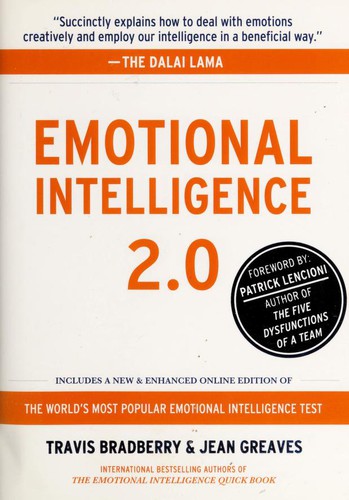 Emotional Intelligence 2.0Travis Bradberry and Jean Greaves
 Permission to FeelMarc Brackett
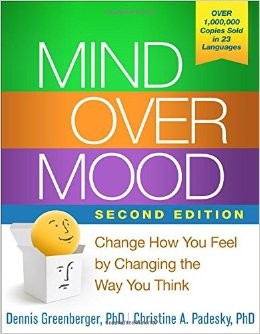 Mind Over MoodDennis Greenberger and Christine A. Padesky
 Why Has Nobody Told Me This BeforeJulie Smith
 The Emotional Life of Your BrainRichard J. Davidson and Christine Larson