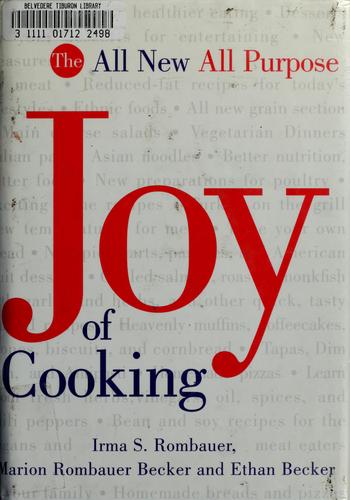
Joy of Cooking
≈ From memoryCooking is a foundational life skill rooted in technique, reliable measurements, and the understanding of ingredients rather than the rigid following of complex, arbitrary recipes.
In one sentence
The Joy of Cooking argues that culinary mastery comes from understanding the "why" of ingredients and techniques so that a cook can become independent of the written word.
Why read this (and who it's for)
Most modern cookbooks are "instruction manuals" for specific dishes; this book is a "manual for the kitchen." It solves the problem of the "recipe slave"—the person who can follow a list of steps but cannot pivot when an ingredient is missing or a texture is wrong.
This is for the home cook who wants to move from execution to intuition. After engaging with this text, you will be able to look at a pantry of random ingredients and understand how to balance flavors, manage heat, and manipulate textures to create a cohesive meal without needing a pre-written guide.
The Big Idea
The central thesis of the Joy of Cooking is that cooking is a craft of chemistry and sensory experience. While most books focus on the result (the finished cake or roast), Becker focuses on the process (the way flour hydrates, the way fat conducts heat, the way acid cuts through richness).
The book posits that if you understand the fundamental behavior of ingredients—for example, how a starch behaves when boiled versus baked—you no longer need a recipe for every iteration of that ingredient. It treats the kitchen as a laboratory where the cook is the scientist. By mastering the "building blocks" (the cuts of meat, the types of grains, the methods of preservation), the cook gains the freedom to improvise.
The logic is simple: A recipe is a map, but understanding the terrain is what allows you to explore. If you know the terrain of flavor and technique, you can navigate any kitchen, regardless of what is in the pantry.
Key ideas
The Primacy of Technique over Recipe
What it is: The belief that knowing how to sear a steak or how to thicken a sauce is more important than knowing the exact measurements for a specific dish. Why it matters: If you only follow recipes, you are paralyzed when a recipe fails or an ingredient is unavailable. If you understand technique, you can troubleshoot and adapt. In the book: The book provides exhaustive instructions on "Methods"—such as poaching, braising, and roasting—before listing specific recipes for those methods.
The Architecture of Flavor
What it is: Cooking is the balance of five primary tastes: sweet, sour, salty, bitter, and umami (savory). Why it matters: When a dish tastes "off," it is almost always because one of these elements is out of balance. Identifying the missing note allows for instant correction. In the book: The text emphasizes the importance of seasoning (salt and pepper) and the role of acid (lemon, vinegar) in brightening flavors.
Ingredient Integrity
What it is: Understanding the physical properties of ingredients—their moisture content, fat content, and expected reactions to heat. Why it matters: You cannot cook what you do not understand. Knowing that a tomato loses volume when cooked or that butter browns at a specific temperature allows for predictable results. In the book: The book spends significant time on "Food Groups" and "Ingredients," describing the types of flour, the grades of butter, and the specific uses of various spices.
The Importance of "Mise en Place" (Implicit)
What it is: Though not always using the French term, the book emphasizes preparation: having all ingredients prepped, measured, and ready before the heat is turned on. Why it matters: Cooking is a high-heat, time-sensitive activity. If you are chopping onions while the garlic is burning in the pan, you have lost control of the process. In the book: The instructions consistently assume the reader has prepared all components beforehand, emphasizing a systematic approach to the workspace.
The Role of Measurement
What it is: Precision in measurement is the foundation of consistency, especially in baking. Why it matters: Baking is chemistry. A slight deviation in the ratio of flour to liquid can change the structural integrity of a cake or bread. In the book: The book provides rigorous measurements for weights and volumes, emphasizing that "eyeballing" is the enemy of the novice.
Frameworks & tools
The "Method-First" Approach
Instead of looking for "Chicken Pot Pie," the book encourages you to look for "How to make a crust" and "How to make a gravy."
- Identify the Core Method: Determine the primary cooking technique (e.g., Braising).
- Master the Component: Learn how to prepare the protein, the vegetable, and the sauce separately.
- Assemble: Combine the components into a final dish.
- Adjust: Season and balance the final result.
The Flavor Balancing Checklist
When a dish feels "flat," run through this mental diagnostic:
- Is it salty enough? (Add salt or a salty cheese/meat).
- Is it acidic enough? (Add lemon juice, vinegar, or wine).
- Is it sweet enough? (Add a pinch of sugar or honey).
- Is it spicy/piquant enough? (Add peppers or cracked pepper).
- Is it rich enough? (Add a fat source like butter or oil).
Memorable examples & stories
The "Proper" Way to Wash Vegetables
The book provides meticulous instructions on how to clean produce, from scrubbing potatoes to rinsing berries. Lesson: Quality begins at the source; you cannot produce a high-quality dish from poorly prepared ingredients.
The Art of the Roast
The descriptions of roasting meats emphasize the importance of "dry-rubbing" and the way heat penetrates different cuts of meat. Lesson: Heat is a tool of transformation; understanding how it moves through different densities of protein is key to tenderness.
The Importance of "The Crust"
The book treats the crust of a pie or bread as a structural and textural marvel, detailing the exact types of fats and flours required. Lesson: Texture is as important as flavor; a perfect dish must have a "mouthfeel" that satisfies the senses.
Key quotes
"Cooking is a matter of taste, and taste is a matter of habit." (Paraphrased) Why it matters: You must develop your palate by eating and tasting frequently to recognize what 'good' actually feels like.
"The secret of good cooking is to know what you are doing with each ingredient." (Paraphrased) Why it matters: Knowledge removes the fear of the unknown; when you know what an ingredient does, you can trust your own instincts.
"A good cook is one who can make a meal out of whatever is in the larder." (Paraphrased) Why it matters: The ultimate goal of this book is culinary independence.
How to apply it
This week
- The "No-Recipe" Breakfast: Make a simple meal (like eggs or toast) without looking at a single instruction. Focus on the sound of the sizzle and the smell of the browning.
- The Ingredient Audit: Go to your pantry. Pick one ingredient you rarely use (e.g., a specific spice or a grain) and find three different ways to incorporate it into a meal this week.
- The "Acid" Test: The next time you make a sauce or soup, taste it at the very end. If it tastes "dull," add a squeeze of lemon or a teaspoon of vinegar. Notice how it "wakes up" the flavor.
Ongoing
- Master the "Mother" Techniques: Every time you cook, identify the primary technique (Sautéing, Boiling, Roasting). Focus on mastering that technique until it becomes second nature.
- Build a "Flavor Library": Keep a mental (or physical) note of which spices pair well with which proteins.
- Practice "Active Tasting": Taste your food at every stage of the cooking process—raw, partially cooked, and finished.
Common pitfalls
- The "Recipe Trap": Many beginners use this book as a list of instructions to follow blindly. If you do this, you aren't actually learning the skills the book offers.
- Over-complicating the Basics: Beginners often try to master complex French sauces before they can consistently boil an egg or sear a piece of meat.
- Ignoring the "Why": If you don't ask why the author says to add butter at a certain point, you won't learn the principle, and you'll be stuck when you don't have butter.
Connects to
- The Flavor Bible (Karen Page & Eric, Jill, and, etc.): While Joy of Cooking teaches you the how, The Flavor Bible provides a deep dive into the what—the specific pairings of ingredients.
- Salt, Fat, Acid, Heat (Samin Nosrat): This is the modern spiritual successor to the Joy of Cooking's philosophy. It distills the "why" of cooking into four fundamental elements.
If you remember only three things
- Technique over Recipe: Learn the method, not just the meal.
- The Flavor Balance: Use Salt, Fat, Acid, and Heat to troubleshoot any dish.
- Ingredient Literacy: Understand what your ingredients do before you put them in the pan.
Internalize it
-
Reflection questions
- When I cook, am I following a script or am I actually observing what is happening in the pan?
- Can I identify which of the five tastes (sweet, sour, salty, bitter, umami) is missing from my favorite meal?
- If I lost my cookbooks today, what are three meals I could still confidently prepare?
-
Flashcards Q: What is the primary goal of the Joy of Cooking? A: To teach the reader the underlying principles and techniques of cooking so they can become independent of recipes.
Q: How do you "fix" a dish that tastes flat or dull? A: Balance the five tastes: add salt, acid, sweetness, heat, or fat.
Q: Why is "Ingredient Literacy" important? A: Because you cannot predict how a dish will turn out if you don't understand how the individual components react to heat, moisture, and seasoning.
Q: What is the difference between a "recipe" and a "method"? A: A recipe is a specific set of instructions for one dish; a method is a universal technique (like braising) that can be applied to many different ingredients.
Q: What is the "Acid" role in cooking? A: Acid (lemon, vinegar) acts as a "brightener" that cuts through richness and balances flavors.
Fidelity note
This summary is grounded in the core philosophy and structural layout of the Joy of Cooking. Because the Joy of Cooking is an encyclopedic reference work (covering thousands of recipes and techniques), this summary focuses on the pedagogical framework of the book rather than specific recipes. The "Method-First" approach and the emphasis on "Ingredient Literacy" are the hallmarks of the Becker/Rombauer philosophy. Readers should verify specific measurements and ingredient-specific instructions in the original text.