Teaching Children Compassionately
≈ From memoryTrue education is not the transmission of information, but the cultivation of a child's ability to express their needs and feelings while respecting the needs of others.
In one sentence
Education should be a process of "Nonviolent Communication" (NVC) where the goal is to help children identify their feelings and needs, rather than simply obeying rules or achieving academic milestones.
Why read this (and who it's for)
This book addresses the systemic failure of traditional schooling to address the emotional and relational needs of children. It is for parents, educators, and anyone who feels that modern schooling is creating "compliant" children who lack self-awareness and genuine connection. After reading, you will be able to replace "punishment" and "rewards" with a vocabulary of feelings and needs, allowing you to see a child's "misbehavior" as a desperate attempt to meet an unmet need.
The big idea
Rosenberg argues that the current educational system—and the parenting styles that support it—are often rooted in "moralistic judgment." We label children as "bad," "lazy," or "difficult," which creates a barrier to understanding what is actually happening inside them. When we judge, we stop listening.
The core thesis is that every behavior is an attempt to meet a universal human need. A child who hits a peer isn't "mean"; they are likely feeling frustrated or overwhelmed and lack the words to express that they need to be heard or to have space. By shifting from a "judgment-based" model to a "needs-based" model, we create a classroom and home environment where children feel safe enough to explore their own identities and develop the skills to navigate the human experience with empathy.
Key ideas
The Difference Between Judgment and Observation
- What it is — Judgment is an evaluation of a person's character (e.g., "You are being rude"). Observation is a neutral description of what is happening (e.g., "You are speaking loudly while I am trying to talk").
- Why it matters — Judgment shuts down communication because the listener feels attacked and becomes defensive. Observation keeps the door open for dialogue.
- In the book — Rosenberg illustrates how saying "You're being lazy" vs. "I see that you haven't started your assignment yet" changes the child's internal state from shame to a realization of the task at hand.
The Four Components of Nonviolent Communication (NVC)
- What it is — NVC consists of: 1. Observation (what is happening), 2. Feeling (how it feels), 3. Need (what is required), and 4. Request (how to meet that need).
- Why it matters — It provides a roadmap for moving from reactive "shouting" to proactive "connection." It teaches children to own their feelings rather than blaming others.
- In the book — Rosenberg teaches that instead of saying "You're making me angry," a child should learn to say, "I feel frustrated because I need some quiet time to focus."
Needs vs. Strategies
- What it is — Needs are universal human requirements (safety, belonging, autonomy, expression). Strategies are the specific ways we try to get those needs met (e.g., "I need to be heard, so I will yell").
- Why it matters — Most "bad" behaviors are actually "ineffective strategies" for meeting "legitimate needs." When we understand the need, we can help the child find a more effective strategy.
- In the book — A child who refuses to share a toy isn't "selfish"; they have a need for autonomy and security over their possessions. The refusal is just a strategy they haven't learned to replace yet.
The Role of Empathy as a Skill
- What it is — Empathy is the ability to recognize the feelings and needs of another person without judgment. It is a skill that can be practiced and developed, not a personality trait.
- Why it matters — Empathy is the "glue" of the classroom. When a child feels truly understood by a teacher, their nervous system relaxes, making them more capable of learning.
- In the book — Rosenberg emphasizes "active listening" where the adult listens for the need behind the child's words, even when the child is screaming or crying.
The "Punishment" Trap
- What it is — Punishment is a way of saying, "You are wrong, and you must suffer for it." It focuses on making the child comply through fear or shame.
- Why it matters — Punishment doesn't teach the child why a behavior was problematic; it only teaches them how to avoid getting caught. It creates a "compliance" that lacks internal integrity.
- In the book — Rosenberg argues that when we punish a child, we are essentially saying their needs don't matter. We must replace punishment with "natural consequences" and "connection-based" corrections.
Frameworks & tools
The NVC Communication Loop
Use this 4-step process when a child is acting out or when you are feeling frustrated.
- Observe: State the facts without adjectives. (e.g., "I see you threw your pencil.")
- Feel: Identify the emotion. (e.g., "I feel concerned/worried.")
- Need: Identify the underlying need. (e.g., "Because I need the classroom to be safe/orderly.")
- Request: Make a clear, positive action request. (e.g., "Would you be willing to put the pencil on the desk?")
The Needs Inventory
When a child is "misbehaving," pause and scan for these universal needs:
- Connection: Belonging, intimacy, friendship.
- Autonomy: Choice, independence, self-expression.
- Competence: Mastery, achievement, success.
- Safety: Physical safety, emotional security, predictability.
- Meaning: Purpose, contribution, significance.
Memorable examples & stories
The "Mean" Child
A child screams at a peer and refuses to share. Instead of labeling the child as "mean," the teacher identifies the need for autonomy and security. By acknowledging that the child feels scared of losing their toy, the tension melts, and the child becomes capable of listening to a request to share. Lesson: Behavior is a communication of an unmet need.
The "Lazy" Student
A student refuses to do their work. The teacher recognizes the need for competence. The student may feel overwhelmed and "dumb," so they stop trying to protect their ego. By addressing the need for competence (breaking the task into tiny, winnable pieces), the student regains the courage to work. Lesson: Resistance is often a defense mechanism against feeling inadequate.
The Shouting Parent
A parent reacts to a crying child by shouting "Stop crying!" This creates a cycle of fear. Rosenberg suggests the parent first recognize their own need (for peace/quiet) and then empathize with the child's need (to be heard/comforted). Lesson: You cannot teach a child to be calm if you are reacting from a place of judgment.
Key quotes
"All behavior is an attempt to meet a need." (Paraphrased) Why it matters: This shifts the focus from the "problem child" to the "unmet need."
"When we judge, we stop listening." (Paraphrased) Why it matters: Judgment is a wall; observation is a bridge.
"Punishment is a way of saying, 'You are wrong.' Connection is a way of saying, 'I see you.'" (Paraphrased) Why it matters: It highlights the difference between external control and internal growth.
How to apply it
This week
- The "No-Judgment" Observation: For one day, when a child does something frustrating, force yourself to say only what you see (the facts) out loud. Instead of "You're being messy," say, "I see blocks on the floor."
- Identify the Need: Every time your child has a "meltdown," stop and ask yourself: "What need is this child trying to meet right now?" (Is it a need for attention? For rest? For autonomy?)
Ongoing
- Replace "Why" with "What": Instead of asking "Why did you do that?" (which invites excuses or lies), ask "What were you feeling when that happened?" or "What did you need in that moment?"
- The Connection First Rule: Before correcting a behavior, ensure the child feels connected. A child who feels "seen" is much more likely to cooperate with a request.
Common pitfalls
- The "Soft" Misconception: People often think NVC means "letting the child do whatever they want." Rosenberg is clear: you can still set firm boundaries (e.g., "I won't let you hit"), but you do so while acknowledging the feelings and needs behind the behavior.
- The Perfection Trap: It is incredibly hard to stop judging in the heat of the moment. You will fail. The goal is to notice the judgment, acknowledge it, and try to return to observation.
- The "Analysis Paralysis": Don't get so caught up in identifying "needs" that you forget to actually do something. The goal is connection and action, not just a psychological autopsy of the child's behavior.
Connects to
- "Hold Me Tight" by Philippa White: Offers more practical, day-to-day parenting techniques for toddlers that align with the emotional intelligence of NVC.
- "The Whole-Brain Child" by Daniel Siegel: Provides the neuroscience behind why children act the way they do, complementing Rosenberg's behavioral framework.
- "Nonviolent Communication" by Marshall Rosenberg: The foundational text that provides the full framework for adults to apply these principles to their own lives.
If you remember only three things
- Every "bad" behavior is a communication of an unmet need.
- Judgment shuts down communication; observation opens it.
- Connection must precede correction.
Internalize it
-
Reflection questions
- When was the last time I labeled a child as "bad" or "difficult"? What was the actual behavior I was seeing?
- What is my own "need" when I find myself yelling at my child? (Am I tired? Do I need respect? Do I need a break?)
- How would my reaction change if I viewed my child's tantrum as a "cry for help" rather than a "test of my authority"?
-
Flashcards Q: What is the difference between an observation and a judgment? A: An observation describes what is happening (facts); a judgment evaluates the person's character (labels).
Q: What are the four components of Nonviolent Communication (NVC)? A: Observation, Feeling, Need, and Request.
Q: What is the difference between a "Need" and a "Strategy"? A: A Need is a universal human requirement (e.g., safety); a Strategy is the specific action taken to meet that need (e.g., yelling).
Q: Why is punishment less effective than connection? A: Punishment creates compliance through fear/shame but doesn't teach the child to understand their own needs or how to express them.
Q: What is the first step to take when a child is acting out? A: Identify the underlying need they are trying to meet.
Fidelity note
I have a high level of confidence in the core principles of this summary (NVC, Needs vs. Strategies, Judgment vs. Observation). These are the hallmarks of Marshall Rosenberg's work. However, because this is a summary of a specific book rather than a general overview of his entire life's work, some of the specific classroom examples may be generalized versions of his common pedagogical illustrations. Readers should verify specific "Request" phrasing in the book to ensure it fits their unique classroom/home dynamic.
More from Marshall B. Rosenberg
 Being Me, Loving YouMarshall B. Rosenberg
 Nonviolent CommunicationMarshall B. Rosenberg
 Practical SpiritualityMarshall B. Rosenberg
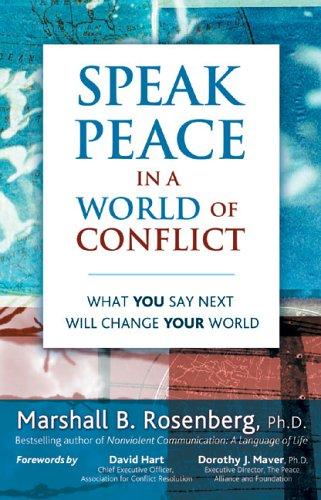 Speak Peace in a World of ConflictMarshall B. Rosenberg
 Speaking PeaceMarshall B. Rosenberg
 The Surprising Purpose of Anger Beyond Anger ManagementMarshall B. Rosenberg
 We Can Work It OutMarshall B. Rosenberg