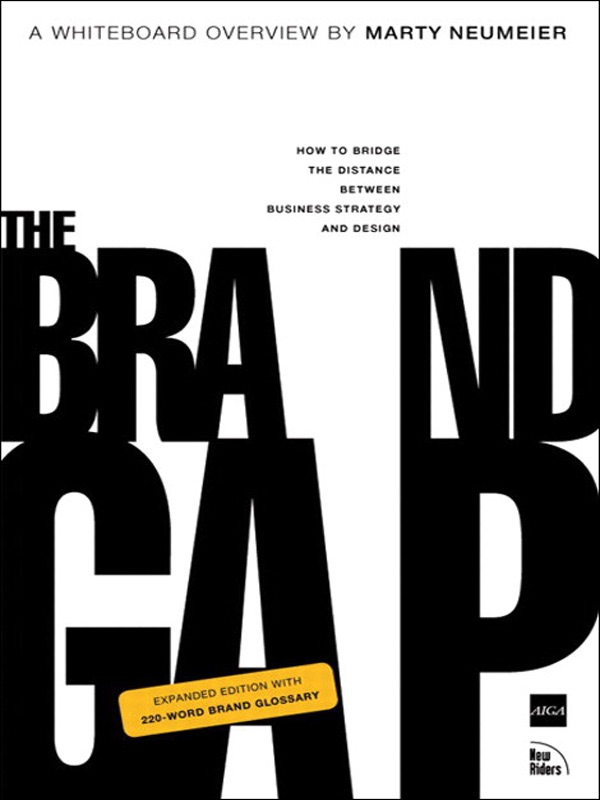
Designing Brand Identity
≈ From memoryA brand is not a logo; it is a holistic system of values, verbal cues, and visual markers that creates a consistent emotional connection between an organization and its audience.
In one sentence
Authentic branding requires moving from subjective "feelings" to an objective, strategic system where every touchpoint—from the logo's curve to the tone of a customer service email—serves a unified promise of who the brand is and what it stands for.
Why read this (and who it's for)
This book solves the "Identity Crisis" faced by many businesses: they have a product, but no soul; or they have a logo, but no strategy. It bridges the gap between marketing (the act of selling) and branding (the act of being).
Who benefits most:
- Brand Managers & Marketers who need a blueprint for building a cohesive identity from scratch.
- Designers who want to move beyond "making things look pretty" into the realm of strategic design.
- Founders/CEOs who realize their company's message is fragmented and inconsistent across different departments.
What you will be able to do: You will be able to audit an existing brand, identify where it is leaking consistency, define a "Brand Personality" that actually guides copywriting, and architect a visual system that scales across multiple products without losing its core essence.
The big idea
Wheeler argues that a brand is not something you do to a customer; it is the sum total of every perception a customer has of your organization. Most companies fail because they treat branding as an aesthetic layer applied at the end of the process. Wheeler insists that Brand Identity must be the foundation, not the decoration.
The logic follows a "Inside-Out" flow: You cannot design a visual identity (the look) until you have defined the Brand Personality (the soul). And you cannot define the personality until you have established the Core Values and Mission (the purpose). If you skip any of these steps, your branding will be "shallow"—it might look good for a day, but it won't build lasting loyalty because there is no authentic substance behind the imagery.
Ultimately, the book argues that consistency is the only way to build trust. In a crowded marketplace, consumers use brands as shortcuts for decision-making. If your brand behaves differently in different places (e.g., formal on LinkedIn, sarcastic on TikTok, and cold in customer support), the "shortcut" breaks, and the consumer loses trust.
Key ideas
Identity vs. Image
What it is: Brand Identity is what the company intends to be (the internal reality); Brand Image is what the public perceives it to be (the external reflection). Why it matters: If you only focus on image, you are constantly reacting to others' opinions. If you only focus on identity, you might be shouting into a void that no one hears. Success lies in narrowing the gap between the two. In the book: Wheeler emphasizes that branding is the intentional management of this gap—shaping the internal identity so clearly that it inevitably produces the desired external image.
The Core Values Triad (Mission, Vision, Values)
What it is: These are the "North Stars." Mission is what you do now; Vision is where you want to go later; Values are the moral boundaries of how you behave always. Why it matters: Without these, your brand's decisions will be inconsistent. When a crisis hits or a new product needs to be launched, these three pillars tell you "Yes" or "No." In the book: She argues that values must be actionable. If a value is "Integrity," but the company allows shady sales tactics, the brand identity is fractured and will eventually collapse under public scrutiny.
Differentiation as Survival
What it is: Identifying the unique space your brand occupies in the consumer's mind compared to competitors. Why it matters: If you are not different, you are a commodity. Commodities compete on price; brands compete on value/meaning. In the book: Wheeler pushes for "differentiation" over "betterment." Being "the best" is hard to prove and subjective; being "different" is a measurable strategic position.
Verbal Identity (Voice and Tone)
What it is: The specific vocabulary, syntax, and personality of the brand's written and spoken words. Why it matters: Most people think branding is visual. It isn't. A brand’s "voice" tells the customer how they should feel when interacting with you. In the book: She distinguishes between Voice (the permanent personality—e.g., "witty," "authoritative") and Tone (how that voice adapts to the situation—e.g., being empathetic during a refund issue but excited during a product launch).
Visual Identity Systems
What it is: The cohesive visual language including logos, color palettes, typography, and imagery styles.
Why it matters: Humans process visuals 60,000 times faster than text. A consistent visual system allows for "instant recognition." In the book: She warns against "Logo-centrism." A logo is just a signature; the system (how colors interact with fonts, how photos are styled) is what actually builds the brand's atmosphere.
Brand Architecture
What it is: The organizational structure of how different products or sub-brands relate to the parent company. Why it matters: If you have five products but they all look and act differently, you confuse the customer. You must decide if you are a "House of Brands" (like Unilever) or a "Branded House" (like Apple). In the book: She provides frameworks for choosing between these two models based on whether the parent brand's equity should be "lent" to the products, or if the products need their own independent identities.
Frameworks & tools
The Brand Identity System (The 4-Phase Process)
To build a brand from scratch, Wheeler suggests moving through these four chronological phases:
Phase 1: Discovery
- Audit: Analyze current perceptions (surveys, social listening).
- Stakeholder Interviews: Talk to employees and customers to find the "hidden" truths of the company.
- Competitive Analysis: Map out where others are playing so you can find a gap.
Phase 2: Strategy
- Define Purpose: Why do we exist beyond making money?
- Identify Values: What are our non-negotiables?
- Establish Personality: If this brand were a person, who would they be? (e.g., The Explorer, The Sage, The Rebel).
Phase 3: Design
- Verbal Identity: Create a style guide for words (Vocabulary, Tone of Voice).
- Visual Identity: Develop the logo, color system, and typography.
- Touchpoint Mapping: Identify every place a customer sees you (Packaging, Website, Billboards) and design for each.
Phase 4: Management
- Brand Guidelines: Create the "Bible" that ensures everyone follows the rules.
- Governance: Establish who has the final say on brand deviations.
Brand Architecture Selection Matrix
When deciding how to organize your products, use this checklist:
- Choose a Branded House (e.g., Google, FedEx) if:
- The parent brand is extremely strong and trusted.
- You want to leverage the reputation of the parent for all new launches.
- You want a unified marketing spend across everything.
- Choose a House of Brands (e.g., P&G, Unilever) if:
- The products serve vastly different audiences (e.g., a luxury watch and a laundry detergent).
- You want to shield the parent brand from a specific product's failure.
- You want each product to have its own unique "personality."
Memorable examples & stories
The "House of Brands" vs. "Branded House" distinction
Wheeler uses the contrast between companies like Procter & Gamble (which owns many brands that don't mention P&G) and Apple (where everything is Apple). Lesson: You must choose a structure based on your audience's psychology—do they want to buy from a "Master Brand" or an independent specialist?
The Importance of Consistency in Visual Systems
She discusses how iconic brands maintain their look over decades. Even when the style evolves (e.g., moving from flat design to 3D), the core markers (specific colors, shapes) remain. Lesson: Evolution is allowed; revolution is dangerous. If you change too much at once, you lose your recognition equity.
The "Voice" of a Brand
She highlights how brands like Nike or Disney have voices that are unmistakable even without a logo. You can recognize their "personality" in a single sentence of copy. Lesson: Verbal identity is often more powerful than visual identity for building emotional loyalty.
Key quotes
- "A brand is not a logo; it's the sum total of every perception a customer has of your organization." (Paraphrased) Why it matters: Shifts the focus from design to psychology.
- "Consistency is the foundation of trust." (Paraphrased) Why it matters: Explains why "doing something new" every week actually hurts brand equity.
- "Identity is what we intend; Image is what they perceive." (Paraphrased) Why it matters: Forces you to audit your internal intentions against external reality.
How to apply it
This week:
- The Brand Audit: Pick one product or service you offer. Write down 5 adjectives that describe how customers actually feel when using it (not how you want them to feel).
- Identify the "Voice": Write three sentences describing your brand's personality as if it were a human being. Is it a wise mentor? A rebellious teenager? A reliable butler?
- Consistency Check: Look at your Instagram, your website, and your email signature. Do they use the same colors, fonts, and "voice"? If not, pick one to fix first.
Ongoing:
- The "Would [Brand Name] Say This?" Test: Before publishing any social post or email, ask: "Does this match our defined Voice?"
- Governance: Create a simple 1-page "Style Sheet" (Fonts, Colors, Tone) and share it with every freelancer or employee who creates content for you.
Common pitfalls
- The "Logo First" Trap: Many companies hire a designer to make a logo before they know what their values are. This leads to a beautiful logo that doesn't actually represent the business.
- Over-Designing: Trying to make every touchpoint unique. If your packaging looks different from your website, which feels different from your store, you aren't "creative"—you're confusing the customer.
- The "Authenticity" Gap: Claiming values (like "Sustainability") in marketing while not actually practicing them in operations. This is the fastest way to destroy a brand identity in the social media age.
Connects to
- "Building a StoryBrand" by Donald Miller: Extends Wheeler's ideas by focusing specifically on how to use the Brand Identity to craft a narrative where the customer is the hero.
- "Designing Brand Experience" by various authors (e.g., Martyneille): Challenges/extends the idea of "Identity" by pushing it into "Experience"—how the brand feels in real-time interactions, not just static touchpoints.
If you remember only three things
- Branding is a strategic system, not an aesthetic choice; it must be built on values and purpose before visuals.
- Consistency is the primary driver of trust; if your voice or look changes wildly between platforms, you lose your "shortcut" in the consumer's mind.
- Identity vs. Image: You must manage the gap between who you intend to be and how people actually see you.
Internalize it
-
Reflection questions
- If my brand were a person, what would their job title be, and what would they be known for in their neighborhood?
- What is the one thing I want every customer to feel the moment they interact with us? Is that feeling currently being reflected in our visuals?
- Which of our current "touchpoints" (social media, packaging, etc.) feels most inconsistent with our core values? Why?
-
Flashcards Q: What is the difference between Brand Identity and Brand Image? A: Identity is internal/intentional; Image is external/perceived. Q: What are the three pillars of a brand's "North Star"? A: Mission (now), Vision (future), and Values (always). Q: What is the difference between Voice and Tone? A: Voice is the permanent personality; Tone is how that voice adapts to specific situations. Q: When should you choose a "House of Brands" over a "Branded House"? A: Choose House of Brands if products serve vastly different audiences or if you want to shield the parent brand from individual product risks. Q: Why is consistency more important than novelty in branding? A: Consistency builds trust and allows consumers to use your brand as a mental shortcut for decision-making.
Fidelity note
I have high confidence in the core frameworks of this book (Identity vs. Image, Brand Architecture, and the Discovery/Strategy/Design/Management flow). These are the foundational pillars of Wheeler's work. I am slightly less certain on specific anecdotes used as case studies, as these can vary between editions; however, the principles of "consistency" and "verbal identity" are central to her entire thesis.