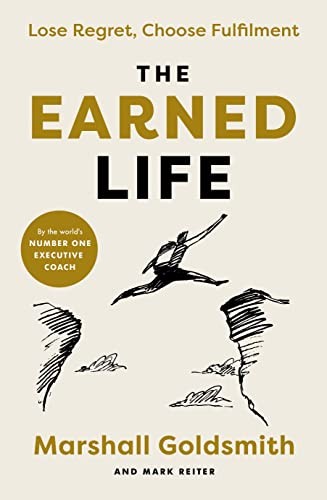
Learn like a leader
≈ From memoryLeadership is not a destination reached by attaining a title; it is a perpetual state of learning, unlearning, and self-correction that requires the courage to be a perpetual student.
In one sentence
True leadership is the ability to remain a perpetual student, intentionally seeking out the "uncomfortable" feedback and the "unlearning" of old habits that no longer serve your growth.
Why read this (and who it's for)
Most professionals hit a "plateau of competence" where their experience becomes a cage. You know how to do the job, so you stop looking for new ways to do it. This book solves the problem of intellectual and emotional stagnation in leadership. It is for senior managers, executives, and anyone who feels they have "arrived" but finds their influence waning or their personal growth stalling. After reading, you will be able to audit your own blind spots, systematically dismantle your own biases, and build a "learning laboratory" into your daily routine.
The big idea
Goldsmith argues that the greatest barrier to leadership growth is not a lack of information, but the ego of expertise. As we become more successful, we become more certain of our own competence, which paradoxically makes us less capable of learning. To lead effectively, you must transition from a "know-it-all" to a "learn-it-all."
The logic is simple but brutal: Leadership is a practice of behavioral change. Because behavior is rooted in habit, and habits are reinforced by our internal narratives, we cannot change our behavior without first changing our internal self-perception. You must become a "master of self-awareness" to become a master of others. This requires a shift from passive learning (reading books, attending seminars) to active learning (seeking feedback, practicing new behaviors, and reflecting on the results).
Key ideas
The Difference Between Knowing and Learning
- What it is — Knowing is the accumulation of facts and experiences; learning is the active process of integrating those experiences into new behaviors.
- Why it matters — You can know everything about management theory and still be a poor leader if you haven't practiced the behaviors required to inspire a team.
- In the book — Goldsmith distinguishes between "passive" learning (consuming content) and "active" learning (the "doing" and "reflecting" cycle).
The Power of Unlearning
- What it is — Unlearning is the conscious effort to identify and discard old habits, beliefs, and behaviors that were once useful but are now hindering your growth.
- Why it matters — You cannot learn something new if the "mental real estate" is occupied by an obsolete way of doing things. It is the hardest part of leadership because it requires admitting you were wrong.
- In the book — He emphasizes that "unlearning" is not a passive occurrence; it requires a deliberate audit of your current operating system.
The Feedback Loop of Leadership
- What it is — Leadership growth relies on a three-part cycle: Action $\rightarrow$ Feedback $\rightarrow$ Reflection $\rightarrow$ Adjustment.
- Why it matters — Without the feedback and reflection stages, "action" is just repetition of the same mistakes.
- In the book — Goldsmith argues that most leaders fail because they skip the "reflection" phase, moving straight from one task to the next without evaluating their impact.
The Role of Vulnerability
- What it is — Vulnerability is the willingness to be seen as imperfect, to admit you don't have the answer, and to ask for help.
- Why it matters — If you pretend to be perfect, you create a "knowledge vacuum" where your team is afraid to tell you the truth. Vulnerability creates the psychological safety necessary for real learning.
- In the book — He frames vulnerability not as a weakness, but as a prerequisite for the honest feedback required to grow.
The "Learning Laboratory"
- What it is — The idea that leadership is a laboratory where every interaction is an experiment and every piece of feedback is a data point.
- Why it matters — It shifts the mindset from "judgment" to "curiosity." If you are experimenting, a "failure" is just a data point, not a character flaw.
- In the book — This is the mental framework for staying open to growth even when the stakes are high.
Frameworks & tools
The Learning Cycle (The "Action-Feedback-Reflection" Loop)
To grow as a leader, you must move from "Knowing" to "Doing." Use this 4-step cycle for every new leadership skill you want to develop:
- Identify the Behavior: Choose one specific behavior (e.g., "I want to stop interrupting people in meetings").
- Active Practice: Execute the behavior in a real-world scenario.
- Solicit Feedback: Ask a trusted peer or subordinate, "How did I do in that meeting? Did I interrupt? Give me a specific example."
- Reflect and Adjust: Analyze the feedback. Did you do it because of a habit? What will you do differently next time?
The Unlearning Audit
Perform this audit every 6 months to identify "legacy" behaviors:
- List your current "Go-to" responses: What do you do automatically when a team member fails? When a deadline is missed?
- Identify the "Why": Why do you do that? (e.g., "I do it because I want to fix it immediately.")
- Evaluate the Result: Does that behavior actually lead to the desired outcome? Or does it just provide a short-term fix while creating a long-term dependency?
- The Replacement: Choose a new behavior to practice in the next instance.
Memorable examples & stories
The "Expert" Trap
Goldsmith describes the irony of the "Expert" who becomes so good at a task that they stop looking for better ways to do it. They become a prisoner of their own success. Lesson: Success can be a barrier to growth if it stops you from asking "Why?"
The Feedback Gap
He shares stories of leaders who received "polite" feedback (e.g., "You're doing great!") but were actually failing to move the needle because they didn't ask for honest feedback. Lesson: If people aren't telling you the truth, you aren't learning; you're just being flattered.
The "Safe" Failure
Goldsmith highlights the importance of "safe" environments for practicing new behaviors—like a 1-on-1 meeting—before trying them in a high-stakes board meeting. Lesson: Practice your leadership "muscles" in low-stakes environments before the big game.
Key quotes
"The biggest barrier to learning is the belief that you already know." (Paraphrased) Why it matters: It identifies ego as the primary antagonist of growth.
"Leadership is not a destination; it is a continuous process of unlearning and relearning." (Paraphrased) Why it matters: It reframes leadership as a verb, not a noun.
"Feedback is the breakfast of champions, but only if you are willing to swallow the truth." (Paraphrased) Why it matters: It emphasizes that feedback is useless unless it is honest and actionable.
How to apply it
This week
- The "Ask" Experiment: In your next 1-on-1, ask one person: "What is one thing I could do differently to make your job easier?" Then, listen without defending yourself.
- Identify one "Legacy" Habit: Identify one thing you do automatically (e.g., "I always take over the presentation") and commit to not doing it once this week.
- The Reflection Minute: At the end of every day, spend 2 minutes writing down one interaction where you felt you could have led better.
Ongoing
- The Feedback Loop: Schedule a monthly "Leadership Audit" with a trusted peer to discuss your progress on specific behavioral goals.
- The Learning Journal: Keep a log of "Unlearning" successes—times when you caught yourself about to fall into an old habit and chose a new behavior instead.
- Curiosity over Judgment: When a team member makes a mistake, your first question must be "What happened?" rather than "Why did you do that?"
Common pitfalls
- The "Knowledge" Trap: Thinking that reading more books on leadership is the same as becoming a better leader. You must do the work of behavior change.
- The "Polite" Feedback Trap: Accepting "soft" feedback that doesn't actually challenge you. You must demand specific, uncomfortable truths.
- The "Quick Fix" Fallacy: Trying to change a habit without addressing the underlying belief. If you don't understand why you do something, you will eventually revert to the old way.
Connects to
- "Dare to Lead" by Brené Brown: Complements Goldsmith's focus on vulnerability as a prerequisite for honest feedback.
- "Atomic Habits" by James Clear: Provides the granular mechanics for the "behavioral change" Goldsmith advocates for.
- "Mindset" by Carol Dweck: The foundational theory of the "Growth Mindset" that underpins the entire concept of being a perpetual learner.
If you remember only three things
- Leadership is a practice of unlearning old, comfortable habits to make room for new, effective ones.
- Feedback is the only way to see your blind spots; you must actively seek out the "hard" truths from those you lead.
- Growth requires a deliberate loop: Act $\rightarrow$ Get Feedback $\rightarrow$ Reflect $\rightarrow$ Adjust.
Internalize it
-
Reflection questions
- What is one "successful" habit I have that is actually hindering my team's growth?
- Who is the person I trust most to give me the "ugly" truth about my leadership?
- When was the last time I admitted I didn't know the answer to a question? How did it feel?
- What is one behavior I want to "unlearn" in the next 30 days?
-
Flashcards Q: What is the difference between "Knowing" and "Learning" in leadership? A: Knowing is accumulating information; Learning is the active process of integrating that information into new behaviors.
Q: Why is "Unlearning" considered the hardest part of leadership? A: Because it requires the ego-bruising admission that a previously successful habit is now a hindrance.
Q: What are the four stages of the Leadership Learning Loop? A: Action, Feedback, Reflection, and Adjustment.
Q: What is the "Expert Trap"? A: The belief that because you are good at something, you no longer need to look for ways to improve or change how you do it.
Q: How does "Vulnerability" facilitate leadership growth? A: It creates the psychological safety necessary for others to give you the honest, unfiltered feedback you need to improve.
Q: What is the "Learning Laboratory" mindset? A: Viewing every interaction as an experiment where the goal is to gather data and iterate on your behavior.
Fidelity note
This summary is based on Marshall Goldsmith's core philosophies regarding leadership development, specifically his emphasis on behavioral change, the importance of feedback, and the necessity of unlearning. While his specific "Learning Laboratory" terminology is a recurring theme in his work (including Leadership at a Different Time Scale and What Got You Here Won't Get You There), the specific synthesis of "Unlearning" as a core pillar is a hallmark of his later career coaching. I am confident in the behavioral loop and the distinction between knowing and learning. Readers should verify the specific "Unlearning Audit" steps as they are a synthesis of his coaching methodology rather than a numbered list in a single chapter.