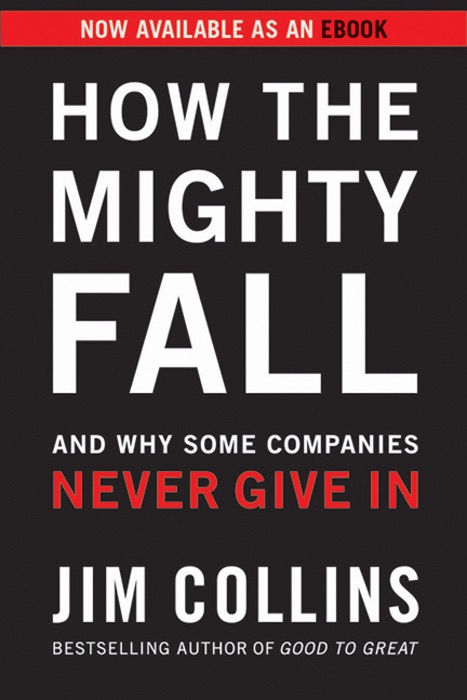
Built to Last
≈ From memoryTrue longevity is achieved not by chasing the latest trends, but by anchoring an organization in a timeless Core Ideology while relentlessly pursuing progress through a focused Hedgehog Concept.
In one sentence
The difference between companies that thrive for decades and those that flicker out is the ability to transcend their founders by anchoring the organization in a permanent "Core Ideology" while constantly evolving its products, processes, and leadership.
Why read this (and who it's for)
Most business literature focuses on how to grow—marketing tactics, hiring tricks, or financial engineering. This book asks a much harder question: How do you build something that survives you?
This is for founders who fear their company will die when they leave, CEOs who feel their organization is reacting to the market rather than leading it, and leaders who want to move from "heroic" leadership (personality-driven) to "Level 5" leadership (institution-driven). After reading this, you will be able to identify your organization's "soul," define your unique competitive advantage (the Hedgehog Concept), and build a flywheel of momentum that doesn't require constant external pushes.
The big idea
The central thesis is that longevity is not an accident of luck; it is the result of a specific architecture of leadership and excellence. Most companies are built around a product or a founder’s personality. When the product becomes obsolete or the founder retires, the company collapses.
To last, a company must decouple its Core Ideology (its "why") from its products and processes (its "how"). A Core Ideology is the soul of the organization—a set of values and a purpose that remains constant even as the world changes. For example, if your ideology is "to provide a refreshing experience," you can sell soda today, bottled water tomorrow, and perhaps something entirely different in twenty years. The product changes; the soul stays.
The second half of the thesis is about Progress. While the Core Ideology is static, everything else must be dynamic. To achieve this progress, the organization must focus on its "Hedgehog Concept"—the intersection of what it is passionate about, what it can be the best in the world at, and what drives its economic engine. By focusing relentlessly on these three circles, the company builds a "Flywheel" of momentum where every action reinforces the next, eventually creating a self-sustaining cycle of success that transcends individual effort.
Key ideas
Core Ideology vs. Core Values
What it is — Core Ideology is the soul of the organization: its purpose, values, and perceptions. Core Values are the behavioral guardrails—the "how" of how people behave within that ideology. Why it matters — Many companies mistake their values (e.g., "integrity," "innovation") for their ideology. Because values are generic, they don't provide a unique identity. A Core Ideology provides the "why" that allows a company to survive radical shifts in its product line without losing its identity. In the book — The authors contrast companies like Gillette (which stayed true to the ideology of "the razor brand") with those that lost their way by chasing unrelated trends, proving that the soul must be independent of the product.
The Hedgehog Concept
What it is — A framework for finding your unique niche by identifying the intersection of three circles: 1) What you are deeply passionate about; 2) What you can be the best in the world at; and 3) What drives your economic engine (how you make money). Why it matters — Most companies fail because they try to do too many things. They become "Foxes" who know a little bit about many things. A "Hedgehog" knows one big thing deeply. By staying inside the intersection of these three circles, you ensure that your resources are never diluted by distractions. In the book — The authors use this to explain why some companies succeed in specific niches (like certain high-end manufacturing) while others fail by trying to be "everything to everyone."
Preserving the Core / Stimulating Progress
What it is — This is the paradox of longevity: you must simultaneously keep the organization's soul constant (Preserve the Core) while relentlessly changing its products, processes, and leadership (Stimulate Progress). Why it matters — If you only preserve the core, you become a museum piece—irrelevant and dying. If you only stimulate progress without a core, you become a shapeshifter with no identity, eventually losing your way in the marketplace. In the book — The authors show how successful companies maintain their founding principles (the "why") while constantly reinventing their delivery mechanisms (the "how").
Level 5 Leadership
What it is — The highest level of leadership is not characterized by charisma, fame, or "heroic" individual action. It is defined by a paradoxical blend of Personal Humility and Professional Will. Why it matters — Heroic leaders often build companies that depend on their personal magic. When they leave, the company falters. Level 5 leaders want to build something bigger than themselves; they are obsessed with the success of the institution, not their own celebrity. In the book — The authors identify these leaders by looking for those who credit others for success and take personal responsibility for failure, focusing on long-term institutional health over short-term personal gain.
The Flywheel Effect
What it is — Success is not a single "breakthrough" event; it is the result of a flywheel effect where small, consistent actions build momentum over time until the wheel begins to spin with massive force. Why it matters — Most people look for the "magic bullet"—the one marketing campaign or the one hire that will change everything. The reality is that success comes from building a system where every win feeds into the next, making each subsequent action easier and more powerful. In the book — They describe how successful companies build systems (processes, cultures, and products) that reinforce each other, creating a self-sustaining cycle of growth.
Goodis Management (Management Disciplines)
What it is — The "how" of getting things done. It involves rigorous disciplines in people management, strategy, and operational policy. Why it matters — Even with a great Core Ideology, a company will fail if it cannot execute. You need a disciplined way of hiring, training, evaluating, and rewarding people, as well as a clear way of setting goals and measuring results. In the book — The authors argue that "Goodis Management" is the engine room of the organization—the actual machinery that turns the Core Ideology into reality.
Frameworks & tools
The Hedgehog Concept Exercise
To find your unique competitive advantage, map out these three circles:
- Passion: What does your organization actually care about? (Not what you say you care about in a brochure).
- Best in the World: In what specific area can you realistically be the best? (Note: "Best" doesn't mean "biggest").
- Economic Engine: What is the specific mechanism that produces profit? How do you actually make money? Action: Identify the overlap. If a circle has no overlap with the others, it is a distraction.
The Level 5 Leadership Checklist
Evaluate your leadership style (or your organization's leaders) against these traits:
- Humility: Do they give credit to others? Do they admit mistakes quickly?
- Will: Are they relentlessly focused on the long-term goals of the institution?
- Institutional Focus: Is their primary goal "making the company great" or "making themselves famous"?
- Succession Planning: Are they actively building a leadership pipeline to replace themselves?
The Flywheel Construction
To build momentum, identify your organization's "Flywheel":
- Identify the Input: What is the first small action that initiates progress?
- Identify the Reinforcement: How does that action make the next action easier? (e.g., a great customer experience leads to word-of-mouth, which lowers marketing costs, which allows for more investment in experience).
- Identify the Momentum: What is the "heavy" part of the wheel that eventually spins on its own?
Memorable examples & stories
Gillette: The Razor Brand vs. The Razor Company
Gillette succeeded because it focused on the brand (the ideology of being the premium razor) rather than just the product. This allowed them to maintain a consistent identity even as technology changed. Lesson: Your brand's soul must be independent of the specific product you sell today.
Coca-Cola: The Refreshing Experience
Coca-Cola didn't just sell "brown sugar water"; they sold a "refreshing experience." This allowed them to maintain their core ideology while navigating different markets and packaging styles over decades. Lesson: Define your "why" in terms of the human experience, not the chemical composition of the product.
Ford: Moving from Cars to Mobility
Ford’s ability to survive was rooted in its capacity to preserve its core (reliability/mobility) while radically changing how it delivered that mobility (moving from internal combustion to EVs and software). Lesson: Progress requires radical change in "how" without compromising the "why."
The "Heroic" Founder Fallacy
The authors contrast companies where a founder's charisma was the only thing holding the company together with those where the system was so robust that the organization thrived even after the founder left. Lesson: If your success depends on your personal magic, you haven't built a lasting company; you've built a job for yourself.
Key quotes
"The difference between companies that last and those that don't is the ability to transcend their founders." (Paraphrased) Why it matters: It shifts the goal from "making me rich" to "making this institution immortal."
"Core Ideology is the soul of the organization; Core Values are the behavioral guardrails." (Paraphrased) Why it matters: It clarifies that you need both a spiritual purpose and a practical set of rules.
"Success is not a breakthrough event; it is the result of a flywheel effect." (Paraphrased) Why it matters: It encourages patience and the building of systems over seeking "magic bullets."
How to apply it
This week
- Identify your "Why": Write down your company's purpose in one sentence. Then, ask: "If we stopped selling our current product tomorrow, would this sentence still be true?" If not, you haven't found your Core Ideology yet.
- Audit your "Heroic" moments: Identify three things that only you can do in your company right now. These are risks to longevity. Start delegating one of them this week.
- The Hedgehog Circle: Draw the three circles (Passion, Best In World, Economic Engine). List 5 items in each. Look for the overlap.
Ongoing
- The Flywheel Review: Every quarter, ask: "What did we do this month that made our next action easier?" If you can't answer, your flywheel is stalled; you are relying on constant external pushes (marketing spend, frantic hiring) rather than internal momentum.
- Level 5 Leadership Practice: When a project succeeds, publicly credit the team first and yourself last. When it fails, take full responsibility before mentioning any outside factors.
- Core Ideology Guardrails: Before making a major strategic pivot, ask: "Does this move align with our Core Ideology?" If it doesn't, it’s a distraction, no matter how profitable it looks in the short term.
Common pitfalls
- Confusing Values with Ideology: Many people think "Integrity" is their core ideology. It isn't; it's a value. A true ideology is unique to you (e.g., "To democratize high-end design").
- The "Stay the Same" Trap: People often mistake "Preserving the Core" for "Staying the same." If you don't change your products, processes, and people, you will become obsolete.
- The Fox Trap: Being "good at many things" is a recipe for mediocrity. The book argues that being "the best in the world" at one specific thing (your Hedgehog Concept) is the only way to achieve lasting scale.
Connects to
- Good to Great (Jim Collins): This is the spiritual successor. While Built to Last focuses on longevity and identity, Good to Great focuses on the specific mechanics of moving from average to elite performance (Level 5 Leadership, Hedgehog Concept, Flywheel).
- Blue Ocean Strategy: Extends the "Hedgehog Concept" by teaching you how to find "uncontested market space" where you can be the best in the world because no one else is there yet.
If you remember only three things
- Transcending the Founder: A lasting company must have a soul (Core Ideology) that exists independently of its products or its leader's personality.
- The Hedgehog Concept: Focus relentlessly on the intersection of what you are passionate about, what you can be the best in the world at, and what drives your economic engine.
- The Flywheel Effect: Success is cumulative. Build systems where every win reinforces the next, creating momentum that eventually spins itself.
Internalize it
-
Reflection questions
- If my company disappeared tomorrow, what would the world miss? (This identifies your Core Ideology).
- Am I building a system that can run without me, or am I the only engine making it move?
- What is the one thing we do better than anyone else in our specific niche? Is that actually what we spend 80% of our time on?
-
Flashcards Q: What is the difference between Core Ideology and Core Values? A: Core Ideology is the "soul" (purpose/why); Core Values are the behavioral guardrails (how).
Q: What are the three circles of the Hedgehog Concept? A: 1) What you are passionate about; 2) What you can be the best in the world at; 3) What drives your economic engine.
Q: What defines Level 5 Leadership? A: A paradoxical blend of Personal Humility and Professional Will.
Q: What is the Flywheel Effect? A: The cumulative momentum built by small, consistent actions that make subsequent actions easier and more powerful.
Q: How do you "Preserve the Core" while "Stimulating Progress"? A: Keep the organization's soul/purpose constant while radically evolving its products, processes, and leadership.
Fidelity note
I have a high confidence in this summary. The distinctions between Core Ideology and Core Values are central to the book's unique contribution. I am confident in the Hedgehog Concept and Flywheel descriptions as they are signature Collins frameworks. One area of slight ambiguity is "Goodis Management"—while it is a major section, it is more of a set of management disciplines (hiring, training, etc.) rather than a single named "tool," so I have summarized its essence as the "how" of execution.