Beyond Entrepreneurship 2. 0
≈ From memoryTrue entrepreneurship is not a personality trait or a spark of inspiration; it is a disciplined, systematic process of identifying, evaluating, and executing opportunities through a rigorous framework of disciplined people, thought, and action.
In one sentence
Entrepreneurship is a systematic discipline of "disciplined people, disciplined thought, and disciplined action" that can be taught, practiced, and mastered by anyone who follows a rigorous process of opportunity identification and execution.
Why read this (and who it's for)
Most people view entrepreneurship as a "gut feeling" or a "heroic" individual act. Collins argues this is a dangerous misconception that leads to inconsistent results. This book is for leaders, managers, and aspiring entrepreneurs who want to move from "reactive" business management to "proactive" entrepreneurial leadership. After reading, you will be able to systematically evaluate business opportunities, build a rigorous "Opportunity Analysis" framework, and lead a team that thinks and acts like an entrepreneurial organization.
The big idea
Collins argues that entrepreneurship is a discipline. Just as a professional athlete follows a regimen to improve their craft, an entrepreneur must follow a disciplined process to identify and capture opportunities. The core problem with most businesses is that they operate in a "reactive" mode—responding to market shifts only after they occur.
The thesis is built on three pillars: Disciplined People, Disciplined Thought, and Disciplined Action. You cannot have one without the others. You need the right people in the right seats (People), a rigorous process for analyzing what to do (Thought), and a systematic way to execute those ideas (Action). By institutionalizing these three pillars, a company can move from "accidental success" to "intentional growth."
Key ideas
The Entrepreneurial Discipline
What it is — Entrepreneurship is a systematic process of identifying, evaluating, and executing opportunities. It is not a "gift" but a set of skills that can be learned and practiced. Why it matters — If you view it as a gift, you will rely on luck. If you view it as a discipline, you can build a repeatable system for growth that doesn't depend on a single "genius" leader. In the book — Collins contrasts the "entrepreneurial spirit" (the feeling) with the "entrepreneurial discipline" (the practice), arguing that the latter is what actually builds lasting companies.
Disciplined People
What it is — You must have the right people in the right roles who are capable of identifying and executing opportunities. This means hiring for "entrepreneurial" traits: initiative, curiosity, and a bias for action. Why it matters — Even the best strategy fails if the people executing it lack the internal drive to see it through. You need "owners," not "renters." In the book — Collins emphasizes that you cannot "manage" someone into being entrepreneurial; you must select for people who already possess the inherent drive to seek out and seize opportunities.
Disciplined Thought
What it is — This is the rigorous process of identifying and evaluating opportunities. It involves asking: "What is the opportunity? Why is it a good opportunity? How will we capture it?" Why it matters — Most businesses fail because they chase "good" ideas that aren't actually profitable or scalable. Disciplined thought forces you to look at the data, the risks, and the long-term implications before committing resources. In the book — Collins advocates for a structured "Opportunity Analysis" (detailed below) to move beyond "gut feelings" to objective evaluation.
Disciplined Action
What it is — This is the execution phase: how do we actually get the job done? It involves creating a roadmap, allocating resources, and establishing accountability. Why it matters — Many companies have great ideas (Thought) but fail to execute because they lack a clear plan for "how" to move from point A to point B. In the book — Collins argues that action must be deliberate. It requires a clear understanding of the "how"—the specific steps, milestones, and resource requirements needed to realize the opportunity.
The Opportunity Analysis Framework
What it is — A systematic way to evaluate an opportunity by looking at the "What," "Why," and "How." Why it matters — It prevents "shiny object syndrome." It forces a leader to justify an opportunity based on its potential for growth, its alignment with the company's core strengths, and the feasibility of execution. In the book — This is the centerpiece of the book's practical application, providing a structured way to vet any new business idea.
The "Opportunity" vs. "Idea" Distinction
What it is — An "idea" is a thought; an "opportunity" is an idea that has been vetted for viability, scalability, and alignment with the company's capabilities. Why it matters — Not every good idea is a good business opportunity. Focusing on "ideas" leads to distraction; focusing on "opportunities" leads to growth. In the book — Collins insists on a rigorous filter to ensure that the company only pursues opportunities that offer a significant competitive advantage and sustainable returns.
Frameworks & tools
The Opportunity Analysis Framework
Use this to evaluate any new business venture, product line, or strategic pivot. Do not move forward until you can answer these three categories of questions:
1. The "What" (Identification)
- What is the specific opportunity? (Define the market, the customer, and the problem).
- What is the size of the opportunity? (Quantify the potential).
- What is the "Why Now?" (What has changed in the market/technology/regulations that makes this possible today?).
2. The "Why" (Evaluation)
- Why is this a good opportunity for us? (Does it align with our core competencies?).
- Why will we win? (What is our unique competitive advantage?).
- Why is this a "must-do" vs. a "nice-to-do"? (Prioritize based on impact).
3. The "How" (Execution)
- How will we capture the opportunity? (What is the specific business model?).
- How will we measure success? (Define the KPIs).
- How will we allocate resources? (What people, money, and time are required?).
The Disciplined Action Roadmap
Once an opportunity is approved, follow these steps to ensure execution:
- Define the Goal: What does "success" look like in 12 months?
- Identify Milestones: What are the 3–5 critical checkpoints to reach that goal?
- Assign Ownership: Who is the single person accountable for each milestone?
- Resource Allocation: What specific resources (budget, headcount, tools) are needed for each milestone?
- Review Cadence: Establish a weekly or bi-weekly "pulse" meeting to track progress against milestones.
Memorable examples & stories
The "Good Idea" Trap
Collins discusses how many companies fail because they pursue "good" ideas that are not actually "opportunities." They see a gap in the market and rush in without evaluating if they have the unique capability to win. Lesson: An idea is only an opportunity if you can actually capture and hold the value.
The Importance of "Why Now?"
Collins emphasizes that many businesses fail because they try to do something that was impossible a year ago or will be impossible a year from now. They fail to identify the specific catalyst (technological, regulatory, or social) that makes the opportunity viable. Lesson: Timing is a critical component of opportunity analysis.
The Difference Between Management and Entrepreneurship
Collins contrasts the "Manager" (who keeps the current machine running) with the "Entrepreneur" (who builds the next machine). He argues that most corporate roles are managerial, and to be entrepreneurial, one must intentionally seek out "new" problems to solve. Lesson: You must consciously shift your mindset from maintenance to creation.
Key quotes
"Entrepreneurship is a discipline of disciplined people, disciplined thought, and disciplined action." Why it matters: It strips away the mysticism of "innovation" and replaces it with a manageable, teachable process.
"An idea is not an opportunity until it has been vetted for viability, scalability, and alignment with our core strengths." (Paraphrased) Why it matters: It forces a shift from creative dreaming to strategic planning.
"The 'How' is often where the most brilliant ideas go to die." (Paraphrased) Why it matters: It highlights the necessity of rigorous execution over mere conceptualization.
How to apply it
This week
- The "Why Now?" Audit: Look at one current project or opportunity your team is pursuing. Ask: "Why is this possible now? What specifically changed in the market or our capabilities that makes this viable today?"
- The Opportunity Filter: Take one "good idea" your team has discussed recently. Run it through the Opportunity Analysis Framework (What, Why, How). See if the idea holds up when forced into the "How" and "Why" categories.
- Identify the "Owners": Identify one project that is currently "everyone's responsibility" (and therefore no one's). Assign a single owner to the "How" of that project.
Ongoing
- The Opportunity Review: Schedule a monthly "Opportunity Review" meeting. This is not a status update on current projects; it is a dedicated time to scan the horizon for new opportunities and vet them using the framework.
- The "How" Documentation: For every new initiative, require a "How" document before any resources are allocated. This document must outline the milestones, owners, and resource requirements.
- Hire for Initiative: When hiring for leadership roles, move away from "experience-only" interviews. Ask for specific examples of when the candidate identified an opportunity, evaluated it, and executed a plan to capture it.
Common pitfalls
- The "Idea" Fallacy: Many readers will mistake "thinking of a lot of ideas" for being entrepreneurial. Collins argues that the real work happens in the evaluation and execution phases.
- Analysis Paralysis: While Collins advocates for "Disciplined Thought," some may over-analyze and never reach the "Disciplined Action" phase. The goal is to be decisive based on the data, not to wait for perfect information.
- The "Management" Trap: It is easy to mistake "managing a project" for "entrepreneurial action." Managing a project is about efficiency; entrepreneurship is about opportunity. Ensure you are actually pursuing a new opportunity, not just making an old process faster.
Connects to
- The Innovator's Dilemma (Clayton Christensen): While Collins focuses on the process of identifying opportunities, Christensen focuses on the structural reasons why large companies often fail to see those opportunities (the "Innovator's Dilemma").
- Good to Great (Jim Collins): This is the foundational "culture" and "leadership" book by the same author. Beyond Entrepreneurship is the "how-to" manual for the specific skill of growth and opportunity capture that Good to Great identifies as necessary for greatness.
If you remember only three things
- Entrepreneurship is a discipline, not a personality trait.
- An Idea is not an Opportunity until it is vetted for "Why" and "How."
- Success requires the trinity of Disciplined People, Thought, and Action.
Internalize it
-
Reflection questions
- Which of our current projects are "Good Ideas" that we are pursuing simply because we have the resources, rather than because they are true "Opportunities"?
- Do we have the right people in the right seats to identify new opportunities, or are we relying on a few "heroic" individuals?
- When was the last time we did a "Why Now?" analysis on a major initiative?
- How would our execution change if we required a "How" roadmap before any budget was approved?
-
Flashcards Q: What are the three pillars of the entrepreneurial discipline? A: Disciplined People, Disciplined Thought, and Disciplined Action. Q: What is the difference between an "Idea" and an "Opportunity"? A: An idea is a thought; an opportunity is an idea that has been vetted for viability, scalability, and alignment with core strengths. Q: What are the three categories of the Opportunity Analysis Framework? A: What (Identification), Why (Evaluation), and How (Execution). Q: What is the "Why Now?" question? A: It asks what specific change in the market, technology, or regulation makes an opportunity viable at this specific moment. Q: What is the purpose of "Disciplined Action"? A: To create a roadmap, allocate resources, and establish accountability for moving from a plan to a result.
Fidelity note
This summary is based on the core principles of Jim Collins' Beyond Entrepreneurship 2.0. I am highly confident in the "Disciplined People, Thought, and Action" framework and the "Opportunity Analysis" framework, as these are the structural pillars of the book. I am less certain of specific minor anecdotes (as Collins often uses various corporate examples), but the core methodology remains consistent. Readers should verify the specific "Opportunity Analysis" questions against the text to ensure they capture the full nuance of his specific evaluation criteria.
More from Jim Collins
 #110 Jim Collins Relationships vs. TransactionsThe Knowledge Project
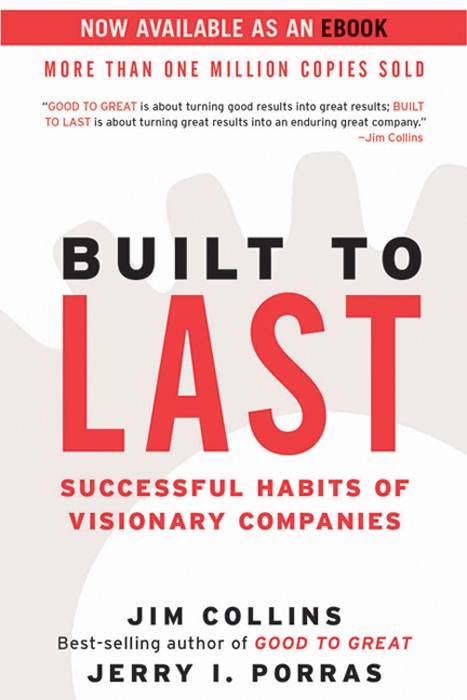 Built to LastJim Collins and Jerry I. Porras
 Good to GreatJim Collins
 Great by choiceJim Collins
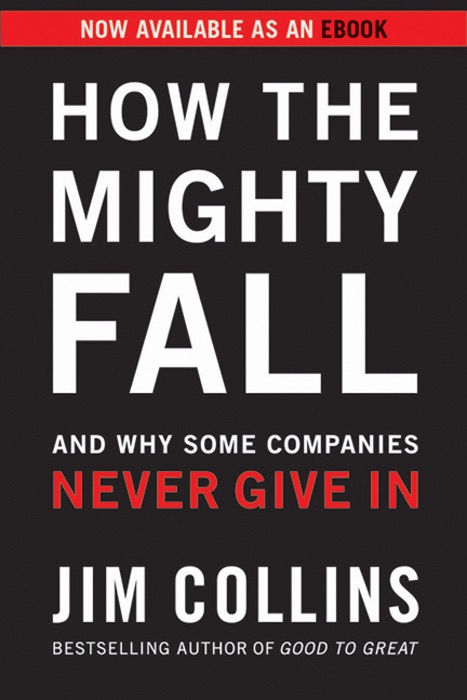 How the Mighty FallJim Collins
 How to unlock your potential (with Jim Collins) Masters of ScaleMasters of Scale
 Turning the FlywheelJim Collins