The haystack syndrome
≈ From memoryTo find the needle in a haystack, you don't look for the needle; you burn the haystack.
In one sentence
Success in complex systems—whether manufacturing, management, or personal life—is not achieved by searching for a "needle" of perfection among a "haystack" of options, but by systematically eliminating the non-essential until only the truth remains.
Why read this (and who it's for)
This book is for the overwhelmed leader, the overwhelmed manager, and the overwhelmed entrepreneur who feels paralyzed by "analysis paralysis." It solves the problem of cognitive overload: the tendency to believe that more information, more options, and more data will lead to better decisions. After reading this, you will stop trying to "find" the right answer and start "clearing" the noise to reveal the obvious.
The big ideas
Goldratt argues that our greatest enemy in decision-making is not a lack of information, but an excess of irrelevant information. We suffer from "The Haystack Syndrome" because we treat every piece of data as potentially valuable. When you have a thousand pieces of data, you cannot possibly evaluate all of them; therefore, you spend your energy looking for a needle that may not even be there, while the haystack grows larger.
The logic is simple but brutal: Complexity is a veil. When a problem is complex, it is usually because we are looking at too many variables at once. To find the solution, you must ruthlessly simplify the environment. You must stop asking "What is the right answer?" and start asking "What can I safely ignore?" By eliminating the "hay" (the non-essential data, the distractions, the secondary goals), the "needle" (the core truth) becomes visible.
Key ideas
The Fallacy of Infinite Information
What it is: The belief that more data leads to better decisions. In reality, more data often leads to more noise, which obscures the signal. Why it matters: If you believe more data is better, you will continue to collect metrics that don't matter, leading to "analysis paralysis" where no action is taken because the data is too overwhelming. In the book: Goldratt illustrates this by showing how managers often drown in spreadsheets, looking for a "perfect" number while the actual problem remains unaddressed.
The Needle vs. The Haystack
What it is: The "needle" is the core problem or the essential truth; the "haystack" is the surrounding noise, distractions, and irrelevant variables. Why it matters: Most people spend 99% of their time analyzing the haystack. If you shift your focus to burning the haystack (removing the irrelevant), the needle reveals itself. In the book: This is the central metaphor of the book—a call to stop searching and start subtracting.
The Power of Elimination
What it is: The most effective way to find a solution is not to add a new strategy, but to remove a current distraction. Why it matters: Addition creates more complexity. Subtraction simplifies the environment. When you remove a distraction, you free up mental energy and resources to focus on what actually moves the needle. In the book: Goldratt argues that "the answer is often hidden in plain sight, obscured by the very things we think are helping us."
Cognitive Overload as a Barrier
What it is: The human brain has a limited capacity for processing complex variables. When we exceed this, our ability to see the "obvious" solution vanishes. Why it matters: When you are overwhelmed, you stop being creative and start being reactive. You make "safe" choices rather than "right" choices. In the book: Goldratt explains that the "haystack" is a psychological trap where our brains give up on finding the needle and instead try to manage the haystack.
The "Obvious" Solution
What it is: The most important truths are usually the simplest ones, but they are the hardest to see because they are so simple they seem "too easy" to be true. Why it matters: We often over-engineer solutions because we don't trust the simple answer. We look for a complex "needle" because we think a complex problem requires a complex solution. In the book: Goldratt challenges the reader to look for the simplest possible explanation for a problem before seeking a sophisticated one.
Frameworks & tools
The "Burn the Haystack" Protocol
Use this when you are facing a complex decision or a stagnant project.
- Identify the "Must-Win" Goal: What is the one thing that, if achieved, makes everything else irrelevant? (The Needle).
- List the Variables: Write down every factor, data point, and concern currently influencing your decision.
- The "So What?" Test: For every item on that list, ask: "If I removed this data point entirely, would the core decision change?"
- The Elimination Strike: Cross out every item that doesn't directly impact the Must-Win Goal.
- The Remaining Haystack: Look at what is left. Is it still too much? Repeat the process until only the essential variables remain.
- Execute on the Needle: Make the decision based only on the remaining variables.
The Complexity Audit
A checklist to identify when you are suffering from Haystack Syndrome:
- Am I looking at more than 5 variables to make this decision?
- Is the data I'm looking at "interesting" but not "actionable"?
- Am I waiting for a "perfect" piece of information before taking action?
- Is the solution I'm considering significantly more complex than the problem itself? If you checked 3 or 4, you are lost in the haystack.
Memorable examples & stories
The Over-Analyzed Manager
Goldratt describes a manager who spent weeks analyzing production schedules, looking for a "perfect" flow, while the actual bottleneck was a simple, recurring human error. Lesson: Complexity is often a mask for a simple, unaddressed reality.
The "Perfect" Data Trap
The author discusses how companies often collect thousands of KPIs, but because they can't monitor them all, they end up monitoring none of them effectively. Lesson: If you can't measure it, manage it; if you can't manage it, ignore it.
The Hidden Needle
Goldratt uses the metaphor of a person looking for a needle in a haystack and suggests that instead of searching, they should set the haystack on fire. Lesson: Radical simplification is the only way to see what is already there.
Key quotes
"The problem is not that the needle is hard to find; the problem is that the haystack is too big." (Paraphrased) Why it matters: It shifts the focus from 'searching' to 'simplifying.'
"We often mistake complexity for sophistication." (Paraphrased) Why it matters: It warns against the ego-driven desire to create complex systems.
"The answer is often hidden in plain sight, obscured by the very things we think are helping us." (Paraphrased) Why it matters: It highlights that our own tools (data, reports, meetings) can become our biggest obstacles.
How to apply it
This week
- The One-Page Rule: For any project you are currently working on, write down the single most important goal on a single piece of paper. Do not allow any other goals to occupy that page.
- The Data Fast: Choose one meeting this week where you will not bring any charts or data. You must explain the situation and the proposed solution using only words.
- The "No" List: Identify three things you are currently doing that provide "interesting" data but do not contribute to your primary goal. Stop doing them immediately.
Ongoing
- Simplify First: Before proposing a solution to a problem, your first step must always be to simplify the problem description.
- The "Burn" Mentality: Whenever you feel overwhelmed by options, stop. Ask: "What can I remove from this list right now to make the decision easier?"
- Audit the Haystack: Once a month, review your KPIs. If a metric hasn't influenced a decision in 30 days, remove it from your dashboard.
Common pitfalls
- The "Data is Never Wrong" Fallacy: People think that because data is "real," it must be useful. Goldratt argues that data can be perfectly accurate and still be completely irrelevant to the decision at hand.
- The Fear of Missing Out (FOMO): The hardest part of "burning the haystack" is the fear that the needle might actually be in the part of the haystack you're burning. You must trust that the "needle" is the core objective.
- Over-Simplification: While the book advocates for burning the haystack, it does not mean ignoring all data. You must still keep the data that actually informs the "Must-Win" goal.
Connects to
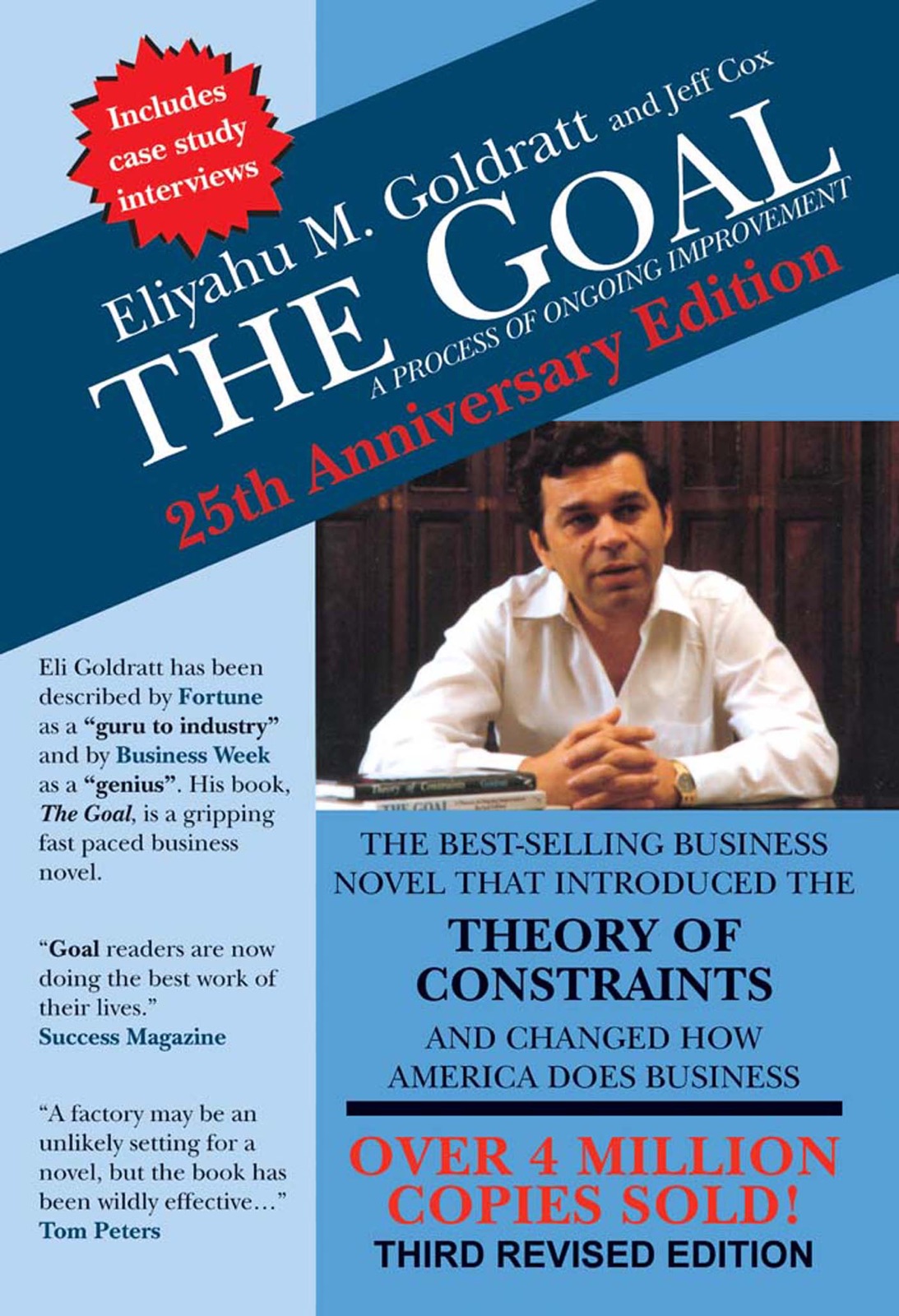
- The Goal (Eliyahu M. Goldratt): The foundational work on Theory of Constraints. The Haystack Syndrome is the philosophical companion to the operational mechanics of The Goal.
- Essentialism (Greg McKeown): A modern personal productivity application of the same principle: doing less, but better.
- Thinking, Fast and Slow (Daniel Kahneman): Provides the cognitive science behind why our brains struggle with complex choices and why we default to "system 1" thinking when overwhelmed.
If you remember only three things
- Stop searching for the "perfect" answer in a sea of data; start removing the irrelevant data.
- Complexity is a veil; the simplest solution is usually the correct one.
- To find the needle, you must burn the haystack.
Internalize it
- Reflection questions
- What is the "haystack" currently surrounding my most important project?
- If I were forced to make a decision in the next 60 seconds, what is the one piece of information I would actually need?
- Which of my current "success metrics" are actually just distractions?
- Flashcards
- Q: What is the "Haystack Syndrome"?
- A: The tendency to believe that more information leads to better decisions, when it actually creates noise that hides the truth.
- Q: What is the "Needle"?
- A: The core truth or the single most important goal that makes everything else irrelevant.
- Q: What is the primary way to find the "Needle"?
- A: By "burning the haystack"—systematically eliminating non-essential information and distractions.
- Q: Why do we often choose complex solutions for complex problems?
- A: Because we mistakenly believe that complexity equals sophistication, and we lose the ability to see "obvious" simple solutions.
- Q: What is the "So What?" test?
- A: A test where you ask: "If I removed this data point entirely, would the core decision change?"
Fidelity note
This summary is based on the core philosophical teachings of Eliyahu M. Goldratt regarding systems thinking and the psychological barriers to decision-making. Because Goldratt's work often blends business theory with philosophical metaphors, the "Haystack" metaphor is the primary vehicle for his argument. The specific "Burn the Haystack" protocol is a synthesis of his advice on simplification and the Theory of Constraints. Readers should verify the specific industrial examples used in the text to see how these apply to manufacturing and supply chain environments.