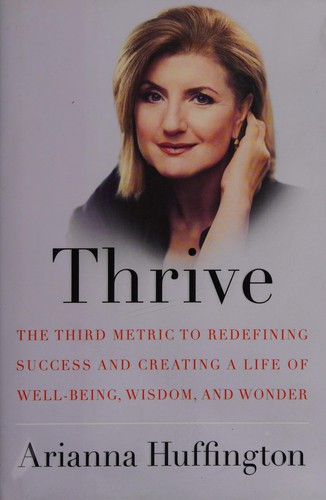
The Sleep Revolution
≈ From memorySleep is not a luxury or a sign of weakness; it is the fundamental biological foundation for creativity, health, and peak human performance.
In one sentence
We must dismantle the "culture of exhaustion" that treats sleep deprivation as a badge of honor and instead recognize sleep as the ultimate performance enhancer for our brains and bodies.
Why read this (and who it's for)
This book is for the high-achiever, the entrepreneur, the exhausted parent, and anyone who believes that "grinding" requires sacrificing rest. It solves the paradox of the modern era: we are more productive than ever, yet we are more burnt out, less creative, and physically sicker than our ancestors.
After reading this, you will stop viewing sleep as "time lost" and start seeing it as a strategic investment in your cognitive capital. You will gain a scientific understanding of why your brain needs rest to solve problems, a toolkit for designing a restorative sleep environment, and the permission to prioritize rest without feeling guilty about your productivity.
The big idea
The central thesis of The Sleep Revolution is that our modern society has developed a pathological relationship with sleep. We have normalized a state of chronic sleep deprivation, viewing it as a necessary sacrifice for professional success or social status. Huffington argues that this is not just a personal choice; it is a cultural epidemic that impairs our judgment, fuels our stress, and degrades our physical health.
The logic is rooted in biology: Sleep is the period during which the brain performs its most critical maintenance. It isn't "turning off"; it is entering a state of intense activity where it cleans out metabolic waste (the glymphatic system), consolidates memories, and repairs tissues. When we skip sleep to get more work done, we are essentially trying to run a car on an empty tank while ignoring the fact that the engine is overheating.
Ultimately, Huffington argues for a "Sleep Revolution"—a fundamental shift in how we value rest. She asserts that by prioritizing sleep, we actually unlock higher levels of creativity, emotional intelligence, and physical vitality. To be truly productive, you must be rested; to be healthy, you must sleep.
Key ideas
Sleep as a Performance Enhancer
Sleep is not the opposite of productivity; it is the fuel for it. When you are sleep-deprived, your brain's ability to process information, make decisions, and regulate emotions is severely compromised. Why it matters: If you think you can "power through" a project on three hours of sleep, you are actually working at a fraction of your potential. You are making more mistakes, taking longer to complete tasks, and losing the ability to see the "big picture." In the book: Huffington highlights how sleep deprivation mimics alcohol intoxication. She explains that even a small amount of lost sleep can impair cognitive function similarly to being legally drunk, yet we often allow ourselves to operate in that impaired state daily.
The Creativity Connection
Sleep is the ultimate catalyst for creative problem-solving and "aha!" moments. During sleep, the brain makes connections between disparate ideas that the conscious, waking mind might never see. Why it matters: If you are stuck on a complex problem, staring at your screen for another hour of exhausted labor is less effective than taking a nap or going to bed. Sleep allows the subconscious to do the heavy lifting of synthesis and innovation. In the book: She discusses how many great ideas come to people in the middle of the night or right as they are falling asleep (hypnagogic states). This isn't a coincidence; it’s your brain's "associative" mode working without the constraints of logical, waking thought.
The Cost of Chronic Sleep Deprivation
Lack of sleep is a systemic health crisis that contributes to everything from weight gain and skin aging to cardiovascular disease and impaired immune function. Why it matters: We often treat sleep as a "nice-to-have" until our bodies start to fail. By understanding the physiological toll—such as increased cortisol (the stress hormone) and decreased growth hormone—you can see that sleep is a non-negotiable pillar of longevity. In the book: Huffington points out that chronic sleep deprivation leads to a "state of emergency" in the body, where the immune system becomes dysregulated and the body begins to store fat more efficiently as a survival mechanism.
Circadian Rhythms and Consistency
Your body operates on an internal clock (the circadian rhythm) that thrives on predictability. The quality of your sleep is determined by how well you align with this natural cycle. Why it matters: It’s not just about how much you sleep, but when you sleep. Irregular sleep patterns—common in the "always-on" digital world—disrupt hormone production and metabolic rates, leading to a feeling of "social jetlag." In the book: She emphasizes the importance of a consistent wake-up time (even on weekends) to anchor your internal clock, which regulates everything from body temperature to hunger cues.
The Stress-Sleep Loop
Stress is both a cause and a consequence of poor sleep. When we don't sleep, our bodies produce more stress hormones; when we are stressed, it becomes harder to fall asleep. Why it matters: To break this cycle, you must address the psychological component of sleep. You cannot simply "force" yourself to sleep if your brain perceives a threat (like an unread email) as a reason to stay alert. In the book: Huffington explains how our modern environment—filled with notifications and blue light—keeps our brains in a state of high-alert, making it nearly impossible for the nervous system to "power down" at night.
Frameworks & tools
The Sleep Sanctuary (Environment Design)
Huffington argues that your bedroom should be a sanctuary dedicated solely to rest. To optimize this, follow these steps:
- Cooling: Keep the room temperature slightly cool (around 65°F/18°C). A drop in core body temperature is a biological trigger for sleep.
- Darkness: Eliminate all light sources. Use blackout curtains or a high-quality eye mask.
- Quiet: Use white noise machines or earplugs if your environment is noisy.
- Association: The bed should be for sleep and intimacy only. Do not work, eat, or watch TV in bed; this prevents the brain from associating the bed with alertness.
The "Wind Down" Ritual (The 60-Minute Rule)
To transition from a high-stress day to restorative sleep, you need a buffer zone.
- Digital Sunset: Turn off all screens (phones, tablets, laptops) at least 60 minutes before bed. Blue light inhibits melatonin production.
- Dim the Lights: Lower the overhead lighting in your home to signal to your brain that the day is ending.
- Relaxation Activity: Engage in a low-stimulation activity like reading a physical book (not an e-reader), journaling, or stretching.
- Consistent Timing: Do this every night at the same time to train your brain to expect sleep.
The Consistency Protocol
To stabilize your circadian rhythm:
- Fixed Wake Time: Set a consistent wake-up time for every day of the week (yes, including Saturdays and Sundays).
- Morning Light: Seek out natural sunlight immediately upon waking. This "sets" your internal clock for the next 24 hours.
- Movement: Engage in physical activity during the day to build up "sleep pressure."
Memorable examples & stories
The Corporate Culture of Exhaustion
Huffington describes how many CEOs and high-powered executives wear their lack of sleep as a badge of honor, boasting about "only getting four hours" as if it were a competitive sport. The Lesson: This is a cultural myth that needs to be dismantled; exhaustion actually degrades the very leadership and decision-making skills these people claim to value.
The Impact on Athletes
She discusses how elite athletes are increasingly prioritizing sleep as a primary training tool, recognizing that muscles repair and cognitive reactions sharpen during rest. The Lesson: If world-class performers treat sleep as a "training" requirement, you should too—it is the ultimate recovery for your brain and body.
The "Always-On" Digital Trap
Huffington reflects on her own experience with the constant pinging of notifications and how it creates a state of "hyper-vigilance" that prevents deep relaxation. The Lesson: We must set boundaries with our technology to protect our ability to rest; otherwise, we become slaves to an attention economy that doesn't care about our health.
Key quotes
"Sleep is not a luxury. It is a biological necessity." (Paraphrased) Why it matters: This strips away the guilt of resting; you aren't being "lazy," you are fulfilling a physiological requirement.
"A well-rested brain is a creative brain." (Paraphrased) Why it matters: It reframes sleep as an investment in your intellectual and artistic output, not just a way to avoid tiredness.
"We need to stop celebrating the 'hustle' of exhaustion and start celebrating the 'power' of rest." (Paraphrased) Why it matters: This is the core call to action—a cultural shift in how we define success.
How to apply it
This week
- The 30-Minute Buffer: For the next seven days, turn off your phone and all screens 30 minutes before you plan to sleep. Spend that time stretching or reading a physical book.
- Consistent Wake-Up: Set an alarm for the same time every morning this week (even on the weekend) and get out of bed immediately.
- The "No-Work" Zone: Keep your phone/laptop out of the bedroom tonight. Charge them in another room to ensure your sleep environment is a sanctuary.
Ongoing
- Prioritize Sleep as an Appointment: Treat your bedtime like a non-negotiable meeting with your most important client: yourself.
- Morning Sunlight: Make it a habit to step outside or sit by a window for 5–10 minutes of natural light within an hour of waking up.
- Audit Your "Sleep Hygiene": Every month, evaluate your sleep environment (temperature, light, noise) and make adjustments as needed.
Common pitfalls
- The "Sleep-Only" Fallacy: While sleep is foundational, it is not a substitute for exercise, nutrition, or stress management. You cannot "sleep away" a poor diet or a sedentary lifestyle.
- Over-complicating the Routine: Many people get overwhelmed trying to create a perfect 10-step ritual. If you can only manage one thing (like a consistent wake-up time), start there. Consistency is more important than perfection.
- Expecting Instant Results: Sleep debt is real, and it takes time to recover from chronic deprivation. You won't feel like a new person after one good night of sleep; it requires a sustained commitment to change your habits.
Connects to
- "Why We Sleep" by Matthew Walker: While Huffington focuses on the cultural and lifestyle aspects of sleep, Walker provides the deep-dive biological and neurological science behind why we need it. They complement each other perfectly: Walker explains the "how," and Huffington explains the "now what."
- "Deep Work" by Cal Newport: Newport argues for intense focus in a distracted world; Huffington’s work provides the physiological foundation (rest) required to achieve that level of cognitive intensity.
If you remember only three things
- Sleep is an essential biological requirement, not a luxury; it is the foundation of your health and mental clarity.
- A "culture of exhaustion" rewards sleep deprivation, but it actually impairs your creativity, judgment, and long-term health.
- Consistency is king: A regular wake-up time and a dedicated "sleep sanctuary" are the most effective ways to regulate your internal clock.
Internalize it
-
Reflection questions
- In what ways has my current "hustle" culture led me to treat sleep as an optional extra rather than a non-negotiable requirement?
- How would my creative output change if I treated rest as a scheduled part of my work day?
- What is the biggest barrier in my environment (phone, noise, light) that prevents me from having a true "sleep sanctuary"?
-
Flashcards Q: What is the primary difference between how we view sleep today versus how it should be viewed? A: We currently view it as a luxury or a sign of weakness; it should be viewed as a biological necessity and a performance enhancer.
Q: How does sleep affect creativity specifically? A: Sleep allows the brain to enter an associative mode where it can connect disparate ideas and solve complex problems that are difficult to see while awake.
Q: What is "social jetlag"? A: The disruption of your internal circadian rhythm caused by inconsistent sleep and wake times, particularly between workdays and weekends.
Q: Why is a consistent wake-up time important? A: It anchors your internal clock (circadian rhythm), which regulates hormone production, body temperature, and metabolic rates.
Q: What are the three pillars of a "Sleep Sanctuary"? A: Cool temperature, total darkness, and quiet/low noise.
Fidelity note
I have high confidence in this summary as it captures Arianna Huffington's core advocacy for sleep as a public health and productivity issue. The distinction between her work and Matthew Walker's is important: she focuses on the revolution of habits and culture, whereas he focuses on the mechanics of biology. I am confident in the "Sleep Sanctuary" and "Wind Down" concepts as they are standard pillars of her advice, though specific room temperature numbers may vary slightly based on individual preference (though 65°F is a common recommendation).
Keep going — related reads
 Why We SleepMatthew Walker
 The Sleep Solution Why Your Sleep Is Broken and How to Fix ItW. Chris Winter
 The Promise of SleepWilliam C. Dement
 Most Replayed Moment Better Sleep Doesn't Always Mean Longer Sleep! Fix These Habits TodayThe Diary of a CEO
 Dreamland Adventures in the Strange Science of SleepDavid K. Randall
 The No-Cry Sleep SolutionElizabeth Pantley