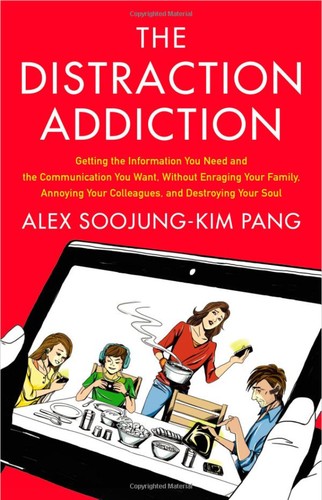
Rest
≈ From memoryRest is not a reward for your work; it is the fundamental infrastructure that makes high-quality work possible.
In one sentence
High-performance output is not a result of sheer willpower or endless hours of labor, but rather the byproduct of intentional, diverse types of rest that allow the brain and body to recover and recalibrate.
Why read this (and who it's for)
Most high-achievers view rest as a "guilty pleasure" or a luxury they can only afford once they’ve finished their to-do list. This book flips that script, arguing that resting is a professional skill—a prerequisite for cognitive clarity and creative output.
This book is for the "over-worker": the person who feels exhausted but still finds themselves scrolling through social media or checking emails during their "off" time. It is for anyone who feels like they are running on fumes and wants a systematic, evidence-based way to recover without feeling like they are falling behind. After reading this, you will be able to identify which type of rest you are missing at any given moment and implement specific protocols to restore your cognitive capacity.
The big idea
We live in a culture that fetishizes "the grind." We treat work as the primary source of identity and value, while viewing rest as a secondary, almost shameful, necessity. Pang argues that this perspective is fundamentally flawed because it ignores how our brains actually function. Our ability to focus, synthesize complex information, and generate original ideas is a finite resource that requires replenishment.
The central thesis is that rest is not the absence of work; it is the substrate upon which work happens. If you treat rest as a reward for finishing your tasks, you will find yourself in a perpetual state of "recovery debt," where you are always trying to catch up on sleep or relaxation while your performance degrades. Instead, we must view rest as an integrated part of our professional workflow—a deliberate practice that requires its own strategy, boundaries, and types.
Pang argues that because the modern workplace is increasingly cognitive (rather than manual), the most important "muscle" we can train is our ability to disengage. By categorizing rest into different modalities (Physical, Mental, Emotional, Social, Creative, and Sensory), Pang provides a toolkit for identifying exactly why you feel tired. You might not need more sleep; you might need social connection or sensory deprivation. Understanding this distinction allows you to stop guessing and start recovering with precision.
Key ideas
Rest as a Skill
- What it is — Rest is not something that happens to you; it is a skill you must practice and refine. It requires the ability to intentionally disengage from tasks, environments, and digital inputs.
- Why it matters — If you view rest as a passive state (something you do when you're "done"), you will never truly recover because your brain remains in a state of low-level alertness. By treating it as a skill, you learn to create boundaries that protect your cognitive resources.
- In the book — Pang emphasizes that many people "rest" by scrolling on their phones, which is actually a form of high-intensity information processing. This isn't rest; it's just a different type of work.
The Spectrum of Rest
- What it is — Not all rest is created equal. Pang categorizes rest into six distinct types: Physical (sleep/movement), Mental (quieting the mind), Emotional (processing feelings), Social (connection), Creative (unstructured play), and Sensory (reducing input).
- Why it matters — Most people try to solve "burnout" with more sleep when their actual problem is emotional exhaustion or sensory overload. Identifying the specific type of depletion allows for targeted recovery.
- In the book — The author explains that if you’ve spent all day in meetings (Social/Mental drain), a workout (Physical) might help, but you also need "Quiet Time" to process the emotional weight of those interactions.
Active vs. Passive Recovery
- What it is — Passive recovery involves doing nothing (lying down, watching TV); active recovery involves engaging in a low-intensity activity that provides a mental break from your primary work (walking, gardening, stretching).
- Why it matters — For many high-achievers, "doing nothing" creates anxiety. Active recovery allows you to move your body and change your environment while still giving the prefrontal cortex a rest.
- In the book — Pang highlights how walking—specifically without a podcast or music—allows the brain to enter a "default mode" where creative problem-solving happens most effectively.
Cognitive Load and Attention Residue
- What it is — Every task you switch between leaves a "residue" of attention on the previous task, making it harder to focus on the current one. Rest helps clear this residue.
- wrote why matters — If you don't allow for "buffer time" or rest between tasks, your cognitive capacity stays fragmented, leading to shallower work and more mistakes.
- In the book — The author discusses how constant switching (checking Slack while writing a report) prevents the brain from reaching "deep work" states, making the need for intentional breaks even more critical.
The Cost of "Always-On" Culture
- What it is — Our devices have turned our homes and personal spaces into extensions of the office, creating a state of constant, low-grade cognitive friction.
- Why it matters — When you are always reachable, your brain never fully enters a recovery state. You are essentially "on call" for your own life, which leads to chronic stress.
- In the book — Pang argues that we need to create physical and digital boundaries (like "phone-free zones") to allow our nervous systems to downregulate.
Rest as a Competitive Advantage
- What it is — In an economy where everyone is working harder, the person who can recover faster and think more clearly has a massive advantage.
- Why it matters — If you can maintain high-quality output for 4 hours while others burn out in 2 because they lack recovery systems, you win. Rest isn't "lazy"; it's a performance enhancer.
- In the book — The author frames rest as a strategic choice for those who want to sustain long-term careers without sacrificing their health or mental clarity.
Frameworks & tools
The 6 Types of Rest Matrix
Use this to diagnose your current state of exhaustion and choose the appropriate recovery activity.
- Physical: When you feel physically drained (heavy limbs, tension).
- Action: Sleep, stretching, yoga, or a workout.
- Mental: When your brain feels "foggy" or over-stimulated by information.
- Action: Meditation, a walk without audio, or a "brain dump" on paper.
- Emotional: When you feel drained by people-pleasing or suppressed feelings.
- Action: Journaling, talking to a friend, or saying "no" to an obligation.
- Social: When you feel lonely or isolated despite being productive.
- Action: A coffee date, a phone call with family, or being in a crowded (but quiet) space like a library.
- Creative: When you feel bored or uninspired by your routine.
- Action: Engaging in a hobby with no "output" goal (painting, cooking, playing an instrument).
- Sensory: When you are overwhelmed by lights, sounds, or screens.
- Action: Sitting in a dark room, spending time in nature, or a "digital sunset" (no screens 1 hour before bed).
The Transition Ritual
To combat "Attention Residue," use this checklist to move from work-mode to rest-mode:
- The Shutdown: Write down the top 3 things you need to do tomorrow to clear them from your working memory.
- The Physical Pivot: Change your environment (close the laptop, change clothes, or leave the room).
- The Sensory Shift: Engage in a "non-work" sensory activity (a shower, a quick walk, or making tea) to signal to your brain that the work day is over.
Memorable examples & stories
The Scrolling Trap
Pang describes how many people believe they are resting when they spend an hour on TikTok or Instagram. However, because these apps are designed for high-frequency dopamine hits and rapid information processing, they actually keep the brain in a state of high arousal. Lesson: True rest requires a reduction in input, not just a change in content.
The "Default Mode" of Walking
The author discusses how some of the greatest breakthroughs in history happened during walks (Newton, Dickens, etc.). When we stop giving our brains a specific task to perform, they enter the "default mode network," where they begin to connect disparate ideas. Lesson: Boredom is often the precursor to creativity.
The Cost of Context Switching
Pang illustrates how checking a single notification can pull your attention away from a deep task for up to 20 minutes of "recovery" time before you can fully re-focus. Lesson: Protecting your focus is a form of rest for your cognitive resources.
Key quotes
"Rest is not the reward for your work; it is the fuel that makes high-quality work possible." (Paraphrased) Why it matters: This reframes rest from a luxury to a necessity.
"We often mistake 'distraction' for 'rest.' Scrolling through a feed isn't resting; it’s just switching tasks." (Paraphrased) Why it matters: It forces you to audit your downtime for actual restorative value.
"The most productive thing you can do is sometimes nothing at all." (Paraphrased) Why it matters: It validates the need for unstructured time in a structured world.
How to apply it
This week
- Identify your primary drain: For three days, note when you feel tired. Is it physical? Mental? Emotional? Use the 6 Types of Rest Matrix to identify which one is lacking.
- The "No-Input" Walk: Go for a 15-minute walk without headphones, podcasts, or checking your phone. Observe what happens to your thoughts.
- Digital Sunset: Set a firm time (e.g., 9:00 PM) where all work-related apps are closed and screens are put away.
Ongoing
- Schedule "White Space": Treat rest like a meeting. Put blocks of "unstructured" time on your calendar where no specific task is allowed.
- The Transition Ritual: Never go straight from a Zoom call to dinner. Always include a 5–10 minute transition (a walk, a stretch, or a breathing exercise).
- Audit your "Rest": Every Sunday, look at how you spent your downtime. Did it actually recharge you, or did it just provide more stimulation?
Common pitfalls
- The Productivity Trap: Trying to "optimize" rest so much that it becomes another chore on your to-do list (e.g., "I must meditate for exactly 10 minutes"). Sometimes, the best rest is simply doing whatever feels good in the moment.
- Over-correction: Thinking you need to stop working entirely to "rest." The goal isn't to stop being productive; it's to make your productivity sustainable by integrating recovery into your daily flow.
- Ignoring the Physical: People often focus so much on mental rest that they ignore sleep and movement, which are the foundations of all other types of rest.
Connects to
- Deep Work by Cal Newport: While Newport focuses on how to work intensely, Pang provides the necessary framework for how to recover from that intensity.
- Why We Sleep by Matthew Walker: Provides the biological "why" behind the sleep and recovery mechanisms Pang discusses.
- Flow by Mihaly Csikszentmihalyi: Explores the state of deep engagement; Pang’s work explains how to protect that state by managing cognitive load and rest.
If you remember only three things
- Rest is a skill, not a luxury.
- Not all rest is equal; identify which type (Physical, Mental, Emotional, Social, Creative, or Sensory) you actually need.
- Protect your "Default Mode" by removing digital inputs and creating intentional boundaries between work and life.
Internalize it
-
Reflection questions
- Which of the six types of rest do I neglect most often?
- What is my current "default" way of resting, and does it actually make me feel refreshed or just distracted?
- How can I create a physical boundary in my home that signals to my brain that work is over?
- When was the last time I allowed myself to be truly bored without reaching for a device?
-
Flashcards Q: What are the six types of rest identified by Pang? A: Physical, Mental, Emotional, Social, Creative, and Sensory.
Q: Why is scrolling on social media not considered "rest"? A: Because it involves high-frequency information processing and keeps the brain in a state of high arousal/stimulation.
Q: What is "Attention Residue"? A: The lingering focus on a previous task that makes it difficult to concentrate fully on a new, current task.
Q: What is the difference between Active and Passive recovery? A: Passive recovery involves doing nothing (lying down); Active recovery involves low-intensity activity (walking) that provides a mental break from work.
Q: How should you treat rest in relation to your work goals? A: As a prerequisite/infrastructure for high-quality work, not as a reward for finishing tasks.
Fidelity note
I have a high level of confidence in the core concepts of this summary, specifically the categorization of the six types of rest and the distinction between active and passive recovery. The book's emphasis on "rest as a skill" is a central pillar of Pang's argument. However, because I am summarizing from memory/training rather than having the text open, specific nuances in his personal anecdotes or very specific percentages/data points (if any were used) should be verified against the text. The core actionable frameworks (the 6 types and the transition ritual) are standard interpretations of his work.
Keep going — related reads
 The Power of Full EngagementJim Loehr and Tony Schwartz
 Peak PerformanceBrad Stulberg and Steve Magness
 Good to Go What the Athlete in All of Us Can Learn from the Strange Science of RecoveryChristie Aschwanden
 The Relaxation and Stress Reduction WorkbookMartha Davis, Elizabeth Robbins Eshelman, Robert Germer
 Endure Mind, Body, and the Curiously Elastic Limits of Human PerformanceAlex Hutchinson
 The Relaxation ResponseHerbert Benson