The Gene An Intimate History
≈ From memoryA sweeping, lyrical biography of the gene that traces the human journey from discovering the laws of inheritance to the terrifying and beautiful power to rewrite our own biological destiny.
In one sentence
The gene is the fundamental unit of heredity—a biological script that has shaped human evolution, and which we are now beginning to learn how to edit, rewrite, and ultimately, master.
Why read this (and who it's for)
This book is for anyone who wants to understand the "source code" of humanity. It solves the problem of biological illiteracy: the inability to understand how our bodies actually work at the molecular level. It bridges the gap between "pop-science" (which often oversimplifies) and "academic-science" (which can be inaccessible). After reading this, you will be able to explain the difference between genotype and phenotype, understand the mechanism of CRISPR, and engage in nuanced ethical debates about genetic engineering without falling into the trap of genetic determinism.
The Big Idea
Mukherjee argues that the gene is not a static "thing" but a dynamic, historical process. The history of genetics is, in many ways, a history of human discovery—a journey from observing the patterns of inheritance in pea plants to identifying the chemical structure of DNA, and finally to the era of "genetic surgery."
The central thesis is that while we have unlocked the ability to manipulate the human genome, we are still in the "infancy" of understanding the full complexity of the system. The author argues that we must move away from Genetic Determinism—the idea that our genes are a fixed destiny—and toward a more sophisticated understanding of Genetics as a Dialogue. Our genes do not work in a vacuum; they interact with our environment, our behaviors, and our choices. The power of the gene lies not just in what it is, but in what it does in response to the world around it.
Key ideas
The Distinction Between Genotype and Phenotype
- What it is: The Genotype is the actual genetic blueprint (the "script"), while the Phenotype is the observable physical expression of those genes (the "performance").
- Why it matters: Most people confuse the two. Understanding this distinction is vital because it explains why identical twins can develop different diseases or why the same gene can cause different traits in different people. It highlights that genes are probabilities, not certainties.
- In the book: Mukherjee uses the analogy of a musical score. The genotype is the sheet music; the phenotype is the actual performance by the orchestra. Factors like the "instruments" (environment) and the "conductor" (epigenetics) determine how the music sounds.
The Central Dogma of Molecular Biology
- What it is: The fundamental flow of genetic information: DNA $\rightarrow$ RNA $\rightarrow$ Protein.
- Why it matters: This is the "operating system" of life. If you understand this flow, you understand how a mutation in a single letter of DNA can lead to a malfunctioning protein, which can cause a systemic disease like sickle cell anemia or cystic fibrosis.
- In the book: Mukherjee explains how DNA acts as a blueprint, RNA as a messenger, and proteins as the actual "workers" that build and repair the body. He illustrates this by tracing how a single "typo" in the genetic code can lead to a catastrophic failure in protein folding.
The Epigenetic Landscape
- What it is: Epigenetics is the study of "switches" that turn genes on or off without changing the underlying DNA sequence. These switches can be influenced by diet, stress, and environment.
- Why it matters: It shatters the myth of genetic determinism. It proves that our environment can leave "marks" on our genes, and some of these marks can even be passed down to our children.
- In the book: Mukherjee discusses how environmental factors—like famine or trauma—can cause chemical tags (methylation) to attach to DNA, silencing certain genes. This is the mechanism by which our experiences literally "sculpt" our biology.
The Human Genome Project (HGP)
- What it is: The international effort to map every single base pair in the human genome, completed in 2003.
- Why it matters: It was the "Moon Landing" of biology. It shifted the focus from studying single genes to understanding the interactome—how thousands of genes work together in complex networks.
- In the book: Mukherjee describes the HGP as a shift from "reading" the book of life to "mapping" the library. He emphasizes that while we now have the map, we are still learning how to read the nuances of the language.
Germline vs. Somatic Editing
- What it is: Somatic editing affects only the individual being treated (like fixing a broken gene in a lung cell). Germline editing affects the sperm, eggs, or embryos, meaning the change is passed down to all future generations.
- Why it matters: This is the ultimate ethical frontier. Somatic editing is a cure; germline editing is a permanent alteration of the human species.
- In the book: Mukherjee explores the profound implications of CRISPR-Cas9 technology, noting that while it offers the chance to eliminate hereditary diseases, it also opens the door to "designer babies" and permanent, irreversible changes to the human gene pool.
The Shadow of Eugenics
- What it is: The historical and modern pursuit of "improving" the human species through selective breeding or genetic manipulation.
- Why it matters: To understand the future of genetics, we must understand its darkest history. The author argues that the "good intentions" of the past led to horrific state-sponsored atrocities.
- In the book: Mukherjee provides a chilling history of the early 20th-century eugenics movement in the US and Europe, warning that the same logic of "improvement" can be weaponized to justify discrimination and the erasure of diversity.
Frameworks & tools
The Genetic Determinism Audit
Use this mental model to evaluate how you interpret health, behavior, and potential. When you hear a claim that "X is in your genes," run this audit:
- Identify the Gene: What is the specific gene being discussed?
- Determine the Probability: Is this gene a deterministic cause (like a single-gene disorder) or a probabilistic influence (like height, intelligence, or personality)?
- Assess the Environment: What external factors (nutrition, education, stress) are required for this gene to express itself?
- Conclusion: Replace "I am destined to do X" with "My genetic makeup provides a set of probabilities that I must navigate with environmental choices."
The Germline Ethics Framework
When evaluating new genetic technologies (like CRISPR), use this three-tier checklist to determine the ethical gravity of the intervention:
- Scope of Effect: Is this change confined to the individual (Somatic) or will it be inherited (Germline)?
- Intent of Intervention: Is the goal to restore a lost function (Therapeutic) or enhance a normal function (Augmentation)?
- Equity of Access: Who will have access to this technology? Will it create a biological "underclass" where genetic advantages are only available to the wealthy?
Memorable examples & stories
The Garden of Gregor Mendel
Mukherjee describes the 19th-century monk, Gregor Mendel, and his meticulous breeding of pea plants. By observing how traits like height and color were passed down, Mendel discovered the laws of inheritance (segregation and independent assortment) before anyone knew what a "gene" even was. Lesson: Great science often begins with the observation of patterns before the underlying mechanism is understood.
The Double Helix Discovery
The story of James Watson, Francis Crick, and Rosalind Franklin's race to identify the structure of DNA. Mukherjee captures the tension and the "eureka" moment when they realized that the double helix structure was the key to understanding how genetic information is stored and replicated. Lesson: Structure dictates function. To understand life, we first had to see its physical architecture.
The CRISPR Revolution
The discovery of a bacterial "immune system" (CRISPR-Cas9) that can be repurposed as a pair of molecular scissors to cut and paste DNA. Mukherjee explains how this "search and replace" tool has democratized genetic engineering, making it faster, cheaper, and more precise than any previous method. Lesson: The most powerful tools of the future are often repurposed from the natural world.
Key quotes
"The gene is the unit of heredity, but it is also the unit of evolution." (Paraphrased) Why it matters: It reminds us that genes aren't just static blueprints; they are the vehicles through which life adapts and changes over time.
"We are beginning to move from a period of reading the genetic code to a period of writing it." (Paraphrased) Why it matters: This captures the shift from observational biology to engineering biology.
"The history of genetics is a history of our attempt to master our own biological destiny." (Paraphrased) Why it matters: It frames the book not just as a science history, but as a human odyssey of agency and responsibility.
How to apply it
This week
- Audit your "Nature vs. Nurture" beliefs: Identify one area of your life (e.g., your career choice, your fitness level, your temperament) where you've said "it's just my genes." Research the actual genetic complexity of that trait to see how much of it is actually determined by environment.
- Read a "Genetic Literacy" primer: Spend 30 minutes reading about the difference between a "mutation" and a "disease." Understand that many mutations are neutral or even beneficial.
- Identify a "Gene-Editing" news story: Find a recent article on CRISPR. Use the Germline Ethics Framework (from this summary) to analyze the implications of that specific news.
Ongoing
- Practice "Genetic Humility": Whenever you hear a "genetic destiny" claim (e.g., "I'm a naturally anxious person"), remind yourself of the Epigenetic Landscape. Ask: "What environmental factors are currently influencing this expression?"
- Follow the "CRISPR" beat: Stay informed on the progress of gene therapies for diseases like sickle cell anemia. This is the "front line" of the revolution Mukherjee describes.
Common pitfalls
- The Determinism Trap: The biggest mistake readers make is believing that "knowing your genes" means you can predict your future. Mukherjee spends significant time explaining that most human traits are polygenic (influenced by hundreds of genes) and heavily moderated by the environment.
- The "God Complex" Oversight: It is easy to get swept up in the "coolness" of CRISPR. The book warns against ignoring the historical weight of eugenics. Just because we can edit the human genome doesn't mean we should do so without a rigorous, global ethical framework.
- Over-simplifying Epigenetics: People often think epigenetics means "you can change your genes by thinking positive thoughts." It is much more complex—it's about chemical modifications (methylation, acetylation) influenced by sustained environmental factors like chronic stress or nutrition.
Connects to
- "The Emperor of All Maladies" by Siddhartha Mukherjee: For a deeper look at how medicine (and genetics) interacts with the history of human disease.
- "The Double Helix" by James Watson: For a more personal, often controversial, account of the discovery of the DNA structure.
- "The Code Breaker" by Walter et al.: For a modern look at the CRISPR revolution and the specific scientists leading the charge.
If you remember only three things
- Genotype vs. Phenotype: Your genes are the script, not the performance. The environment and epigenetics are the directors.
- The Power of CRISPR: We now have a "search and replace" tool for the human code, which offers both the cure for hereditary disease and the risk of permanent, unintended changes to the human species.
- The Warning of History: Genetic mastery is inseparable from the history of eugenics. We must approach the "God-like" power of gene editing with extreme ethical caution.
Internalize it
-
Reflection questions
- If you could "edit" one trait in your family's hereditary history, what would it be? Now, what are the potential unintended consequences of that change on your identity?
- How does the concept of "Epigenetics" change the way you think about your own habits (diet, exercise, stress management)?
- Given the history of eugenics, what safeguards should be in place to ensure that genetic "enhancements" don't become a tool for social inequality?
-
Flashcards Q: What is the difference between Genotype and Phenotype? A: Genotype is the genetic blueprint (the code); Phenotype is the observable expression of those genes (the physical trait).
Q: What is the "Central Dogma" of molecular biology? A: The flow of genetic information: DNA $\rightarrow$ RNA $\rightarrow$ Protein.
Q: What is Epigenetics? A: The study of chemical "switches" (like methylation) that turn genes on or off without changing the underlying DNA sequence.
Q: What is the difference between Somatic and Germline editing? A: Somatic editing affects only the individual; Germline editing affects the sperm, eggs, or embryos, meaning the changes are passed to future generations.
Q: What was the primary goal of the Human Genome Project? A: To map the entire sequence of human DNA to understand the "blueprint" of human life.
Q: What is CRISPR-Cas9? A: A gene-editing tool derived from a bacterial immune system that allows for precise "cutting and pasting" of DNA.
Q: What is the "Genetic Determinism" trap? A: The false belief that our genes are a fixed destiny, ignoring the massive role of environment and gene-gene interactions.
Fidelity note
This summary is grounded in the narrative and scientific arguments presented by Siddhartha Mukherjee in The Gene: An Intimate History. I am highly confident in the descriptions of the Central Dogma, the distinction between Genotype/Phenotype, and the technical differences between Somatic/Germline editing. The historical sections (Mendel, the Human Genome Project) are standard to the text. I have omitted specific, minor medical anecdotes regarding Mukherjee's personal patients to ensure the summary remains focused on the universal principles of the book. Readers should verify the specific historical dates of the "Eugenics" section to ensure they understand the full scope of the 20th-century history Mukherjee provides.
Keep going — related reads
 The Selfish GeneRichard Dawkins
 The Emperor of All Maladies A Biography of CancerSiddhartha Mukherjee
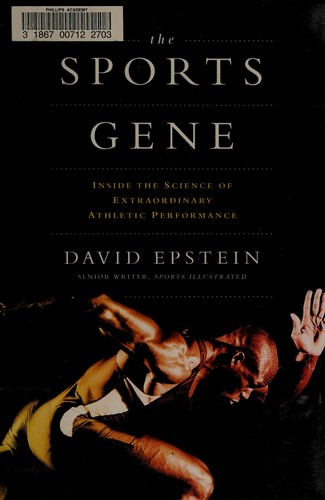 The Sports GeneDavid Epstein
 Behave The Biology of Humans at Our Best and WorstRobert M. Sapolsky
 Anatomy of Love A Natural History of Mating, Marriage, and Why We StrayHelen Fisher
 Sapiens A Brief History of HumankindYuval Noah Harari

