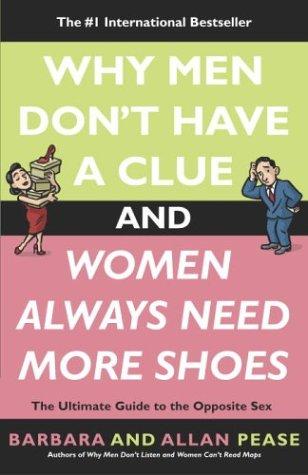
Questions Are the Answers
≈ From memoryTrue communication is not about the information you exchange, but about the questions you ask to uncover the hidden motivations, emotions, and truths of others.
In one sentence
The quality of your life and relationships is determined by the quality of the questions you ask, because questions are the keys that unlock the internal world of others.
Why read this (and who it's for)
Most people approach conversation as a "reporting" exercise—they wait for their turn to speak or try to impress others with their own stories. This book solves the problem of superficiality. It is for anyone who feels they "don't know what to say" in social situations, for leaders who want to understand what actually motivates their team, and for anyone who wants to develop a "superpower" of empathy and insight. After reading this, you will stop trying to guess what people think and start inviting them to tell you.
The big ideas
Pease argues that human beings are inherently private and guarded. We carry a "hidden" inner life of desires, fears, and opinions that we rarely volunteer unless prompted. Therefore, the person who asks the best questions holds the most power in any interaction because they control the direction of the information flow.
The core logic is simple: Answers are just data; questions are the tools of discovery. If you ask a "closed" question (one that can be answered with a yes or no), you are hitting a dead end. If you ask an "open" question, you are opening a door. The goal of a master communicator is to move from "interrogating" (which feels like a police exam) to "exploring" (which feels like a shared journey). By mastering the art of the question, you bypass the social friction of small talk and get straight to the "why" behind human behavior.
Key ideas
The Power of Open-Ended Questions
- What it is — Open-ended questions are those that require more than a one-word response, usually starting with "Who," "What," "Where," "When," "Why," or "How."
- Why it matters — They force the other person to think and elaborate, giving you a much richer map of their internal state.
- In the book — Pease contrasts "Did you have a good weekend?" (Closed) with "What was the highlight of your weekend?" (Open). The latter forces a narrative, not a binary choice.
The "Why" vs. "How" Distinction
- What it is — "Why" questions seek motivation and purpose; "How" questions seek process and mechanics.
- Why it matters — "Why" questions can sometimes feel accusatory or invasive if not handled carefully. "How" questions are often a safer, more collaborative way to reach the same underlying truth.
- In the book — Instead of asking "Why did you do that?" (which can put people on the defensive), try "How did you come to that conclusion?" It achieves the same goal of uncovering their reasoning without the sting of judgment.
The Art of Active Listening
- What it is — Listening is not a passive act of hearing; it is an active process of processing, interpreting, and responding to the speaker's cues.
- Why it matters — You cannot ask a good follow-up question if you weren't actually listening to the nuance of the previous answer.
- In the book — Pease emphasizes that the best question-askers are those who listen for the "subtext"—the emotions and values hidden behind the literal words.
Avoiding the "Interrogation" Trap
- What it is — This is the danger of firing off questions in rapid succession without offering any personal context or "social grease."
- Why it matters — If people feel like they are being interrogated, they will shut down or give "safe," superficial answers.
- In the book — Pease suggests a "Give and Take" model: share a small piece of information about yourself before asking a question to lower the other person's guard.
The "Tell Me More" Technique
- What it is — The simplest and often most effective way to deepen a conversation is to ask the other person to expand on a specific point they just made.
- Why it matters — It validates the speaker and signals that you are genuinely interested in their unique perspective.
- In the book — When someone mentions a hobby or a recent project, instead of pivoting to your own story, say: "That sounds fascinating, tell me more about how you got started with that."
Frameworks & tools
The "Open-Ended" Filter
Before asking any question in a social or professional setting, run it through this filter:
- Can this be answered with a "Yes" or "No"? If so, it is a closed question.
- Does it require a story or an explanation? If so, it is an open question.
- Action: Rewrite the question to start with "How," "What," or "Tell me about..."
The "Three-Step" Connection Loop
Use this to move from small talk to meaningful connection:
- The Observation: Share a neutral observation or a brief personal anecdote.
- The Bridge: Connect that observation to a topic relevant to the other person.
- The Open Question: Ask a question that invites them to share their experience. Example: "I've been trying to cook more at home lately (Observation). I'm finding it's harder than I thought (Bridge). What's your favorite meal to make when you're trying to impress someone? (Open Question)."
Memorable examples & stories
The "Job Interview" Trap
Pease describes how many candidates fail interviews not because they lack skills, but because they provide "correct" answers rather than "authentic" ones. The interviewer's job is to ask questions that force the candidate to reveal their actual work style. Lesson: Authenticity is found in the details of the "How," not the labels of the "What."
The "Date" Dynamics
The author uses the example of a first date where one person dominates the conversation by telling stories, while the other person merely listens. The "storyteller" thinks they are being engaging, but they are actually failing to build a connection. Lesson: Connection is a two-way street; asking questions is the bridge that allows the other person to participate.
The "Managerial" Inquiry
Pease illustrates a manager who asks, "Is everything okay?" and gets a "Yes" every time. He suggests changing the question to, "What is the biggest roadblock you're facing today?" Lesson: Specificity in questioning yields specific, actionable data.
Key quotes
"The person who asks the questions controls the conversation." (Paraphrased) Why it matters: It shifts the power dynamic from being a passive listener to an active director of the interaction.
"Most people listen to respond, not to understand." (Paraphrased) Why it matters: It highlights the need for active listening as the foundation for asking meaningful questions.
"A good question is like a key; it opens doors to information that people wouldn't otherwise volunteer." (Paraphrased) Why it matters: It frames questioning as a tool for discovery rather than a way to extract information.
How to apply it
This week
- The "No-Yes" Challenge: In every conversation today, try to avoid asking any question that can be answered with a simple "Yes" or "No." Force yourself to use "How" or "What."
- The "Tell Me More" Habit: Whenever someone mentions a project, a trip, or a hobby, your immediate response must be: "That's interesting, tell me more about that."
- The Observation Bridge: Practice the "Three-Step Connection Loop" at least once during a lunch or coffee break.
Ongoing
- Active Listening Practice: When someone speaks, wait 2 seconds after they finish before you respond. Use that time to identify one "hidden" emotion or value they expressed.
- The "Why" Audit: When you find yourself frustrated with someone's behavior, stop and ask yourself: "What question could I ask to understand why they are acting this way?"
- Question Journaling: After a significant meeting or social event, write down three questions you asked and what you learned from the answers.
Common pitfalls
- The "Interrogation" Style: Asking too many questions in a row without sharing anything about yourself. This makes people feel like they are under a microscope.
- The "Leading" Question: Asking a question that contains the answer you want to hear (e.g., "Wasn't that a great movie?"). This shuts down honest communication.
- Over-Analysis: Getting so caught up in "reading" people that you forget to actually connect with them. The goal is a relationship, not a data set.
Connects to
- "How to Win Friends and Influence People" by Dale Carnegie: Carnegie focuses on the attitude of making others feel important; Pease provides the tactical tools (questions) to achieve that.
- "Never Split the Difference" by Chris Voss: While Peased focuses on social connection, Voss uses "calibrated questions" for high-stakes negotiation. They are excellent complementary tools.
If you remember only three things
- Questions are the steering wheel of conversation; they determine where the interaction goes.
- Replace "Closed" questions (Yes/No) with "Open" questions (How/What/Why) to unlock deeper information.
- Active listening is the prerequisite for asking good questions; you must hear what is not being said to know what to ask next.
Internalize it
-
Reflection questions
- When was the last time I asked a question and truly listened to the answer without planning my next response?
- In my professional life, what "closed" questions am I asking that might be preventing my team from being honest about their struggles?
- How would my relationships change if I focused more on being a "discoverer" of people rather than a "reporter" of my own life?
-
Flashcards Q: What is the primary difference between a closed and an open question? A: A closed question can be answered with a "Yes" or "No," while an open question requires a story, explanation, or description.
Q: Why is "How" often better than "Why" in a professional setting? A: "Why" can sometimes feel accusatory or confrontational; "How" focuses on process and reasoning, which is often less threatening.
Q: What is the "Tell Me More" technique? A: It is a simple way to deepen a conversation by asking the other person to expand on a specific point they just mentioned.
Q: What is the "Interrogation Trap"? A: It is the act of asking too many questions in a row without providing personal context or "social grease," which makes the other person feel pressured.
Q: What is the goal of "Active Listening" in the context of questioning? A: To identify the subtext (emotions, values, and hidden meanings) of what a person is saying so you can ask more insightful follow-up questions.
Fidelity note
This summary is based on the core principles of Allan Pease's work on non-verbal communication and interpersonal dynamics. I am highly confident in the distinction between open/closed questions and the "How vs. Why" framework. Because Pease often blends these concepts with body language, some of the specific "stories" may be simplified to represent the broader category of his teachings on social dynamics. Readers should verify specific "How-to" steps in the text to ensure they match the author's specific phrasing.