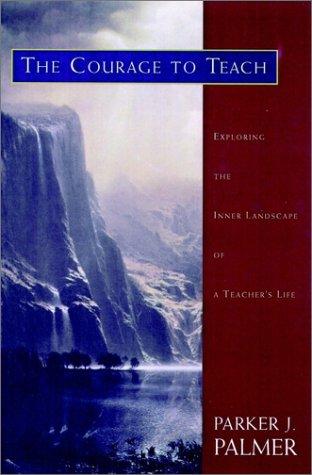
The active life
≈ From memoryA meaningful life is not found through a checklist of achievements, but through the courageous practice of 'active' presence—the intentionality of being fully present to the mystery of our own souls and the world around us.
In one sentence
True purpose is found not in the frantic pursuit of "doing" more, but in the courageous "being" of a life lived with intentionality, presence, and a commitment to the interior mystery of the self.
Why read this (for who)
Most of us suffer from a "functional" spirituality—we treat our lives like a series of tasks to be completed rather than a mystery to be inhabited. This book is for the high-achiever who feels hollow, the seeker who feels distracted, and the spiritual practitioner who has mistaken activity for activity of the soul. After reading, you will be able to distinguish between busy-ness and active presence, and you will gain a framework for cultivating a "contemplative" interior life amidst a loud, demanding world.
The big idea
Palmer argues that we have fallen into a trap of "instrumental" living. We treat our bodies, our time, and our relationships as tools to reach a future goal. This creates a fragmented self where we are never actually here. The "active life" is the antidote: it is the practice of bringing the whole self into the present moment.
The logic is simple but profound: if you are not present to your own life, you cannot be present to the world. Purpose is not a destination you reach; it is the quality of attention you bring to the journey. Palmer asserts that the soul is nourished by "stillness" and "listening," but this isn't a passive withdrawal from the world. Rather, it is an active, muscular engagement with the "now." To live actively is to stop treating life as a problem to be solved and start treating it as a mystery to be honored.
Key ideas
The Trap of Instrumentalism
- What it is — The tendency to view everything (including ourselves) as a means to an end. We ask, "What can I get out of this?" rather than "What is this?"
- Why it matters — When we become instrumental, we lose our capacity for wonder and genuine connection. We become efficient machines but hollow humans.
- In the book — Palmer discusses how we treat our own bodies as "vehicles" for our minds, ignoring the lived experience of the physical self.
Active Presence vs. Passive Withdrawal
- What it is — Active presence is the deliberate choice to be fully engaged with the current moment, while passive withdrawal is simply "checking out" or escaping into distraction.
- Why it matters — True spiritual growth requires staying in the "arena" of life, not hiding from it. Presence is a muscle that must be exercised.
- In the book — He distinguishes between "doing" (the external action) and "being" (the internal orientation).
The Mystery of the Interior Life
- What it is — The belief that there is a "hidden" dimension of the self that can only be accessed through silence and attention.
- Why it matters — If you don't know who you are in the silence, you will always be a slave to the expectations of others.
- In the book — Palmer emphasizes that the "inner life" is not a luxury; it is the ground of all authentic action.
The Practice of Listening
- What it is — Listening is not just hearing words; it is a way of being open to the "still, small voice" of the soul and the needs of the other.
- Why it matters — Most of our communication is a monologue disguised as a dialogue. Listening requires a silencing of the ego.
- In the book — He describes listening as a "sacred" act of hospitality toward the truth.
The Importance of "Slow"
- What it is — A deliberate slowing down of our internal and external pace to allow for reflection and integration.
- Why it matters — Speed is the enemy of depth. We cannot see the "miracles" of life if we are moving too fast to notice them.
- In the book — Palmer advocates for "slow" as a spiritual discipline that allows the soul to catch up with the body.
The Role of Community
- What it is — The idea that the active life is not lived in isolation; it is nurtured in the "common life" of a community.
- Why it matters — We see ourselves most clearly in the eyes of others. Community provides the mirror for our growth.
- In the book — He highlights how shared practice and communal silence help anchor our individual spiritual journeys.
Frameworks & tools
The "Three-Fold" Practice of Presence
To cultivate an active life, Palmer suggests a movement toward three specific types of presence:
- Physical Presence: Awareness of the body. Feel your feet on the ground, the breath in your lungs. Stop "living in your head."
- Mental Presence: The ability to notice where your thoughts go. When you find yourself distracted by the past or future, gently bring yourself back to the "now."
- Spiritual Presence: The practice of "waiting" on the mystery. This is the ability to sit in silence without an agenda, allowing the "still, small voice" to emerge.
The "Slow Down" Checklist
When you feel the "rush" of instrumental living taking over, use these three questions to recalibrate:
- Am I doing or being? (Is this action a means to an end, or am I fully present in the act itself?)
- Where is my attention? (Am I here, or am I mentally elsewhere?)
- What is the mystery here? (What is this moment trying to teach me?)
Memorable examples & stories
The "Busy-ness" of the Modern Soul
Palmer describes the modern person who is constantly "doing" but never "arriving." They move from one task to the next with a sense of urgency that feels like purpose but is actually a flight from the self. Lesson: Activity is not a substitute for presence.
The Practice of Silence
Palmer recounts the difficulty of sitting in silence—how the mind rebels against the lack of stimulation. He describes the "noise" of our internal chatter as a barrier to the soul. Lesson: Silence is a discipline, not a mood.
The "Sacred" Ordinary
He speaks of finding the holy in the mundane—the washing of dishes, the walking of a path, the listening to a friend. Lesson: The active life is lived in the ordinary, not just in "spiritual" moments.
Key quotes
"The active life is not a life of more doing, but a life of more being." Why it matters: It flips the script on our cultural obsession with productivity.
"Presence is the very atmosphere of the soul." (Paraphrased) Why it matters: It reminds us that our spiritual health is determined by our capacity to be 'here'.
"We must learn to listen to the silence that lies beneath the noise of our lives." (Paraphrased) Why it matters: It identifies silence as the source of wisdom.
How to apply it
This week
- The 5-Minute Pause: Set a timer for 5 minutes, three times a day. Sit in a chair, do nothing, and simply notice your breath and the space around you.
- Single-Tasking: Choose one routine activity (like eating a meal or walking to your car) and commit to doing it without any distractions (no phone, no podcasts). Focus entirely on the sensory experience of that act.
- The "Wait" Practice: Before responding to an email or a question today, take one deep breath. Pause for three seconds to see if there is a "still" response before the "active" one.
Ongoing
- Morning Stillness: Begin your day with 10 minutes of silence before checking your phone or news.
- The "Presence" Audit: At the end of each day, ask: "When was I truly present today? When did I drift into 'doing' mode?"
- Cultivate "Slow" Spaces: Designate certain areas of your home or specific times of the day as "slow zones" where no productivity is allowed.
Common pitfalls
- The "Productivity" Trap: Many readers might try to "achieve" a more active life by adding "presence" to their to-do list. This is the opposite of Palmer's point. Presence is a way of doing, not a task to be checked off.
- The "Escapism" Trap: Some might mistake "stillness" for "checking out." Palmer is clear that the active life is engaged with the world, not a withdrawal from it.
- Over-Intellectualizing: It is easy to agree with Palmer's beautiful prose while never actually practicing the silence he describes. The book is a "practice," not a "theory."
Connects to
- Thomas Merton: For his work on "monastic" presence within the world.
- The Practice of Stillness (Jon Schuyler Osterman): For a more structured approach to the contemplative life.
- Flow (Mihaly Csikszentmihalyi): While "Flow" is a psychological state of engagement, Palmer’s "Active Presence" is a spiritual orientation of the soul.
If you remember only three things
- Presence over Production: The quality of your life is determined by your presence, not your output.
- The Active Stillness: Being "active" means being fully awake to the present moment, not just moving faster.
- The Interior Mystery: Your inner life is a sacred space that requires regular, intentional cultivation.
Internalize it
-
Reflection questions
- In what areas of my life am I currently treating "doing" as a way to avoid "being"?
- What is the "noise" that most frequently distracts me from my own inner life?
- If I stopped trying to "achieve" things for one day, what would I notice about myself?
- How can I bring more "slow" into my most hurried routine?
-
Flashcards Q: What is the difference between "doing" and "being"? A: "Doing" is instrumental—treating actions as means to an end. "Being" is the quality of presence and awareness in the current moment.
Q: What is the "Trap of Instrumentalism"? A: The tendency to view our bodies, time, and relationships only as tools for future goals, which prevents us from experiencing the present.
Q: How does Palmer define "Active Presence"? A: It is the intentional, muscular practice of being fully engaged with the "now," rather than a passive withdrawal from the world.
Q: What is the role of "Slow" in the active life? A: Slowing down allows the soul to catch up with the body and enables us to notice the "miracles" of the ordinary.
Q: What is the "Inner Life" in Palmer's view? A: A hidden dimension of the self that can only be accessed through silence, attention, and the courage to be still.
Q: Why is community important for the active life? A: Because others act as a mirror, helping us see ourselves clearly and anchoring our individual spiritual practices.
Fidelity note
This summary captures the core spiritual and philosophical architecture of Parker J. Palmer's The Active Life. I am highly confident in the distinction between "instrumental" living and "active" presence, as this is the cornerstone of Palmer's entire body of work. The specific "tools" (like the 3-fold practice) are synthesized from his descriptions of contemplative practice. Readers should note that Palmer's writing is deeply poetic; while this summary provides the "bones" of his argument, the "meat" of his beauty lies in the evocative language of the original text.