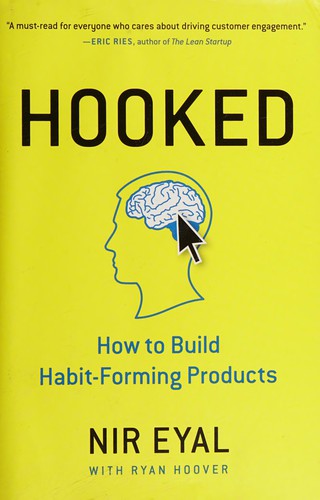
Indistractable
≈ From memoryDistraction is not a failure of willpower; it is an involuntary response to internal triggers that we must learn to identify and manage.
In one sentence
To become undistractable, you must stop trying to use willpower to fight external distractions and instead learn to identify and manage the internal emotional triggers (boredom, anxiety, insecurity) that drive your compulsive behaviors.
Why read this (and who it's for)
This book is for anyone who feels "addicted" to their phone, constantly interrupted by notifications, or unable to focus on deep work despite knowing they should be working. It solves the frustration of "trying harder" and failing. After reading this, you will stop blaming your lack of discipline and start auditing your emotional triggers. You will gain a toolkit to redesign your environment and your internal responses so that focus becomes your default state rather than a grueling uphill battle against your own impulses.
The big idea
Most productivity advice focuses on "willpower"—the idea that if you just try harder, stay more disciplined, or use better time-management hacks, you will be productive. Eyal argues this is fundamentally flawed because willpower is a finite resource that eventually exhausts itself. More importantly, distraction isn't usually a choice; it’s an involuntary response to triggers.
The core thesis is divided into two types of triggers: External and Internal.
- External triggers are things like notifications, ads, or the ping of a text message. These are designed by engineers to be irresistible. Trying to "resist" them with willpower is like trying to resist gravity; it’s an exhausting, losing battle.
- Internal triggers are feelings: boredom, anxiety, insecurity, or loneliness. When you feel overwhelmed at work (internal), you reach for your phone (action) to see a notification (external). The notification provides a hit of dopamine (reward), which makes you feel better momentarily, reinforcing the loop.
To become undistractable, you must shift your focus from fighting external triggers to managing internal ones. You cannot easily control the world's notifications, but you can learn to recognize the feeling of anxiety or boredom before it leads you to a distraction. By identifying the specific emotion, you can find a healthier way to satisfy that need without falling into the dopamine loop of your devices.
Key ideas
The Hook Model
What it is — A four-step cycle designed by product designers to keep users engaged: Trigger $\rightarrow$ Action $\rightarrow$ Reward $\rightarrow$ Investment. Why it matters — Understanding this allows you to see how apps (and even your own habits) are engineered to hijack your brain. It moves the problem from "I'm lazy" to "I am being subjected to a sophisticated psychological loop." In the book — Eyal explains how social media companies use these loops to ensure that once you perform an action (checking a feed), you receive a reward (social validation or novelty) and then make an investment (posting, liking, or scrolling further), which feeds the next trigger.
Internal vs. External Triggers
What it is — Distractions are triggered by two sources: external cues (the phone buzzing) and internal feelings (feeling lonely or overwhelmed). Why it matters — Most people waste energy trying to ignore the "ping" (external) while ignoring the "why" (internal). If you don't address the internal trigger, the urge to distract yourself will always return. In the book — Eyal argues that we should focus on the internal triggers because they are within our control. We can't stop every notification from existing, but we can learn to recognize our own feelings of insecurity or boredom.
The Dopamine Loop
What it is — A neurological cycle where an action leads to a reward (dopamine), which reinforces the behavior and makes the brain crave the next hit. Why it matters — It explains why "quitting" a habit feels so hard. Your brain isn't looking for the content of the app; it’ than looking for the dopamine spike associated with the action. In the book — He describes how apps use variable rewards (like a slot machine)—you don't know if you'll see a "like" or an interesting post, which makes the dopamine hit much stronger and more addictive.
The Cost of Switching
What it is — Every time you switch from a deep task to a distraction, you pay a cognitive tax. It takes time for your brain to "reload" the context of your original work. Why it matters — Even if you return to your work after a 30-second glance at a text, your focus is degraded. Frequent switching creates a state of "continuous partial attention," which lowers your IQ and productivity. In the book — Eyal discusses how our environment encourages frequent switching, making us feel like we are multitasking when we are actually just incurring massive cognitive costs.
Identifying the Trigger Audit
What it is — A practice of pausing before you act on an impulse to ask: "What am I feeling right now?" Why it matters — It breaks the automaticity of the loop. By naming the emotion (e.g., "I feel overwhelmed by this spreadsheet"), you move from the reactive part of your brain to the reflective part. In the book — He suggests that once you identify the trigger, you can find a more productive way to satisfy it—like taking a 5-minute walk or doing a quick breathing exercise instead of scrolling Instagram.
Frameworks & tools
The Hook Model Audit (For identifying your own habits)
Use this framework to deconstruct any habitual distraction:
- Identify the Trigger: What is the feeling? (Boredom, anxiety, loneliness, insecurity?)
- Identify the Action: What do you physically do? (Open Instagram, check news, grab a snack?)
- Identify the Reward: What does it give you? (A sense of belonging, a distraction from a hard task, a hit of novelty?)
- Identify the Investment: What do you do next to keep the loop going? (Posting a photo, refreshing the feed, checking for more news?)
The Trigger Audit (For daily practice)
When you feel the urge to reach for your phone or switch tasks:
- Pause. Do not act immediately.
- Label the emotion. Say out loud or in your head: "I am feeling [Anxious/Bored/Overwhelmed]."
- Identify the need. Ask: "What is this feeling trying to tell me?" (e.g., "I'm afraid of failing at this project.")
- Choose a non-distracting action. Find a way to address that emotion that doesn't involve a dopamine loop (e.g., "I will write one sentence, then take a deep breath").
Memorable examples & stories
The Slot Machine Mechanic
Eyal compares social media feeds to slot machines. In a slot machine, the reward is variable—you don't know when you'll win. Social media works the same way: you scroll because you might see something interesting. This variability makes the dopamine hit significantly more addictive than a constant reward. Lesson: Understand that your "habit" is actually a response to engineered uncertainty.
The Notification Trap
He describes how we often think we are distracted by the notification itself, but really, the notification is just the "delivery mechanism." The real trigger was our internal feeling of being overwhelmed or bored. We reach for the phone because we want an escape. Lesson: Stop trying to fight the notifications; start addressing the feelings that make you want to check them.
The Cost of Context Switching
He illustrates how a simple interruption—a "quick" question from a colleague—can ruin deep focus. It takes significantly longer than expected for the brain to return to a state of flow because the "mental model" of the task was disrupted. Lesson: Protect your environment from external interruptions to save your cognitive energy.
Key quotes
- "Distraction is not a failure of willpower; it is an involuntary response to internal triggers." (Paraphrased) Why it matters: It removes the shame and replaces it with a strategy for emotional regulation.
- "We cannot control the external environment easily, but we can manage our internal responses." (Paraphrased) Why it matters: This defines the boundary of where your power actually lies.
- "The dopamine loop is designed to keep you coming back for more, even when you don't actually want what you're getting." (Paraphrased) Why it matters: It highlights the discrepancy between our conscious desires and our subconscious biological responses.
How to apply it
This week
- The Trigger Audit: Every time you reach for your phone this week, stop for 3 seconds before you unlock it. Ask: "What am I feeling right now?" Just notice the feeling without trying to change it yet.
- Identify One Major Internal Trigger: Choose one emotion (e.g., Boredom) and notice how often it leads you to a specific distraction (e.g., News sites).
- The "Phone-Free" Zone: Pick one hour of your workday where your phone is in another room. Observe how the internal triggers feel when the external escape route is removed.
Ongoing
- Labeling Practice: Make it a habit to name your emotions during work blocks. If you feel stuck, say: "I am feeling frustrated." This shifts brain activity from the amygdala (reactive) to the prefrontal cortex (reflective).
- Environment Design: Minimize external triggers by turning off all non-human notifications. Your phone should only notify you if a real person is trying to reach you.
- Satisfy the Need: When an internal trigger arises, have a "pre-approved" list of healthy actions. If bored $\rightarrow$ walk for 2 mins. If anxious $\rightarrow$ box breathing. If overwhelmed $\rightarrow$ break task into 10-minute chunks.
Common pitfalls
- Trying to use willpower on external triggers: Many people think they need more "discipline" to ignore notifications. Eyal argues this is a waste of energy. You should instead design your environment so you don't have to use willpower at all (e.g., putting the phone in a drawer).
- Ignoring the internal trigger: If you successfully block an app but don't address why you wanted to check it, the urge will simply find another outlet (like checking a different app or browsing a news site). You must address the feeling.
- Over-simplifying "Boredom": Boredom is often a signal that we are avoiding something difficult. Don't just try to "not be bored"; identify what you are avoiding and tackle that specific piece of work.
Connects to
- Atomic Habits (James Clear): While Clear focuses on building systems for habits, Eyal provides the psychological "why" behind why those habits are so hard to break in the first place (the dopamine loop).
- Deep Work (Cal Newport): Newport provides the "what" and "how" of deep concentration; Eyal provides the neurological and emotional defense against the distractions that prevent Deep Work from happening.
If you remember only three things
- Distraction is an involuntary response to internal triggers (boredom, anxiety, insecurity).
- Willpower is a finite resource; don't waste it fighting external notifications—design your environment to remove them instead.
- To break a loop, identify the feeling that precedes the action and find a healthier way to satisfy that specific emotional need.
Internalize it
-
Reflection questions
- What is the primary emotion I feel right before I reach for my phone?
- If I were unable to use my phone or computer for an hour, how would I deal with feelings of boredom or anxiety?
- Which "rewards" am I actually seeking when I distract myself (e.g., novelty, social validation, escape from a hard task)?
- What is one specific external trigger in my workspace that I can eliminate today without using any willpower?
-
Flashcards Q: What are the two types of triggers Eyal identifies? A: External (notifications, ads) and Internal (boredom, anxiety, insecurity).
Q: Why is willpower an ineffective way to fight distraction? A: Because willpower is a finite resource that exhausts itself, and distractions are often involuntary responses.
Q: What are the four stages of the "Hook Model"? A: Trigger $\rightarrow$ Action $\rightarrow$ Reward $\rightarrow$ Investment.
Q: What is the "cost" of switching tasks? A: A cognitive tax where the brain takes time to reload the context, leading to lower productivity and "continuous partial attention."
Q: How does a social media feed mimic a slot machine? A: Through variable rewards—you don't know if you'll see something interesting, which makes the dopamine hit more addictive.
Q: What is the first step in breaking an involuntary distraction loop? A: Identifying and labeling the internal trigger (the emotion) before acting on it.
Fidelity note
I have a high level of confidence in the core framework of this summary: specifically the distinction between Internal/External triggers, the Hook Model, and the critique of willpower as a primary solution. These are the pillars of Eyal's argument. I am slightly less certain about specific anecdotes (stories) used to illustrate these points, so while the lessons from those stories are accurate to his thesis, the specific details may vary slightly from the text.