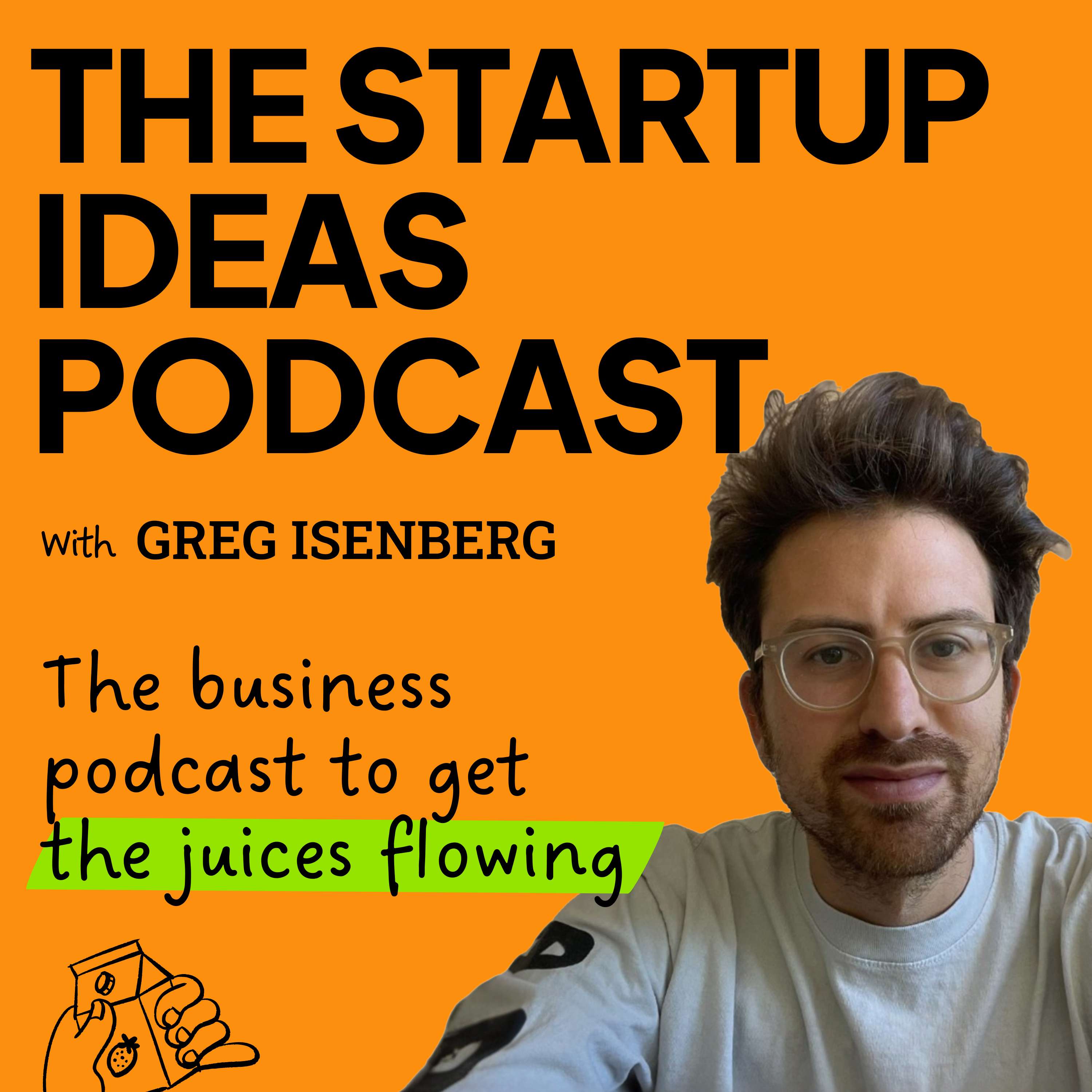
Greg Eisenberg — $5T opportunity: AI Roll Ups
✓ Source-groundedSolo founders can capture a massive portion of the $5 trillion retirement market by acquiring small, stable service businesses and applying a shared layer of AI agents to explode profit margins.
In one sentence
The massive wave of retiring small business owners creates a $5 trillion opportunity for entrepreneurs to acquire "boring" service firms and use a shared layer of AI agents to turn 5% profit margins into 30-40% margins.
Why read this (and who it's for)
This is for the solo founder or small team who wants to move away from the "zero-to-one" grind of starting a new company from scratch and toward "one-to-many" ownership. It solves the problem of finding a scalable, high-margin business model by leveraging the "boring" stability of existing companies (accounting, property management, etc.) and the "unfair" leverage of modern AI agents. After reading this, you will understand the architecture of an AI-powered holding company and the specific operational playbook for rolling up businesses.
The big idea
Greg Eisenberg argues that we are entering a unique era where three distinct tailwinds have converged to create a massive market opening: a "retirement wave" of millions of small business owners (the "Boomer" effect), the maturation of AI agents into reliable workers capable of handling repetitive service tasks, and a stagnant pricing model in service industries where margins have remained flat for 30 years.
The core thesis is that while large venture funds (like Thrive and General Catalyst) are buying the "big" firms, there is a massive, untapped middle market of smaller firms that are too small for the giants but perfectly suited for a solo founder. By creating a "shared layer"—a unified system of AI agents, rules, and dashboards—a founder can acquire a second, third, and fourth business and plug them into the same infrastructure. This allows the owner to keep revenue steady while drastically reducing the cost of labor, effectively multiplying the profit of the business without changing the customer experience.
Key ideas
The Three Converging Tailwinds
The opportunity is created by the intersection of three specific market conditions: 1) Owners of firms (accounting, insurance, property management) are retiring with no clear succession plan; 2) AI agents can now perform the "boring" work (data entry, drafting, chasing documents) with high reliability; and 3) Service businesses are currently valued on 5-10% margins because the market assumes those margins are fixed. Why it matters: When these three things hit at once, it creates a "black swan" opportunity where a business's value can be unlocked without needing to find new customers. In the book: Eisenberg cites McKinsey's estimate that about a million businesses are expected to sell by 2035.
The "Shared Layer" Architecture
The power of a roll-up isn't just owning multiple companies; it's the "bar at the bottom" of the organization. This is a shared infrastructure of agents, global rules, and back-office systems that every business in the portfolio uses. Why it matters: It makes the second and third acquisitions exponentially easier and more profitable because the infrastructure already exists. In the book: Eisenberg describes this as a "shared folder" of rules and agents that allows the owner to scale without linear headcount growth.
The "Human as Accountability Layer"
While AI does the heavy lifting, humans remain the essential final gatekeepers. The system is designed so that an agent can "block" or "flag" work, but a human must always provide the final approval before a client sees anything. Why it matters: It preserves the trust built over 20-30 years of human relationships while still capturing the efficiency of AI. In the book: Eisenberg notes that in the Larson Gross example, the humans shifted from "doing" the work to "reviewing" the work, allowing them to handle more clients with less stress.
The "Rules" as the Moat
In an AI-driven world, the most valuable asset isn't the software (which everyone can access); it's the specific, proprietary list of rules and corrections for a specific niche. Why it matters: Anyone can use GPT-4, but not everyone has a list of 500 specific rules on how to handle a "messy" property management client. In the book: Eisenberg argues that the "corrections log" becomes the most valuable thing you own because it captures the nuances of the business.
The "Service-to-Ownership" Pipeline
The best way to acquire these businesses isn't through a bidding war on a marketplace; it's by becoming a trusted vendor first. Why it matters: It lowers the barrier to entry and builds the trust necessary to acquire a business from an owner who is emotionally attached to their legacy. In the book: Eisenberg suggests starting by selling a specific service (e.g., cleaning up month-end books) to a firm, then eventually buying the firm once trust is established.
Frameworks & tools
The AI Roll-Up Holding Company Structure
A blueprint for a solo-founder holding company:
- The Holding Company: The top-level entity that owns the businesses.
- The General Managers (GMs): Hire a high-performing "senior" person from the existing business (e.g., a 15-year bookkeeper) and give them a piece of the upside.
- The Shared Layer: A unified system of:
- Global Rules: General instructions for all businesses.
- Business-Specific Rules: Unique rules for specific clients or firms.
- The Corrections Log: A record of every time a human had to fix an agent's mistake.
- The Runbooks: Step-by-step instructions for recurring tasks.
The Weekly "Multi-Preneur" Routine
How to manage a portfolio of businesses without burning out:
- Monday: Review 5 core metrics (Profit Margin, Human Time per Job, Agent Correction Rate, Client Retention, Key Employee Happiness).
- Tuesday: 1-on-1 calls with each GM to identify friction points.
- Wednesday: The "Correction Log" Hour. Review every human-corrected agent draft and turn those corrections into new "Rules."
- Thursday/Friday: Business development (coffee with owners, researching new industries).
Memorable examples & stories
The Larson Gross Case Study
A firm in Bellingham, Washington, that has been around since 1949. After a partnership with a large fund, they used AI to process 7,000 tax returns, saving accountants 31% of their time. The lesson: The people who used to do the work are now the people who check the work, allowing for massive scale.
General Catalyst’s $1.5B Strategy
A massive VC firm set aside $1.5 billion to buy and optimize businesses (like property management and customer support) using AI. The lesson: When the smartest money in the world is putting billions into a specific strategy, there is a proven playbook to follow.
The "Owner-Operator" Advantage
Eisenberg notes that many small business owners won't sell to a faceless, billion-dollar VC firm because they care about who takes over their "baby." The lesson: A solo founder can win deals that are "too small" for the big funds by offering a more personal, high-touch transition.
Key quotes
"The people who used to do the work are becoming the people who check it." Why it matters: This is the fundamental shift in the labor model of the rest of the economy.
"The most valuable thing you own... is your list of every way they go wrong in your kind of business." Why it matters: It defines the "moat" in an era of commoditized AI models.
"You're adding leverage... in the productivity sense of the word." Why it matters: It clarifies that the goal isn't just financial leverage, but the ability for one human to oversee a massive amount of output.
How to apply it
This week
- Identify the "Boring" Niche: Choose one industry (e.g., bookkeeping, property management, insurance) and research the "pain points" of the owners.
- Audit your own "Rules": Even if you don't own a business yet, write down a "Runbook" for a complex task you do regularly. See if you can turn it into a set of instructions for an AI agent.
- Analyze the "Small" Market: Look for businesses with 5-10 employees. These are often too small for the big funds but perfect for a solo roll-up.
Ongoing
- Build the "Corrections Log": Every time you use AI and it fails, don't just fix it. Log the error, the reason, and the new rule to prevent it from happening again.
- The "Human-in-the-Loop" Rule: Ensure that for any high-stakes task, the AI is the preparer and the human is the approver. Never let the AI send a final communication to a client without a human "green light."
Common pitfalls
- The "Private Equity" Trap: Many people think this is just "Private Equity with an AI sticker." It is not. Traditional PE fails because of poor integration and culture. The "AI Roll-up" succeeds by using AI to handle the integration of tasks, not just the integration of people.
- The "Margin Compression" Myth: People worry that once everyone uses AI, prices will drop. While true eventually, there is a multi-year window where you can enjoy lower costs while the market still pays "pre-AI" prices.
- The "Layoff" Guilt: People view this as a way to fire people. While some roles will disappear, the goal is to shift the human role from "manual laborer" to "editor/reviewer," which is a more sustainable (though different) type of work.
Connects to
- The Lean Startup: Challenges the "build-measure-learn" loop of a single product by proposing a "buy-optimize-roll-up" model for existing businesses.
- The Age of AI (Kissimmee/Huang): Extends the technical capabilities of LLMs into a specific, industrial-scale business strategy for "boring" services.
If you remember only three things
- The Opportunity: A $5T retirement wave of small businesses is waiting for an AI-powered "roll-up" strategy.
- The Strategy: Buy a business, keep the human "General Manager," and plug in a "Shared Layer" of AI agents and rules.
- The Moat: Your value isn't the AI; it's the proprietary "Rules" and "Corrections Log" you build for a specific niche.
Internalize it
- Reflection questions
- Which "boring" industry do I understand well enough to write a "Rule Book" for?
- If I were to hire a General Manager for a business I owned, what qualities would they need to manage an AI-heavy workflow?
- How can I start "serving" a business owner today to build the trust needed for a future acquisition?
- Flashcards Q: What are the three converging tailwinds of the AI Roll-up? A: 1) The retirement of small business owners, 2) The maturation of AI agents, and 3) The stagnant pricing/margins of service businesses. Q: What is the "Shared Layer" in a roll-up? A: A unified system of agents, global rules, and dashboards used across all businesses in a holding company. Q: What is the "Corrections Log"? A: A record of every time a human had to fix an agent's work, used to create new rules and improve the system. Q: Who is the "Accountability Layer" in this system? A: The human (often a senior employee) who reviews and approves all AI-generated drafts before they reach the client. Q: How does a solo founder compete with billion-dollar funds? A: By targeting smaller businesses that are "too small" for the big funds and by offering a more personal, high-touch transition for the owner.
Fidelity note
This summary is grounded in the provided transcript. I am confident in the "Shared Layer" and "Rules" concepts as they are the core of Eisenberg's organizational theory. The "5T" and "McKinsey" numbers are presented as estimates/projections, not guaranteed certainties. The specific "Weekly Routine" is a personal framework provided by the speaker, not a universal law.