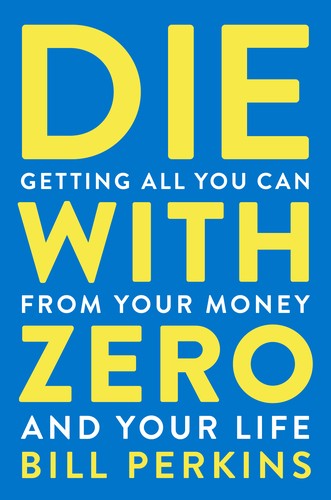
Bill Perkins — Optimizing Your Relationship With Money
✓ Source-groundedStop optimizing for a large pile of money and start optimizing for the fulfillment of your life's unique experiences.
In one sentence
The core thesis of Bill Perkins' work is that most people are unknowingly optimizing for someone else's system—specifically, the accumulation of wealth—while failing to optimize for their own life fulfillment and the unique experiences they can only have at specific points in time.
Why read this (and who it's for)
This is for anyone who feels like they are "winning" the game of success (saving, earning, accumulating) but still feels unfulfilled or stuck in a loop of "autopilot" routines. It solves the problem of passive success: the trap of hitting financial milestones only to realize you've traded away the time and health required to enjoy them. After reading this, you will be able to audit your current financial and life choices to ensure they are actually serving your personal values rather than a societal default.
The big idea
Most people operate on a "default mode" of survival and accumulation. We are biologically wired to save for the winter and hoard resources, but in a modern context, this often manifests as a relentless pursuit of a "large stack of money" without a clear plan for what that money is supposed to do. Perkins argues that if you aren't intentionally choosing what to optimize for, you will default to optimizing for someone else's system—the "hustle culture" or the "financial interest" system.
The logic of the book is rooted in intentionality. We have a finite amount of time on this planet. Therefore, the goal isn't to maximize a number in a bank account; the goal is to maximize the fulfillment of your life. This requires a shift from "numbers math" (how much can I save?) to "fulfillment math" (is this experience worth the time and effort I am giving up?).
Key ideas
The Trap of Abstract Optimization
What it is — Many people work for "money" as an abstract concept because they haven't attached it to a specific, tangible reward. Why it matters — If you work for an abstract "more," you end up giving up your life for nothing. You are essentially running a program that optimizes for a number, not a life. In the book — Perkins notes that the "greatest trick" is making money the goal. He argues you must always attach money to a specific thing—a boat trip, a vacation, or a series of experiences—otherwise, you are just running on a treadmill of "more."
The Autopilot of Subroutines
What it is — Our lives are often governed by "subroutines"—automated habits and routines that run in the background of our minds. Why it matters — These subroutines are often optimized for survival (getting through the day, keeping the job) rather than thriving (finding purpose and happiness). In the book — Perkins explains that we often lack intentionality because we get caught up in these routines. To thrive, you must use your prefrontal cortex to fight the autopilot and ask: "What am I actually optimizing for?"
The Opportunity Cost of Time
What it is — Every choice involves a trade-off. When you choose to spend time on one thing, you are simultaneously choosing not to do something else. Why it matters — We often fail to do the "math" of our lives. We assume a promotion or a higher salary is always better, but we fail to calculate what that choice costs us in terms of family time, health, or personal peace. In the book — Perkins shares a personal example of being offered a job in Washington D.C. He had to "flash forward" to see if the move would take him away from the things he valued (his house and time with family) to realize the "cost" of the promotion.
The "Muscle" of Virtue
What it is — Character traits like generosity or discipline are not static traits; they are muscles that must be exercised. Why it matters — If you have spent 40 years building the "stinginess" muscle of accumulation, you cannot expect to become a philanthropist overnight. You have to train the new muscle. In the book — Perkins compares this to going to the gym. If you've been out of the gym for 40 years, you can't expect to bench 225 lbs on day one. You must practice the new behavior (like being generous or responding calmly) repeatedly to build the neural pathways.
The Unique Window of Experience
What it is — Certain experiences are only available to you during specific "sub-periods" of your life. Why it matters — If you delay an experience until you have the "perfect" amount of money, you might find that you no longer have the health, the time, or the circumstances to actually enjoy it. In the book — Perkins discusses the importance of recognizing when a certain "period" of life is happening (like having young children or being in a certain geographic location) and ensuring you are optimizing for the fulfillment of that specific period.
Frameworks & tools
The Fulfillment Audit
Use this to identify where your life is currently on "autopilot."
- Identify the Subroutines: List your current daily routines (work, social, financial). Ask: "Who is this routine optimizing for? Me, or a system (the boss, the bank, social media)?"
- Define the Values: Identify what actually fulfills you (e.g., family, travel, creative work, peace).
- Calculate the Fulfillment Math: For every major upcoming decision, ask: "What is the reward? (It cannot be money)." Identify the specific experience you are trading your time for.
- Flash Forward: Project yourself 5–10 years into the future. Does the current path lead to the life you want to live then?
The "Muscle" Training Method
To change a habit or a character trait (like reacting with anger or being stingy):
- Identify the "Adapted Child": Recognize the old survival mechanism (e.g., "I need to prove I'm awesome to my dad").
- Choose the New Response: Identify the "thriving" response (e.g., "I am already awesome; I don't need to prove it").
- Repetition over Perfection: Accept that you will "play bad piano" at first. The goal is to repeat the new behavior until it becomes a default neural pathway.
Memorable examples & stories
The St. Petersburg Comparison
Perkins describes visiting St. Petersburg and seeing retirees who couldn't climb the steps to see the sights. He reflects on the "worst-case scenario": waiting until you have the resources to do something, only to find you are no longer physically able to do it. Lesson: Don't let the "delayed gratification" of saving for the future destroy the ability to enjoy the present.
The "Professional" Success Trap
Perkins discusses how people often think they are making "smart" choices (taking the promotion, moving to the big city) because those are the "default" paths of success. Lesson: These are often just "power-saving" modes for the soul—choosing the path of least resistance rather than the path of highest fulfillment.
The "Adapted Child"
Perkins speaks about the "kid" inside us that was formed to survive a specific environment (like a demanding parent). Lesson: You must recognize that this "kid" is no longer needed in your current environment; you must do the work to move from "survival" to "thriving."
Key quotes
"Are you optimizing just to have a large stack of money at the end? Like, what is that about?" Why it matters: It forces you to confront the lack of purpose in many common financial goals.
"If you aren't optimizing, then you will be optimal for someone else's system." Why it matters: It highlights the danger of passive living.
"The goal is the thing. Not my job is to be miserable running a bookstore so someday I can not be running a bookstore." Why it matters: It rejects "hustle culture" where the present is sacrificed for a hypothetical future.
"You've developed other muscles and all other muscles atrophied... you just gotta keep going at it." Why it matters: It provides a realistic, encouraging framework for behavioral change.
How to apply it
This week
- The "Why" Audit: Look at your bank statement or your calendar for the last 7 days. For every major expense or time-block, ask: "What was the actual reward for this? Was it a fulfillment of a value, or just a default routine?"
- The Flash Forward: Pick one major decision you are currently facing (a job offer, a move, a purchase). Close your eyes and imagine yourself 5 years from now. If you make this choice, what does your life look like? Does it align with your values?
Ongoing
- The "No-Money" Rule: When making a financial decision, you are no longer allowed to say "I want to save for a rainy day" or "I want to be successful." You must state the specific experience (e.g., "I am saving for a trip to Japan" or "I am investing in a bookstore"). The Muscle Practice: Identify one "survival" reaction you have (like snapping at a spouse or overworking). Practice one "thriving" response daily, even if you do it poorly at first.
Common pitfalls
- The "Perfect" Trap: Waiting until you have "enough" money to start living your life. Perkins warns that the "worst" case is that you don't live long enough to get there.
- The Comparison Trap: Comparing your "success" to others' success. Perkins notes that people often love a failure because it validates their own cowardice for playing it safe.
- The "Expert" Fallacy: Thinking that reading the book or hearing the advice is the same as doing the work. You must build the "muscle" through reps.
Connects to
- The Daily Stoic (Stoicism): Specifically the concept of "Preferred Indifferents"—money is better to have than not, but it is not the goal.
- Ramit Sethi: Mentioned by Perkins as a contemporary who also focuses on the "how" of spending and designing a life.
If you remember only three things
- If you aren't intentionally optimizing for your own fulfillment, you are optimizing for someone else's system.
- Stop working for "abstract" money; always attach your financial goals to specific, tangible experiences.
- Behavioral change is a muscle; you must be willing to "play bad piano" while you build new neural pathways for thriving.
Internalize it
-
Reflection questions
- What is the "system" I am currently optimizing for? Is it my own, or someone else's?
- What is a "sub-period" of my life (e.g., a certain age, a certain role) that I am currently neglecting?
- If I stopped caring about "success" as defined by others, what would my day-to-day look like?
- What is the "survival" habit I am still clinging to that no longer serves my current life?
-
Flashcards Q: What happens if you aren't intentionally optimizing for your own life? A: You will default to optimizing for someone else's system (like hustle culture or financial interests). Q: What is the "greatest trick" in financial planning? A: Making "money" the goal instead of a specific, tangible experience. Q: Why is it important to "flash forward" when making decisions? A: To see what a decision will cost you in terms of your values (time, family, peace) rather than just looking at the immediate gain. Q: How does Perkins describe the process of changing a habit? A: As building a "muscle." You must practice the new behavior repeatedly to build new neural pathways. Q: What is the "Adapted Child"? A: The version of yourself that was formed to survive a past environment, which may no longer be suited for your current life. Q: What is the difference between "survival" and "thriving"? A: Survival is running on autopilot subroutines; thriving is intentionality and optimizing for life fulfillment.
Fidelity note
This summary is grounded in the transcript of the interview between Ryan Holiday and Bill Perkins. The summary captures Perkins' core arguments regarding "fulfillment math," the "muscle" of virtue, and the dangers of "autopilot" living. It does not include the host's (Ryan Holiday) specific questions, but rather focuses on the answers and arguments provided by Bill Perkins. The distinction between "survival" and "thriving" is a central theme of the conversation and is emphasized throughout.