Jordan B. Peterson — How to Best Guide Your Life Decisions & Path | Dr. Jordan Peterson
✓ Source-groundedTo navigate life effectively, you must move beyond mere inhibition of impulses toward the integration of lower-order personalities into a higher-order, purposeful life.
In one sentence
Humanity's greatest challenge is not simply suppressing our biological impulses, but integrating them into a coherent, voluntary structure of meaning and responsibility.
Why read this (and who it's for)
This conversation addresses the paralysis of modern life—the feeling of being overwhelmed by internal drives and external noise. It is for anyone who feels "hijacked" by their own emotions, addictions, or lack of direction. After internalizing these ideas, you will be able to view your internal struggles not as personal failures, but as "subpersonalities" that require integration rather than mere suppression.
The big idea
Dr. Jordan Peterson argues that the human brain is equipped with powerful, often conflicting, circuits: autonomic functions, raw impulses (desires and aversions), and the prefrontal cortex (executive function). However, our biological hardware is insufficient to navigate the complexities of modern existence. We require a "rule book"—a framework of values and stories—to guide our actions.
The core of his argument is the distinction between inhibition and integration. While many psychological models (like Freud's) focus on inhibiting "bad" urges, Peterson argues that true maturity is the ability to take those raw, lower-order motivational states and subordinate them to a higher-order goal. You don't stop being aggressive or ambitious; you learn to direct that energy toward a purpose that is sustainable and socially constructive.
Key ideas
The Insufficiency of Biological Defaults
Our biological settings, established during the first 25 years of life, are not enough to help us become our "best selves." Because we are social animals, we require external structures—traditions, stories, and rules—to provide the scaffolding for our development.
- Why it matters: It humbles our reliance on "common sense" or "instinct" and highlights the necessity of seeking out wisdom and community.
- In the book: Peterson notes that the complexity of socialization over 25 years is a signal that our default biological settings are insufficient to guide us into the future.
Integration vs. Inhibition
Inhibition is the "unsophisticated" act of pushing down a desire. Integration is the "sophisticated" act of giving an impulse its proper place within a voluntary structure.
- Why it matters: If you only inhibit, the impulse remains a hidden, volatile force. If you integrate, you harness its power for a higher purpose.
- In the book: Peterson uses the example of a team athlete: they aren't "less" aggressive than others; they have simply subordinated their aggression to a higher-order goal that enables success.
Subpersonalities and Motivational States
We should not view "impulses" as simple reflexes. Instead, they are "subpersonalities"—narrow-minded, unidimensional personalities with their own perceptions and rationalizations.
- Why it matters: Recognizing that an addiction or a recurring angry thought is a "subpersonality" allows you to treat it as a distinct entity that needs to be managed and integrated, rather than as "you."
- In the book: Peterson argues that identifying a motivated state as an impulse fails to account for the effect of that state on perception.
The Role of "Action at a Distance"
Human beings are biologically wired for "throwing"—the ability to exert impact on a distant target. This manifests in our desire to create action in space and time.
- Why it matters: This is the root of human achievement. Whether it is a rocket launch or a piece of art, we are driven to bridge the gap between where we are and where we want to be.
- In the book: Peterson observes that the "throwing" gesture is deeply embedded in our physiology and structured our cognition.
The Danger of Effortless Gratification
When the "masculine" (the reliable, structured) fails, sexuality and other drives become commoditized. This leads to a "degenerate" state where the immediate gratification of the present destroys the possibility of a future.
- Why it matters: It explains why modern society feels hollow: when we trade long-term meaning for immediate, easy satisfaction, we eventually lose the capacity for deep, lasting connection.
- In the book: Peterson describes how the "sexual revolution" promised unlimited opportunity but resulted in the "demise of sexuality itself" because it lacked a stable, committed structure.
The "Fool" as a Precursor to the Redeemer
Growth requires the voluntary acceptance of being a "fool." You must be willing to be ignorant and make mistakes in the pursuit of a new truth.
- Why it matters: It removes the paralyzing fear of failure. If you accept that being a "beginner" is the price of entry, you can actually start.
- In the book: Peterson cites Jung's idea that the "fool is the precursor to the Redeemer."
Frameworks & tools
The Integration Model
Instead of asking "How do I stop doing [X]?", ask "How can I integrate the energy of [X] into a higher-order goal?"
- Identify the Subpersonality: Name the specific "personality" that drives the behavior (e.g., "The Impulse to Seek Validation").
- Acknowledge its Power: Recognize that this subpersonality has its own perceptions and "logic."
- Define the Higher-Order Goal: Identify a goal that is "upward"—one that benefits your future self and your community.
- Subordinate the Impulse: Practice directing the energy of the subpersonality toward the higher-order goal.
The "Upward" Aiming Framework
When faced with a conflict (e.g., an argument with a spouse), use this mental checklist:
- Identify the Hijack: Recognize if you are being dominated by a lower-order circuit (like rage).
- Pause: Stop the immediate reaction.
- Define the "Upward" Outcome: Ask, "If this could rectify itself in the best possible manner, what would that look like?"
- Select the Action: Choose the action that benefits the relationship across time, rather than the "proximal victory" of winning the argument.
Memorable examples & stories
The Team Athlete
A professional athlete is not "less" aggressive than a non-athlete. They have simply learned to subordinate their aggression to a higher-order goal (winning the game) in a way that is socially and sustainably successful.
- Lesson: Discipline is not the absence of drive; it is the redirection of drive.
The Case of the Recovered Alcoholic
A friend of Peterson’s underwent a "brain transplant" through religious transformation. He didn't just stop drinking; he saw an image of who he could become and accepted a new identity with a different incentive structure.
- Lesson: True change requires a "new personality" and a new way of seeing oneself.
The 5% of Aggressive Children
In a study of two-year-olds, only 5% of boys were consistently aggressive. Most were socialized by age four; the 5% who weren't became the "repeat offenders" of the future.
- Lesson: Socialization is a protective, necessary mechanism for human survival.
Key quotes
"The properly socialized person is someone who has integrated their lower-order... impulses into a sustainable voluntary structure that regulated them."
- Why it matters: It defines the goal of maturity as integration, not suppression.
"The fact of that future trouble has no bearing on their continued behavior... they are so non-communitarian that they are willing to even betray their own future selves."
- Why it matters: It explains the tragedy of psychopathy: the inability to care about the "future self."
"The fool is the precursor to the Redeemer."
- Why it matters: It gives permission to be a beginner and encourages the courage to be wrong.
How to apply it
This week
- Identify one "Subpersonality": Pick a recurring habit or emotional reaction (e.g., "The Procrastinator" or "The Defensive Critic"). Write down what its "goals" are.
- The "Upward" Pause: The next time you feel a spike of anger or irritation in a conversation, pause for three seconds. Ask: "What would the best possible version of this interaction look like?"
- Practice "Voluntary Foolishness": Do one thing this week that you are bad at, specifically for the sake of learning. Embrace the awkwardness of being a beginner.
Ongoing
- The Integration Audit: When you feel a strong impulse, ask: "How can I use this energy for a higher-order goal?"
- Establish an "Upward" Aim: Before starting a difficult task (like a workout or a hard conversation), pray or meditate for "clarity of mind" and "sustained focus."
- Rule-Book Living: Actively seek out "stories" (books, history, philosophy) that provide a framework for your values, rather than relying solely on your immediate feelings.
Common pitfalls
- Confusing Inhibition with Integration: Many people think they are "working on themselves" because they are white-knuckling a bad habit. If you aren't redirecting the energy toward a higher goal, you are just inhibiting, which is less effective.
- The "Trauma" Trap: Peterson warns against focusing solely on the past or "damaged self." While acknowledging the past is important, the goal is to move toward "embracing the task" of what you must do now.
- The Narcissism of the Intellect: Beware of using your intellect to become a "judge" of others (or yourself) without a moral foundation. The intellect can become "Luciferian" if it is not anchored in a commitment to truth and responsibility.
Connects to
- The Works of Alfred Adler: Specifically his focus on "Power" and practical, bottom-up psychology.
- The Works of Carl Jung: For his exploration of the "transcendent" and the creative use of the unconscious.
- The Works of Sigmund Freud: As a contrast to Peterson's model of integration versus Freud's model of inhibition.
If you remember only three things
- Integration > Inhibition: Don't just stop a behavior; find a higher-order purpose for that energy.
- Subpersonalities: Treat your impulses as "small personalities" that need to be managed and integrated.
- The Upward Aim: When hijacked by emotion, pause and ask what the "best possible" outcome for the long-term is.
Internalize it
-
Reflection questions
- Which "subpersonality" currently has the most influence over my daily decisions?
- In what ways am I currently just inhibiting a behavior rather than integrating it into a higher goal?
- What is the "Upward" version of the conflict I am currently experiencing?
- Am I willing to be a "fool" in the pursuit of a new skill or truth?
-
Flashcards Q: What is the difference between inhibition and integration? A: Inhibition is the unsophisticated suppression of an impulse; integration is the sophisticated subordination of that impulse to a higher-order, voluntary goal.
Q: How does Peterson define "subpersonalities"? A: They are lower-order motivational states that have their own perceptions, emotions, and cognitive rationalizations.
Q: Why is the "Upward" aim important in conflict? A: It prevents you from being hijacked by "proximal" wins (like winning an argument) and forces you to consider what benefits the relationship across time.
Q: What is the "throwing" principle? A: The human drive to create "action at a distance"—to exert impact on a target that is not immediately present.
Q: What is the "Price of Entry" for growth? A: Being a "voluntary fool"—accepting the role of the beginner and the inevitable mistakes that come with learning.
Fidelity note
This summary is based strictly on the provided transcript of the conversation between Dr. Jordan Peterson and Andrew Huberman. The summary captures Peterson's specific definitions of integration, subpersonalities, and the "throwing" principle. It reflects his views on the limitations of biological defaults and the necessity of "rule books" (stories/traditions). The summary does not include the host's (Huberman) specific scientific queries unless they directly prompted a specific point of clarification from Peterson.
More from Huberman Lab
 12 Rules for Life An Antidote to ChaosJordan B. Peterson24 Rules for LifeJordan B. Peterson
 Beyond OrderJordan B. Peterson
 How to Find the Meaning You’ve Been Looking For - Jordan Peterson (4K)Modern Wisdom
 Introduction to Personality TheoryJordan B. PetersonJordan Peterson - How Years Fly By Without You NoticingModern Wisdom
 Jordan Peterson Life, Death, Power, Fame, and Meaning Lex Fridman Podcast #313Lex Fridman Podcast
 Jordan Peterson on Rules for Life, Psychedelics, The Bible, and MoreThe Tim Ferriss Show
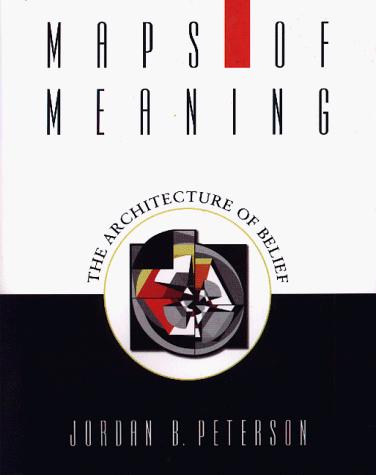 Maps of MeaningJordan B. PetersonPersonality and its transformationsJordan B. Peterson